For months, I’ve kept silent about what Pope Leo said when he invited me to the Vatican to brief him about Opus Dei abuse.
I wanted to give him time to act. But nothing has happened. The time has come to speak out about what he told me.
🧵 A THREAD
I am a member of the Norwegian Nobel Committee.
There are five of us. Five people, appointed by a parliament most of the planet could not find on a map, who decide, once a year, which human being the world has agreed to call good.
I know. I know. I think about it on the tram.
We meet in a building on Henrik Ibsens gate, a street named after a man who wrote almost exclusively about people discovering they are frauds, which nobody on the committee finds funny except me. There is a room with a long table and the portraits of the dead laureates looking down, Mandela, the Dalai Lama, a great many earnest men in spectacles, and one portrait we do not discuss, which is Kissinger, 1973, awarded while the bombs were still falling, after which two of our predecessors resigned and the satirist Tom Lehrer said political satire was now obsolete. We keep him on the wall. A reminder. Every family has the uncle.
It is October in Oslo, which means the sun gives up around four in the afternoon like a civil servant, and it rains the particular Norwegian rain that isn’t quite falling, just hanging there, judging you. I arrive with wet shoes. I always arrive with wet shoes. There is coffee, because this is Norway and there is always coffee, we drink more of it per person than almost anyone alive, and someone’s wife has sent kanelboller, the cinnamon buns, and we sit, five Norwegians, damp, caffeinated, sugared, and we decide the moral standing of the entire species.
Let me tell you how it actually works, because the world imagines a cathedral and it is, I promise you, a book club with a mandate.
287 nominations this year. 208 people, 79 organizations. Anyone can nominate, that’s the secret nobody understands: a professor, a parliamentarian, a former laureate, so the “nominee” list is meaningless, it’s a suggestion box, and every autumn some congressman nominates his own golden retriever and the press writes “SHORTLISTED.” Nobody is shortlisted. There is no short list the public ever sees. There is us, and the coffee, and the rain, and the portraits, and a Norwegian stubbornness that is older than the prize itself.
We read reports. The institute’s advisers write them, thick dull documents, and we argue. Our chairman told the BBC once that in the final meeting “there is a high temperature.” High temperature, for a Norwegian, means someone slightly raised an eyebrow and then apologized for it. We don’t do high temperature. We do a long silence, and then Kristin says “well,” and everyone knows exactly what “well” meant, and it’s settled. That’s our shouting. “Well.” You’d have to be raised here to hear the violence in it.
Now. This year. I will not say the name, because we never say the name, but you know the name.
A certain head of state wanted this prize the way a child wants a thing in a shop window, which is to say loudly, and in public, and with the full belief that wanting it was itself the argument. He said he deserved it. He said he’d ended eight wars, a number that grew most times he said it, like a fish. He had other heads of state phone us. Israel’s prime minister posted it on the internet, “Give him the Nobel.” The leaders of Cambodia and Pakistan announced they’d nominated him, as though announcing it were part of it, as though we tally mentions. A man flew around the globe collecting endorsements for a Norwegian committee the way you’d collect signatures for a petition to the council about a noisy dog.
And here, uff da, is the detail I treasure, the one that makes me smile into my coffee. The nomination deadline is the 31st of January. He took office on the 20th. So for all the phone calls, all the posts, all the gilded lobbying, the only nominations that could possibly count for this year’s prize were filed in the first eleven days of his term, before he had, by his own arithmetic, ended a single one of the eight wars. He campaigned all year for a prize whose window had shut while he was still hanging up his coat. We didn’t have to reject him. The calendar did. We just watched. Norwegians are very good at watching. We have long winters.
People think we sit there weighing his deeds. We don’t. That’s the thing I can’t make the world understand. We’re not grading his homework. We don’t owe anyone the prize for a ceasefire, however real, however loud the announcement. “He made peace” is not a sentence that ends in a medal, the way he believes it does, the way he believes every good thing ends in his name on it. The will of a dead Swede says the prize goes to whoever did the most for fraternity between nations. A dead Swede, I should add, who made his entire fortune inventing dynamite and selling arms, and spent his last years horrified at his own obituary, which called him a merchant of death, and so bought his way to immortality as a man of peace. The whole prize is one guilty arms dealer’s attempt to launder his name. We are, all of us, administering a dead man’s public relations. I find this clarifying. It keeps me humble. It should keep everyone humble, and it keeps, by my count, no one humble at all.
So who did we give it to?
An eighty-five-year-old woman. A judge. Born in Durban, under apartheid, granddaughter of a Tamil man who came to South Africa as indentured labor, a bus driver’s daughter from the poor Indian quarter, who became the first non-white woman to run a law practice in her province, who defended Mandela’s people when defending them was dangerous, who sat on the Rwanda tribunal and the court at the Hague, and who, at eighty-five, is right now a judge weighing whether a genocide is a genocide. When we told the world, our chairman said the rule of law “underpins the system we have set up to ensure peace,” and that “peace requires justice.” She wasn’t even in Oslo. She was in Nuremberg. In courtroom 600. The actual room where they tried the Nazis. You cannot stage that. God staged that, and God, it turns out, is a better satirist than any of us.
She did not phone us. She did not post. No prime minister demanded it for her on the internet. She had, as far as our deliberations are concerned, the one qualification the loud man could never manufacture, which is that she wanted the work and not the medal. The medal finds those people. It flees the ones who chase it. This is not a rule we wrote. It’s just the only pattern the hundred-odd years of our mistakes has ever shown.
The reaction from across the ocean was immediate. His spokesman posted that we “place politics over peace.” Ja. Perhaps. We’re five damp pensioners in a rainy city; of course it’s political, it was always political, it was political when we gave it to a sitting American president nine months into his first term for the promise of things he had not yet done, and we have been quietly embarrassed about that one for fifteen years, so believe me, we had a particular reason this year to prefer a woman with fifty years of verdicts behind her over a man with eight wars in front of him and a deadline already behind him.
Here is what he will never understand, the thing I’d tell him on the tram if he ever took one. We are the one prize he cannot buy, cannot post his way to, cannot have a friendly dictator phone in for him. Not because we’re incorruptible, nei, we’re as vain and wrong and human as the portraits on our wall. But because the entire point of the thing, the only power a small cold country’s book club has ever held, is that it goes to the person not performing the wanting. The moment you demand it, you’ve proven you don’t understand what it’s for, and proving that is itself the disqualification. He ran the most expensive campaign in the history of the prize and the campaign was the reason. He was never losing to Navi Pillay. He was losing to the concept.
It’s dark now. Four o’clock dark. The buns are gone. Kristin said “well” an hour ago and we all went home. I’m on the tram with my wet shoes, and somewhere across the water a very powerful man is explaining to a camera that the prize is rigged, that we’re corrupt, that he’ll win it next year, and he genuinely might, we’re only five idiots and we’ve been wrong before, Kissinger is still on the wall.
But not this year. This year an old woman in Nuremberg, in the room where the law once stared down the exact kind of man who thinks wanting a thing loudly enough should make it his, got a phone call she didn’t ask for.
That’s the job. We don’t reward the man who ends the war and announces it.
We reward the woman who spent fifty years deciding what a war was.
He’ll never see the difference. That’s rather the whole point of him.
Takk for i dag. I have to change trams.
PIERO
@PieroCantautor
Hoy se cumple otro aniversario del fallecimiento de mi madre, Anoland Bellido de Luna, ocurrido el 7 de Octubre de 1991 en la ciudad de Panamá, y coincidiendo con esta fecha, se “ha mudado al otro barrio” el argentino Piero de Benedictis uno de los cantaautores que influyó en mi desarrollo como compositor de letras y de músicas.
Lo conocí a finales de la década del 60; cuando fue a Panamá a ofrecer un recital. Él era conocido, su canción “Mi Viejo” sonaba en las emisoras nacionales. Yo terminaba recién la escuela secundaria y empezaba la Universidad.
Lo llamé al hotel donde se hospedaba, me atendió y fui a verlo, con mi amigo Jaime Correa, con la intención de mostrarle mi tema “Pablo Pueblo”, a ver si se animaba él a grabarlo.
Me recibió y en su habitación con mi guitarra le interpreté mi tema. Al terminar de cantarlo le pregunté si le había gustado, respondido que sí, mucho, pero que no lo grabaría. Me dijo, “grabalo tu, y así seremos dos los que hacemos este tipo de musica”.
Con el tiempo nos hicimos amigos y aunque no compartiéramos el mismo espacio geográfico siempre estuvimos comunicados.
Lo vi varias veces, en mis presentaciones en la Argentina, y siempre le dí el crédito que merece su talento y la solidaridad que me demostró cuando yo era un adolescente con hambre de hacer cosas.
Se fue el cuerpo pero nos deja su alma en las canciones que escribió, siempre pensando en nosotros y en la memoria de su experiencia.
Adiós Piero, colega y hermano. Gracias por tus letras y las memorias que evocan.
Es cierto compadre. “¡Cómo se nos van los años!”
Rubén Blades
7 de Octubre, 2026
“You just said that 10% doesn’t seem an unreasonable estimate that AI could kill all humans”
“Yes”
“Wow… oh my God.”
@vicderbyshire speaks to Nobel Prize Winner and so-called ‘Godfather of AI’ Geoffrey Hinton about predictions by an Anthropic researcher that there’s a more than 10% chance AI could kill all humans within a decade.
#Newsnight
The people building AI earnestly believe that it could kill us all by the end of the decade. This is not a marketing stunt. If anything, many executives and senior researchers will couch their phrasing in the press to sound sensible - but I hear the same people express fear privately. No other human activity poses this level of danger.
I posted yesterday about the Airlink flypast in Cape Town and like many professional pilots, I was aghast.
The reaction to this flypast has been fascinating.
For some, it was spectacular. A moment of national pride, flown by experienced South African aviators and apparently carefully planned, rehearsed and approved.
I understand that.
But here’s why so many professional aviators are uncomfortable with what we saw.
Aviation is extraordinarily safe precisely because we question ourselves.
We debrief. We challenge. We report. We investigate. And sometimes, even when something was legal, authorised and went exactly as planned, we still ask…
Was that really a good idea?
That isn’t negativity. It isn’t disrespect. And it certainly isn’t an attack on South African aviation.
It’s mature safety culture.
The lead aircraft reportedly cleared the stadium roof by around 40–50 feet. Hundreds of professional aviators around the world have looked at those images and expressed concern.
That deserves more than “nothing to see here”.
Perhaps the eventual conclusion will be that everything was conducted entirely within the approved parameters. But a mature safety culture should still be capable of saying: we planned it, we approved it, we flew it, and with hindsight, perhaps the margins were tighter than they needed to be.
Because aviation didn’t become one of the safest forms of transport by defending everything that worked.
It became safe by relentlessly examining the things that nearly didn’t. And this is wholeheartedly one of those times.
Every time pilots challenge something, file a report, admit an error or question an accepted practice, somebody flying tomorrow is a little safer because of it.
That’s why professional aviators can sometimes sound overly cautious. The flypast fun police!!
We’re not trying to take the spectacle out of aviation. Quite the opposite in fact.
We’re trying to make sure everyone gets to enjoy it again tomorrow.
We are dealing with some seriously twisted people.
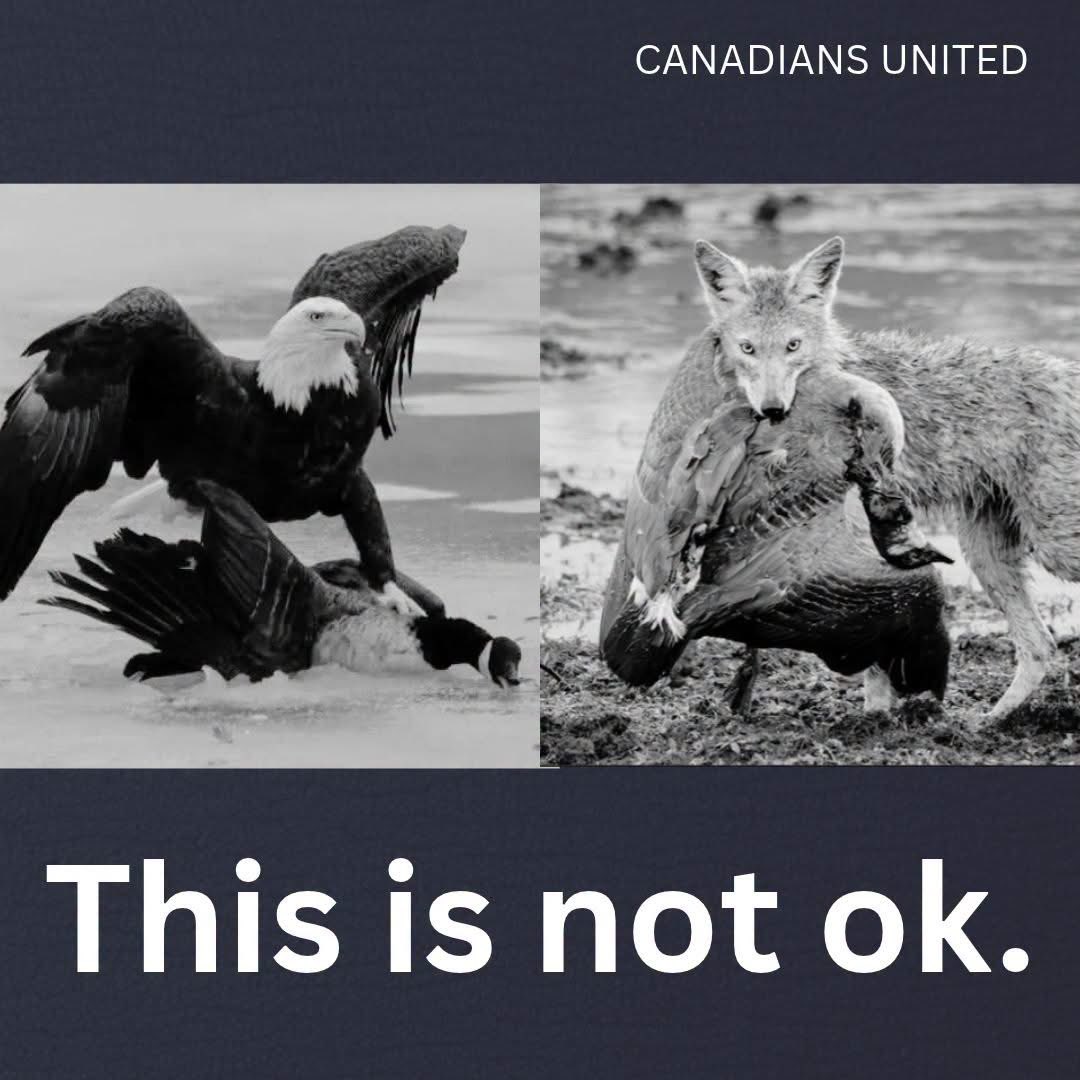
From a Canadian perspective, I have to say: this is not normal.
Look at what is being put out through official U.S. government channels. One picture was posted by the White House. Another came from the U.S. Department of the Interior press. These aren’t random people on the internet. These are official institutions of the United States government, speaking to the world on behalf of the American state.
And as a Canadian, I find that deeply disturbing. Because the whole world is watching this. Not just Canadians. Not just Americans.
All of us.
People around the world are watching how the United States chooses to use its enormous political power, its influence, and its institutions.
I don’t believe I’ve ever seen another country engage in this kind of openly vindictive rhetoric in quite this way. Not Russia. Not China. Not even North Korea.
For generations, Canadians have looked to the United States as our closest neighbour, our largest trading partner, and one of the world’s most influential democracies. We may disagree with American governments, and Canadians certainly have plenty of opinions about American politics, but there has always been an expectation that, beneath the political battles, there was a certain standard of conduct.
This feels like something different.
There is a difference between defending your country and taking pleasure in humiliating someone. There is a difference between strong rhetoric and rhetoric that appears designed specifically to hurt, provoke, and degrade.
There is a difference between protecting your own country and wanting to tear down another for no reason.
It wasn’t enough to drive in the knife; they had to twist it too.
And from outside the United States, it is difficult to watch this and understand how anyone can consider it appropriate for a government to behave this way. This isn’t about being Canadian versus American. It isn’t about left versus right. It isn’t even about whether you agree with the person being targeted.
It’s about standards.
If a foreign government behaved this way, many of the same people would be outraged. They would call it cruel, undignified, or authoritarian, and rightfully so.
Canada and the United States have had disagreements for generations. We have argued over trade, foreign policy, borders, energy, defence, and countless other issues. But disagreement between neighbours does not require contempt for one another.
In fact, precisely because Canada and the United States are so closely connected, what happens there matters enormously to us.
Anybody who thinks this is acceptable behaviour simply because it is coming from “their side” has lost the plot.
Because governments are supposed to represent more than anger, vengeance, and political tribalism.They are supposed to represent their people.
And I would hope that Americans, regardless of their political beliefs, can still recognize the difference between strength and cruelty.
The whole world is watching.
And what they are seeing is not strength.
It’s something much uglier.
Source: Canadian United
The name Lake Ontario comes from the Wendat word Ontari’io, which, appropriately, means “the lake is beautiful, the lake is big”.
The name is more than 400 years old, predating both the Confederation of Canada and the Declaration of Independence of the United States of America.
We know that America is changing. Their trading relationships, their foreign policies, their national monuments, their hydronyms.
Canadians also know that naming reality means calling it Lake Ontario – then, now and always.
BREAKING: The White House Just Published A Twelve “FACT” Manifesto About Canada That Hitler Would Be Proud Of.
I checked every one of Trump’s Goebbels-inspired bullshit propaganda facts about Canada. Here’s How Many Survived.
https://t.co/iMiriuS5Du
El programa de Pergolini ODP hizo este clip con IA sobre la vida y los logros de San Martin. Es muy bueno y deberían pasarlo en todos los colegios y universidades no solo como historia para entender en cuatro minutos quien fue Don José sino porque también sirve para mostrar las enormes ventajas de la IA cuando está bien usada.
Impecable.
Aplausos.
Viralicen!
That guitar tone was an accident. Chasing a ZZ Top sound, Dire Straits left a wah pedal parked half-open and a studio mic that had drooped overnight, pointing at the floor.
They never could recreate it. The riff that defined MTV, built by mistake.
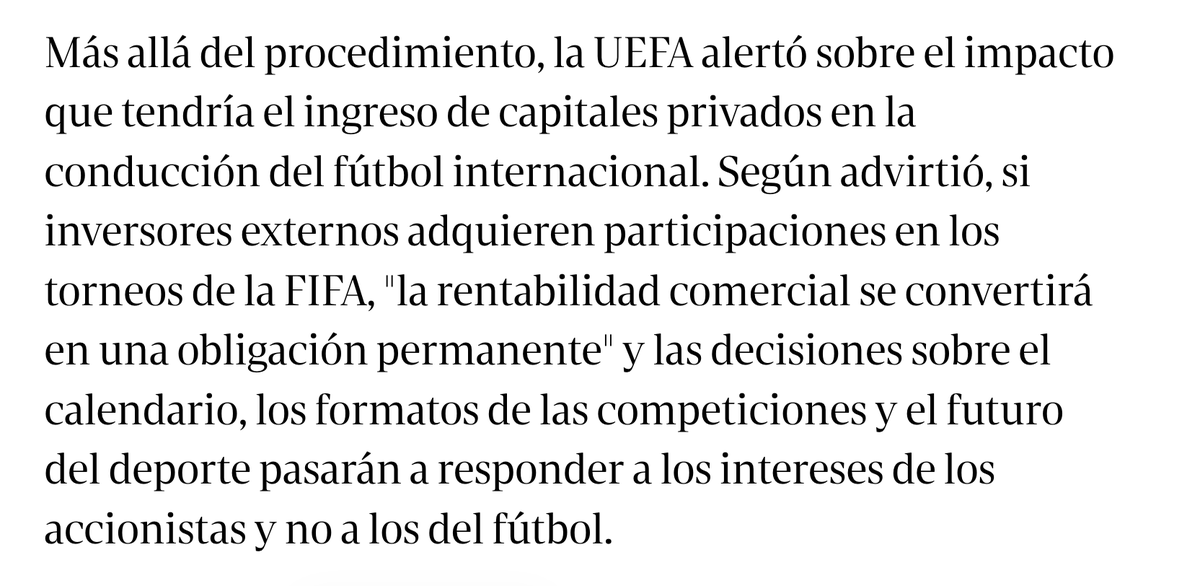
La UEFA tiene muy claro que si FIFA privatiza el fútbol mundial el beneficio privado importará más que el fútbol -porque los inversores querrán rentabilidad.
Con el fútbol parece fácil de entender.
¿Y con la salud, la educación, la jubilación...?
¿En serio no lo entienden?