🚨 SEX differences in Rheumatology are HUGE — but still ignored in guidelines.
📌 Key numbers from a major 2026 review:
🔴 RA
• ♀:♂ = 3:1
• Women → ~3× higher odds of refractory disease
• Women less likely to receive biologics
• Men → more erosive/radiographic damage
🟣 SLE
• ♀:♂ = 8–15:1
• Women with SLE (35–44 yrs) → 50× higher MI risk vs general population
• Mortality in lupus nephritis: 24.2% men vs 13.4% women
• Men → ↑ nephritis, serositis, organ damage
🔵 Axial SpA
• Syndesmophytes: 40% men vs 15% women
• TNFi response at 1 yr: 38% men vs 17% women
• Women → longer diagnostic delay & more misdiagnosis
🟠 Sjögren Disease
• ♀:♂ = 9:1
• Lymphoma prevalence: 18% men vs 5.2% women
• Men → ↑ ILD & mortality
• Women → ↑ fatigue, pain & QoL impairment
🟢 Gout
• Women diagnosed ~8 yrs later
• Women → ↑ CKD, obesity, HF & multimorbidity
• Men → earlier disease & more tophi
⚠️ Biggest issue:
The “minority sex” in each disease is underrepresented in clinical trials → weaker evidence → biased care.
🎯 Future = Sex-aware + Gender-aware Rheumatology.
📖 Nat Rev Rheumatol (2026)
DOI: 10.1038/s41584-026-01376-4
#Rheumatology #Lupus #RA #AxSpA #Sjogrens #Gout #PrecisionMedicine #MedTwitter
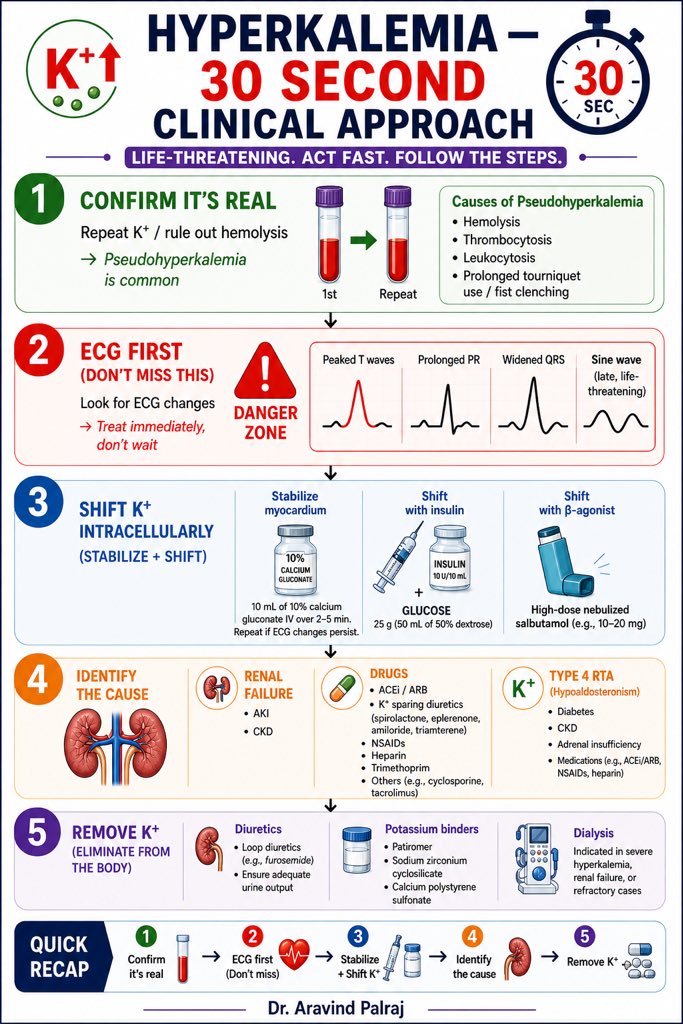
Hyperkalemia in connective tissue diseases is common - and reversible.
Renal involvement, ACEi/ARBs, trimethoprim, tacrolimus, metabolic acidosis… the setup is often right in front of us.
Tall T waves are not “just ECG changes.” They are warnings.
Before blaming weakness on myositis, check potassium.
#Rheumatology #Hyperkalemia #CTD #Lupus #Vasculitis #MedicalEducation
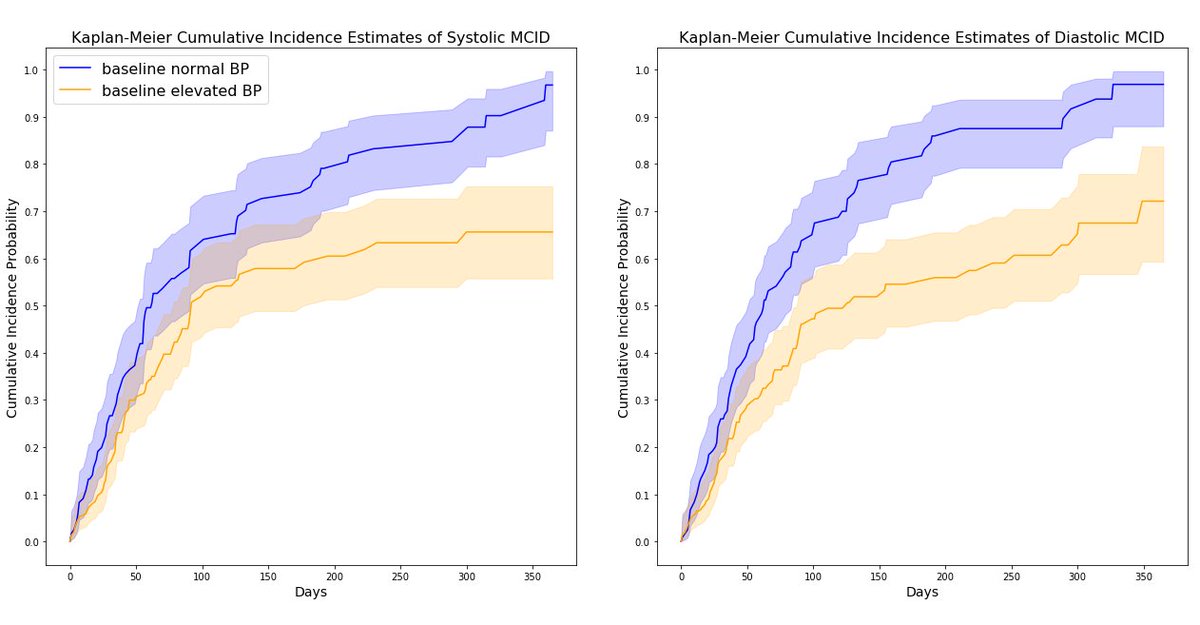
Among 287 patients with lupus nephritis, treatment with voclosporin was associated with increased blood pressure, with more pronounced increases among those with normal blood pressure at baseline
Arthritis Care & Research
https://t.co/lvdV8cbFG2
New research published this week in ACR Open Rheumatology
Immunosuppressive medications and nonserious infections in RA
https://t.co/bfuK0Mg0jR
Quantifying degree of vascular burden in GCA on cranial vessel wall MRI
https://t.co/m8DEHcE3v3
Population-based estimation of years of potential life lost associated with lupus
https://t.co/mYrt7iwKR4
Semaglutide and tirzepatide in rheumatic and musculoskeletal diseases
https://t.co/OsjUmLQEjT
I was on duty that day, a final-year medicine trainee.
A call came from orthopedics.
“45-year-old man, fall from bike — fracture left distal radius, rib fracture on right side. Now complaining of left-sided chest pain.”
They’d given him diclofenac for pain.
Pain had improved… but 30 minutes later, he started clutching his chest.
“Probably rib pain,” they thought.
But the rib fracture was on the right side.
He kept insisting —
“Doctor, this pain is on the left… and it’s getting worse.”
So they called me.
When I reached, he was in visible distress — sweating, anxious, restless.
No addictions. No comorbidities. No prior drug allergy.
He said, “Initially my pain was in the right chest and left forearm… now it’s heaviness on the left side of my chest.”
The X-ray had ruled out any left rib fracture.
No local tenderness.
Something didn’t add up.
I asked him to describe the pain.
He said quietly,
“Feels like someone’s sitting on my chest.”
He was nauseated, sweating more.
While talking, I noticed something else — red rashes scattered across his abdomen and thighs.
They looked fresh.
“When did this start?”
He thought for a second.
“About 45 minutes ago.”
I checked his drug chart — IM diclofenac for pain.
I looked at the rash again, then at his face turning pale.
The timing fit perfectly.
My orthopedic colleague asked,
“What are you thinking?”
I said, “Let’s get an ECG — now.”
He replied, “We already have one, it was normal for pre-op.”
Still, we repeated it.
And that changed everything.
ST elevation — V1 to V4.
Troponin and CK-MB both high.
Acute coronary syndrome.
We gave a loading dose, sublingual nitrate.
His BP was 150/80.
I added verapamil.
He started feeling better.
We repeated the ECG after an hour —
the ST elevation had vanished.
My colleague asked, “Why verapamil?”
I just smiled.
Because this wasn’t atherosclerosis.
This was an allergy of the heart.
That night, I met Kounis Syndrome —
an allergic storm that spasms the coronaries.
Triggered by a painkiller.
A paradox —
the drug meant to relieve pain had almost broken a heart.
In the following months, I saw two more.
One after penicillin.
One after a bee sting.
Each time, I remembered that man.
And his quiet, unforgettable line —
“Doctor… the pain has shifted to the wrong side.”
Medicine teaches you to treat what you see.
Experience teaches you to question what you don’t.
Sometimes, the clue isn’t in the test —
it’s hidden in the timeline.
In a rash. A word. A hesitation.
That’s where the diagnosis lives.
🩺 #MedTwitter #KounisSyndrome #StorytellingInMedicine #Allergy #Cardiology #Rheumatology #Immunology
#Sullysrounds #MedX #Medtwitter #Mnemonics #Medicine #History
@DrAkhilX @IhabFathiSulima@Janetbirdope #MedTwitter #RheumTwitter
@CelestinoGutirr@aditya_gan3500@nileshnolkha@nirmalregency