Another excerpt from the forthcoming essay of my three-part serial on film noir and cultural demoralization for @Culture_Decode, which, turning from an analysis of Polanski's Chinatown in parts one and two, will now focus on Oliver Stone and Michael Cimino's Year of the Dragon and Otto Preminger's Where the Sidewalk Ends.
"The film’s opening scene places us amid a throng of revelers and spectators viewing a nighttime procession of street performers who are wielding dragon floats, beating ceremonial drums, and lighting firecrackers in New York City’s Chinatown. The location choice is, of course, an obvious homage to Polanski’s Chinatown, the symbolic significance of which cannot be overstated for an appraisal of the sense to be made of what is at stake, what is at issue, in Year of the Dragon. Beginning with its first shot, the film signals that it will take up where Polanski’s own film had ended: not just in physical terms of its location (albeit New York’s Chinatown rather than Los Angeles’), but also ideologically, thematically, and, as we shall see, spiritually.
For if Polanski had a decade beforehand deliberately subverted many of the hallmark themes and conventions of the genre by ending his noir on a note of tragedy and darkness epitomized by its final shot of a desolate and hopelessly forsaken Chinatown street, Year of the Dragon will further deepen, and indeed complete, that subversion by plunging us from its outset into a chaotic Chinatown milieu itself signifying the American public’s feelings of disorientation, confusion, and disillusionment in the wake of Watergate and the Vietnam War. While the parade is a celebratory event, there remains something unmistakably wild, menacing, and anarchic about it, including the prominent dragon imagery, which, for good reason, will not have been improperly interpreted by the viewer who senses something foreboding, even sinister, in it.
In Chinese culture, the dragon traditionally is associated with authority, dignity, and honor. And the Dragon year is itself considered to be a fortuitous time for starting new ventures, for building families, and for career advancements. This choice of year for the film’s setting cannot be accidental, for, as we will come to see, everything we are in turn shown ends up running directly contrary to what has just been described: for what to make of our protagonist’s, Det. Stanley White’s (Mickey Rourke), own 'venture,' which is to say, his desire to take down the Chinatown Triads? It is a mission that will prove to be a vapid one, ultimately destructive and self-indulgent, a fantasy; as for building a family, his own home life is in tatters from the moment we are introduced to him, given the fact that he is already essentially estranged from his wife, Connie, with no children (and there is no mention of any in-laws or other extended family); and as for the prospects of career advancement, White has already attained the pinnacle of his profession’s success, being the most highly-decorated cop in New York City history (as he is fond of routinely reminding others), yet he renounces the typical careerist path that would ordinarily accompany such success (say, running for political office or pursuing promotion at NYPD) in the name of instead pursuing what itself will prove only to be a pointless alternative, something not only ultimately ineffectual, since the crime he fights will always persist no matter what he happens to achieve against it, but ultimately pointless because the entire enterprise rests on an egoism that is not all that different from the sort that drives the banal careerism he takes himself to reject. Consequently, when the film’s subsequent events are recognized as the direct contraries they are to what the Chinese Dragon year is traditionally said to promise, we cannot but note that Stone and Cimino mean to suggest that something besides good fortune governs the unfortunate lives of those whom we are about to encounter. The underworld of Chinatown’s organized crime, which itself can be understood as a cipher for the even deeper clandestine underworld of state intelligence (we later receive indications in the film that allude to the role of domestic and foreign intelligence services in international drug-trafficking, among other things), obeys a logic of evil reminiscent of the one shown in Polanski’s Chinatown. And given all that, it is hardly a stretch to see the immediate appearance of the dragon (in both name and image) as a symbolic allusion to the devil. In any case, what at one level is certainly nothing more than an innocuous and traditional Chinese New Year’s parade consequently nevertheless evokes the unsettling feeling that we have in fact stumbled into the wrong neighborhood, for it is in fact a theater of war.
Indeed, as the film will go on to show, from at least the perspective of Stanley White, Chinatown is a literal warzone. Stone and Cimino’s ultimate claim, what makes the film an inversion of the classical noir genre, is that White’s view of the neighborhood and of his relation to it as a New York City police detective are both ultimately the consequence of his own psychological hangups, his own prejudices, his own illusions, his own moral failings—in short, his entire vocation as a principled, dogged policeman, his self-conception as an indefatigable lawman, is itself a compensatory, self-serving fantasy reflective of what is presented to be his own aberrant psychology. Far from being the gritty, straight-shooting, intuitive detective who sees what others cannot see, and so acts accordingly, he is blind. He thinks he sees, thinks he desires the truth, thinks he wants to know, thinks he wants justice, but what he sees and what he wants is not the unvarnished truth, but rather an impression of things that is made in his own image and meant to serve the fulfillment of that image.
Whereas Polanski’s Chinatown had sought to undermine the supposedly naïve notion that justice in this world ever can prevail in light of evil’s omnipotence (which is why the cynical and ambivalent Gittes is himself a far cry from the traditional noir hero), in Stone and Cimino’s telling, the very notion of any genuine and absolute distinction between good and evil is depicted as being inherently dubious, inasmuch as the best candidate for someone who might be thought to fit the bill of an idealistic, principled, and tenacious agent, White, is someone whom, by the film’s conclusion, is shown to have been little more than selfish, narcissistic, immature, and, perhaps most importantly, deeply self-deceived about the origins of his own apparent, and merely apparent, desire for justice.
What we have, thus, is not a standard neo-noir that merely complicates and blurs the boundaries between the categories of good and evil, law and injustice, right and wrong, but one that calls into question whether the notion of a hero is at all plausible, or whether, instead, any such notion is really just an illusion, a fantasy, a self-serving myth motivated by self-deception, hypocrisy, and pathology.[1] In a word, Det. Stanley White is not merely the flawed hero, even the anti-hero, but rather a figuration of the death of the hero: he is the cinematic embodiment of a psychological fantasy that once was taken for an archetypal hero, an idealistic figure that is no longer seen to be a loftily unattainable measure for audience’s own noblest and purest inclinations and aspirations, but rather a shallow and bankrupt projection that had concealed the true ugliness behind what motivates such myth-making in the first place. In watching White himself come to terms with the unflattering truth supposedly behind his real motivations for pursuing crime-fighting as he does, the audience is thus given to see that the cult of the Hollywood hero is not just itself a cinematic fantasy, but that the underlying cultural ethos that once had made such a hero plausible (or at least likeable) to audiences is no longer sustainable, for, if Stone and Cimino are to be believed, it was always merely a crass, ham-fisted ideological illusion. Where, then, Polanski had contended that the would-be hero Gittes is really just a bungler, a dupe, a sucker, someone who does not yet fully comprehend his situation’s futility given what he’s up against, here Stone and Cimino will contend that everything formerly associated with the noir protagonist, the desire for justice, the desire to know, the adhesion to duty, the belief that good will triumph over evil, that justice will in the end prevail, is not simply woefully naïve, but rooted in pernicious illusion, as exemplified in White’s own outright hypocrisy, which itself is the symptom of his various untreated psychopathologies from enculturated prejudices exacerbated by his wartime Vietnam trauma.
Through Gittes’s own failure, Polanski had taken himself to have convincingly told us to give up on the quixotic quest of opposing systemic corruption and evil, for only a naïve underestimation of the world’s darkness could sustain such a commitment in the face of the ugliness of the truth; should we happen to have been unpersuaded by Chinatown's lesson, through White, Stone and Cimino will aim to tell us to give up on any such desire, for the very desire itself is said to be fraudulent and indeed self-indicting.
[1] Michael Mann’s 1995 neo-noir, Heat, revisits this well-worn theme through its depiction of the mimetic rivalry between 'hero' Det. Vincent Hanna (Al Pacino) and 'villain,' heist man Neal McCauley (Robert DeNiro). Mann makes the theme explicit, when, in the famous diner conversation between the two, Vincent and Neal come to recognize that they are flip-sides of the same coin, two men whose identities and preferred ways of life depend on that of the other’s. Denis Ferrina comments on this common neo-noir trope when, in an interview, he said of the film’s moral universe, 'the good guy [is] not so good, [the] bad guy not so bad.'"
Eye-opening short (featuring documents acquired by DCF Director of Research Operations, Dr. Brett Carollo) exposes how Hollywood gets script veto power and production help from three-letter agencies, and how "fun" movie trivia (Stallone’s dog, Cruise’s stunts, Spielberg’s fee, etc.) is often crafted PR propaganda to shape what we believe.
If you don't notice the cultural engineering, that means it's working! 🎥 🎬
https://t.co/53tYmpLo29
We are joined by @StevenDeLay4 for a discussion of the legal thriller The Firm (1993), directed by Sydney Pollack. We talk about themes of misdirection and demoralization, as well as Pollack's Three Days of the Condor (1975) and his Mossad connections. https://t.co/5cQVJJmonz
Thomas and Travis Mateer (@madpoet19) cover Ari Aster's acclaimed 2025 political satire Eddington, pairing it with his 2023 film Beau is Afraid, as well as Yorgos Lanthimos' Bugonia, another 2025 movie that purports to take conspiracy theories seriously. https://t.co/Zrzx5CkhZ5
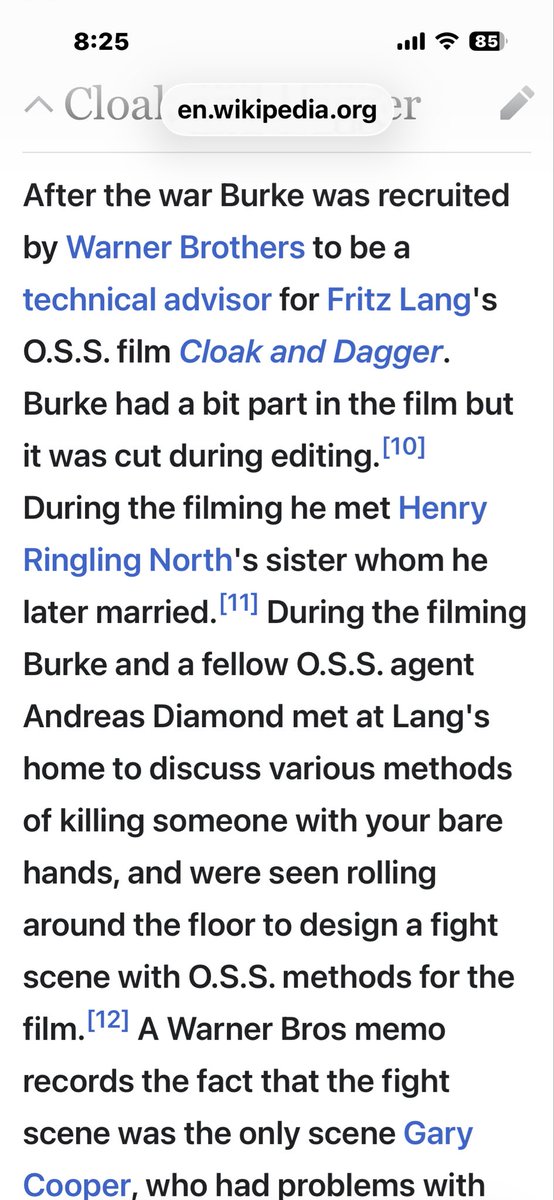
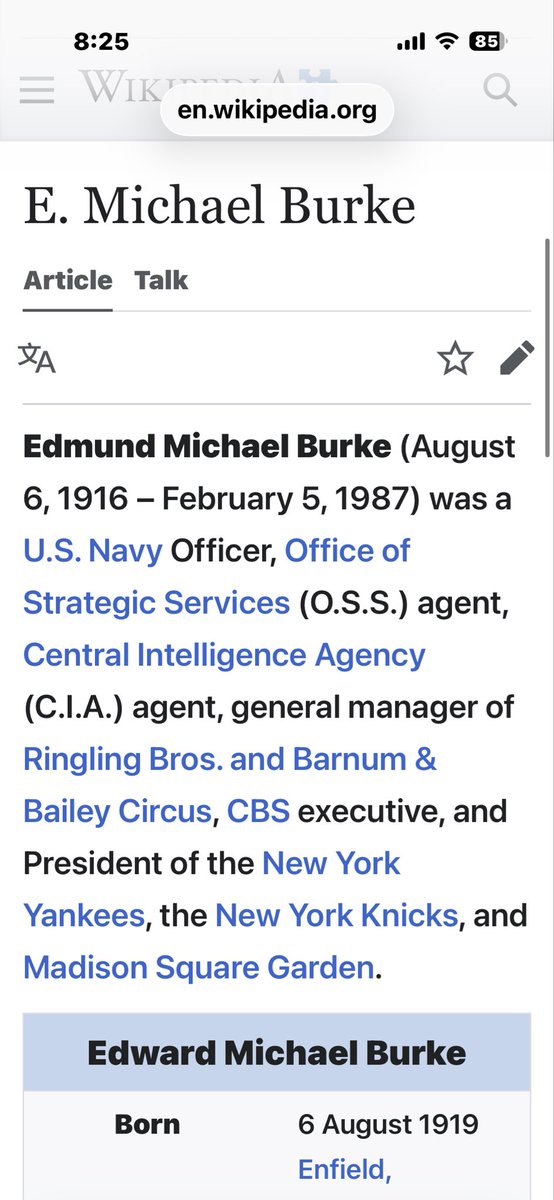
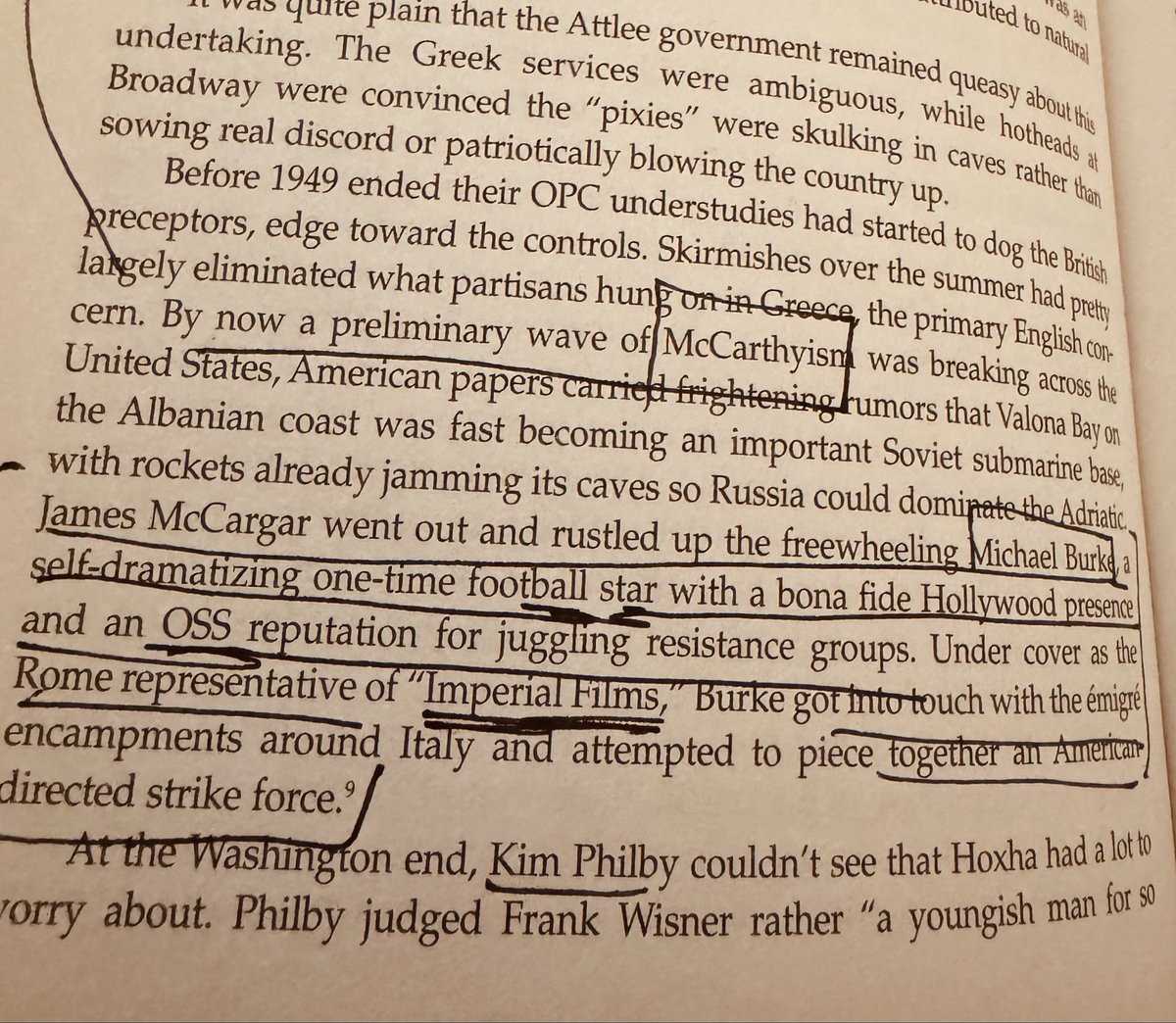
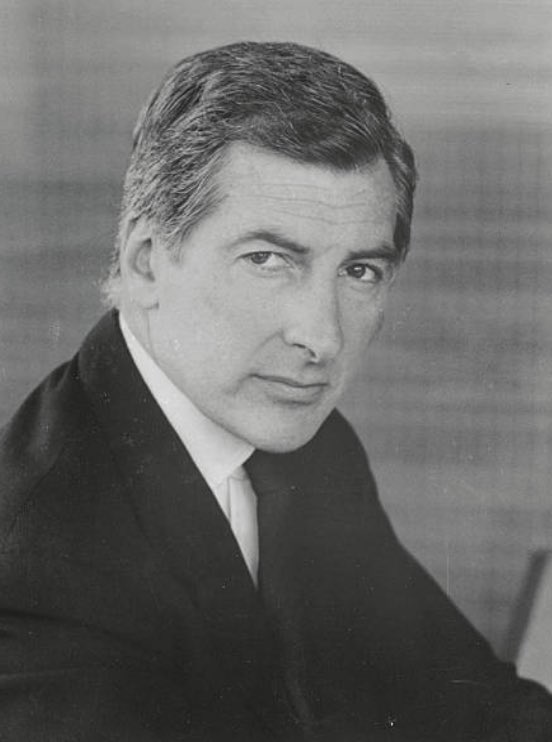
College Football Star and Warner Bros, Film Consultant Michael Burke also ran covert OSS missions under cover as an executive of “Imperial Films” to recruit for US special operations in overthrowing Albanian communists
@JamieLHanshaw Yes, I cite this article in my upcoming book (adapted from my PhD dissertation): Transhumanism and the Religion of Apotheosis, published by Wipf and Stock and due out this fall.
Hollywood is an arm of the FEDS. The Decoding Culture Foundation @Culture_Decode has all the receipts. Here is part 1 of a thread I put together with their amazing research. Ben Affleck, call your office (or your handler)...
Premiering tonight! Dr. Brett Carollo @DecoderShell@Culture_Decode returns to discuss the recently published volume #3 of the research anthology Cultural Engineering Studies and his article Hermeneutics of Total Suspicion: Gnostic Inversion and the Serpent. We talk about various gnostic cults and their influence on culture throughout the centuries leading up to the rejection of the body embracing transhumanism.
https://t.co/zK48oyaOOJ
Coming soon: Out of this World #86 featuring Dr. Brett Carollo!
Premiering Tuesday, May 19th at 9:00 PM EST, DCF Director of Research Operations, Dr. Brett Carollo @DecoderShell , will be joining Jamie Hanshaw Dyer (@JamieLHanshaw) for a conversation you won't want to miss!
The pair will discuss the recently published third volume of DCF's research anthology Cultural Engineering Studies, and Dr. Carollo's article "Hermeneutics of Total Suspicion: Gnostic Inversion and the Serpent", as well as various gnostic cults and their influence on culture throughout the centuries leading up to the rejection of the body embracing transhumanism.
Watch the full conversation on May 19th here: https://t.co/ah9224SS7B
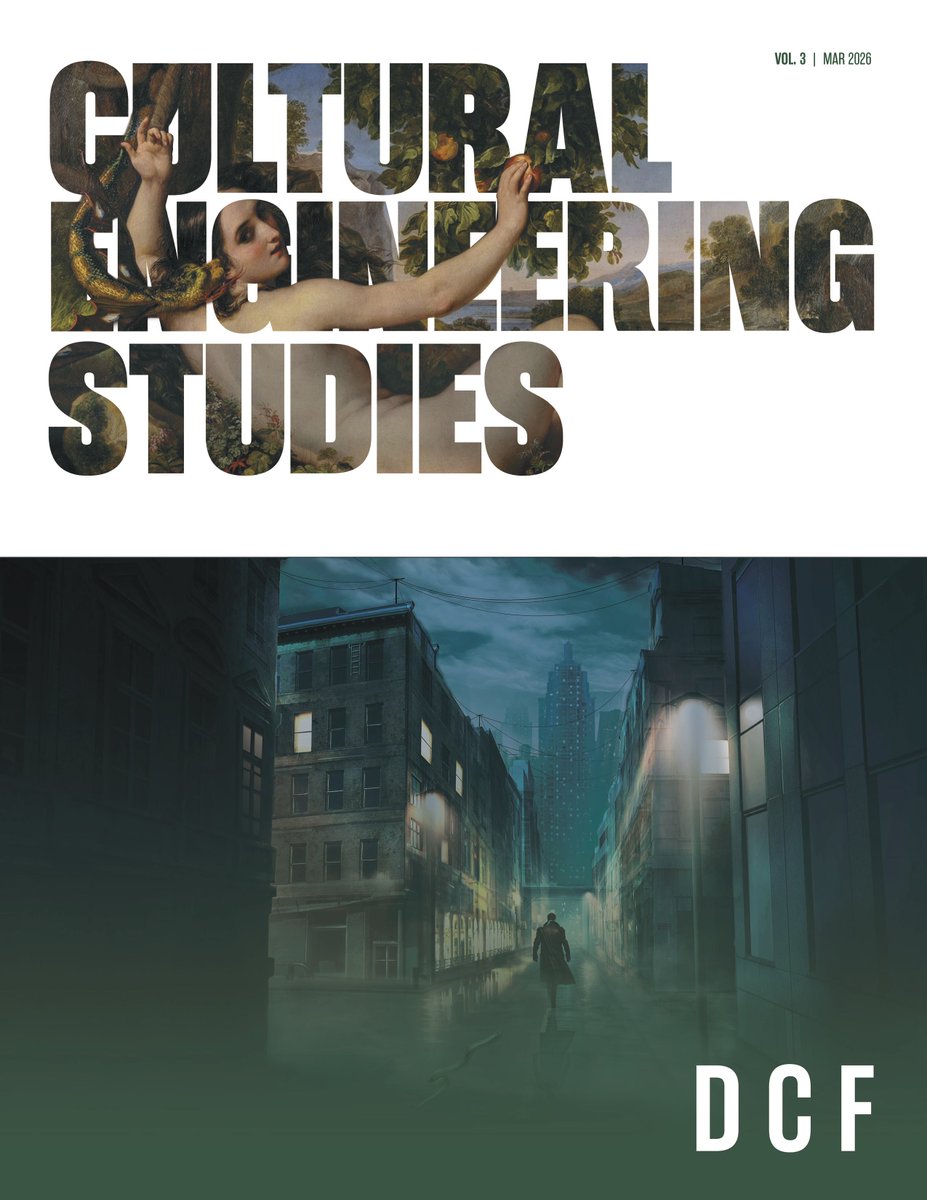
Avaiable now: Volume 3 of Cultural Engineering Studies!
Our latest volume takes up the theme of Neo-Gnosticism and examines its role in shaping the deeper logic of modern film, media, politics, and cultural engineering. Inside, you can find articles that trace the myths of false liberation, spiritual inversion, and manufactured rebellion that have helped form the modern imagination.
Featuring writings by:
Jamie Hanshaw (@JamieLHanshaw)
Jasun Horsley, (@JaKephas)
Brett Carollo (@DecoderShell)
Joshua Stylman (@jstylman)
Paul and Phillip Collins (@PhillipDCollin1)
Hans Utter (@Resonantstate), and
Thomas Millary (@CinemaPsyop)
Plus a interactive zine by Mrs Horsley (@Mrs___Horsley)
If you want serious research, strong writing, and a print publication built to last, this is our strongest volume yet.
Order now: https://t.co/KjrbXoC19j
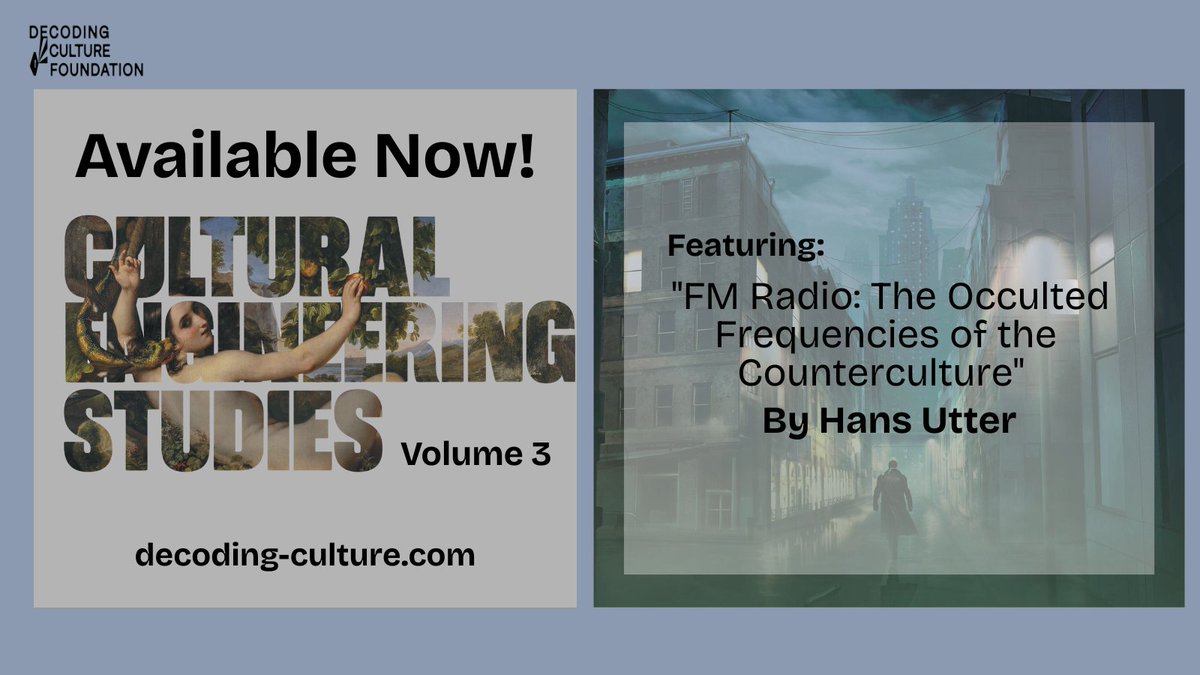
"Cultural Engineering Studies 3: Neo Gnosticism" contributor spotlight: Hans Utter:
In his first contribution to CES, "FM Radio: The Occulted Frequencies of the Counterculture", Hans Utter, an expert in ethnomusicology, analyzes a critical but overlooked factor in the cultural revolution of the 1960s. The political, aesthetic, spiritual, and pharmacological elements of the emerging counterculture needed a binding new medium, a role played by FM radio. Describing the novel techniques pioneered by DJs like Bob Fass and Lorenzo Milam and comparing them to Tavistock Institute frameworks for collective manipulation, Utter's essay reveals how FM overlapped with military and intelligence psyops to become a vital instrument of largescale cultural engineering.
Excerpted from the article:
"When the cultural history of the 1960s is recounted, certain images dominate: bearded protesters marching against the Vietnam War, psychedelic light shows spilling over concert halls, the tribal and primeval rituals of Woodstock, or the iconic silhouette of a young woman placing a flower in a soldier’s rifle barrel. The standard narrative foregrounds LSD, rock music, civil rights struggles, and political assassinations as the crucibles of transformation. Yet running parallel to these visible currents was a subtler, less tangible medium—radio, particularly the experimental landscape of FM broadcasting—that played a critical role in shaping the consciousness of the decade.
Radio is curiously absent in most mainstream accounts. Scholars of various stripes have meticulously documented the role of psychedelic drugs in altering perceptions, the Tavistock Institute and other research bodies in experimenting with mass psychology, and the Laurel Canyon music scene as an incubator of countercultural sound. But radio, despite its capacity to reach millions in real time, is often treated as a mere transmitter of music rather than as an active site of transformation. This omission is striking, for radio possesses unique psycho-acoustic properties: it infiltrates domestic and private spaces, often through solitary listening; it works with voice, sound, and silence in hypnotic rhythms; and it has the ability to induce altered states of attention through repetition, sensory inhibition, and immersive soundscapes."
Stone continues to explore the ghosts of the 1960s with his anti-war drama Born on the Fourth of July (1989). We keep analyzing Stone's treatments of religion, sexuality, war, and masculinity, and talk his interaction with the counterculture psyop . https://t.co/NjMlbF6xdb
It's here!
In case you missed it, Cultural Engineering Studies Volume 3 is available now, exclusively on the DCF website.
To celebrate the release of Volume 3, during the rest of April and the month of May, you can acquire Volumes 1 and 2 at a discounted price.
However, we’re also offering a Collector's Bundle with Volumes 1, 2, and 3. This is our biggest deal ever, and it won't stick around forever.
Get the bundle here: https://t.co/fv6Dx1FoSa.
Out now: Volume 3 of Cultural Engineering Studies
This new volume takes up the theme of Neo-Gnosticism and examines its role in shaping the deeper logic of modern film, media, politics, and cultural engineering. Inside, you can find articles that trace the myths of false liberation, spiritual inversion, and manufactured rebellion that have helped form the modern imagination.
Featuring writings by:
Jamie Hanshaw (@JamieLHanshaw)
Jasun Horsley, (@JaKephas)
Brett Carollo (@DecoderShell)
Joshua Stylman (@jstylman)
Paul and Phillip Collins (@PhillipDCollin1)
Hans Utter, and
Thomas Millary (@CinemaPsyop)
Plus a interactive zine by Mrs Horsley (@Mrs___Horsley)
If you want serious research, strong writing, and a print publication built to last, this is our strongest volume yet.
Order now: https://t.co/KjrbXoC19j
🧵 (1/4) Coming Soon, "Cultural Engineering Studies, Volume 3: Neo-Gnosticism." 👁️🎥🍎
The third volume of CES traces the gnostic turn in modern culture and the way false liberation, spiritual inversion, and manufactured rebellion have shaped film, politics, and media.
Below we continue to reveal the groundbreaking contributions featured in this upcoming release.
Firstly, from DCF President Thomas Millary (@CinemaPsyop):
"The Lego Barbie Matrix: Hollywood Meta-Reflections on Feminism, Gnosticism, and Pop Culture"
DCF President Thomas Millary’s contribution to this issue examines the radical gnosticization of Hollywood cinema that took place during the 2010s, in the wake of the Matrix trilogy and a series of other landmark gnostic films released around the turn of the millennium. The male gnostic savior of the earlier phase is now commonly deconstructed to make way for the dark religion of the feminine, which is defined by the very same shapeshifting malleability characteristic of the simulated matrix world.
Through close readings of four films—The Lego Movie (2014) and its sequel (2019), Barbie (2023), and the ill-fated fourth installment in the Matrix series, The Matrix Resurrections (2021)—Millary demonstrates how the metaphysical destabilization and disorientation inherent in gnostic storytelling have become tools for reconciling corporate consumerism with woke gender politics and other staples of 21st-century cultural engineering. “Red pill” techniques once used to promise liberation from a predatory false reality are now leveraged to glorify that same false reality's demiurgic powers of manipulation. The pop culture matrix terminates in this ultimate act of gnostic inversion.