When I speak in a French or German speaking country, I open in French or German. Then, a few lines in, I tell the audience I would prefer to continue in English. It works like magic.
It is my way of speaking to the heart of the people. They expected a man who would address them in English. Instead, they meet one who took the time to learn their language. The words that follow are meant for their minds. Those first few sentences are meant for their hearts.
Anyone who tells you language does not matter, in politics or in any human interaction, is doing one of three things. They are trying to fool you. They are trying to gaslight you. Or they simply do not know what they are saying.
Language sits at the root of human nature. We process it with the oldest parts of our brain. That is why, in a foreign land, the sound of your mother tongue arrests your attention before you have decided to listen. It is not your fault. It is being human.
Will speaking a people's language guarantee good policies? No. I assure you it will not. Policy is a different matter entirely. And it must be engaged for what it is.
But language matters. Simple as that.
Everyone knows this. Everyone. Even the Obidients of this world. So, imagine a normal human being pretending not to.
𝗘̀𝗞𝗢́ — A 𝗖𝗼𝗿𝗿𝗲𝗰𝘁𝗶𝗼𝗻 Series⚠️ 𝗣𝗮𝗿𝘁-𝟭 of 𝟮‼️
The place name 𝗘̀𝗸𝗼́ is found all over Yorùbáland:
For example, on Monday morning 𝗔𝗽𝗿𝗶𝗹 𝟮𝟲𝘁𝗵 𝟭𝟴𝟯𝟬, R. & J. Lander stopped briefly near an 𝗘̀𝗸𝗼́ town in the countryside of Ọ̀yọ́-Ilé (Ọyọ empire’s capital).
From their description, this 𝗘̀𝗸𝗼́ (“Eco”) town was not too far from Ṣakí (“Chekki”); not too far from Kòso (“Coosoo”), Ìgbòho (“Bohoo”), & Ọ̀yọ́ itself.
For the actual report, see 𝗙𝗿𝗮𝗺𝗲-𝟭 from Richard & John Lander, “Journal of an Expedition”, 1 (1832).
Others are found in present day Osun, Oyo, Delta & Lagos states— each of which is a Yorùbá town.
——
This post intends to add a clarifying context to an older post (dated: Nov. 8th 2023) on this subject.
See ‘Highlights’ on my ‘Profile’ for the older post.
Despite this intended context, the following facts remains historically accurate as in the older post:
𝟭) Lagos traditions say that the Àwórì occupy Ìdó island, & Ọ̀tọ̀ (on that island) was the key town & seat of government in the area (under the Ọlộfin); while 𝗘̀𝗸𝗼́ (next to Ìdó island) is the Yorùbá name for their 𝗳𝗮𝗿𝗺. [Historians now set this in c.1000].
Refer to 𝗙𝗿𝗮𝗺𝗲-𝟮 for a documention of the Lagos tradition on this as published in year 𝟭𝟴𝟴𝟴 in the “Précis of Information Concerning the Colony of Lagos”: Intelligence Branch of British War Office.
.
.
𝟮) To be very emphatic, this island beside Ìdó had received its name ‘𝗘̀𝗸𝗼́’ (literally: ‘𝗽𝗹𝗮𝗻𝘁𝗮𝘁𝗶𝗼𝗻’ as is to be demonstrated in 𝗣𝗮𝗿𝘁-𝟮) before any human or group of people began to live on this farmland.
See 𝗙𝗿𝗮𝗺𝗲-𝟯 for this Lagos tradition as is seen in Alan C. Burns (GCMG) “History of Nigeria”, 1929.
.
.
𝟯) Moreover, the 𝗘̀𝗸𝗼́ island was first inhabited by one of the Ọlộfin’s sons named Onîta (also called ‘Arómirẹ́’). He’s reputed in the Lagos traditions to have initiated this by setting up a 𝗳𝗮𝗿𝗺 𝗰𝗮𝗺𝗽 (aka. 𝗳𝗮𝗿𝗺𝘀𝘁𝗲𝗮𝗱) for himself on this original plantation.
See 𝗙𝗿𝗮𝗺𝗲-𝟰 for this Lagos tradition as is seen in Loṣi, “History of Lagos”, (Tika-Tore, Lagos 1914).
In other words, the part of Lagos island known till date as 𝗘𝗿𝗲́𝗸𝗼 (literally: ‘𝗳𝗮𝗿𝗺𝘀𝘁𝗲𝗮𝗱’) can be traced back to that act by Onîta-Ògbógbódí (‘Arómirẹ́’).
.
.
𝟰) In the 1500s, 𝗘̀𝗸𝗼́-island slowly took the shape of a trade magnet of sizeable importance (thanks to European coastal trading activities) drawing in non-Àwórì immigrant trade groups, such as some Ìjẹ̀bú, Ìlàjẹ, Ìkálẹ̀, Itsẹkiri, and Bini trading groups.
Each trade group sought permission to land from the Àwórì, & a piece of the Àwórì 𝗽𝗹𝗮𝗻𝘁𝗮𝘁𝗶𝗼𝗻 (𝗘̀𝗸𝗼́) was respectively allotted to each group for 𝗰𝗮𝗺𝗽.
Refer to: Alan Burns (GCMG) “History of Nigeria”, 1929, page 43. See also: “A History of the Yoruba People” (Amalion 2010), p. 222 by S. A. Akintoye.
——
Given the events and timelines highlighted from 𝟭 to 𝟰 above, it is now very clear that the etymology of the name ‘𝗘̀𝗸𝗼́’ could not possibly have derived from the name of Onîta’s (aka. Arómirẹ́’s) ‘𝗲𝗿𝗲́𝗸𝗼’.
Again, the reason is simple: the name 𝗘̀𝗸𝗼́ applied first to the island, while the name 𝗘𝗿𝗲́𝗸𝗼 appeared later-on on the island starting with Arómirẹ́’s act.
Also going by the events and timelines, the Benin & other immigrant trade groups encountered this name 𝗘̀𝗸𝗼́ (fully: 𝗘̀𝗸𝗼́'𝗼𝗿𝗶́-𝗼𝗺𝗶, lit. “Èkó on waters”: Alli, in Asaju, “Lagos and Its Environs”, 2006:51) on this island as an existing centuries-old name.
As such, versions of the name began to appear in the lexicons and accounts of the out-groups. The European reports show it as: Ichoo, Curamo, etc.
The Ìjẹ̀bú accounts have it as Èkó & Èkõrómi. The Ijaw oral traditions report it as Iko and Ụkụrọama.
The Bini group wasn’t an exception: its lexicon & accounts received it as Eko (short), Korame (full).
——
Continue Below‼️
The part I love most is when His Imperial Majesty, Oba Adeyeye Enitan Ogunwusi Ojaja II, mentioned that the Bini Kingdom learned the art of making artefacts in Ile-Ife. 👑 This is not some new story; it is part of the documented historical record.😂😂😂😂🤷♂️🤷♂️🤷♂️
𝗔𝗚𝗕𝗔́𝗗𝗔́: 𝗧𝗵𝗲 𝗘𝘁𝘆𝗺𝗼𝗹𝗼𝗴𝘆 𝗼𝗿 𝗟𝗶𝘁𝗲𝗿𝗮𝗹 𝗜𝗻𝘁𝗲𝗿𝗽𝗿𝗲𝘁𝗮𝘁𝗶𝗼𝗻
The verbs in the term "agbádá" are "GBÁ" & "DÁ".
The verb "𝗴𝗯𝗮́" has diverse significances such as: to "sweep", 𝘁𝗼 "𝗳𝗹𝘂𝘁𝘁𝗲𝗿" [in this context] and so on
The same verb is present in the name of a similar robe, viz, "𝗴𝗯𝗮́rìyẹ̀" — literally "𝗳𝗹𝘂𝘁𝘁𝗲𝗿-swishingly".
See 𝗙𝗿𝗮𝗺𝗲-𝟭 for: "Dictionary of Modern Yoruba".
.
.
.
Likewise, the verb "𝗱𝗮́" has multiple significances including to "𝗰𝗼𝘂𝘁𝘂𝗿𝗲" (i.e. to "𝗱𝗲𝘀𝗶𝗴𝗻") an attire — as in "ẹgbẹ́jọ𝗱𝗮́" (group attire), and in the proverb "à gbà tán ni à ń gb'ọ̀lẹ, tí a bá 𝗱𝗮́-aṣọ fún ọ̀lẹ ń ṣe ni à ń paá l'áró". See 𝗙𝗿𝗮𝗺𝗲-𝟮 for the "Dictionary".
The nominalization of this verb 𝗱𝗮́ with the vowel "i" (for example) yields the noun: "i-𝗱𝗮́", meaning, "that which is 𝗰𝗼𝘂𝘁𝘂𝗿𝗲𝗱", i.e. "an apparel", & so on
.
.
.
In sum, "a𝗴𝗯𝗮́𝗱𝗮́" derives from "a𝗴𝗯𝗮́+i𝗱𝗮́", that is, "the apparel which flutters", "the sweeping garb", "the flowing garment", i.e. "𝘁𝗵𝗲 𝗳𝗹𝘂𝘁𝘁𝗲𝗿���𝗻𝗴 𝗮𝗽𝗽𝗮𝗿𝗲𝗹".
Cheers!!!
Nigeria’s move towards a credit-based economy is strategically important. NCGC has issued ₦21.59bn in guarantees, enabling ₦46.95bn in loans to 67,512 borrowers. The leverage is significant: every ₦1 in guarantees has unlocked about ₦2.17 in credit. More importantly, 33.5% of beneficiaries are first-time formal borrowers.
This is how financial inclusion can become economic infrastructure. But the real measure of success will be what these loans produce: businesses that expand, workers who gain employment, borrowers who build credible credit histories and enterprises that become bankable without government guarantees. Credit guarantees should open the door to finance; productivity and repayment must keep that door open.
🇳🇬 REGION WITH THE LOWEST CHILDREN IN CHILD LABOUR — 2022
(Region — % of children in child labour):
South East — 49.9%
North East — 49.4%
North Central — 43.1%
South South — 43.1%
North West — 34.6%
South West — 27.5%
Child labour prevalence was highest in the South-East at 49.9%, while the South-West recorded the lowest at 27.5%, a 22.4 percentage-point gap across Nigeria’s six geopolitical zones.
#Statisense
(NBS, ILO)
You guys at @ARISEtv need to seriously examine what you are calling journalism.
How on earth do you conduct an interview with @PeterObi , hear his side of a matter involving serious allegations and then proceed as though you have the authority to pronounce those allegations false without properly hearing from the people who made them?
Is this journalism or a public-relations exercise?
A journalist is not a judge, and a television station is certainly not a court of law. Your job is not to interview the accused, accept his explanation as the final word, and then manufacture a report that appears designed to exonerate him. Your job is to investigate.
If the Anambra State Government made allegations against Peter Obi, then the obvious journalistic responsibility is to put those allegations directly to the government, demand the evidence, put Peter Obi’s response alongside it, independently verify the competing claims and report what the evidence establishes.
It is intellectually dishonest to present one party's defence as though it automatically settles the matter.
There is an old saying: “He who judges after hearing only one side is a master of evil.” That warning applies even more strongly to journalism, because millions of Nigerians rely on the media to separate facts from political narratives.
And let us be very clear: if ARISE TV wants Nigerians to believe that your coverage has absolutely nothing to do with Peter Obi’s political ambitions, then stop behaving in a manner that creates the opposite impression.
You cannot selectively interrogate one side, ignore or inadequately challenge the other side, and then release a report that effectively tells Nigerians, “case closed.”
Who gave you the evidence to reach that conclusion?
Did you independently verify the records involved?
Did you interview the officials making the allegations?
Did you obtain the documents supporting their claims?
Did you confront Peter Obi with every material piece of evidence?
Did you give the other side the same opportunity to respond?
If the answer to these questions is no, then what exactly was the basis for the confidence with which your report appeared to dismiss the allegations?
This is not about whether Peter Obi is guilty or innocent. That is precisely the point. A journalist should not decide that question based on an interview with only the person accused.
Let the evidence speak.
Let both sides speak.
Let independent verification speak.
Then let Nigerians decide.
What you have done, however, risks turning journalism into advocacy—where the media outlet appears more interested in protecting a preferred narrative than interrogating every side of a contentious political matter.
ARISE TV should know better.
You have a responsibility to your viewers, not to Peter Obi, not to the Anambra State Government and not to anybody’s political ambition.
Do the investigation. Hear everybody. Verify everything. Publish the evidence.
Until then, stop dressing a one-sided narrative up as an authoritative verdict.
Nigerians are not that gullible.
And frankly, this standard of journalism is not worthy of the reputation ARISE TV claims for itself.
My daughter’s naming ceremony was two Sundays ago, and we gave her six names, all Yoruba names.
Someone asked me why I didn’t give her an English or Christian name.
I told him there is really nothing like a "Christian name." What people commonly call Christian names are mostly names of Hebrew, Greek, Latin and other origins that became widely used among Christians.
So yes, my daughter has six names, and they are all proudly Yoruba. 🇳🇬
A day will come when we will talk about the unseen heros who worked hard behind the scene to reset this economy. These were people who didn't care about politics or what was in it for them. Their focus was Nigeria. They are in the purest form - Patriots.
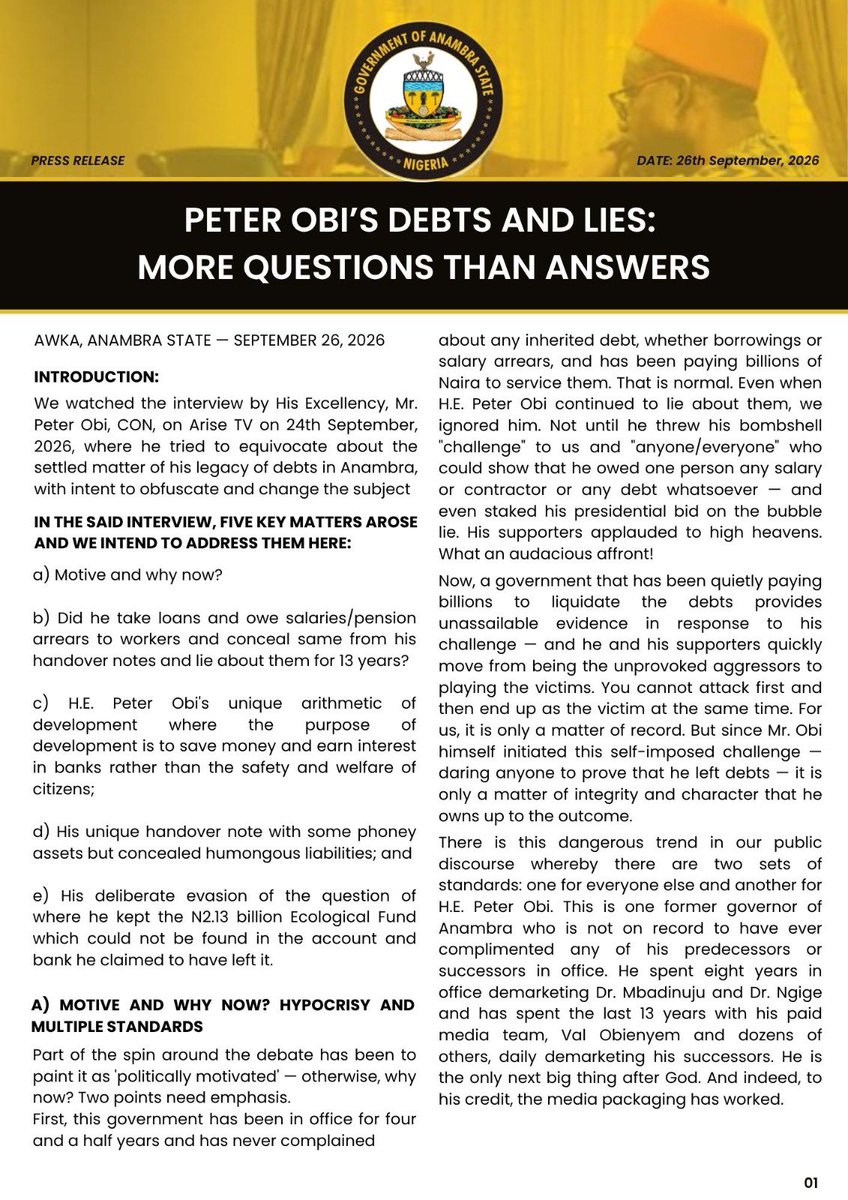
PRESS RELEASE
26th September, 2026
PETER OBI’S DEBTS AND LIES: MORE QUESTIONS THAN ANSWERS
Introduction:
We watched the interview by HE Peter Obi, CON, on Arise TV on 24th September, 2026, where he tried to equivocate about the settled matter of his legacy of debts in Anambra
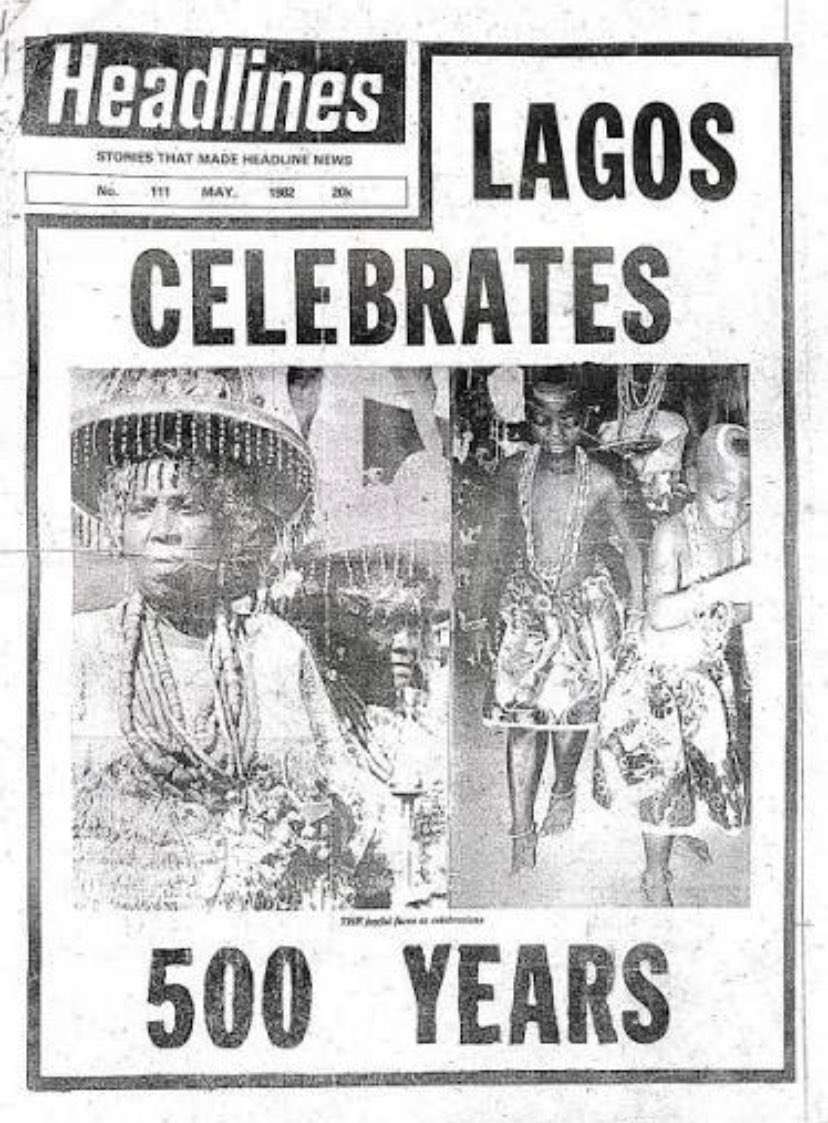
May 1982, When Governor Lateef Jakande Led Lagos In Celebrating 500 Years, Remembering Olofin Ogunfunmire And The Awori Idejo Founders Of Eko.
If you follow the date on this newspaper cover posted, 1982 minus 500 years gives you 1482 as the year the Government used to mark the founding.
In real history the settlement is even older. Lagos, originally called Eko, was founded by Olofin Ogunfunmire, the progenitor of the Awori people.
He left Ile Ife around 1425 and first settled at Isheri on the Ogun River, then later moved with his wife Ajaiye to Iddo in the centre of present day Lagos.
It was at Iddo that his children were born. Those children are the Idejo, who are recognised till today as the traditional landowners of Lagos. He divided the land among them. That is why Iru went to the Oniru family, Ikate to the Elegushi, Lagos Island to Aromire, Iganmu to Ojora, Otto and mainland to the Oloto and others.
Isheri was the dispersal point from where many other Awori towns like Igbesa, Agboyi and Ota were established.
The Portuguese only gave it the name Lagos around 1472 when they came for trade, they did not found it.
So by tradition, by written history and by court records, the real owners and aboriginal settlers of Lagos are the Awori and their Idejo descendants, the white cap chiefs.
At the time of the 500 years celebration in May 1982, the Governor of Lagos State was Alhaji Lateef Kayode Jakande of the Unity Party of Nigeria.
He was the one who hosted the festival, the cultural displays and the reception for traditional rulers and guests as seen on your newspaper cover.
Ogun state’s seaport is still at MOU level, still a long way to go, Cross river state already secured their $3.5bn funding and construction of actual port infrastructure is scheduled to start imminently and critical access road infrastructure has already begun, I think we focus too much on negativity once it’s a Yoruba state and it’s just disgusting
WORLD BANK LOAN:
1: @PeterObi is being clever by half on the World Bank loan issue.
2: Nobody said he personally went to the World Bank to borrow for Anambra.
3: The Federal Government is the borrower.
4: Participating states then access the FUNDS through the agreed subsidiary arrangements.
-(a): FG will not just wake up to disburse FUNDS.
-(b): Anambra govt must forward an approval of the State Executive Council where Peter Obi chaired.
-(c): Was he drinking hero beer when SEC met?
-(d): before disbursement, Anambra signed LOAN AGREEMENT oooo.
-(e): But he was aware of DISBURSEMENT.
-(f): Abi una no see your own CREDIT ALERTS from ya phones.
5: So hiding behind “I didn’t borrow from the World Bank” misses the point.
6: Anambra govt must PAY THAT LOAN back simple
One of the harshest fact of our existence is that you don't have to be brilliant to be rich. Peter Obi exemplifies this.
@PeterObi is actually a very much intellectually challenged person who somehow got lucky and got rich. I congratulate him.
However, we need his followers to stop thinking he can ever play any role in leading Nigeria. This is beyond his ken.
Your state has direct or indirect access to the sea. Your state receives 3x, 4x what Ogun State receives from FAAC. Your state could do so much but they chose to be redundant.
Ogun State knew we were not going to get help from Abuja, so we took matters into our own hands.
Governor Dapo Abiodun reformed the system, went after investors, created enabling environment, began rebuilding the overwhelmingly dilapidated infrastructure, sought FG help on Federal Roads and laid the foundation for both short and long term economic growth.
Now that the dividend of those extraordinary efforts is beginning to show, what did you do? You began to subtly ascribe Ogun State’s success and promising future to the Federal Government led by President Tinubu.
Are you not ashamed that a state receiving one of the lowest, sometimes the lowest, FAAC allocations is doing this much?
Some states have more money, direct access to the sea, far greater resources including access to 13% derivation. Yet you hold them to little or no standards at all. You channel all your spite towards Ogun State while ignoring your own backyard.
Well, Ogun had to build its way out and this building was done through sheer resilience of Ogun State people and our leaders. The effort is now yielding visible results that even the blind cannot ignore that this has always been a long term game to achieve economic prosperity above all. Thank you for putting us on our toes.
To whom: Continue to ignore your Governors and the very bad situation in your state outside of your capitals while you focus your frustration on Ogun State. You have the power to make changes, you have only chosen to use it for sinister reasons in another state’s business.
Adiyẹ to su ti ko tọ̀? Ara ẹ lo wa.
Good morning.
Our government cannot be trusted but some conversation can be entrusted using basic public finance.
If government says fuel subsidy would cost Nigeria ₦21 trillion a year, please understand what that actually means.
It does NOT mean ₦21 trillion is sitting in one government account somewhere.
Subsidy is a flow, not a bag of money.
If petrol costs ₦1,000 to supply but government wants Nigerians to buy it for ₦600, somebody has to absorb the ₦400 difference.
Where does government get that money?
From the same public resources it could have used elsewhere: oil revenue, Federation Account resources, taxes and other government revenue and, where necessary, borrowing. Infact we borrow almost 30-40% to service our budget for the past 10 years.
In Nigeria’s old system, the subsidy burden was largely absorbed through NNPC/petroleum revenues before the balance went into the Federation Account.
So when someone says, “If subsidy is ₦21tn, where is the ₦21tn?” that is the wrong question ilk of ignorance.
The real question is what public revenue would government sacrifice, and what would it have to borrow or stop funding, to maintain a ₦21tn-a-year subsidy?
Even the government’s recent explanation of the ₦15.8tn subsidy savings makes this distinction: it says the money was resources freed up, not ₦15.8tn sitting untouched in a special account.
Please, let’s discuss public finance with basic understanding before shouting “Where is the money?”. If you dont understand, do ask people or AI.
PART 2: EVIDENCE PETER OBI LIED
This is the first tranche of payment to Anambra State workers—entitlements left unpaid by Peter Obi in his eight years as governor, now being paid by Gov. Soludo’s administration.


![theOlaBola's tweet photo. 𝗘̀𝗞𝗢́ — A 𝗖𝗼𝗿𝗿𝗲𝗰𝘁𝗶𝗼𝗻 Series⚠️ 𝗣𝗮𝗿𝘁-𝟭 of 𝟮‼️
The place name 𝗘̀𝗸𝗼́ is found all over Yorùbáland:
For example, on Monday morning 𝗔𝗽𝗿𝗶𝗹 𝟮𝟲𝘁𝗵 𝟭𝟴𝟯𝟬, R. & J. Lander stopped briefly near an 𝗘̀𝗸𝗼́ town in the countryside of Ọ̀yọ́-Ilé (Ọyọ empire’s capital).
From their description, this 𝗘̀𝗸𝗼́ (“Eco”) town was not too far from Ṣakí (“Chekki”); not too far from Kòso (“Coosoo”), Ìgbòho (“Bohoo”), & Ọ̀yọ́ itself.
For the actual report, see 𝗙𝗿𝗮𝗺𝗲-𝟭 from Richard & John Lander, “Journal of an Expedition”, 1 (1832).
Others are found in present day Osun, Oyo, Delta & Lagos states— each of which is a Yorùbá town.
——
This post intends to add a clarifying context to an older post (dated: Nov. 8th 2023) on this subject.
See ‘Highlights’ on my ‘Profile’ for the older post.
Despite this intended context, the following facts remains historically accurate as in the older post:
𝟭) Lagos traditions say that the Àwórì occupy Ìdó island, & Ọ̀tọ̀ (on that island) was the key town & seat of government in the area (under the Ọlộfin); while 𝗘̀𝗸𝗼́ (next to Ìdó island) is the Yorùbá name for their 𝗳𝗮𝗿𝗺. [Historians now set this in c.1000].
Refer to 𝗙𝗿𝗮𝗺𝗲-𝟮 for a documention of the Lagos tradition on this as published in year 𝟭𝟴𝟴𝟴 in the “Précis of Information Concerning the Colony of Lagos”: Intelligence Branch of British War Office.
.
.
𝟮) To be very emphatic, this island beside Ìdó had received its name ‘𝗘̀𝗸𝗼́’ (literally: ‘𝗽𝗹𝗮𝗻𝘁𝗮𝘁𝗶𝗼𝗻’ as is to be demonstrated in 𝗣𝗮𝗿𝘁-𝟮) before any human or group of people began to live on this farmland.
See 𝗙𝗿𝗮𝗺𝗲-𝟯 for this Lagos tradition as is seen in Alan C. Burns (GCMG) “History of Nigeria”, 1929.
.
.
𝟯) Moreover, the 𝗘̀𝗸𝗼́ island was first inhabited by one of the Ọlộfin’s sons named Onîta (also called ‘Arómirẹ́’). He’s reputed in the Lagos traditions to have initiated this by setting up a 𝗳𝗮𝗿𝗺 𝗰𝗮𝗺𝗽 (aka. 𝗳𝗮𝗿𝗺𝘀𝘁𝗲𝗮𝗱) for himself on this original plantation.
See 𝗙𝗿𝗮𝗺𝗲-𝟰 for this Lagos tradition as is seen in Loṣi, “History of Lagos”, (Tika-Tore, Lagos 1914).
In other words, the part of Lagos island known till date as 𝗘𝗿𝗲́𝗸𝗼 (literally: ‘𝗳𝗮𝗿𝗺𝘀𝘁𝗲𝗮𝗱’) can be traced back to that act by Onîta-Ògbógbódí (‘Arómirẹ́’).
.
.
𝟰) In the 1500s, 𝗘̀𝗸𝗼́-island slowly took the shape of a trade magnet of sizeable importance (thanks to European coastal trading activities) drawing in non-Àwórì immigrant trade groups, such as some Ìjẹ̀bú, Ìlàjẹ, Ìkálẹ̀, Itsẹkiri, and Bini trading groups.
Each trade group sought permission to land from the Àwórì, & a piece of the Àwórì 𝗽𝗹𝗮𝗻𝘁𝗮𝘁𝗶𝗼𝗻 (𝗘̀𝗸𝗼́) was respectively allotted to each group for 𝗰𝗮𝗺𝗽.
Refer to: Alan Burns (GCMG) “History of Nigeria”, 1929, page 43. See also: “A History of the Yoruba People” (Amalion 2010), p. 222 by S. A. Akintoye.
——
Given the events and timelines highlighted from 𝟭 to 𝟰 above, it is now very clear that the etymology of the name ‘𝗘̀𝗸𝗼́’ could not possibly have derived from the name of Onîta’s (aka. Arómirẹ́’s) ‘𝗲𝗿𝗲́𝗸𝗼’.
Again, the reason is simple: the name 𝗘̀𝗸𝗼́ applied first to the island, while the name 𝗘𝗿𝗲́𝗸𝗼 appeared later-on on the island starting with Arómirẹ́’s act.
Also going by the events and timelines, the Benin & other immigrant trade groups encountered this name 𝗘̀𝗸𝗼́ (fully: 𝗘̀𝗸𝗼́'𝗼𝗿𝗶́-𝗼𝗺𝗶, lit. “Èkó on waters”: Alli, in Asaju, “Lagos and Its Environs”, 2006:51) on this island as an existing centuries-old name.
As such, versions of the name began to appear in the lexicons and accounts of the out-groups. The European reports show it as: Ichoo, Curamo, etc.
The Ìjẹ̀bú accounts have it as Èkó & Èkõrómi. The Ijaw oral traditions report it as Iko and Ụkụrọama.
The Bini group wasn’t an exception: its lexicon & accounts received it as Eko (short), Korame (full).
——
Continue Below‼️](https://pbs.twimg.com/media/GVpKgevXUAA-C93.jpg)
![theOlaBola's tweet photo. 𝗘̀𝗞𝗢́ — A 𝗖𝗼𝗿𝗿𝗲𝗰𝘁𝗶𝗼𝗻 Series⚠️ 𝗣𝗮𝗿𝘁-𝟭 of 𝟮‼️
The place name 𝗘̀𝗸𝗼́ is found all over Yorùbáland:
For example, on Monday morning 𝗔𝗽𝗿𝗶𝗹 𝟮𝟲𝘁𝗵 𝟭𝟴𝟯𝟬, R. & J. Lander stopped briefly near an 𝗘̀𝗸𝗼́ town in the countryside of Ọ̀yọ́-Ilé (Ọyọ empire’s capital).
From their description, this 𝗘̀𝗸𝗼́ (“Eco”) town was not too far from Ṣakí (“Chekki”); not too far from Kòso (“Coosoo”), Ìgbòho (“Bohoo”), & Ọ̀yọ́ itself.
For the actual report, see 𝗙𝗿𝗮𝗺𝗲-𝟭 from Richard & John Lander, “Journal of an Expedition”, 1 (1832).
Others are found in present day Osun, Oyo, Delta & Lagos states— each of which is a Yorùbá town.
——
This post intends to add a clarifying context to an older post (dated: Nov. 8th 2023) on this subject.
See ‘Highlights’ on my ‘Profile’ for the older post.
Despite this intended context, the following facts remains historically accurate as in the older post:
𝟭) Lagos traditions say that the Àwórì occupy Ìdó island, & Ọ̀tọ̀ (on that island) was the key town & seat of government in the area (under the Ọlộfin); while 𝗘̀𝗸𝗼́ (next to Ìdó island) is the Yorùbá name for their 𝗳𝗮𝗿𝗺. [Historians now set this in c.1000].
Refer to 𝗙𝗿𝗮𝗺𝗲-𝟮 for a documention of the Lagos tradition on this as published in year 𝟭𝟴𝟴𝟴 in the “Précis of Information Concerning the Colony of Lagos”: Intelligence Branch of British War Office.
.
.
𝟮) To be very emphatic, this island beside Ìdó had received its name ‘𝗘̀𝗸𝗼́’ (literally: ‘𝗽𝗹𝗮𝗻𝘁𝗮𝘁𝗶𝗼𝗻’ as is to be demonstrated in 𝗣𝗮𝗿𝘁-𝟮) before any human or group of people began to live on this farmland.
See 𝗙𝗿𝗮𝗺𝗲-𝟯 for this Lagos tradition as is seen in Alan C. Burns (GCMG) “History of Nigeria”, 1929.
.
.
𝟯) Moreover, the 𝗘̀𝗸𝗼́ island was first inhabited by one of the Ọlộfin’s sons named Onîta (also called ‘Arómirẹ́’). He’s reputed in the Lagos traditions to have initiated this by setting up a 𝗳𝗮𝗿𝗺 𝗰𝗮𝗺𝗽 (aka. 𝗳𝗮𝗿𝗺𝘀𝘁𝗲𝗮𝗱) for himself on this original plantation.
See 𝗙𝗿𝗮𝗺𝗲-𝟰 for this Lagos tradition as is seen in Loṣi, “History of Lagos”, (Tika-Tore, Lagos 1914).
In other words, the part of Lagos island known till date as 𝗘𝗿𝗲́𝗸𝗼 (literally: ‘𝗳𝗮𝗿𝗺𝘀𝘁𝗲𝗮𝗱’) can be traced back to that act by Onîta-Ògbógbódí (‘Arómirẹ́’).
.
.
𝟰) In the 1500s, 𝗘̀𝗸𝗼́-island slowly took the shape of a trade magnet of sizeable importance (thanks to European coastal trading activities) drawing in non-Àwórì immigrant trade groups, such as some Ìjẹ̀bú, Ìlàjẹ, Ìkálẹ̀, Itsẹkiri, and Bini trading groups.
Each trade group sought permission to land from the Àwórì, & a piece of the Àwórì 𝗽𝗹𝗮𝗻𝘁𝗮𝘁𝗶𝗼𝗻 (𝗘̀𝗸𝗼́) was respectively allotted to each group for 𝗰𝗮𝗺𝗽.
Refer to: Alan Burns (GCMG) “History of Nigeria”, 1929, page 43. See also: “A History of the Yoruba People” (Amalion 2010), p. 222 by S. A. Akintoye.
——
Given the events and timelines highlighted from 𝟭 to 𝟰 above, it is now very clear that the etymology of the name ‘𝗘̀𝗸𝗼́’ could not possibly have derived from the name of Onîta’s (aka. Arómirẹ́’s) ‘𝗲𝗿𝗲́𝗸𝗼’.
Again, the reason is simple: the name 𝗘̀𝗸𝗼́ applied first to the island, while the name 𝗘𝗿𝗲́𝗸𝗼 appeared later-on on the island starting with Arómirẹ́’s act.
Also going by the events and timelines, the Benin & other immigrant trade groups encountered this name 𝗘̀𝗸𝗼́ (fully: 𝗘̀𝗸𝗼́'𝗼𝗿𝗶́-𝗼𝗺𝗶, lit. “Èkó on waters”: Alli, in Asaju, “Lagos and Its Environs”, 2006:51) on this island as an existing centuries-old name.
As such, versions of the name began to appear in the lexicons and accounts of the out-groups. The European reports show it as: Ichoo, Curamo, etc.
The Ìjẹ̀bú accounts have it as Èkó & Èkõrómi. The Ijaw oral traditions report it as Iko and Ụkụrọama.
The Bini group wasn’t an exception: its lexicon & accounts received it as Eko (short), Korame (full).
——
Continue Below‼️](https://pbs.twimg.com/media/GVpKgeuW0AAu2Z3.jpg)
![theOlaBola's tweet photo. 𝗘̀𝗞𝗢́ — A 𝗖𝗼𝗿𝗿𝗲𝗰𝘁𝗶𝗼𝗻 Series⚠️ 𝗣𝗮𝗿𝘁-𝟭 of 𝟮‼️
The place name 𝗘̀𝗸𝗼́ is found all over Yorùbáland:
For example, on Monday morning 𝗔𝗽𝗿𝗶𝗹 𝟮𝟲𝘁𝗵 𝟭𝟴𝟯𝟬, R. & J. Lander stopped briefly near an 𝗘̀𝗸𝗼́ town in the countryside of Ọ̀yọ́-Ilé (Ọyọ empire’s capital).
From their description, this 𝗘̀𝗸𝗼́ (“Eco”) town was not too far from Ṣakí (“Chekki”); not too far from Kòso (“Coosoo”), Ìgbòho (“Bohoo”), & Ọ̀yọ́ itself.
For the actual report, see 𝗙𝗿𝗮𝗺𝗲-𝟭 from Richard & John Lander, “Journal of an Expedition”, 1 (1832).
Others are found in present day Osun, Oyo, Delta & Lagos states— each of which is a Yorùbá town.
——
This post intends to add a clarifying context to an older post (dated: Nov. 8th 2023) on this subject.
See ‘Highlights’ on my ‘Profile’ for the older post.
Despite this intended context, the following facts remains historically accurate as in the older post:
𝟭) Lagos traditions say that the Àwórì occupy Ìdó island, & Ọ̀tọ̀ (on that island) was the key town & seat of government in the area (under the Ọlộfin); while 𝗘̀𝗸𝗼́ (next to Ìdó island) is the Yorùbá name for their 𝗳𝗮𝗿𝗺. [Historians now set this in c.1000].
Refer to 𝗙𝗿𝗮𝗺𝗲-𝟮 for a documention of the Lagos tradition on this as published in year 𝟭𝟴𝟴𝟴 in the “Précis of Information Concerning the Colony of Lagos”: Intelligence Branch of British War Office.
.
.
𝟮) To be very emphatic, this island beside Ìdó had received its name ‘𝗘̀𝗸𝗼́’ (literally: ‘𝗽𝗹𝗮𝗻𝘁𝗮𝘁𝗶𝗼𝗻’ as is to be demonstrated in 𝗣𝗮𝗿𝘁-𝟮) before any human or group of people began to live on this farmland.
See 𝗙𝗿𝗮𝗺𝗲-𝟯 for this Lagos tradition as is seen in Alan C. Burns (GCMG) “History of Nigeria”, 1929.
.
.
𝟯) Moreover, the 𝗘̀𝗸𝗼́ island was first inhabited by one of the Ọlộfin’s sons named Onîta (also called ‘Arómirẹ́’). He’s reputed in the Lagos traditions to have initiated this by setting up a 𝗳𝗮𝗿𝗺 𝗰𝗮𝗺𝗽 (aka. 𝗳𝗮𝗿𝗺𝘀𝘁𝗲𝗮𝗱) for himself on this original plantation.
See 𝗙𝗿𝗮𝗺𝗲-𝟰 for this Lagos tradition as is seen in Loṣi, “History of Lagos”, (Tika-Tore, Lagos 1914).
In other words, the part of Lagos island known till date as 𝗘𝗿𝗲́𝗸𝗼 (literally: ‘𝗳𝗮𝗿𝗺𝘀𝘁𝗲𝗮𝗱’) can be traced back to that act by Onîta-Ògbógbódí (‘Arómirẹ́’).
.
.
𝟰) In the 1500s, 𝗘̀𝗸𝗼́-island slowly took the shape of a trade magnet of sizeable importance (thanks to European coastal trading activities) drawing in non-Àwórì immigrant trade groups, such as some Ìjẹ̀bú, Ìlàjẹ, Ìkálẹ̀, Itsẹkiri, and Bini trading groups.
Each trade group sought permission to land from the Àwórì, & a piece of the Àwórì 𝗽𝗹𝗮𝗻𝘁𝗮𝘁𝗶𝗼𝗻 (𝗘̀𝗸𝗼́) was respectively allotted to each group for 𝗰𝗮𝗺𝗽.
Refer to: Alan Burns (GCMG) “History of Nigeria”, 1929, page 43. See also: “A History of the Yoruba People” (Amalion 2010), p. 222 by S. A. Akintoye.
——
Given the events and timelines highlighted from 𝟭 to 𝟰 above, it is now very clear that the etymology of the name ‘𝗘̀𝗸𝗼́’ could not possibly have derived from the name of Onîta’s (aka. Arómirẹ́’s) ‘𝗲𝗿𝗲́𝗸𝗼’.
Again, the reason is simple: the name 𝗘̀𝗸𝗼́ applied first to the island, while the name 𝗘𝗿𝗲́𝗸𝗼 appeared later-on on the island starting with Arómirẹ́’s act.
Also going by the events and timelines, the Benin & other immigrant trade groups encountered this name 𝗘̀𝗸𝗼́ (fully: 𝗘̀𝗸𝗼́'𝗼𝗿𝗶́-𝗼𝗺𝗶, lit. “Èkó on waters”: Alli, in Asaju, “Lagos and Its Environs”, 2006:51) on this island as an existing centuries-old name.
As such, versions of the name began to appear in the lexicons and accounts of the out-groups. The European reports show it as: Ichoo, Curamo, etc.
The Ìjẹ̀bú accounts have it as Èkó & Èkõrómi. The Ijaw oral traditions report it as Iko and Ụkụrọama.
The Bini group wasn’t an exception: its lexicon & accounts received it as Eko (short), Korame (full).
——
Continue Below‼️](https://pbs.twimg.com/media/GVpKgetWIAAHzoa.jpg)



![theOlaBola's tweet photo. 𝗔𝗚𝗕𝗔́𝗗𝗔́: 𝗧𝗵𝗲 𝗘𝘁𝘆𝗺𝗼𝗹𝗼𝗴𝘆 𝗼𝗿 𝗟𝗶𝘁𝗲𝗿𝗮𝗹 𝗜𝗻𝘁𝗲𝗿𝗽𝗿𝗲𝘁𝗮𝘁𝗶𝗼𝗻
The verbs in the term "agbádá" are "GBÁ" & "DÁ".
The verb "𝗴𝗯𝗮́" has diverse significances such as: to "sweep", 𝘁𝗼 "𝗳𝗹𝘂𝘁𝘁𝗲𝗿" [in this context] and so on
The same verb is present in the name of a similar robe, viz, "𝗴𝗯𝗮́rìyẹ̀" — literally "𝗳𝗹𝘂𝘁𝘁𝗲𝗿-swishingly".
See 𝗙𝗿𝗮𝗺𝗲-𝟭 for: "Dictionary of Modern Yoruba".
.
.
.
Likewise, the verb "𝗱𝗮́" has multiple significances including to "𝗰𝗼𝘂𝘁𝘂𝗿𝗲" (i.e. to "𝗱𝗲𝘀𝗶𝗴𝗻") an attire — as in "ẹgbẹ́jọ𝗱𝗮́" (group attire), and in the proverb "à gbà tán ni à ń gb'ọ̀lẹ, tí a bá 𝗱𝗮́-aṣọ fún ọ̀lẹ ń ṣe ni à ń paá l'áró". See 𝗙𝗿𝗮𝗺𝗲-𝟮 for the "Dictionary".
The nominalization of this verb 𝗱𝗮́ with the vowel "i" (for example) yields the noun: "i-𝗱𝗮́", meaning, "that which is 𝗰𝗼𝘂𝘁𝘂𝗿𝗲𝗱", i.e. "an apparel", & so on
.
.
.
In sum, "a𝗴𝗯𝗮́𝗱𝗮́" derives from "a𝗴𝗯𝗮́+i𝗱𝗮́", that is, "the apparel which flutters", "the sweeping garb", "the flowing garment", i.e. "𝘁𝗵𝗲 𝗳𝗹𝘂𝘁𝘁𝗲𝗿���𝗻𝗴 𝗮𝗽𝗽𝗮𝗿𝗲𝗹".
Cheers!!!](https://pbs.twimg.com/media/HTcv_yMWoAEODJj.jpg)



![theOlaBola's tweet photo. 𝗘̀𝗞𝗢́ — A 𝗖𝗼𝗿𝗿𝗲𝗰𝘁𝗶𝗼𝗻 Series⚠️ 𝗣𝗮𝗿𝘁-𝟭 of 𝟮‼️
The place name 𝗘̀𝗸𝗼́ is found all over Yorùbáland:
For example, on Monday morning 𝗔𝗽𝗿𝗶𝗹 𝟮𝟲𝘁𝗵 𝟭𝟴𝟯𝟬, R. & J. Lander stopped briefly near an 𝗘̀𝗸𝗼́ town in the countryside of Ọ̀yọ́-Ilé (Ọyọ empire’s capital).
From their description, this 𝗘̀𝗸𝗼́ (“Eco”) town was not too far from Ṣakí (“Chekki”); not too far from Kòso (“Coosoo”), Ìgbòho (“Bohoo”), & Ọ̀yọ́ itself.
For the actual report, see 𝗙𝗿𝗮𝗺𝗲-𝟭 from Richard & John Lander, “Journal of an Expedition”, 1 (1832).
Others are found in present day Osun, Oyo, Delta & Lagos states— each of which is a Yorùbá town.
——
This post intends to add a clarifying context to an older post (dated: Nov. 8th 2023) on this subject.
See ‘Highlights’ on my ‘Profile’ for the older post.
Despite this intended context, the following facts remains historically accurate as in the older post:
𝟭) Lagos traditions say that the Àwórì occupy Ìdó island, & Ọ̀tọ̀ (on that island) was the key town & seat of government in the area (under the Ọlộfin); while 𝗘̀𝗸𝗼́ (next to Ìdó island) is the Yorùbá name for their 𝗳𝗮𝗿𝗺. [Historians now set this in c.1000].
Refer to 𝗙𝗿𝗮𝗺𝗲-𝟮 for a documention of the Lagos tradition on this as published in year 𝟭𝟴𝟴𝟴 in the “Précis of Information Concerning the Colony of Lagos”: Intelligence Branch of British War Office.
.
.
𝟮) To be very emphatic, this island beside Ìdó had received its name ‘𝗘̀𝗸𝗼́’ (literally: ‘𝗽𝗹𝗮𝗻𝘁𝗮𝘁𝗶𝗼𝗻’ as is to be demonstrated in 𝗣𝗮𝗿𝘁-𝟮) before any human or group of people began to live on this farmland.
See 𝗙𝗿𝗮𝗺𝗲-𝟯 for this Lagos tradition as is seen in Alan C. Burns (GCMG) “History of Nigeria”, 1929.
.
.
𝟯) Moreover, the 𝗘̀𝗸𝗼́ island was first inhabited by one of the Ọlộfin’s sons named Onîta (also called ‘Arómirẹ́’). He’s reputed in the Lagos traditions to have initiated this by setting up a 𝗳𝗮𝗿𝗺 𝗰𝗮𝗺𝗽 (aka. 𝗳𝗮𝗿𝗺𝘀𝘁𝗲𝗮𝗱) for himself on this original plantation.
See 𝗙𝗿𝗮𝗺𝗲-𝟰 for this Lagos tradition as is seen in Loṣi, “History of Lagos”, (Tika-Tore, Lagos 1914).
In other words, the part of Lagos island known till date as 𝗘𝗿𝗲́𝗸𝗼 (literally: ‘𝗳𝗮𝗿𝗺𝘀𝘁𝗲𝗮𝗱’) can be traced back to that act by Onîta-Ògbógbódí (‘Arómirẹ́’).
.
.
𝟰) In the 1500s, 𝗘̀𝗸𝗼́-island slowly took the shape of a trade magnet of sizeable importance (thanks to European coastal trading activities) drawing in non-Àwórì immigrant trade groups, such as some Ìjẹ̀bú, Ìlàjẹ, Ìkálẹ̀, Itsẹkiri, and Bini trading groups.
Each trade group sought permission to land from the Àwórì, & a piece of the Àwórì 𝗽𝗹𝗮𝗻𝘁𝗮𝘁𝗶𝗼𝗻 (𝗘̀𝗸𝗼́) was respectively allotted to each group for 𝗰𝗮𝗺𝗽.
Refer to: Alan Burns (GCMG) “History of Nigeria”, 1929, page 43. See also: “A History of the Yoruba People” (Amalion 2010), p. 222 by S. A. Akintoye.
——
Given the events and timelines highlighted from 𝟭 to 𝟰 above, it is now very clear that the etymology of the name ‘𝗘̀𝗸𝗼́’ could not possibly have derived from the name of Onîta’s (aka. Arómirẹ́’s) ‘𝗲𝗿𝗲́𝗸𝗼’.
Again, the reason is simple: the name 𝗘̀𝗸𝗼́ applied first to the island, while the name 𝗘𝗿𝗲́𝗸𝗼 appeared later-on on the island starting with Arómirẹ́’s act.
Also going by the events and timelines, the Benin & other immigrant trade groups encountered this name 𝗘̀𝗸𝗼́ (fully: 𝗘̀𝗸𝗼́'𝗼𝗿𝗶́-𝗼𝗺𝗶, lit. “Èkó on waters”: Alli, in Asaju, “Lagos and Its Environs”, 2006:51) on this island as an existing centuries-old name.
As such, versions of the name began to appear in the lexicons and accounts of the out-groups. The European reports show it as: Ichoo, Curamo, etc.
The Ìjẹ̀bú accounts have it as Èkó & Èkõrómi. The Ijaw oral traditions report it as Iko and Ụkụrọama.
The Bini group wasn’t an exception: its lexicon & accounts received it as Eko (short), Korame (full).
——
Continue Below‼️](https://pbs.twimg.com/media/GVpKgewX0AAxMo0.jpg)
![theOlaBola's tweet photo. 𝗔𝗚𝗕𝗔́𝗗𝗔́: 𝗧𝗵𝗲 𝗘𝘁𝘆𝗺𝗼𝗹𝗼𝗴𝘆 𝗼𝗿 𝗟𝗶𝘁𝗲𝗿𝗮𝗹 𝗜𝗻𝘁𝗲𝗿𝗽𝗿𝗲𝘁𝗮𝘁𝗶𝗼𝗻
The verbs in the term "agbádá" are "GBÁ" & "DÁ".
The verb "𝗴𝗯𝗮́" has diverse significances such as: to "sweep", 𝘁𝗼 "𝗳𝗹𝘂𝘁𝘁𝗲𝗿" [in this context] and so on
The same verb is present in the name of a similar robe, viz, "𝗴𝗯𝗮́rìyẹ̀" — literally "𝗳𝗹𝘂𝘁𝘁𝗲𝗿-swishingly".
See 𝗙𝗿𝗮𝗺𝗲-𝟭 for: "Dictionary of Modern Yoruba".
.
.
.
Likewise, the verb "𝗱𝗮́" has multiple significances including to "𝗰𝗼𝘂𝘁𝘂𝗿𝗲" (i.e. to "𝗱𝗲𝘀𝗶𝗴𝗻") an attire — as in "ẹgbẹ́jọ𝗱𝗮́" (group attire), and in the proverb "à gbà tán ni à ń gb'ọ̀lẹ, tí a bá 𝗱𝗮́-aṣọ fún ọ̀lẹ ń ṣe ni à ń paá l'áró". See 𝗙𝗿𝗮𝗺𝗲-𝟮 for the "Dictionary".
The nominalization of this verb 𝗱𝗮́ with the vowel "i" (for example) yields the noun: "i-𝗱𝗮́", meaning, "that which is 𝗰𝗼𝘂𝘁𝘂𝗿𝗲𝗱", i.e. "an apparel", & so on
.
.
.
In sum, "a𝗴𝗯𝗮́𝗱𝗮́" derives from "a𝗴𝗯𝗮́+i𝗱𝗮́", that is, "the apparel which flutters", "the sweeping garb", "the flowing garment", i.e. "𝘁𝗵𝗲 𝗳𝗹𝘂𝘁𝘁𝗲𝗿���𝗻𝗴 𝗮𝗽𝗽𝗮𝗿𝗲𝗹".
Cheers!!!](https://pbs.twimg.com/media/HTcv_yOWQAAVeYX.jpg)