Which musical title best suits this x-post?
1. Another one bites the dust (Queen)
2. The winner takes it all (ABBA)
3. Money (Pink Floyd)
Other titles? In comments please!
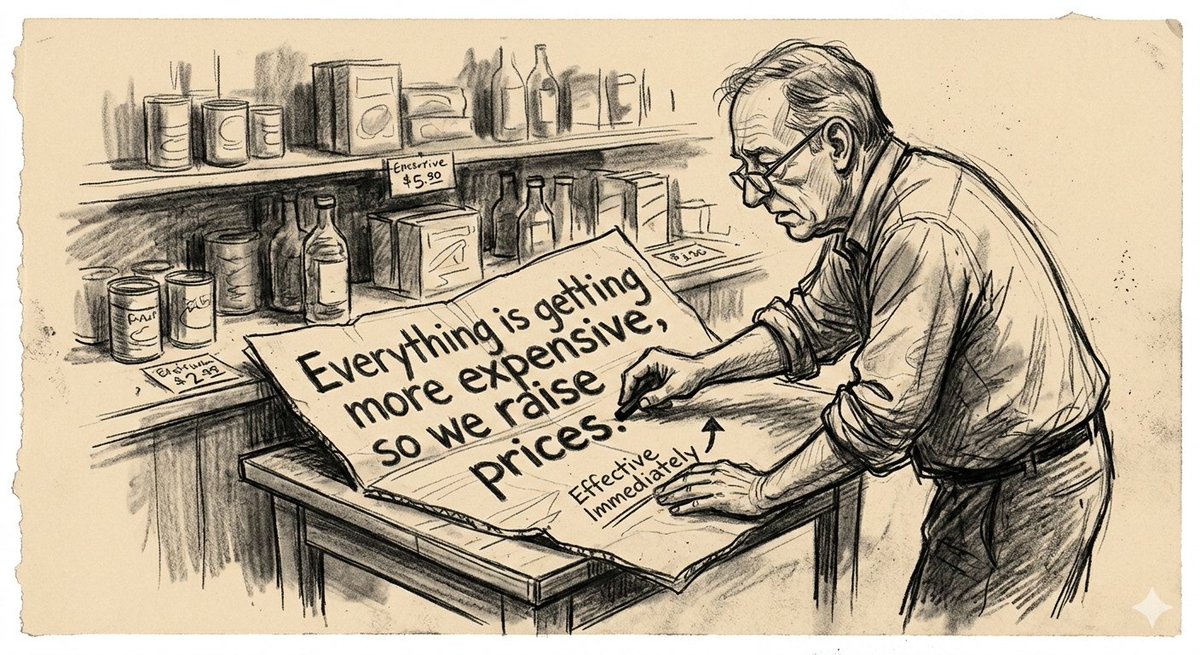
“Everything is getting more expensive, so we raise prices.”
I hear more businesses and traders say.
>If everyone does that, we don’t create value, we create a spiral.<
#fightinflation#Accounting#CostOfLiving
3/3
By combining existing technologies — UV‑C, air treatment, ethylene oxidation and controlled climate conditions — post‑harvest handling moves from damage control to system control
From assuming to assuring the future.
The question isn’t if this is possible.
Post 1/3
What if we fundamentally rethink post‑harvest handling?
Imagine fruit treated immediately after harvest with UV‑C light, then stored in a naturally cooled environment (3–5 °C) with controlled humidity, ultra‑low ethylene levels and continuous air treatment.
#coldchain
2/3
What does this system deliver?
• Significantly lower microbial pressure
• Reduced reliance on fungicides
• Delayed ripening through ethylene management
• Less food waste, better structure & quality
• Energy savings by avoiding extreme cooling
Prevention
Correction
Post 1/3
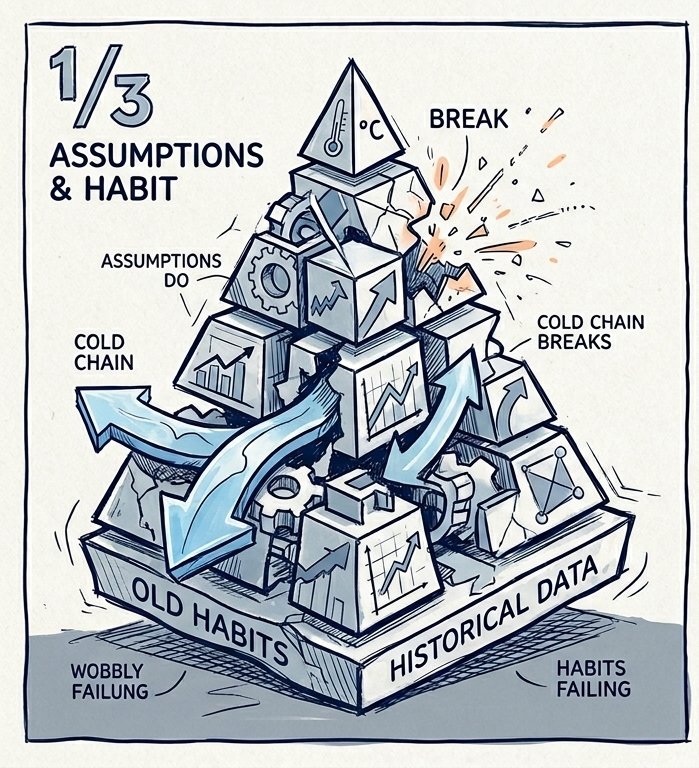
Spring and summer don’t break cold chains - Assumptions do.
Many logistics operations rely on what worked before: historical data, standard procedures, materials. That’s not assurance: that’s habit. Habits are rarely tested until they fail.
#ColdChain#RiskManagement
Post 2/3
The real shift: From assuming to assuring.
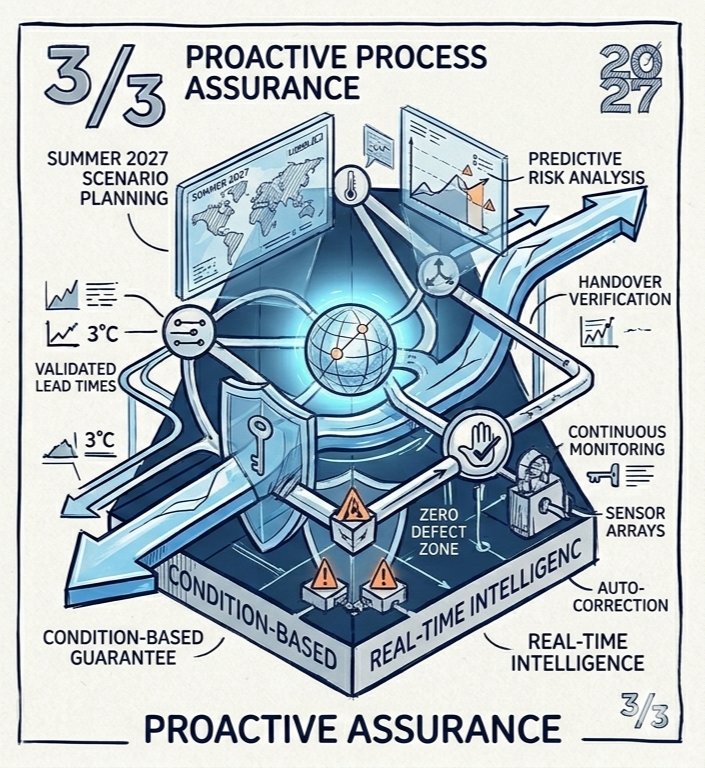
Assuring means measuring temperature behavior, understanding variability in lead times, and validating handover moments.
Most losses aren’t caused by extremes.
Evidence beats intuition!
#SupplyChainRisk#ProcessAssurance
Post 3/3
When temperature and quality become explicit control variables, the question changes:
Not “will this probably work?”
But “under which conditions can we guarantee it?”
That’s how summer 2027 becomes a scenario, not a threat.
Post 2/3
The real shift: From assuming to assuring.
Assuring means measuring temperature behavior, understanding variability in lead times, and validating handover moments. Most losses aren’t caused by extremes.
Evidence beats intuition!
#SupplyChainRisk#ProcessAssurance
Reports on Cold Chain Reality 6/6
Observations from studies, field tests and anonymised cases.
Not to assign blame or compare systems, but to learn from differences and collectively improve how cold chains are designed and managed worldwide.
Progress starts with openness.
#ATP
Reports on Cold Chain Reality
Observations from studies, field tests and anonymised cases
This is where education matters.
Within Universities (Applied Sciences), anonymised case disclosures can help connect theory with operational reality, across regions and levels of maturity.
Reports on Cold Chain Reality
Observations from studies, field tests and anonymised cases
Cold chain performance is therefore not defined by setpoints or dashboards alone, but by the temperature history the product actually lives through.
#AppliedResearch#ColdChainReality
Reports on Cold Chain Reality
From assumptions to assurance.
These deviations are rarely about failing systems. They emerge from real‑world conditions: airflow behaviour, loading patterns, handling practices, infrastructure constraints and process gaps.
#chilled#coldchain
DEISKO Reports | Cold Chain Reality
From assumptions to assurance in cold chain logistics.
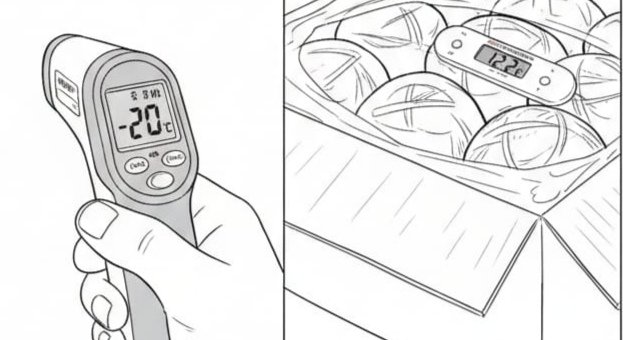
Studies, field tests and anonymised case findings repeatedly show that standard monitoring does not always reflect what products ACTUALLY experience during transport and storage.
#HACCP
DEISKO Reports | Cold Chain Reality
From assumptions to assurance in cold chain logistics. (1/6)
Across regions & supply chain contexts, temperature control is often assumed, but not always verified at product level in practice.
#ColdChain#FoodLogistics#AppliedResearch