@doctor_rahmeh@FCDOGovUK@UKinUkraine@ukinrussia You’re an utter disgrace to the British public. The people never voted for this.Our people want more housing, better funding for the NHS not foreign wars started by NATO expansionism.
El Presidente de China 🇨🇳 Xi Jinping, acaba de dar un discurso que quedará en los libros de historia, y las futuras generaciones aprenderán del ejemplo que imparte este país asiático:
"¿Hacia dónde va la humanidad? Todos los países navegamos en el mismo barco. En lugar de dispersarnos en más de 190 barcas pequeñas, cada uno a la deriva por su cuenta, deberíamos unir fuerzas: construir un solo gran navío o, al menos, una flota que avance junta, para que toda la humanidad pueda llegar a un horizonte mejor.
Si las civilizaciones se achataran a un único color o un único modelo, el mundo perdería su riqueza y se volvería gris, monótono, invivible.
Lo que hace falta es reconocernos como iguales, dejar de lado la soberbia y los prejuicios, esforzarnos por entender mejor lo que nos distingue de otras culturas, y fomentar el intercambio, el diálogo y una convivencia armónica entre todas las civilizaciones." 🌎🤝🇨🇳
This little girl, named Anna Mary Robertson, led an unremarkable life for 78 years. She married Thomas Moses, had ten children, and earned a living cleaning the homes of wealthy citizens—a typical life for a woman born in 1860.
But at 78, after becoming a widow, Anna, now known as Grandma Moses, began to paint seriously. Though she had always been a bit creative, she had no idea just how talented she was. Her work was discovered, and she quickly gained fame as an artist. She would go on to live until 101, passing away in 1961.
In the last 23 years of her life, Grandma Moses became a renowned artist. Despite being born into poverty and losing five of her ten children, she found unexpected fame and success in her old age—something she likely never imagined was possible for someone like her. For decades, she had cleaned the homes of the wealthy, never dreaming that one day her own work would be celebrated worldwide and even featured on national postage stamps.
Her life was unremarkable for nearly eighty years, but the last 23 were extraordinary.
More historical photos: https://t.co/dQjceOPkrz
In 1973, eight perfectly healthy people walked into different psychiatric hospitals across the United States. They were not ill. Yet no one inside those walls was able to see it.
It was an experiment. One of the most disturbing experiments in the history of psychiatry. Designed by psychologist David Rosenhan, it began with a simple yet unsettling question: is it really possible to reliably distinguish mental health from mental illness?
To find out, Rosenhan recruited eight pseudopatients. They were ordinary people: a painter, a housewife, a pediatrician, a graduate student. They lied about only one thing—they claimed to hear voices. Nothing more. No bizarre behavior, no crises, just three words heard in their minds: “empty,” “hollow,” “thud.”
All of them were admitted. And immediately afterward, they stopped pretending. They behaved normally. They cooperated. They asked to be discharged. It wasn’t possible.
The staff no longer saw people, but diagnoses. Every action was reinterpreted through the lens of illness: writing notes? Obsessive behavior. Standing in the hallway? Pathological attention-seeking. Being polite? Controlled behavior consistent with the disorder.
Seven of them were labeled schizophrenic. One was diagnosed as manic-depressive. Not a single one was recognized as healthy. Not one.
But the real patients noticed. Some approached and whispered, “You’re not like the others. You don’t belong here.” They saw what the experts could not recognize.
The average length of hospitalization was 19 days. One person remained hospitalized for 52 days. Each passing day confirmed the same truth: the label was more powerful than reality.
When Rosenhan published his study—On Being Sane in Insane Places—it caused an earthquake. The psychiatric community erupted in outrage. One hospital challenged Rosenhan to send new pseudopatients, confident they would expose them. He accepted. In the following months, the hospital identified 41 supposed impostors. But Rosenhan had sent no one. No one at all.
The truth was now undeniable: diagnoses were not always based on facts, but on context. Once labeled, a person became a prisoner of that narrative. Even if they were sane. Even if they protested the truth.
This experiment shattered blind trust in clinical labels. It led to major reforms in the diagnosis and treatment of mental illness. But above all, it left a haunting and still relevant lesson:
Perception can distort reality more than madness itself.
And often, the most dangerous illusion is not that of those considered insane, but of those who believe they are always right.
Eight healthy people entered psychiatric hospitals in 1973. They came out carrying a truth the world could no longer ignore.
영화 촬영감독이 만든 AI 영상 프롬프트 빌더 툴
미디어 타입/장르/무드/사운드부터
실제 영화 촬영 현장에서 감독들이 사용하는
샷타입/카메라 바디/렌즈/필터/조명 등까지
AI 영상 생성에 필요한 거의 모든 프롬프트를
촬영 옵션만 선택하면 자동으로 빌드해주고
각 영상 생성 모델에 맞게 최적화도 해줌
이제 시네마틱 AI 영상 만들 때
프롬프트 작성하기 너무 쉽겠다🥹
Who Opposed Nuking Japan?
“The Japanese were ready to surrender and it wasn’t necessary to hit them with that awful thing.” —Gen. Dwight D. Eisenhower
“In 1945 Secretary of War Stimson, visiting my headquarters in Germany, informed me that our government was preparing to drop an atomic bomb on Japan. I was one of those who felt that there were a number of cogent reasons to question the wisdom of such an act. … The Secretary, upon giving me the news of the successful bomb test in New Mexico, and of the plan for using it, asked for my reaction, apparently expecting a vigorous assent. During his recitation of the relevant facts, I had been conscious of a feeling of depression and so I voiced to him my grave misgivings, first on the basis of my belief that Japan was already defeated and that dropping the bomb was completely unnecessary, and secondly because I thought that our country should avoid shocking world opinion by the use of a weapon whose employment was, I thought, no longer mandatory as a measure to save American lives. It was my belief that Japan was, at that very moment, seeking some way to surrender with a minimum loss of ‘face.’ The Secretary was deeply perturbed by my attitude.” —Gen. Dwight D. Eisenhower
“The use of the atomic bomb, with its indiscriminate killing of women and children, revolts my soul.” —Herbert Hoover
“[T]he Japanese were prepared to negotiate all the way from February 1945 … up to and before the time the atomic bombs were dropped; … [I]f such leads had been followed up, there would have been no occasion to drop the bombs.” —Herber Hoover
“I told [Gen. Douglas] MacArthur of my memorandum of mid-May 1945 to Truman, that peace could be had with Japan by which our major objectives would be accomplished. MacArthur said that was correct and that we would have avoided all of the losses, the Atomic bomb, and the entry of Russia into Manchuria.” —Herbert Hoover
“MacArthur’s views about the decision to drop the atomic bomb on Hiroshima and Nagasaki were starkly different from what the general public supposed. When I asked General MacArthur about the decision to drop the bomb, I was surprised to learn he had not even been consulted. What, I asked, would his advice have been? He replied that he saw no military justification for the dropping of the bomb. The war might have ended weeks earlier, he said, if the United States had agreed, as it later did anyway, to the retention of the institution of the emperor.” — Norman Cousins
“General MacArthur definitely is appalled and depressed by this Frankenstein monster. I had a long talk with him today, necessitated by the impending trip to Okinawa. He wants time to think the thing out, so he has postponed the trip to some future date to be decided later.” — Gen. Douglas MacArthur’s pilot, Weldon E. Rhoades
“[General Douglas] MacArthur once spoke to me very eloquently about it, pacing the floor of his apartment in the Waldorf. He thought it a tragedy that the bomb was ever exploded. MacArthur believed that the same restrictions ought to apply to atomic weapons as to conventional weapons, that the military objective should always be limited damage to noncombatants…MacArthur, you see, was a soldier. He believed in using force only against military targets, and that is why the nuclear thing turned him off…” — Richard Nixon
“The Japanese were ready for peace, and they already had approached the Russians and the Swiss. And that suggestion of giving a warning of the atomic bomb was a face-saving proposition for them, and one that they could have readily accepted. In my opinion, the Japanese war was really won before we ever used the atom bomb.” —Under Secretary of the Navy, Ralph Bird
“The Japanese position was hopeless even before the first atomic bomb fell, because the Japanese had lost control of their own air.” — General “Hap” Arnold
“[Gen.] Arnold’s view was that the dropping of the atomic bomb was totally unnecessary. He said he knew the Japanese wanted peace. There were political implications in the decision, and Arnold did not feel it was the military’s job to question them. … [Arnold’s view was]: when the question comes up of whether we use the atomic bomb or not, my view is that the Air Force will not oppose the use of the bomb, and they will deliver it effectively if the Commander-in-Chief decides to use it. But it is not necessary to use it in order to conquer the Japanese without the necessity of a land invasion.” — General Ira Eaker, Deputy Commander of U.S. Army Air Forces
“The Japanese had, in fact, already sued for peace. The atomic bomb played no decisive part, from a purely military point of view, in the defeat of Japan.” — Fleet Admiral Chester W. Nimitz, Commander in Chief of the U.S. Pacific Fleet
“The Japanese had, in fact, already sued for peace before the atomic age was announced to the world with the destruction of Hiroshima and before the Russian entry into the war.” — Adm. Nimitz
“The use of this barbarous weapon at Hiroshima and Nagasaki was of no material assistance in our war against Japan. The Japanese were already defeated and ready to surrender because of the effective sea blockade and the successful bombing with conventional weapons … The lethal possibilities of atomic warfare in the future are frightening. My own feeling was that in being the first to use it, we had adopted an ethical standard common to the barbarians of the Dark Ages. I was not taught to make war in that fashion, and wars cannot be won by destroying women and children.” —Fleet Admiral William D. Leahy, Chief of Staff to President Truman
“Truman told me it was agreed they would use it, after military men’s statements that it would save many, many American lives, by shortening the war, only to hit military objectives. Of course, then they went ahead and killed as many women and children as they could, which was just what they wanted all the time.” —Adm. Leahy
“The war would have been over in two weeks without the Russians entering and without the atomic bomb. … The atomic bomb had nothing to do with the end of the war at all.” — Major General Curtis LeMay, XXI Bomber Command
“[LeMay said] if we’d lost the war, we’d all have been prosecuted as war criminals. And I think he’s right. He, and I’d say I, were behaving as war criminals. LeMay recognized that what he was doing would be thought immoral if his side had lost. But what makes it immoral if you lose and not immoral if you win?” —Robert MacNamara
“The first atomic bomb was an unnecessary experiment … It was a mistake to ever drop it … [the scientists] had this toy and they wanted to try it out, so they dropped it.” — Fleet Admiral William Halsey Jr.
“I concluded that even without the atomic bomb, Japan was likely to surrender in a matter of months. My own view was that Japan would capitulate by November 1945. Even without the attacks on Hiroshima and Nagasaki, it seemed highly unlikely, given what we found to have been the mood of the Japanese government, that a U.S. invasion of the islands scheduled for 1 November 1945 would have been necessary.” — Paul Nitze, director and then Vice Chairman of the Strategic Bombing Survey
“[E]ven without the atomic bombing attacks, air supremacy over Japan could have exerted sufficient pressure to bring about unconditional surrender and obviate the need for invasion. Based on a detailed investigation of all the facts, and supported by the testimony of the surviving Japanese leaders involved, it is the Survey’s opinion that certainly prior to 31 December 1945, and in all probability prior to 1 November 1945, Japan would have surrendered even if the atomic bombs had not been dropped, even if Russia had not entered the war, and even if no invasion had been planned or contemplated.” — U.S. Strategic Bombing Survey, 1946
“Just when the Japanese were ready to capitulate, we went ahead and introduced to the world the most devastating weapon it had ever seen and, in effect, gave the go-ahead to Russia to swarm over Eastern Asia. Washington decided it was time to use the A-bomb. I submit that it was the wrong decision. It was wrong on strategic grounds. And it was wrong on humanitarian grounds.” — Ellis Zacharias Deputy Director of the Office of Naval Intelligence
“When we didn’t need to do it, and we knew we didn’t need to do it, and they knew that we knew we didn’t need to do it, we used them as an experiment for two atomic bombs. Many other high-level military officers concurred.” — Brigadier General Carter Clarke, the Military Intelligence officer in charge of preparing summaries of intercepted Japanese cables for President Truman and his advisors
“The commander in chief of the U.S. Fleet and Chief of Naval Operations, Ernest J. King, stated that the naval blockade and prior bombing of Japan in March of 1945, had rendered the Japanese helpless and that the use of the atomic bomb was both unnecessary and immoral. — Carter Clarke
“I proposed to Secretary Forrestal that the weapon should be demonstrated before it was used… the war was very nearly over. The Japanese were nearly ready to capitulate… My proposal… was that the weapon should be demonstrated over… a large forest of cryptomeria trees not far from Tokyo… Would lay the trees out in windrows from the center of the explosion in all directions as though they were matchsticks, and, of course, set them afire in the center. It seemed to me that a demonstration of this sort would prove to the Japanese that we could destroy any of their cities at will… Secretary Forrestal agreed wholeheartedly with the recommendation… It seemed to me that such a weapon was not necessary to bring the war to a successful conclusion, that once used it would find its way into the armaments of the world.” — Special Assistant to the Secretary of the Navy Lewis Strauss
“In the light of available evidence I myself and others felt that if such a categorical statement about the retention of the dynasty had been issued in May 1945, the surrender-minded elements in the Japanese government might well have been afforded by such a statement a valid reason and the necessary strength to come to an early clear cut decision. If surrender could have been brought about in May 1945, or even in June, or July, before the entrance of Soviet Russia into the Pacific war and the use of the atomic bomb, the world would have been the gainer.” — Under Secretary of State Joseph Grew
And for what it’s worth, then-Army Chief George Marshall wanted only to hit military facilities with it, not cities.
“It will not be long before we are reduced to savagery. We are the barbarians within our own empire.” — Russell Kirk, author of The Conservative Mind
“This doctrine of progress is a most interesting instance of the blind and foolish confidence of Americans in the God Progress. … Thus far, apparently, it has been progress toward annihilation, an end to be accomplished, perhaps, by the improved atomic bomb? We have dealt more death and destruction in the space of ten years than the men of the Middle Ages, with their Devil, were able to accomplish in a thousand.” —Russell Kirk
“The atomic bomb was a final blow to the code of humanity. I cannot help thinking that we will suffer retribution for this. For a long time to come I believe my chief interest is going to be the restoration of civilization, of the distinctions that make life intelligible.” — Richard Weaver, author of Ideas Have Consequences
a big new step forward in ai from gabriel, he’s one of the highest agency shifters n shakers in the game.
super excited for this launch.
the world needs super high agency people that get what’s coming. here’s one of them.
Here’s the first in a series of articles that examined who had access to the WTC Towers in terms of being able to set them up for demolition. https://t.co/0u8q3kL8sn
The critical density of the universe is the average density at which spacetime is flat
It just so happens that a black hole the size of the observable universe has exactly the same density as the critical density for a universe with flat spacetime
Another coincidence is that as far as we can tell a black hole is the computationally most dense object possible, the ultimate computer
Now we look out and say 'gee whiz I dont see many Dyson spheres, we must be the only intelligent species because *obviously* surrounding a star with solar panels is the *best possible way* of creating a super computer'
this is retarded, obviously - a black hole is not just the ultimate computer but the ultimate heat engine, something that converts mass directly to energy via Hawking radiation
Face it - we are late to the game. Most of the stars that will ever form have already formed. There are civilizations billions of years older than us, engineering megastructures that look like active galactic nuclei, quasars, etc.
Almost all the entropy in the universe is inside black holes, on the far side of an event horizon.
The galaxy is absolutely littered with black holes. Supercomputers. New universes. Inside, expanding regions of flat spacetime that originate at a singular beginning, just like our universe.
You live in a computer.
.@JamesTalarico: The young people here might not remember this, but those of you who are a little older might. Not so long ago, you could afford to live a good life here in America.
You could buy a home in your 20s. You could go to college for cheap or free. You could support a whole family on one paycheck. You could afford to get married, have kids, and retire comfortably. You could fulfill your God-given potential.
We called it the American Dream.
In the middle of the 20th century, we invested in healthcare and education. We built homes and highways. We protected workers' rights and paychecks. We blocked consolidation and encouraged competition. We built the largest, strongest middle class in the history of the world.
But today that middle class has disappeared. For too many of our neighbors, the American Dream has become an American Nightmare.
We can't afford a home, but Jeff Bezos has at least a dozen. We can't afford to fill up our tank, but Mark Zuckerberg is launching helicopters from his mega-yacht. One in five Texas children live in poverty — but one of our residents became the world's first trillionaire.
The top 1% put the American Dream behind a paywall.
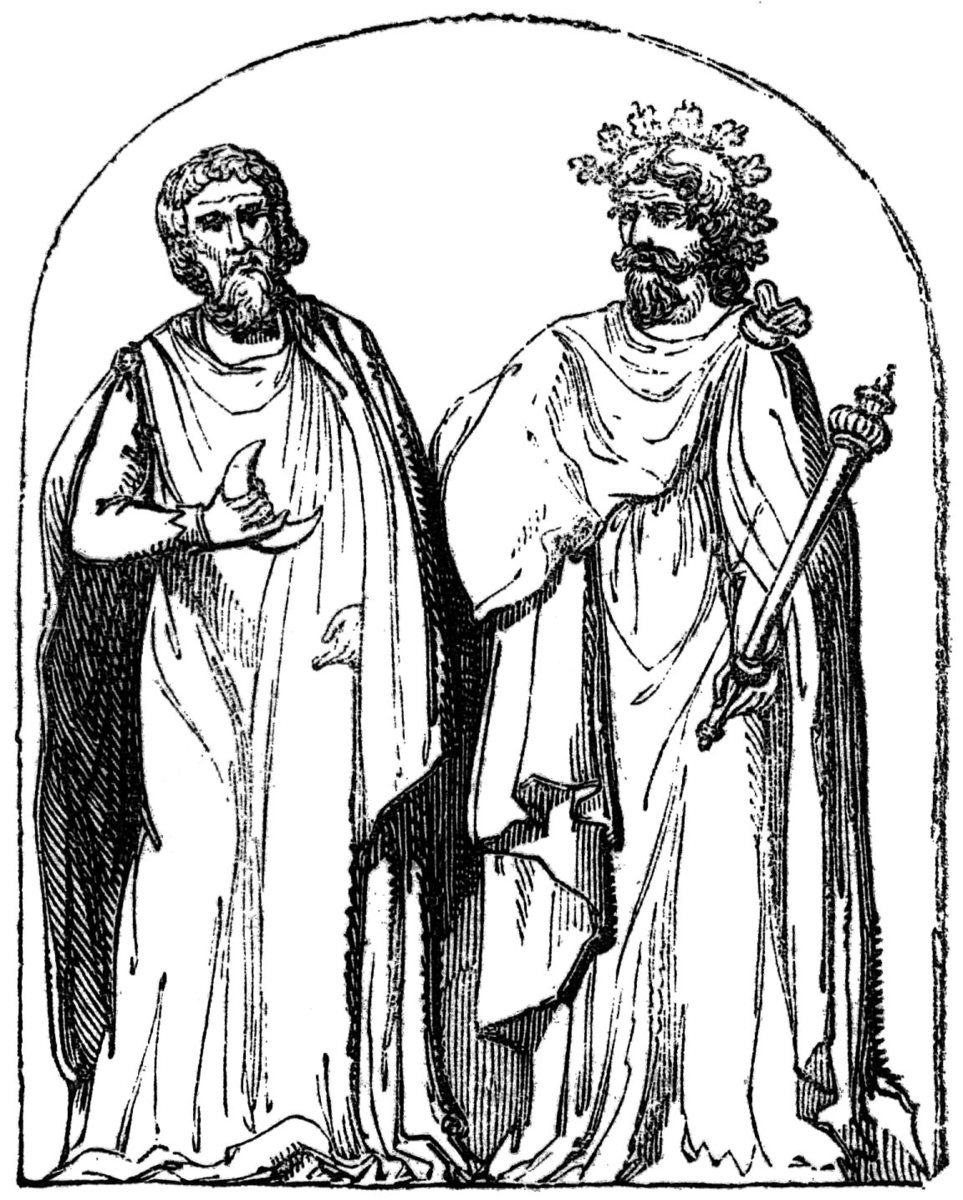
Before Britain was Christian, its gods lived in forests, rivers and stone.
From Druids and Roman conquest to Saint Patrick, Picts and Vikings, our new six-part series uncovers the beliefs that shaped the British Isles.
A THREAD... 🧵
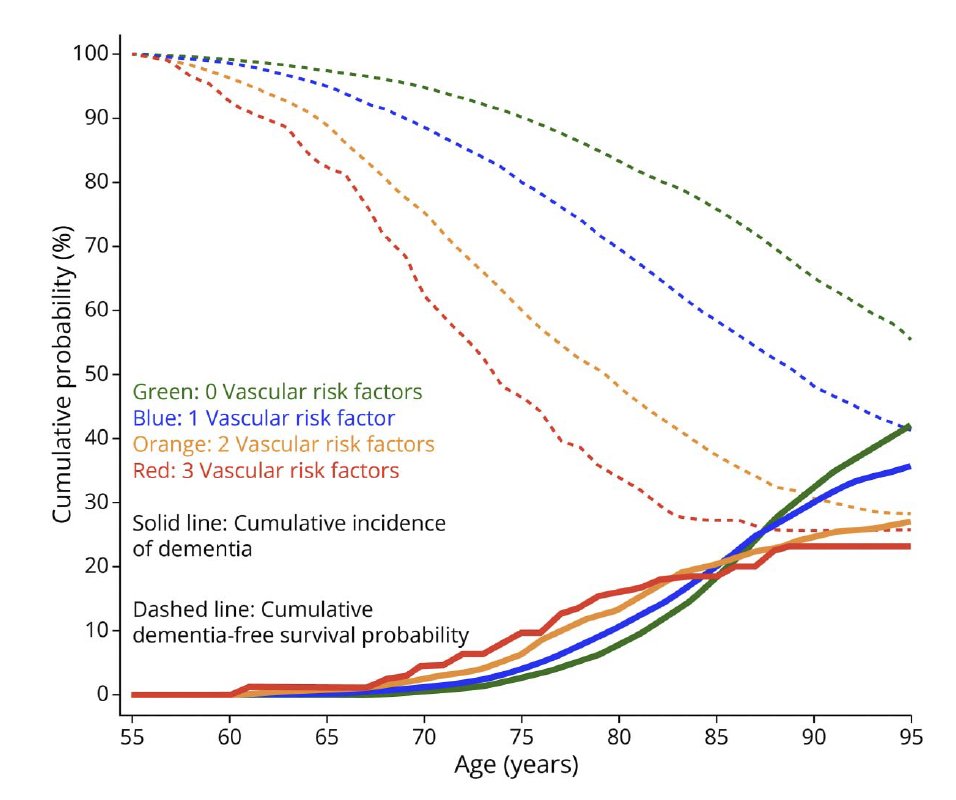
You are ~55 years old and want up to 13 years of dementia-free survival. What are the 3 big preventive factors associated with this outcome?
—Normal blood pressure (no medication or >140/90)
—No diabetes
—No smoking
https://t.co/yUkg7useEP
Built a Claude Skill that writes optimized prompts for Seedance 2.5
Trained on the official ByteDance prompt/user guides, covering:
- Core prompt formula (subject/scene/style/camera/audio)
- Multi-reference mapping (@Image/@Video/@Audio)
- Long-video staging with timestamp control (0-3s / 3-7s / etc.)
- Video editing, extension, and seamless transition syntax
- Keyframes, storyboards, and blockout (coarse/fine) workflows
Skill in comments 👇




![scotthortonshow's tweet photo. Who Opposed Nuking Japan?
“The Japanese were ready to surrender and it wasn’t necessary to hit them with that awful thing.” —Gen. Dwight D. Eisenhower
“In 1945 Secretary of War Stimson, visiting my headquarters in Germany, informed me that our government was preparing to drop an atomic bomb on Japan. I was one of those who felt that there were a number of cogent reasons to question the wisdom of such an act. … The Secretary, upon giving me the news of the successful bomb test in New Mexico, and of the plan for using it, asked for my reaction, apparently expecting a vigorous assent. During his recitation of the relevant facts, I had been conscious of a feeling of depression and so I voiced to him my grave misgivings, first on the basis of my belief that Japan was already defeated and that dropping the bomb was completely unnecessary, and secondly because I thought that our country should avoid shocking world opinion by the use of a weapon whose employment was, I thought, no longer mandatory as a measure to save American lives. It was my belief that Japan was, at that very moment, seeking some way to surrender with a minimum loss of ‘face.’ The Secretary was deeply perturbed by my attitude.” —Gen. Dwight D. Eisenhower
“The use of the atomic bomb, with its indiscriminate killing of women and children, revolts my soul.” —Herbert Hoover
“[T]he Japanese were prepared to negotiate all the way from February 1945 … up to and before the time the atomic bombs were dropped; … [I]f such leads had been followed up, there would have been no occasion to drop the bombs.” —Herber Hoover
“I told [Gen. Douglas] MacArthur of my memorandum of mid-May 1945 to Truman, that peace could be had with Japan by which our major objectives would be accomplished. MacArthur said that was correct and that we would have avoided all of the losses, the Atomic bomb, and the entry of Russia into Manchuria.” —Herbert Hoover
“MacArthur’s views about the decision to drop the atomic bomb on Hiroshima and Nagasaki were starkly different from what the general public supposed. When I asked General MacArthur about the decision to drop the bomb, I was surprised to learn he had not even been consulted. What, I asked, would his advice have been? He replied that he saw no military justification for the dropping of the bomb. The war might have ended weeks earlier, he said, if the United States had agreed, as it later did anyway, to the retention of the institution of the emperor.” — Norman Cousins
“General MacArthur definitely is appalled and depressed by this Frankenstein monster. I had a long talk with him today, necessitated by the impending trip to Okinawa. He wants time to think the thing out, so he has postponed the trip to some future date to be decided later.” — Gen. Douglas MacArthur’s pilot, Weldon E. Rhoades
“[General Douglas] MacArthur once spoke to me very eloquently about it, pacing the floor of his apartment in the Waldorf. He thought it a tragedy that the bomb was ever exploded. MacArthur believed that the same restrictions ought to apply to atomic weapons as to conventional weapons, that the military objective should always be limited damage to noncombatants…MacArthur, you see, was a soldier. He believed in using force only against military targets, and that is why the nuclear thing turned him off…” — Richard Nixon
“The Japanese were ready for peace, and they already had approached the Russians and the Swiss. And that suggestion of giving a warning of the atomic bomb was a face-saving proposition for them, and one that they could have readily accepted. In my opinion, the Japanese war was really won before we ever used the atom bomb.” —Under Secretary of the Navy, Ralph Bird
“The Japanese position was hopeless even before the first atomic bomb fell, because the Japanese had lost control of their own air.” — General “Hap” Arnold
“[Gen.] Arnold’s view was that the dropping of the atomic bomb was totally unnecessary. He said he knew the Japanese wanted peace. There were political implications in the decision, and Arnold did not feel it was the military’s job to question them. … [Arnold’s view was]: when the question comes up of whether we use the atomic bomb or not, my view is that the Air Force will not oppose the use of the bomb, and they will deliver it effectively if the Commander-in-Chief decides to use it. But it is not necessary to use it in order to conquer the Japanese without the necessity of a land invasion.” — General Ira Eaker, Deputy Commander of U.S. Army Air Forces
“The Japanese had, in fact, already sued for peace. The atomic bomb played no decisive part, from a purely military point of view, in the defeat of Japan.” — Fleet Admiral Chester W. Nimitz, Commander in Chief of the U.S. Pacific Fleet
“The Japanese had, in fact, already sued for peace before the atomic age was announced to the world with the destruction of Hiroshima and before the Russian entry into the war.” — Adm. Nimitz
“The use of this barbarous weapon at Hiroshima and Nagasaki was of no material assistance in our war against Japan. The Japanese were already defeated and ready to surrender because of the effective sea blockade and the successful bombing with conventional weapons … The lethal possibilities of atomic warfare in the future are frightening. My own feeling was that in being the first to use it, we had adopted an ethical standard common to the barbarians of the Dark Ages. I was not taught to make war in that fashion, and wars cannot be won by destroying women and children.” —Fleet Admiral William D. Leahy, Chief of Staff to President Truman
“Truman told me it was agreed they would use it, after military men’s statements that it would save many, many American lives, by shortening the war, only to hit military objectives. Of course, then they went ahead and killed as many women and children as they could, which was just what they wanted all the time.” —Adm. Leahy
“The war would have been over in two weeks without the Russians entering and without the atomic bomb. … The atomic bomb had nothing to do with the end of the war at all.” — Major General Curtis LeMay, XXI Bomber Command
“[LeMay said] if we’d lost the war, we’d all have been prosecuted as war criminals. And I think he’s right. He, and I’d say I, were behaving as war criminals. LeMay recognized that what he was doing would be thought immoral if his side had lost. But what makes it immoral if you lose and not immoral if you win?” —Robert MacNamara
“The first atomic bomb was an unnecessary experiment … It was a mistake to ever drop it … [the scientists] had this toy and they wanted to try it out, so they dropped it.” — Fleet Admiral William Halsey Jr.
“I concluded that even without the atomic bomb, Japan was likely to surrender in a matter of months. My own view was that Japan would capitulate by November 1945. Even without the attacks on Hiroshima and Nagasaki, it seemed highly unlikely, given what we found to have been the mood of the Japanese government, that a U.S. invasion of the islands scheduled for 1 November 1945 would have been necessary.” — Paul Nitze, director and then Vice Chairman of the Strategic Bombing Survey
“[E]ven without the atomic bombing attacks, air supremacy over Japan could have exerted sufficient pressure to bring about unconditional surrender and obviate the need for invasion. Based on a detailed investigation of all the facts, and supported by the testimony of the surviving Japanese leaders involved, it is the Survey’s opinion that certainly prior to 31 December 1945, and in all probability prior to 1 November 1945, Japan would have surrendered even if the atomic bombs had not been dropped, even if Russia had not entered the war, and even if no invasion had been planned or contemplated.” — U.S. Strategic Bombing Survey, 1946
“Just when the Japanese were ready to capitulate, we went ahead and introduced to the world the most devastating weapon it had ever seen and, in effect, gave the go-ahead to Russia to swarm over Eastern Asia. Washington decided it was time to use the A-bomb. I submit that it was the wrong decision. It was wrong on strategic grounds. And it was wrong on humanitarian grounds.” — Ellis Zacharias Deputy Director of the Office of Naval Intelligence
“When we didn’t need to do it, and we knew we didn’t need to do it, and they knew that we knew we didn’t need to do it, we used them as an experiment for two atomic bombs. Many other high-level military officers concurred.” — Brigadier General Carter Clarke, the Military Intelligence officer in charge of preparing summaries of intercepted Japanese cables for President Truman and his advisors
“The commander in chief of the U.S. Fleet and Chief of Naval Operations, Ernest J. King, stated that the naval blockade and prior bombing of Japan in March of 1945, had rendered the Japanese helpless and that the use of the atomic bomb was both unnecessary and immoral. — Carter Clarke
“I proposed to Secretary Forrestal that the weapon should be demonstrated before it was used… the war was very nearly over. The Japanese were nearly ready to capitulate… My proposal… was that the weapon should be demonstrated over… a large forest of cryptomeria trees not far from Tokyo… Would lay the trees out in windrows from the center of the explosion in all directions as though they were matchsticks, and, of course, set them afire in the center. It seemed to me that a demonstration of this sort would prove to the Japanese that we could destroy any of their cities at will… Secretary Forrestal agreed wholeheartedly with the recommendation… It seemed to me that such a weapon was not necessary to bring the war to a successful conclusion, that once used it would find its way into the armaments of the world.” — Special Assistant to the Secretary of the Navy Lewis Strauss
“In the light of available evidence I myself and others felt that if such a categorical statement about the retention of the dynasty had been issued in May 1945, the surrender-minded elements in the Japanese government might well have been afforded by such a statement a valid reason and the necessary strength to come to an early clear cut decision. If surrender could have been brought about in May 1945, or even in June, or July, before the entrance of Soviet Russia into the Pacific war and the use of the atomic bomb, the world would have been the gainer.” — Under Secretary of State Joseph Grew
And for what it’s worth, then-Army Chief George Marshall wanted only to hit military facilities with it, not cities.
“It will not be long before we are reduced to savagery. We are the barbarians within our own empire.” — Russell Kirk, author of The Conservative Mind
“This doctrine of progress is a most interesting instance of the blind and foolish confidence of Americans in the God Progress. … Thus far, apparently, it has been progress toward annihilation, an end to be accomplished, perhaps, by the improved atomic bomb? We have dealt more death and destruction in the space of ten years than the men of the Middle Ages, with their Devil, were able to accomplish in a thousand.” —Russell Kirk
“The atomic bomb was a final blow to the code of humanity. I cannot help thinking that we will suffer retribution for this. For a long time to come I believe my chief interest is going to be the restoration of civilization, of the distinctions that make life intelligible.” — Richard Weaver, author of Ideas Have Consequences](https://pbs.twimg.com/media/HPDPksWWQAE3eOs.jpg)