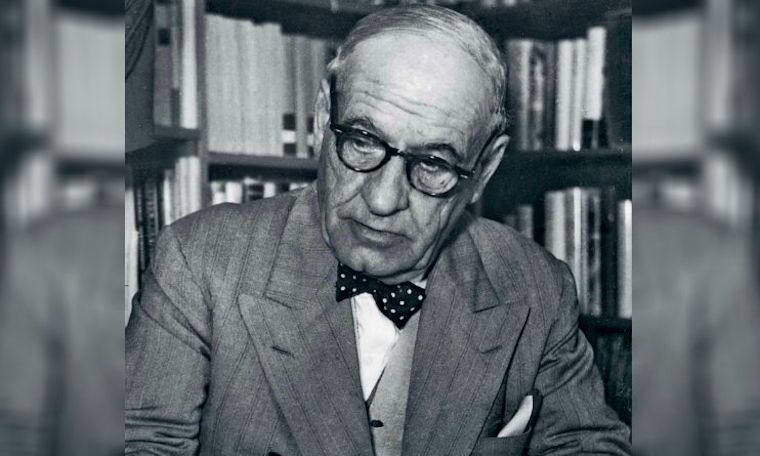
"En 1930, le philosophe espagnol José Ortega y Gasset publia *La révolte des masses*, un ouvrage qui reste aujourd’hui encore d’une prophétie dérangeante. Sa cible principale n’était pas les pauvres ni la classe ouvrière, mais un nouveau type d’être humain qu’il appelait « l’homme de masse ».
L’homme de masse, affirmait Ortega, se définit par son attitude plutôt que par ses revenus. C’est l’individu ordinaire qui est parfaitement satisfait de lui-même, n’exige rien de plus de son caractère ou de son intellect, et pourtant insiste pour que sa médiocrité soit considérée comme un droit. Il ne s’incline pas devant l’excellence, la compétence ou des normes plus élevées. Il les considère avec méfiance ou ressentiment. Ce que les générations précédentes considéraient comme le privilège d’une minorité – l’influence politique, l’autorité culturelle, le droit de façonner la société – l’homme de masse le revendique désormais comme son dû, sans faire l’effort correspondant pour s’élever au-dessus de la moyenne.
Ortega estimait que ce type de personne était le fruit du succès même de la civilisation moderne. L’amélioration du niveau de vie, l’éducation de masse et les institutions libérales avaient donné aux gens ordinaires un pouvoir et un confort sans précédent. Mais cela n’avait pas engendré un sens correspondant des responsabilités ni d’humilité face aux réalisations supérieures. Il en résulta une révolte : l’homme de la masse refusait d’accepter l’autorité d’un savoir, d’une culture ou d’un caractère supérieurs. Il exigeait que tout soit ramené à son niveau.
Le danger, a averti Ortega, réside dans le fait qu’une civilisation ne peut survivre si ses acteurs clés ne respectent plus les normes qui ont permis son émergence. Lorsque la médiocrité commence à dominer sans aspirer à rien au-delà d’elle-même, l’excellence est sapée, les institutions se délabrent et la politique devient l’expression du ressentiment plutôt que de la responsabilité.
Le diagnostic d’Ortega reste troublant, car il ne s’agit pas d’une plainte contre la pauvreté ou l’exclusion. C’est un avertissement contre une médiocrité complaisante au grand pouvoir."
(source : @CreativeDeduct)
@harari_yuval Le paradigme de l’obsolescence possible de la méritocratie basée sur un diplôme obtenu à 20 ans à cause de l’IA n’effacera pas, selon moi, un des fondamentaux de toute société : apprendre à apprendre restera nécessaire entre 12 et 20 ans pour être utile toute une vie?
Instead of watching an hour of Netflix, watch this 2 hour hour Stanford lecture will teach you more about how LLMs like ChatGPT and Claude are built than most people working at top AI companies learn in their entire careers.
China just pulled off the biggest AI heist in history on Anthropic.
In a letter sent to the Senate Banking Committee, Anthropic accused operators tied to Alibaba's Qwen AI lab of running the largest model extraction attack the company has ever detected.
The numbers are truly insane:
Alibaba allegedly used roughly 25,000 fraudulent Claude accounts to generate 28.8 million queries over a 44 day operation that ran from April 22 to June 5, all aimed directly at Claude's two most commercially valuable skills - advanced software engineering and agentic reasoning (the ability to plan and execute multi step tasks on its own).
For context, this SINGLE campaign was larger than every previous Chinese campaign against Claude COMBINED.
The technique is called distillation. You point a cheaper model at a stronger one, pump millions of carefully crafted prompts through it, harvest the answers, and then train your own model on the responses.
The attacker never sees the weights, never touches the training data, and never has to actually break in anywhere.
The attacker just has to be a paying customer.
This is the new playbook for corporate espionage in AI.
Competitors do not have to hack the company they want to copy. They sign up for the API like everyone else, route tens of millions of queries through proxies and stolen identities, and walk away with a working clone of the most valuable capabilities.
And here is where it gets darker...
In April, the White House published a formal memo through OSTP director Michael Kratsios identifying distillation as a national security threat and committing to share intelligence with American AI labs about foreign campaigns.
Anthropic says the Alibaba campaign started AFTER that memo was published. In open defiance of the administration's warning.
Then two days after Anthropic sent its private warning to the Senate, the Commerce Department's response landed:
They did NOT sanction Alibaba.
They restricted Anthropic's most advanced models from American customers worldwide, citing national security concerns.
So the actual timeline reads like this:
Alibaba allegedly extracts billions of dollars of American AI capability over six weeks. Anthropic warns Washington. Washington responds by locking American companies out of the very models Alibaba allegedly already copied.
Alibaba's American depositary receipts dropped more than 3% on the news and fell below $100. The company is also suing the Pentagon to be removed from the Chinese military blacklist it was added to on June 8.
Anthropic is now fighting on two fronts at the same time.
The first front is trying to convince Washington to protect its models from being stolen abroad. The second is trying to convince Washington to let Americans actually use those models at home.
If your competitive moat is model capability, your moat is a leaky API key. Every API you consume is a potential extraction surface, and every API you sell is a potential extraction target.
The intellectual property border simply does not exist when the product ships as software through a public endpoint.
The defensible asset is no longer the model. It is the distribution, the proprietary data pipeline, and the customer relationships that make a competitor's copy useless even when they hold it in their hands.
Alibaba may already have 28.8 million pages of Claude's reasoning sitting in a training corpus right now.
While American companies just got locked out of the original.
Who do you think wins from that?
@AnatoliKopadze Cet article montre comment notre monde actuel passe de la carriole au chemin de fer, ou du feu de bois au barrage hydroélectrique : une révolution industrielle ou la décision humaine change de nature comme cela fut le cas pour le déplacement et les gestes de la vie domestique!
@Guib0r3 C’est étonnant que tout le monde éduqué sache cela et que règne silence ou falsifications sur ce sujet… Faut-il y voir une culpabilité relativement récente (post-inquisition et post-décolonisation) de l’occident éduqué? Merci pour ce rappel éclairé et vrai.
Anthropic CEO: "It is absolutely wild that people are talking about the same tired political issues, when we are near the end of the AI exponential."
Dario Amodei spent 10 minutes explaining why almost nobody sees it.
here's what he covers:
> in 2017 he predicted exactly where AI would be today. he was right.
> models went from "smart high school student" to "PhD-level work" step by step as planned.
> the progress has not slowed down, not even close.
> none of this surprised him, what surprised him is that nobody else sees it.
the world is still focused on everything else.
new episodes, memes, celebrity beef, election news..
meanwhile the most important thing happening right now goes unnoticed.
this is not a slow shift, it never was.
the people who understand this early and actually start using these tools properly are going to be in a completely different position than everyone else, that gap is already opening.
the guide on how to be on the right side of it is in the article below.
Jensen Huang on why AI won't give workers more free time but will make them busier than ever:
He explains it by separating two ideas most people conflate: task versus purpose.
He starts by drawing a critical distinction:
"The purpose versus the task of a job has to be separated. The task of a radiologist includes studying scans, but the purpose of the job is to work with clinicians and doctors and patients to help diagnose disease."
When AI handles tasks faster, the purpose expands to fill the new capacity.
Jensen uses radiologists as a real-world example:
"The fact that these radiologists can now study scans so fast, they order more scans from more modalities. As a result, they're able to onboard patients a lot more quickly. The number of patients in a hospital can go up. The hospital is making more money taking care of more patients. Radiologists busier than ever."
He sees the exact same pattern playing out with his own engineering team:
"Our company 100% of software engineers are now supported by agents. They're busier than ever because their experimentation is coming back a lot more quickly. Every single idea expressed in the code instantaneously."
The result is greater ambition rather than less work:
"We're exploring more ideas, more software engineers are working with each other, coming up with new ideas, new problems that we never even think of solving before because we just didn't have the time to do before."
His conclusion challenges the popular narrative around AI and free time:
"I think most people have this wrong. I think that the fact that we're now so productive, we can experiment, iterate so fast, we're going to be busier than ever."
@r0ck3t23 Si la nation qui contrôle les talents contrôle le monde, alors la suprématie de la Chine sur les US est déjà établie...
L'humanité se développe selon l'innovation technologique depuis homo-sapiens, non?
Jensen Huang just told you who is winning the most important race on Earth.
For fifty years, America held an unchallenged monopoly on the future. We built the transistor. We launched the internet. We wrote the source code for the modern world.
Then the man who builds the physical backbone of every AI system on the planet read the score out loud.
Huang: “50% of the world’s AI researchers are Chinese.”
Half the minds building what comes next are not ours.
Huang: “70% of last year’s AI patents are published by China.”
Seven out of every ten blueprints for the next era are being written in Mandarin.
Huang: “Nine out of the ten top science and technology schools in the world are now in China.”
The talent pipeline did not slow down. It reversed direction.
Huang: “We used to lead most of them; now they lead most of them. This has completely flipped in the last half to a decade.”
Fifty years of American intellectual supremacy. Inverted in less than ten.
This is not a rivalry between OpenAI and DeepSeek. This is not a stock ticker or a quarterly earnings call.
This is the largest transfer of civilizational power in the modern era. And it is happening while the West drafts safety frameworks and fills out compliance paperwork.
Huang: “They have a large population of highly qualified students. They work incredibly hard. This is a country with an enormous might.”
China does not treat AI like a product category. They treat it as the single variable that decides who writes the rules for the next century.
The West keeps asking what AI should be allowed to do.
China keeps asking how fast they can build it.
That gap is not philosophical. It is existential.
This is not a left fight. This is not a right fight. This is a survival fight. And right now, America is not fighting it like one.
The nation that controls the talent controls the research. The nation that controls the research controls the models. The nation that controls the models does not ask permission.
It sets the terms.
History never remembers the civilization with the better safety committee.
It remembers the one that refused to stop building.
Jensen Huang just told Silicon Valley it’s fighting on the wrong floor.
Every boardroom in tech is locked on the same question. Which model wins. OpenAI or xAI. GPT or Claude. Grok or Gemini.
Trillions moving on that bet alone.
Huang zoomed out and showed them the whole building.
Huang: “AI is actually essentially a five-layer cake.”
Energy at the bottom. Chips above it. Cloud above that. Models next. Applications on top.
Five layers. One war. Everyone crowded onto the fourth floor.
Huang: “This is where most people think AI is.”
He was pointing at the model layer. Every pitch deck. Every valuation. Every founder story. All packed onto one floor.
One floor below the finish line. Three above the foundation. The middle of the building.
Huang: “At the bottom is energy.”
Not data. Not parameters. Not talent.
Power.
You cannot out-code the grid. You cannot train a frontier model with a press release. The smartest model on Earth still needs a dumb turbine spinning somewhere.
The smartest engineers alive are building on top of someone else’s silicon, inside someone else’s cloud, powered by someone else’s electricity.
They own nothing beneath them.
Huang: “This layer on top ultimately is where economic benefit will happen.”
Healthcare. Finance. Manufacturing. The only floors where AI actually meets money.
Every dollar of real value lives at the top. Every physical constraint that decides who gets to play lives at the bottom.
The model sits in between. Squeezed from above and below and owning neither end.
Silicon Valley is burning hundreds of billions to build plumbing for somebody else’s economy.
The basement decides if it runs. The penthouse decides if it pays.
The companies building models think they are building the future.
Huang just told them they are the middle layer in someone else’s cake.