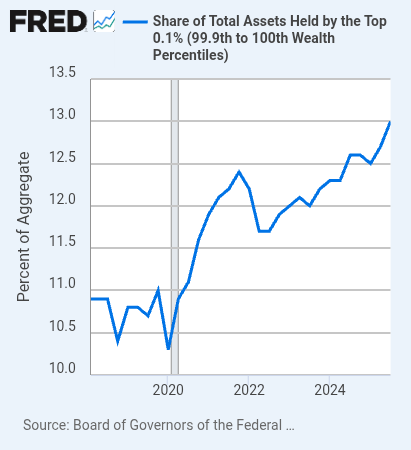
You’d think with seven centuries of balance sheet creation rate cuts would be postponed indefinitely. I mean maybe Powell and @neelkashkari’s grandchildren can discuss rate cuts? 🤡🌎😂 #inflation#QE#ZIRP
Investors in 1922 Weimar Germany and 2017 Venezuela who waited for a dip in the gold price to get rid of their dying currencies were wiped out. We are at a stage in which you need to get into the lifeboat.
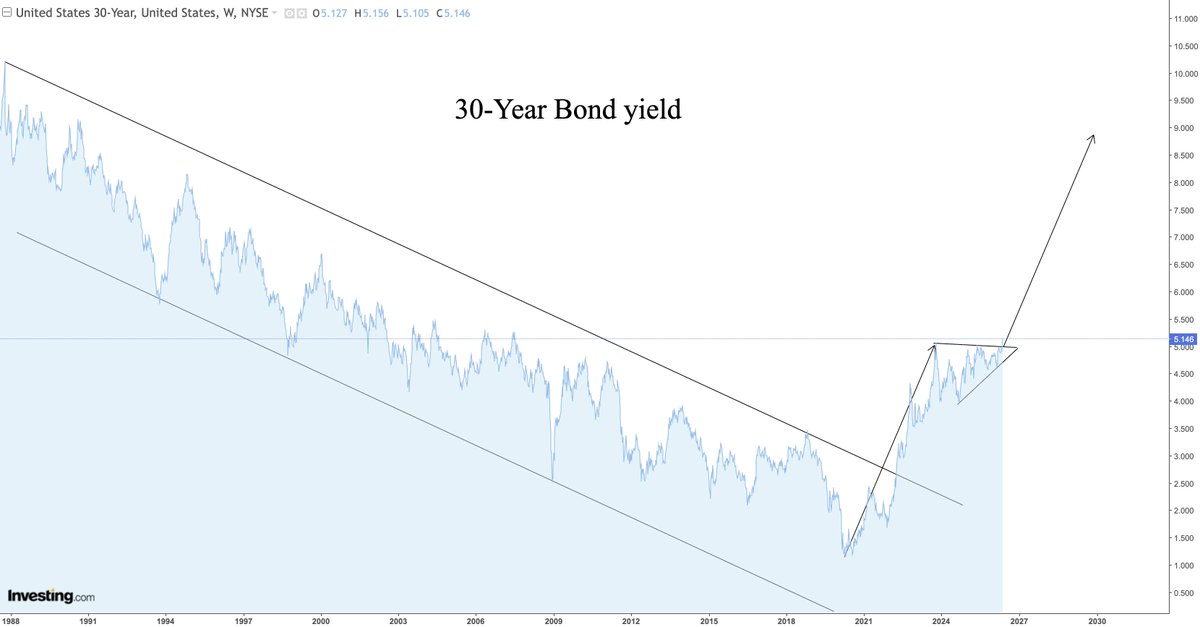
Sell the Long Bond and wear diamonds! None of the experts saw the prospect of a 5% yield in the early part of this decade. This chart tells us 9% by the end of the decade is a possibility.
I do this from time to time.
Lately people have been sweating…
Since January 1962, the average 10-year-yield is 5.82%. The median yield is 5.44%.
Today (May 15, 2026) 4.6%.
Yes, we have far more debt now.
Gee, how did that happen?
#WGS10YR
BREAKING: Jerome Powell has officially ended his 8y term as Federal Reserve Chair
Due his controversial policies "transitory inflation", printing $6 trillion & doubling T-Bill purchases in his final 6 months, he'll go down as the most accommodative K shaped Fed Chair in history
In 458 BC, Rome was on the brink of collapse.
An invading army had trapped the Roman consul and his legion in a mountain pass. Panic spread through the city. The Senate did the only thing they could think of:
They sent messengers to find a 60-year-old farmer plowing his field.
His name was Lucius Quinctius Cincinnatus. He had once been a senator, then lost his fortune paying his son's bail. Now he worked his own four-acre plot just to feed his family.
When the Senate's envoys arrived, they found him sweating behind a plow. They asked him to put on his toga so they could deliver an official message.
The message: Rome was making him dictator. Absolute power. Total command of the army. No checks. No oversight. No term limit.
He accepted.
Within 16 days, Cincinnatus had raised an army, marched out, surrounded the enemy, and forced their surrender. The republic was saved.
He had legal authority to rule for six months. He could have stayed. He could have expanded his power. He could have done what every other ruler in human history did when handed unlimited control.
Instead, he resigned on day 16.
He took off the toga, walked back to his farm, and finished plowing the field he'd left half-done.
Twenty years later, when Rome faced another crisis, they called him back. He was 80 years old. He took command, crushed the conspiracy, and resigned again, this time after just 21 days.
He died poor. On his farm.
2,200 years later, when George Washington was offered a kingship after winning the American Revolution, he refused and went home to Mount Vernon. The reason he was hailed as "the American Cincinnatus" is because Europeans literally could not believe a man who had won would willingly give up power.
King George III, on hearing Washington would resign rather than rule, said: "If he does that, he will be the greatest man in the world."
The lesson isn't that Cincinnatus was humble.
The lesson is that for most of human history, the people most qualified to lead were the ones who didn't want to. And the moment a society starts rewarding those who chase power instead of those who flee from it is the moment the republic begins to die.
Cincinnati, Ohio is named after him.
Most people who live there have no idea why.
A pre-1965 dime has about $5.34 worth of silver.
That's enough to buy a gallon of gas (in most states) and get change back.
It's the same silver, but the currency changed.
A former World Bank president has sounded the alarm, revealing that the Federal Reserve has lost over a trillion dollars—and counting—turning it into nothing more than a massive hedge fund for the rich and powerful.
He claims the Fed is borrowing money from banks at 5.4% interest, then pouring it into government bonds, creating the illusion that the government’s financial situation is better than it actually is.
He warns that this scheme isn’t just limited to the U.S.—it’s happening across central banks worldwide.
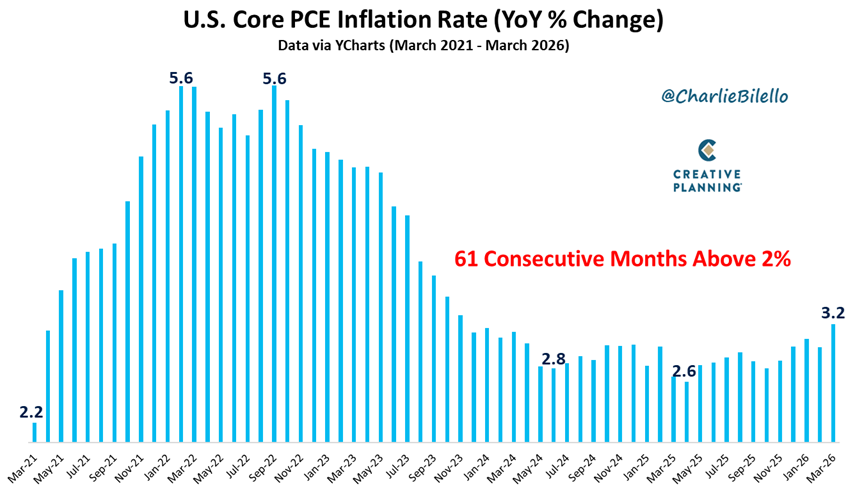
The Fed's preferred measure of inflation (Core PCE) came in at 3.2% in March, the highest level since November 2023. This was the 61st consecutive reading above the Fed's 2% target level. There will be no Fed rate cut in June and one could make a strong case for a rate hike.
The Federal Reserve is expanding its balance sheet at a pace greater than 7.5% per year; during a period when the U.S. economy is supposedly not in a recession. This is not normal monetary policy; it is almost certaintly an emergency response to a structural crisis in the U.S. Treasury market.
Tomorrow's News Today...
BREAKING: NO CHANGE. THE FED HOLDS INTEREST RATES STEADY AT 3.50-3.75%, CITING CONTINUED UNCERTAINTY OVER THE WAR IN IRAN AND ITS IMPACT ON ECONOMIC GROWTH AND INFLATION.
Big Print Update
In written answers to the Senate Warsh re-emphasized that he does not think inflation statistics are accurate and in his testimony he suggested using the "trimmed mean" which throws out outlier prices and is currently printing much lower than headline numbers. Wake up folks. Bessent is calling the shots and Warsh is going to cut short rates. They have to to reduce government interest expenses. Given that this administration doesn't move slowly, I could see an unscheduled Fed meeting right after May 15 and a 100 bps rate cut. Last chance to get on the sound money train at relatively attractive prices: gold, silver, bitcoin.
Is this the Big Print? Yes and no. M2 the monetary base grows when the banks make loans and print money into existence. The Fed creates money out of thin air in the form of reserves which it gives to the banks in exchange for Treasury Bonds. Literally with a mouse click. The bank reserves do not hit M2 but they allow the banks to increase their lending which does hit M2. It generally does this in a crisis (2008, COVID). Warsh has said that (absent a market disruption) he wants to shrink the balance sheet (i don't believe he can) but that lower interest rates fuel growth. He believes in AI productivity gains he and Bessent emphasize growth. Therefore, he will cut. Another credit/inflation cycle will begin. All other things being equal: inflationary. The big unknown? The Bond Market. If the bond market realizes that real yields are hugely negative it will sell off hard and drive the Fed into crisis mode and YCC. Given that the middle east problem appears to be dragging on my operating assumption is lower rates, credit growth, more inflation, stock and bond trouble and then the CRISIS which creates the Big Print on the Fed's balance sheet. If they were to lock long bonds at 2.5% which they did to finance WWII the bond market will look at the Fed and say "sold to you". The Fed Balance sheet is ~$6.6T. US Federal debt is $39T. So, Big Print 1: GFC $3.6T, Big Print 2: COVID $5.0T. Big Print 3: ???
None of us own enough sound money assets.