HMRC Can’t See My Bitcoin, It’s Anonymous, Right? Think Again.
I’ve heard this one too many times. Let’s clear up a big crypto misconception: Bitcoin transactions aren’t as private as you might think.
Here’s the lowdown:
- Public Ledger: Bitcoin transactions are recorded on the blockchain, which is like a digital ledger that everyone can see.
- Pseudonymous, Not Anonymous: Transactions show addresses, not names. Sounds private, right? Not quite.
Even though your name isn’t plastered on the blockchain, your identity can still be linked to Bitcoin addresses. How?
- Linkable Identity: If you’ve ever used a Bitcoin address linked to an exchange where you’ve confirmed your identity, boom—your future transactions can be tracked.
- Chain Analysis: Experts can analyse the blockchain and potentially link your Bitcoin addresses together, exposing your total holdings and past transactions.
For Example: Say you bought 0.5 BTC through an exchange and provided your ID. You also have 1 BTC stashed in a hardware wallet from other sources, and you think it’s under the radar. You decide to move all your BTC to a new address in your hardware wallet. Good so far, right? But if you spend 0.75 BTC from this wallet, the transaction will mix the traceable 0.5 BTC with 0.25 BTC from your "anonymous" stash. Suddenly, your hidden 1 BTC isn’t so hidden. Observers can now trace this back to you, revealing your total assets and their origins.
The Bottom Line: Bitcoin’s blockchain is a transparent world. Moving BTC around doesn’t erase trails. If you’ve mingled your identified and unidentified BTC, a keen observer (like HMRC) can unravel your financial history and keep tabs on your future moves.
Luckily for you, it’s not too late to set things right with HMRC. Making a voluntary disclosure can help you manage your tax affairs before they manage you. Need help with this? Get in touch!
#Crypto #Cryptocurrency #CryptoTax #CryptoTaxation #Tax #Personal #Tax #Accounting #CryptoAccounting #CryptoInvesting #CryptoPortfolio #CryptoBusiness #TaxOptimisation #FinancialReview #WealthManagement #SelfAssessment #HMRC #Finance #Investing #Wealth #AssetManagement
To what extent is HMRC spying on me?
You might be aware that the taxman keeps an eye on financial comings and goings, but the depth of that surveillance might surprise you.
Introduced back in the summer of 2010, HMRC’s Connect wasn’t fully operational at launch. Fast forward to today, it involves about 350 dedicated employees and has evolved into something far more sophisticated.
What is Connect? Well it certainly isn't the game.
It's a powerful social network analysis and data mining system developed by HMRC to detect tax evasion and undisclosed activities.
Connect isn’t just scraping the surface; it digs deep, cross-referencing tax records with an expansive array of data sources:it's a powerful social network analysis and data mining system developed by HMRC to detect tax evasion and undisclosed activities.
Here are some examples of what information it can see:
- Adverts on the internet e.g Rightmove and Zoopla
- Bank accounts and pensions
- Council Tax
- Credit and Debit Card transactions, going back four years
- Companies House
- DVLA
- DWP
- Ebay and other internet marketplaces
- The electoral roll
- Gas safe register
- Insurance Companies
- Land Registry
And yes, HMRC has even utilised Google Earth in its efforts.
According to a recent report by This Is Money, Connect now processes an astonishing 55 billion data items related to taxpayers.With AI technology only getting more advanced, it’s intriguing to think about what Connect will be capable of in the future.
Tax evasion is no small game, and HMRC’s Connect system is like having a high-powered detective on your tail.
What do you think about the reach of Connect? Too much, or just what’s needed to keep things fair?
#Crypto #Cryptocurrency #CryptoTax #CryptoTaxation #Tax #Personal Tax #Accounting #CryptoAccounting #CryptoInvesting #CryptoPortfolio #CryptoBusiness #TaxOptimisation #FinancialReview #WealthManagement #SelfAssessment #HMRC #Finance #Investing #Wealth #AssetManagement
Ever wondered what secrets a Bitcoin transaction might hold?
When you peek into a Bitcoin transaction through a block explorer like https://t.co/utD64dbRet, you can uncover a wealth of information—more than just numbers and addresses.
Here’s what you can find out:
✅ Transaction Inputs and Outputs: Every transaction shows where the Bitcoins came from (inputs) and where they are going (outputs). This includes the amount transferred and the Bitcoin addresses involved.
✅ Transaction Value: The total amount of Bitcoin that was transferred in the transaction, displayed in both BTC and your preferred fiat currency.
✅ Fees Paid: You can see the transaction fees paid to miners. This is especially interesting in understanding how fees fluctuate based on network activity.
✅ Block Information: Find out which block the transaction was included in, the block height (number of blocks mined since the first block), and the time it was mined.
✅ Confirmation Status: Check how many confirmations a transaction has received. A higher number of confirmations generally means a more secure transaction.
✅ Hash: You’ll see the unique hash of the transaction, a kind of digital fingerprint that ensures the transaction hasn’t been altered.
Using a block explorer isn’t just about tracking your own transactions; it’s a window into the Bitcoin network’s soul, showing how funds move and how the network processes them.
Curious to dive deeper into your Bitcoin transactions?
To get started I would recommend visiting a block explorer like https://t.co/utD64dbRet, paste in a transaction ID, and go from there.
Whether you're verifying transaction details, tracking your payments, or just satisfying your curiosity, these tools are invaluable.
#CryptoAccounting #ForensicAccounting #CryptoSecurity #BlockchainTechnology #DigitalAssets #CryptoBusiness #Cryptocurrency #FinancialReview #CryptoAccounting #Accounting #CryptoTaxation #Crypto #Fraud #CryptoCrime #Crime #CyberCrime #CyberSecurity #Hacking #WhiteCollar
Have you ever heard of CARF?
The Crypto-Asset Reporting Framework, or CARF, is a initiative by the OECD Global Forum on Transparency and Exchange of Information for Tax Purposes.
It aims to facilitate the automatic exchange of information between countries to address tax evasion risks associated with cryptocurrencies and digital assets.
With the rapid adoption of cryptocurrencies and blockchain technologies, there are growing concerns about their potential to facilitate illicit activities, including tax evasion.
The European Commission highlighted in a 2022 Impact Assessment that the pseudo-anonymity and decentralised nature of cryptocurrencies heighten these risks.
What Does This Mean for Crypto Service Providers?
Crypto Asset Service Providers (CASPs) are now mandated to gather essential personal information from users, such as tax residency and taxpayer identification numbers.
They must also assess the 'reasonableness' of this information against other known details about the user.
Annual Reporting Requirements Include:
✅ Fiat to Crypto Transactions: Exchanges between crypto-assets and fiat currencies.
✅ Crypto to Crypto Transactions: Trades involving one or more forms of crypto-assets.
✅ Crypto Transfers: This includes using crypto to pay for goods and services and transfers to unhosted wallets.
Initially, the proposal required CASPs to report wallet addresses for transactions to unhosted wallets. However, this was removed from the final regulations after feedback from industry stakeholders—a decision that has faced criticism from groups like the Tax Justice Network.
In the EU, these rules will be enforced starting January 1, 2026, with the first reports due in 2027."
#Crypto #Cryptocurrency #CryptoTax #CryptoTaxation #Tax #Personal #Tax #Accounting #CryptoAccounting #CryptoInvesting #CryptoPortfolio #CryptoBusiness #TaxOptimisation #FinancialReview #WealthManagement #SelfAssessment #HMRC #Finance #Investing #Wealth #AssetManagement
Ever wondered how experts track and analyse cryptocurrency transactions across the blockchain?
One key technique known as clustering.
Clustering in crypto forensics involves grouping together blockchain addresses that are likely controlled by the same entity.
Here’s how generic clustering heuristics make this possible:
✅ Deposit Heuristic: Useful for identifying and clustering addresses belonging to centralised services like exchanges. By tracing from deposit addresses to consolidation addresses—where multiple users’ deposits are mingled (similar to how banks operate)—this heuristic helps map out the flow of funds on platforms, particularly on account-based blockchains like Ethereum.
✅ Potentially Unnamed Service Heuristics: Sometimes, certain wallets behave in a way that suggests they are operated by a service, yet the actual custodian remains unidentified. In such cases, these addresses are clustered and labeled as an unnamed service until further information can definitively attribute them to a known entity.
✅ Event-based Heuristics: These focus on clustering addresses linked to decentralised protocols on smart contract-enabled blockchains such as Ethereum. By monitoring specific activities triggered by the protocol’s factory contract, this heuristic clusters associated addresses based on their interactions.
✅ Co-spend Heuristic: This identifies addresses that co-own Unspent Transaction Outputs (UTXOs) spent together in the same transaction—a common trait for UTXO-based blockchains like Bitcoin. However, it’s crucial to consider transactions like CoinJoin, designed to obscure such analysis. Proper implementation must differentiate between genuine co-spends and those meant to confuse.
#CryptoAccounting #ForensicAccounting #CryptoSecurity #BlockchainTechnology #DigitalAssets #CryptoBusiness #Cryptocurrency #FinancialReview #CryptoAccounting #Accounting #CryptoTaxation #Crypto #Fraud #CryptoCrime #Crime #CyberCrime #CyberSecurity #Hacking #WhiteCollar
Ever wondered how experts track and analyse cryptocurrency transactions across the blockchain?
One key technique known as clustering.
Clustering in crypto forensics involves grouping together blockchain addresses that are likely controlled by the same entity.
Here’s how generic clustering heuristics make this possible:
- Deposit Heuristic: Useful for identifying and clustering addresses belonging to centralised services like exchanges. By tracing from deposit addresses to consolidation addresses—where multiple users’ deposits are mingled (similar to how banks operate)—this heuristic helps map out the flow of funds on platforms, particularly on account-based blockchains like Ethereum.
- Potentially Unnamed Service Heuristics: Sometimes, certain wallets behave in a way that suggests they are operated by a service, yet the actual custodian remains unidentified. In such cases, these addresses are clustered and labeled as an unnamed service until further information can definitively attribute them to a known entity.
- Event-based Heuristics: These focus on clustering addresses linked to decentralised protocols on smart contract-enabled blockchains such as Ethereum. By monitoring specific activities triggered by the protocol’s factory contract, this heuristic clusters associated addresses based on their interactions.
- Co-spend Heuristic: This identifies addresses that co-own Unspent Transaction Outputs (UTXOs) spent together in the same transaction—a common trait for UTXO-based blockchains like Bitcoin. However, it’s crucial to consider transactions like CoinJoin, designed to obscure such analysis. Proper implementation must differentiate between genuine co-spends and those meant to confuse.
#CryptoAccounting #ForensicAccounting #CryptoSecurity #BlockchainTechnology #DigitalAssets #CryptoBusiness #Cryptocurrency #FinancialReview #CryptoAccounting #Accounting #CryptoTaxation #Crypto #Fraud #CryptoCrime #Crime #CyberCrime #CyberSecurity #Hacking #WhiteCollar
You might have heard of privacy coins like Monero, Zcash, and Dash.
These coins enhance privacy through technologies that obscure transaction details, making the movement of money virtually untraceable.
This capability raises significant questions about the balance between individual privacy rights and governmental responsibilities.
Privacy coins cater to users seeking greater anonymity in their transactions, which is not typically offered by mainstream cryptocurrencies like Bitcoin.
By masking the transaction amount and the addresses of the sender and receiver, these coins provide a level of privacy that mimics the anonymity of cash transactions.
While privacy is a right, it comes into conflict with the government's duty to prevent financial crimes such as money laundering, terrorist financing, and tax evasion.
Privacy coins can potentially be used as tools for illegal activities because they make it difficult for authorities to trace transactions. This anonymity complicates the work of law enforcement and regulatory bodies, posing a huge challenge.
What do you think about the use of privacy coins? Are they a necessary tool for protecting individual privacy, or do they pose too great a risk to be left unchecked?
#Crypto #Cryptocurrency #CryptoFacts #CryptoTax #CryptoTaxation #CryptoInvesting #CryptoPortfolio #CryptoBusiness #DigitalAssets #Bitcoin #NFT #Asset
What Are Token Standards?
Ever wondered how crypto tokens operate so seamlessly across various platforms? The secret lies in token standards, the rulebooks that govern the functionality of tokens on the blockchain.
At their core, token standards consist of a set of rules, conditions, and functions that outline how a token behaves within the blockchain ecosystem. These standards ensure that tokens interact smoothly with other software and platforms.
Many blockchain smart contracts, especially those in the Ethereum ecosystem, adhere to specific token standards like ERC-20, ERC-721, ERC-777, and ERC-1155.
Here’s a quick breakdown:
ERC-20: The foundation for creating fungible tokens, which are interchangeable and divisible, just like traditional money.
ERC-721: The standard for non-fungible tokens (NFTs), which are unique and indivisible, making them perfect for representing one-of-a-kind items like digital art or collectibles.
ERC-777 and ERC-1155: These standards introduce more complex interactions but maintain the foundational principles set by ERC-20 and ERC-721.
By standardising the way tokens are created, issued, and managed, token standards not only facilitate the smooth functioning of smart contracts but also bolster the interoperability and reliability of a blockchain network.
#Crypto #Cryptocurrency #CryptoFacts #CryptoTax #CryptoTaxation #CryptoInvesting #CryptoPortfolio #CryptoBusiness #DigitalAssets #Bitcoin #NFT #Asset
Do you still have questions about the Mavryk blockchain & our quests with @joincommonwlth? 🧐
Join us this Saturday at 4pm UTC for our upcoming AMA! We will be joined by @Davis_AlexD & @theSamMorrow as we talk about #RWA's, #DeFi, answer FAQs from Discord, and take your questions live! 🥳
Set your reminder below to be notified! 👇 https://t.co/l8Vo5xd3iL
🔊Introducing the Mavryk Network!
Mavryk is a new Layer 1 pioneering the onboarding of #RWAs with #DeFi, making the digital economy more accessible, efficient, and interoperable.
Together, we're shaping the future of Open Finance, join us for the journey and #BeMavryk!
🧵
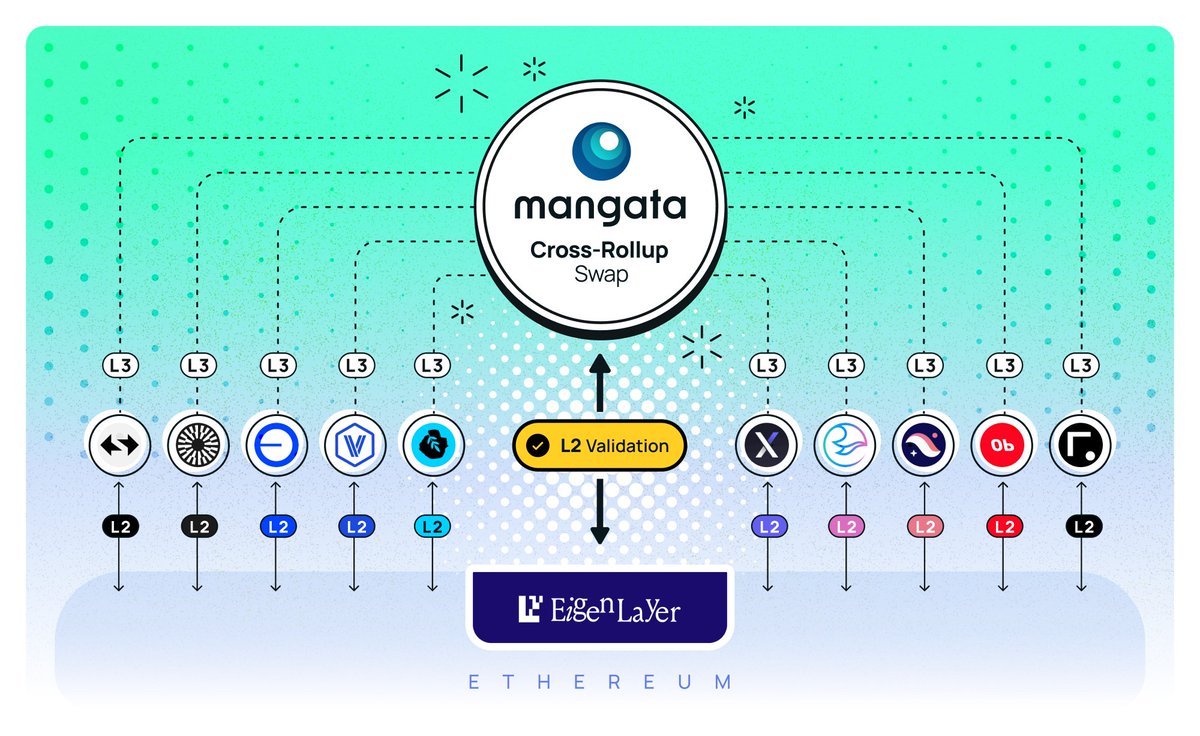
Introducing cross-rollup swaps by Mangata! 🔁
The number of ETH L2s go brrrr but liquidity remains fragmented across the Ethereum ecosystem. This is a major problem!
Swap from one rollup to another, in just seconds.
Unified liquidity across all Ethereum Layer 2s 🧵👇
🚨 ANNOUNCEMENT ALERT! 🚨
Registration for the upcoming Analog Testnet launch is now OPEN! 🥳
Be among the first to experience the cutting-edge features of our platform. 🎉
Ready to dive into the future? Sign up today! 👇
https://t.co/VrJKoZVUJH
#AnalogTesnet
🌟 Introducing the #BLOCKLORDS GameDrop! 🌟
Today marks a pivotal moment in the BLOCKLORDS universe! As the details of GameDrop are revealed. Get ready to dive into how you can participate in this groundbreaking event. 👇
At Dyor, we're on a mission to make Web3 easily accessible to all. Our platform uses unique features like Swipe-to-Explore making investing easier, all designed with YOU in mind as we aim to simplify your journey into DeFi💙