Hi, I am student @ChaiCodeHQ cohort 2026 student.
Just finished reviewing yesterday class, now I want to connect with people, who are in IT.
Let’s inspire each other in the feed.
- Instead of chasing every third-party state library, true engineering happens when you build real projects under industry-standard constraints.
- For complex concepts like Server-Side Rendering (SSR) and Server Components, the logical path forward is moving to Next.js.
The final chapter of the React series with @Hiteshdotcom is officially wrapped. At its core, React is an interface tool designed to safely fetch, optimize, and display backend data.
Time to stop consuming tutorials and start building.
@ChaiCodeHQ#ChaiCode
. Connect an open-source backend like FreeAPI to MongoDB Atlas and build full-stack frontends for Twitter or Instagram clones.
@Hiteshdotcom@ChaiCodeHQ#chaicode
Deploying React apps to production is straightforward with Vercel or Netlify.
- Isolate your app folder
- Secure .env files in .gitignore
- Push to GitHub
- Map your environment keys in the cloud dashboard
@Hiteshdotcom@ChaiCodeHQ#chaicode#reactjs#buildinpublic
Assembling the page views for the React mega-project
- Built core page modules including Signup, Login, AddPost, and EditPost.
- Structured client-side routing by making RouterProvider paired with custom layout guards to lock down secure pages.
@Hiteshdotcom@ChaiCodeHQ
Building production-ready forms in React
> Built a post container that shifts between creation and editing modes.
> Implemented a smart useEffect tracking hook that watches input fields to auto-generate optimized browser-friendly URL slugs on the fly
@Hiteshdotcom@ChaiCodeHQ
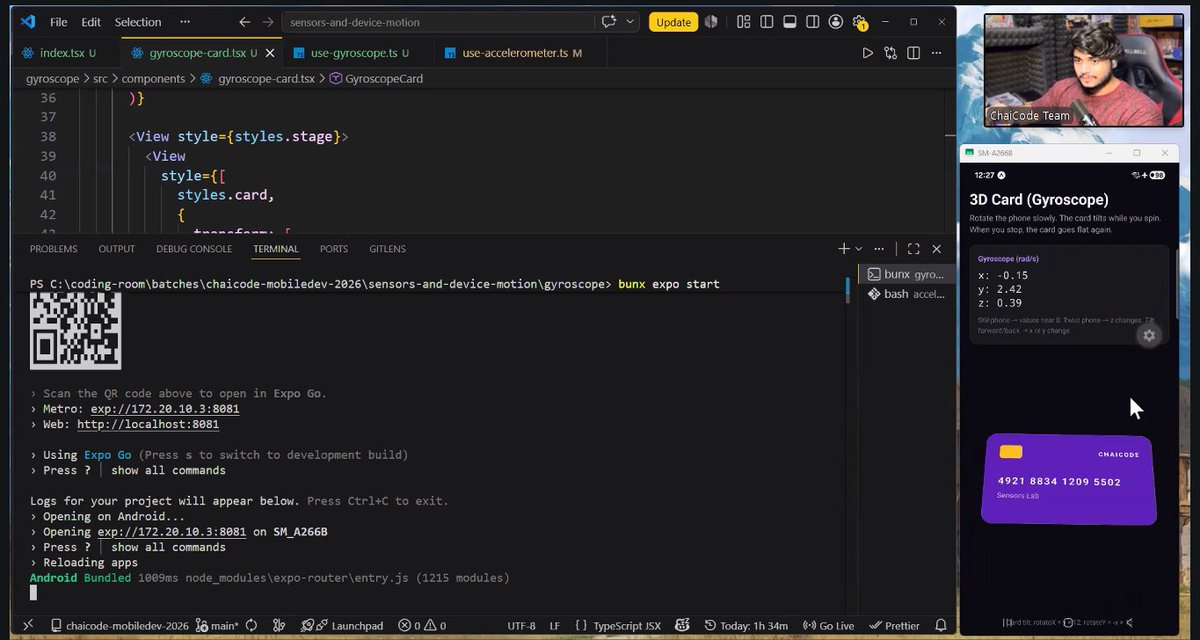
Today we learned about how make apps using physical interactions from the real world - the sensors
Built 3 app using Accelerometer, gyroscope and light sensor.
session felt like attending physics class 👨🏫
@surajtwt_@nirudhuuu@ChaiCodeHQ#mobiledevphysics
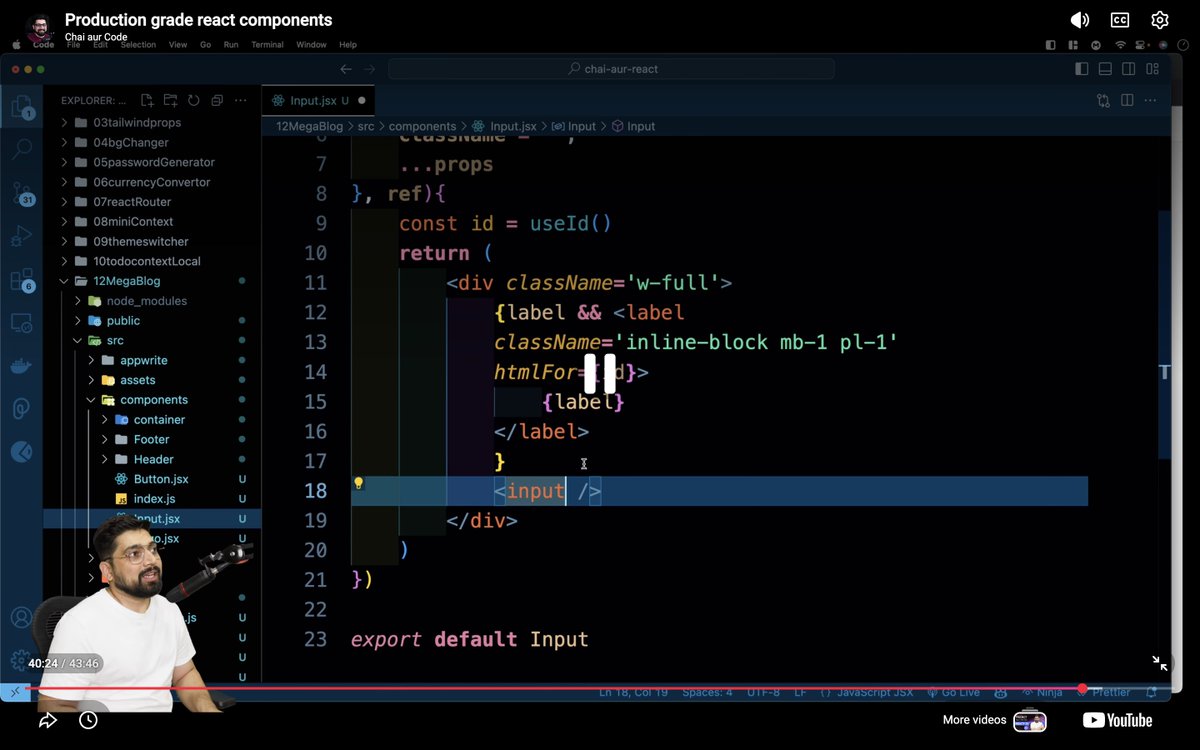
1. Built reusable input wrappers that dynamically manage custom labels, styles, and placeholders.
2. Explored forwarding references to give parent layout containers direct control over inner DOM elements for clean, scalable, and optimized forms.
Setting up global state management with Redux Toolkit
Built a centralized store and a dedicated authSlice with clean login/logout actions.
Wrapped the app shell in a <Provider> and used a useEffect hook to sync active Appwrite auth states on mount.
@Hiteshdotcom@ChaiCodeHQ
Setting up database collections and storage handling with Appwrite.
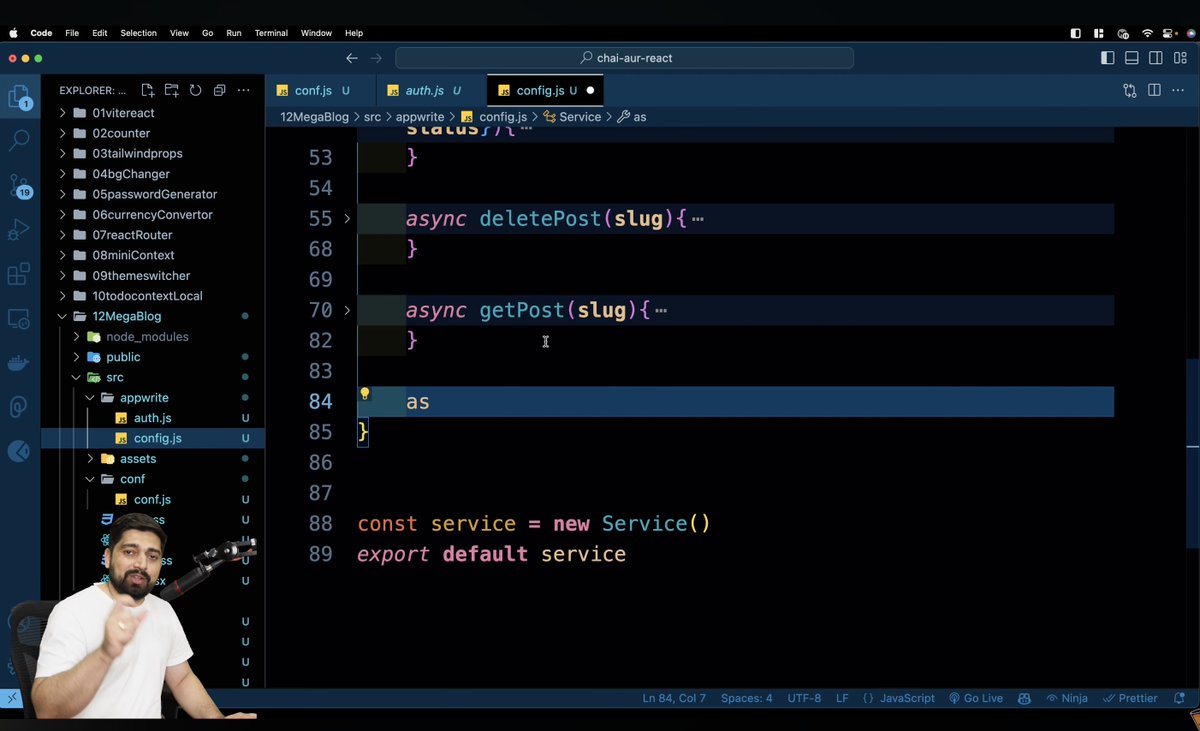
Built clean async wrappers for blog CRUD actions, asset uploads, and custom indexed queries using Query. Equal to isolate backend logic from frontend views.
@Hiteshdotcom@ChaiCodeHQ#chaicode
Mark Zuckerberg says he doesn't drink coffee or caffeine and does jiu-jitsu instead
"Sometimes on vacation, I'll drink it recreationally. I don't like any kind of chemicals or anything like that"
"My sister gives me such a hard time about that. She's like, 'You're just sitting there raw dogging reality'"
"I wake up and I fight people... It's neurologically stimulating, good cardio and strength, it's a good day"
"Better than caffeine for me. I'm just not into that stuff"
Microsoft just banned its own engineers from using AI.
The tool was literally costing MORE than the humans it was supposed to replace.
They lied to you about AI adoption and now the whole narrative is blowing up:
Microsoft gave thousands of engineers access to Claude Code six months ago and encouraged them to use it.
Engineers loved it and adoption exploded. But then the invoices arrived.
Token-based pricing means every query, every code review, every debugging session costs money. At scale across 100,000 engineers, the numbers became so large that Microsoft issued an internal order to cancel nearly all Claude Code licenses by end of June and force everyone onto their own cheaper tool instead.
The company that invested $5 billion in Anthropic just told its own people to stop using Anthropic's product because it costs too much.
Uber's story is even worse...
Their CTO Praveen Neppalli Naga told The Information that the budget he planned for the full year was "blown away already" by April.
Uber had rolled out Claude Code in December 2025. By March, 84% of their 5,000 engineers were using it with 70% of all committed code coming from AI systems.
Heavy users were burning $500 to $2,000 per month each. Naga himself spent $1,200 in a single two-hour demo session.
The company had even built internal leaderboards ranking engineers by how much AI they used. They literally gamified the spending and then ran out of money.
Now look at what Nvidia's own VP of applied deep learning Bryan Catanzaro said to Axios last month. Direct quote:
"For my team, the cost of compute is far beyond the costs of the employees."
This is a VP at the company that SELLS the chips saying that using AI is more expensive than paying humans.
Think about what this means for the entire AI narrative.
Every CEO on every earnings call for the past two years has said the same thing:
AI will make us more efficient, reduce headcount, and cut costs.
The stock market rewarded every company that said it.
Fired workers, stock goes up. Announced AI adoption, stock goes up.
But the actual companies deploying AI at scale are discovering the math doesn't work. The MORE employees use AI, the HIGHER the bill.
Goldman Sachs forecasts a 24x increase in token consumption by 2030 as companies adopt AI agents. Gartner just published a report showing that even though individual token prices will drop 90% by 2030, total enterprise AI costs will go UP because agents consume exponentially more tokens per task than basic tools.
Meta built an internal dashboard called "Claudeonomics" to track which employees use the most AI. Amazon started pushing engineers to "tokenmaxx," their internal term for consuming as many AI tokens as possible.
Both companies are spending hundreds of billions on AI infrastructure this year alone.
And Microsoft, the company that bet its entire future on AI, just told 100,000 engineers to stop using the tool they liked best because the per-token bills got out of control.
The companies building AI are telling investors it saves money. The companies using AI are finding out it costs more than the humans it was supposed to replace. And even the company that makes the chips just admitted it through its own VP.
This is the gap nobody on Wall Street is pricing in.
$725 billion in AI infrastructure spending this year across Big Tech. And the first companies to actually deploy these tools at scale are already pulling back because the economics don't work.
What do you think?
Another amazing class on NEXT.js by @surajtwt_ sir.
Today we learned about the Server and Client components and their use cases, difference.
Api routes and server action and then build a fullstack todo application.
@ChaiCodeHQ@Hiteshdotcom@nirudhuuu
Setting up an authentication service with Appwrite.
Built a class-based wrapper to avoid vendor lock-in, ensuring the backend can be switched seamlessly in the future without breaking the frontend codebase.
@Hiteshdotcom@ChaiCodeHQ#chaicode
Setting up a production-ready React blog project using Vite!
Learnt how to prefix variables with VITE_, map them via a config.js object, and structure Appwrite backend collections. @Hiteshdotcom@ChaiCodeHQ#chaicode
Fun class on NEXT.js by @surajtwt_ sir
Learned about:
Intro to next.js
File base routing
- static route
- nested static route
- dynamic routes
- multi dynamic route
- optional/catch all routes
Route Groups
Rendering: CSR, ISR, SSR and SSG
and imp components
@ChaiCodeHQ
Setting up the React mega project backend with @ChaiCodeHQ
Using Appwrite for auth & storage, RTK for state, TinyMCE for text editing, and React Hook Form for validation. Thanks @Hiteshdotcom#chaicode