Felicitations to all Passport Authorities in India and abroad on the occasion of the 14th Passport Seva Divas.
The rollout of Passport Seva Programme 2.0, introduction of chip-enabled e-Passports, opening of new PSKs and POPSKs, and record levels of passport issuance are enhancing ease of travel, expanding access to global opportunities, and empowering citizens.
#TeamMEA reaffirms its commitment to keep making passport services delivery faster, more transparent and accessible, guided by the vision of ‘Surakshit Passport, Sugam Seva, Sashakt Nagrik’.
#12YearsofSeva
When studying physics at university, Albert Einstein missed many of the mathematics classes thinking them superfluous. Luckily, his friend Marcel Grossmann (left) took excellent notes. Later, when developing his general theory of relativity he asked Grossmann for help with math.
Today, on my final day as Director of National Intelligence, I’m releasing never-before-seen communications and documents exposing how Dr. Fauci provided millions in US taxpayer dollars to fund dangerous gain-of-function research at the Wuhan lab, worked with politicized elements within the Intelligence Community to suppress the truth about his actions and hide the virus’ lab-leak origins, and lied to Congress while under oath in 2024. It’s time you know the truth.
https://t.co/3YJSstB7d4
“You have thousands of moments ahead of you. The important thing isn’t to get them all right; it’s to find a way to keep moving forward.”
Sundar Pichai, MS ’95, CEO of Google and Alphabet, addressed the Class of 2026 at Stanford’s 135th Commencement ceremony.
Watch the full speech at the link: https://t.co/3OFNRonqeH
The team of Lucnica Ensemble sang Vande Mataram during the welcome in Bratislava.
This comes at a time when we are marking 150 years of Vande Mataram and recalling its glorious contribution to India’s history and freedom struggle.
🧵 1/2 This weekend @celebi_aviation’s local 5th columns, sent me a legal notice implying that @RTErdogan & @EmineErdogan’s daughter is of low character & association with her is disreputable. My lawyer @jai_a_dehadrai sent them this reply (notice in following tweet)
The green and scenic landscape around the Bhagavathipuram railway station near the TN-Kerala border beautifully captured as a train passes through, on the lovely Sengottai-Punalur route, in the jurisdiction of @drmmadurai in @GMSRailway! Pic courtesy, Aneesh! #IndianRailways #photography @BalakrishnanR
“In the depth of winter, I finally learned that within me there lay an invincible summer.”
When Albert Camus was awarded the 1957 literature prize, he was just 44 years old – the second youngest literature laureate at the time of the award.
Read more: https://t.co/XxLfYsQqiX
The Dhritarashtra Syndrome:
How Putramoh Has Come To
Unravel Mamata Banerjee’s Party
Just as Dhritarashtra lost his kingdom to putramoh, Mamata Banerjee lost Bengal and is now helplessly watching her party wither from within due to her 'andho bhalobasha', or blind affection, for her nephew.
Just weeks after a historic electoral wipeout, Mamata Banerjee’s Trinamool Congress has suffered a split in the state-level already and is now staring at a bifurcation in its parliamentary party also.
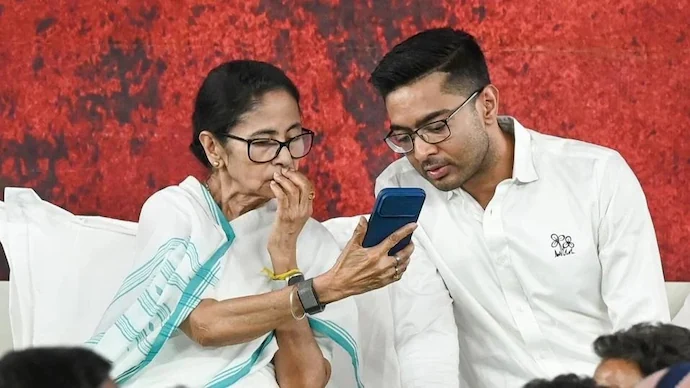
Several MPs are already in Delhi or heading there. Both Mamata Banerjee and her nephew Abhishek Banerjee have reached Delhi amid the escalating crisis. And in a desperate counter-move, Mamata has just clipped her own nephew Abhishek Banerjee’s wings.
This is not just another political quarrel. This is the implosion of a model of politics.
Let’s set the context with hard numbers.
In the Assembly elections, the BJP delivered a decisive verdict: 208 seats out of 294. TMC was reduced to 80 MLAs.
On June 4, 58 of those MLAs — nearly three-quarters — backed expelled leader Ritabrata Banerjee as Leader of the Opposition in the Assembly, with Speaker recognition.
Low turnout at Mamata’s own huddle on June 5 told the story: only 8 of 80 MLAs and 6 MPs showed up at Kalighat.
Now the parliamentary wing is wobbling. TMC has around 28 Lok Sabha MPs. Under the anti-defection law, a clean split needs roughly 19 MPs (two-thirds).
Sources say several are already in Delhi. Cooch Behar MP Jagadish Chandra Basunia is there. Two actor-MPs are expected next week. Reports suggest around 20 MPs have been in touch with the BJP.
On June 5-6, at a National Working Committee meeting at her Kalighat residence, Mamata struck back with a comprehensive overhaul.
She retained Abhishek Banerjee as National General Secretary — but immediately diluted his authority by appointing two joint national secretaries: Rajya Sabha MPs Derek O’Brien and Dola Sen.
The message is unmistakable: key decisions will now be collective, not unilateral.
She also dissolved all party committees and frontal organisations for what the party called “introspection and performance review.”
Chandrima Bhattacharya replaces Subrata Bakshi as West Bengal President. Multiple old-timers and loyalists have been elevated. Firhad Hakim, long-time Kolkata strongman, stepped down as Mayor and was left out of the new structure.
This is classic damage control: promote veterans, force power-sharing at the top, and project unity ahead of the INDIA bloc meeting in Delhi on June 8.
The stated trigger is Abhishek Banerjee’s style of functioning. Rebels allege he operates in a closed, syndicate-driven silo and rarely engages directly with grassroots workers or even many elected representatives.
But the real story is structural.
TMC was built as a personality-driven, anti-Left machine under Mamata. Over 15 years in power it evolved into a classic patronage ecosystem — where loyalty to the high command (increasingly the family) determined access to contracts, postings, and protection.
When that ecosystem loses the oxygen of state power after a crushing defeat, the contradictions explode. The same MLAs and MPs who thrived in the syndicate now see limited upside in blind loyalty.
Ritabrata Banerjee’s elevation by rebels is less about ideology and more about finding any alternative pole to Abhishek’s dominance.
This is the recurring tragedy of dynastic-regional parties in India: they deliver short-term electoral mobilisation through muscle, money, and identity, but they rarely build resilient second-rung leadership or ideological coherence. When the leader’s aura fades or electoral math turns, the entire structure wobbles.
Short term: Expect more drama in Delhi this week. Possible court battles, more statements, and high-stakes negotiations. TMC’s already weakened position in the INDIA bloc just got shakier.
For Bengal: After 15 years, the state got a clear electoral verdict for change. Instead of a mature transition or deep introspection on governance outcomes — law and order, migration, jobs, institutions — the party is consumed by internal power redistribution.
Longer term: This episode exposes the limits of family-controlled, syndicate-style organisation in a competitive democracy. It creates space — and pressure — for alternative political models focused on delivery rather than distribution of patronage.
Whether this accelerates further realignments or forces TMC into a painful internal correction will shape Bengal’s political landscape for years.
The Times of India report and cross-verified accounts from The Indian Express paint a picture of a party in rapid transition — not yet a full split, but clearly no longer the monolith it once projected.
Bengal politics has always been intense. What happens next will test whether TMC can reinvent itself or whether we are witnessing the beginning of a more fragmented and perhaps more competitive political order in the state.
What do you think — is this manageable damage control or the start of something bigger? Drop your take in the comments.
If this resonated with you, share it with others who care about India’s story. Follow Sanjay Madrasi Pandey @sanjraj for sharp, unsparing insights on country, culture, and civilisation.
I.N.D.I.A: Alliance That Never Was
When they named their alliance INDIA with full stops between every letter, perhaps they were unknowingly predicting its future because this alliance was never built to stay together. It came with built-in full stops that are now turning into permanent breaks.
INDIA alliance was always an alliance that never was.
It was a marriage of convenience between parties with zero ideological glue. Everyone wanted to be the groom, and nobody was willing to be the bride or even share the mandap without constant one-man ship.
Look at the scorecard today, sharpened by the latest electoral verdicts and open hostilities. TMC has been decisively ousted from power in West Bengal after fifteen years, with BJP delivering a historic landslide.
Mamata Banerjee and TMC, who once showed scant regard for the alliance and often went their own way, now appear humbled after the rout and are running pillar to post to garner support from alliance partners.
DMK has been decimated in Tamil Nadu, its leader losing his own seat. And in a telling blow, Congress snapped its decades-old alliance with DMK and extended support to actor Vijay's TVK to form the government.
RJD is out of power in Bihar. AAP stands routed in Delhi and is now locked in ugly public spats with Congress. The mask is now completely off. DMK has called Congress backstabbers and has been boycotting alliance meetings.
And in a striking public spectacle today in Delhi, just as bloc leaders gathered for meeting, large hoardings and posters adorned streets and prominent roundabouts across the capital, prominently displaying past statements of alliance leaders themselves, including Arvind Kejriwal, Mamata Banerjee, Sharad Pawar, and others sharply attacking Congress and Rahul Gandhi.
The posters laid bare the double standards in the starkest visual form. Fierce criticism one day, photo-op for opposition unity the next day.
The truth is simple. Congress has a habit of using regional parties when weak and sidelining or cutting deals without them when it senses an opening.
This so-called grand alliance had only one glue, hatred for Modi. The moment they failed to dislodge him or sustain coordinated momentum across states, that glue melted away.
Alliances built only on negativity, ego, and temporary convenience were never going to last. And today, with one partner after another either routed at the polls or openly rebelling, that reality is playing out in full public view, from the full stops in the name to the final stops in the states after states.
If this resonated with you, please share the video widely and follow @Sanjraj for insightful updates on country, culture & civilisation.
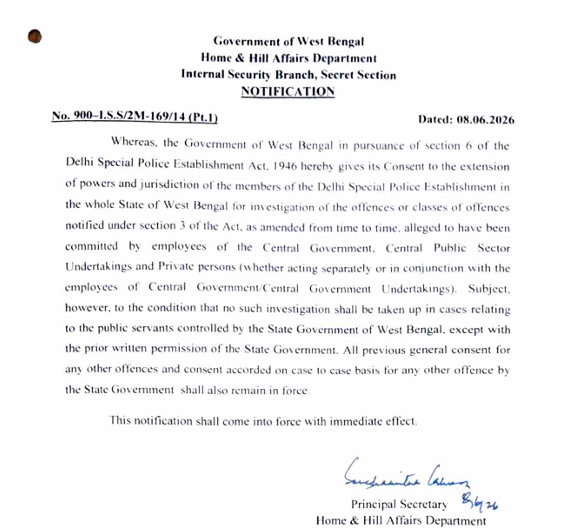
🚨 Big: For eight long years, the Trinamool Congress government in Bengal had built a wall.
In November 2018, Mamata Banerjee withdrew the general consent to the CBI. No more easy raids. No more smooth investigations into corruption cases without the state’s nod every single time.
Today, June 8, 2026, that wall has a crack. The new BJP government under Chief Minister Suvendu Adhikari has issued a notification restoring consent — but with a crucial rider.
What does this actually mean for TMC, its supporters, and especially for Abhishek Banerjee and the senior officials who allegedly ran the system hand-in-glove?
Watch this space for a detailed explainer soon!
Outrage Over Operation Lotus,
Silence Over Operation Joseph?
Everyone is shouting ‘Operation Lotus’ over what’s happening to TMC in Bengal. But when Joseph Vijay breaks AIADMK piece by piece in Tamil Nadu with Congress help, the same people suddenly go quiet. Why this hypocrisy?
Let’s peel the layers of this deep-entrenched hypocrisy that’s playing out in the South right now.
In the east, we all know the BJP delivered a massive verdict in the 2026 Bengal assembly elections, winning 207 seats and leaving Mamata Banerjee’s Trinamool Congress with just 80 MLAs.
What’s happened since is dramatic. Nearly 58 of those 80 TMC MLAs have rebelled, crossed the two-thirds mark, and even chosen expelled leader Ritabrata Banerjee as their leader of opposition.
Even before Mamata and her cronies could recover from the shock, close to 20 of TMC’s 29 Lok Sabha MPs, led by senior leader Kakoli Ghosh Dastidar, went into a huddle in Delhi and wrote to the Speaker stating they no longer want to be part of TMC and will support the NDA government.
Predictably, the usual chorus has begun—this is ‘BJP’s Operation Lotus.' Horse trading, poaching, and murder of democracy.
Fair enough, let’s talk numbers. But let’s also talk about Tamil Nadu.
In the same election cycle, actor-turned-politician Joseph Vijay’s TVK won 108 seats and formed the government with Congress and other allies’ support.
Now, just weeks later, the AIADMK — which won 47 seats — is crumbling. Multiple MLAs have already quit the party and joined TVK.
Reports suggest anywhere between 25 and 35 AIADMK legislators are in talks to switch sides. Yet, the national media and opposition voices that were screaming about Bengal have suddenly gone very quiet. No furious debates, no talk of ‘Operation Joseph.'
This selective outrage is the real story.
The fact is, personality-driven or cult-based regional parties rarely survive big electoral shocks or leadership crises. History has shown this repeatedly.
When N.T. Rama Rao passed away, the Telugu Desam Party went through years of family feuds and splits. After Bal Thackeray’s death, Shiv Sena split wide open in 2022—one faction aligned with the BJP, the other stayed with Uddhav, fighting over the party symbol and name.
Let’s steer towards the Hindi heartland of Uttar Pradesh, where BSP, built entirely around Mayawati, saw six of its MLAs in Rajasthan simply merge with the Congress government in 2019 without any major outcry.
AIADMK has been struggling with a leadership vacuum ever since J. Jayalalithaa’s death in 2016. No single leader has been able to command the same unquestioned loyalty.
That’s why it’s falling apart faster. TMC, on the other hand, still has Mamata Banerjee as its founder and emotional anchor, which is why it’s trying to put up more resistance.
The point is simple. Defections and splits happen across parties—Congress has done it, BJP has done it, and regional parties do it. The moment one side does it, it becomes a national emergency. When their side does it, it becomes ‘natural realignment.'
This hypocrisy doesn’t help anyone. What we should actually be discussing is why so many of our parties remain so heavily dependent on one or two individuals instead of building strong second-rung leadership and institutional structures. That weakness is what makes them vulnerable, whether in Kolkata or Chennai.
Let me know in the comments—do you think this selective outrage is damaging our democracy? Should we judge all parties by the same standard?
f this resonated with you, please share it widely. Follow me @Sanjraj for insightful threads and videos on our country, culture, and civilisation.
W-I-T-H-E-R-I-N-G 'INDIA' ALLIANCE
HANDING A 2/3rds MAJORITY TO NDA?
India’s political chessboard is shifting faster than predicted. The opposition’s fragmentation is no longer just talk — it is now visible in Parliament, in state assemblies, and in carefully calculated legal moves.
Just days after the dramatic split in the Trinamool Congress, the rebel MPs have executed a precise legal step. Around 20 of TMC’s 28 Lok Sabha MPs, led by Kakoli Ghosh Dastidar, have formally merged with the little-known Nationalist Citizens Party of India—a virtually nondescript outfit originally from Tripura.
Why this route? To bypass the anti-defection law and avoid immediate disqualification proceedings. By merging with another recognised party instead of directly joining the BJP or NDA, they have created a buffer and secured their seats in the Lok Sabha for now.
In a delicious twist of political irony, these rebel TMC MPs appear to have heeded Abhishek Banerjee’s advice and joined a political party. Just not their own.
Interestingly, the rebel MPs were themselves divided on the path forward.
One section, particularly younger leaders like Saayoni Ghosh, June Malia, and Mitali Bag, wanted a complete break—walking away from the TMC symbol and identity altogether.
The other group wanted the opposite: to claim they represent the original TMC.
For the moment, these MPs have been parked with this North East-based party. They are expected to stay there until the next Lok Sabha elections, with the possibility of a formal merger with the BJP closer to the polls.
However, the BJP appears reluctant to immediately accommodate Muslim MPs from the rebel camp, such as Yusuf Pathan. What happens to them in the interim remains uncertain.
A dinner gathering of rebel TMC MPs was also held at Banga Bhawan last night as they continue to coordinate their next moves in Delhi.
Meanwhile, the parallel legal battle continues. The faction is fighting in the courts to be recognised as the original TMC—staking claim to the party symbol, name, and assets worth approximately ₹1,019 crore.
On the ground in Bengal, Ritabrata Banerjee is leading the rebel MLAs, while Kakoli Ghosh Dastidar heads the parliamentary faction. This is not a clean split yet—it is a messy, two-front battle: one in the courts for legitimacy and assets and another in Parliament for political relevance.
Even as the legal fight drags on, these rebels have already signaled they will support the NDA on key issues. That alone pushes the NDA’s effective strength in the Lok Sabha from around 293 to around 313.
Meanwhile, in Maharashtra, Uddhav Thackeray held a crucial meeting of his Shiv Sena (UBT) MPs at Matoshree yesterday.
Out of the nine Lok Sabha MPs, four skipped the meeting in person. Notably, two MPs—Sanjay Deshmukh and Nagesh Patil-Ashtikar—did not visit Matoshree and attended the meeting online instead.
For any split to be protected under the anti-defection law, six out of the nine MPs would need to come together.
The Shinde faction is reportedly working on these MPs. If even a few cross over or extend support, the NDA’s numbers could climb further — potentially touching 318 or more.
In Uttar Pradesh, quiet conversations are underway. The Samajwadi Party, which has 37 Lok Sabha MPs, is reportedly seeing several of its members being wooed towards the BSP, which has maintained a relatively accommodative stance towards the NDA.
Whether they formally defect or simply choose to abstain on critical votes, the mathematics works in the government’s favour.
The bigger picture emerges when we look at other regional players. DMK with its 22 Lok Sabha MPs is deeply resentful after being sidelined by Congress in Tamil Nadu. YSRCP’s 4 MPs, JMM’s 3 MPs, and BJD’s limited presence have their own calculations.
If these parties simply abstain instead of actively opposing, the government gains the numbers it needs without formal alliances.
The prize everyone is watching includes two major constitutional amendments that the government is keen to push in the upcoming Monsoon session: the Delimitation Bill and the One Nation, One Election proposal.
Both require a two-thirds majority — roughly 362–363 votes in the Lok Sabha. With the current realignments and possible abstentions, that threshold is no longer out of reach.
Successful passage of these bills will redraw India’s political map for decades, giving greater representation to populous northern states and fundamentally changing how elections are held across the country.
What we are witnessing is not just individual defections. It is the classic Indian political instinct at work: when the balance of power tilts decisively, rational actors move.
The old INDIA alliance looks increasingly fractured. The NDA, meanwhile, is quietly constructing a working majority that extends well beyond its formal seat count.
The monsoon session could mark a decisive turn. The question is no longer whether the opposition will hold together—but how many more pieces will break away before the next big legislative battle.
What do you think—is this the beginning of a lasting realignment or just temporary turbulence? Drop your thoughts in the comments.
If this resonated with you, please share widely. Follow @Sanjraj for insightful posts/videos on country, culture and civilisation.
Congress Courts Mellowed Mamata!
Will Fallen Satrap Take The Bait,
Be A Supplicant of The Gandhis?
----
Look at this picture!
The same Mamata Banerjee who once walked out on the Congress with her head held high, the Didi who built an empire by staying outside Delhi’s shadow, is now seen in a warm, lingering embrace with Sonia Gandhi.
Has the defiant, often arrogant Mamata finally mellowed? Or is this the image of a leader who has nowhere else to go?
Three decades after 'The Exodus' from the Congress, Mamata is being offered a deal to fold whatever remains of her party, Trinamool Congress, and return to the roots.
After a crushing defeat that shattered her party from within, is this the last lifeboat being thrown to a sinking ship?
Is this the opening move in a desperate bid for opposition survival?
Stay with me. This is no longer just Bengal’s story.
In 1998, when the Left Front was at its peak, Mamata did not just launch another political party. She started a movement to challenge the Left's 34-year rule.
In those early years, the BJP and NDA quietly backed her as a useful force against the CPI(M). She later joined the Vajpayee-led NDA government and served as railway minister.
But the relationship was turbulent. In 2001, after the Tehelka expose, she walked out of the NDA in protest and turned toward Congress for the West Bengal elections.
She briefly returned to the NDA in 2003 before parting ways again.
Through these shifts, she built a movement. In 2011, with Congress as an ally, she delivered the Poriborton, or the great change.
TMC replaced the Left as the new establishment and won again in 2016 and 2021 by forging a powerful emotional contract: only Didi can protect you.
For millions of Bengalis, she was not just a leader. She was family. Ma, Mati, Manush. That contract held for one and a half decades.
But long years in power created their own reality. What outsiders often missed was the daily weight of what Bengalis called ‘party raj’ and syndicate culture.
In paras and villages, small traders, auto drivers, and women running tiny businesses paid “party tax”—informal cuts to local TMC strongmen for permissions, protection, or simply to function.
It was constant, not always dramatic, and it bred quiet resentment.
Then came Sandeshkhali's systemic sexual violence horror coupled with RG Kar tragedy—the rape and murder of a young doctor inside a government hospital, apparently because she had known more than she should have about the alleged human organ smuggling cartel.
The protests, the doctors’ strike, and the allegations of shielding and cover-up damaged the one thing TMC owned completely: the trust of women and the middle class who once saw Didi as their protector.
Add youth unemployment and the growing sense that nothing fundamental had changed for ordinary people, and the ground had already shifted beneath her.
In May 2026, voters delivered a clear, landslide victory to the BJP, ending TMC’s 15-year-old jungle raj.
Most dramatically, Mamata lost her own Bhabanipur seat to her nemesis Suvendu Adhikari, once a senior TMC leader and now BJP's first-ever chief minister in the crucial border state.
Defeat exposed what power had concealed. Within weeks, the organisational structure began to unravel.
Reports emerged of secret meetings involving over fifty MLAs, with only eight reportedly showing up at a key meeting at Mamata’s residence.
The party dissolved all its committees for a “comprehensive overhaul." Whispers of legislators exploring other options grew louder.
Long-serving leaders and sections of the minority cell felt decisions had concentrated around Mamata’s nephew Abhishek Banerjee, sidelining the old booth-level workers who built the party during its toughest years.
The resentment stayed hidden while TMC held power. It surfaced the moment power slipped.
According to reports, Congress has made a direct offer: full merger of TMC back into the Indian National Congress.
The timing is deliberate. Mamata travelled to Delhi for the INDIA bloc meeting on 8 June, her first major engagement with the Gandhis since the defeat.
Now, voices outside Bengal are also pushing for TMC's full merger with the parent party, not coordination.
Shiv Sena (UBT) MP Sanjay Raut has publicly urged TMC and other breakaway factions to merge back into Congress, arguing that a stronger Congress is needed to steer the Opposition against the BJP.
He claims the BJP wants to eliminate smaller regional parties under its “one nation, one party” vision.
History offers a clear warning, though. Since Independence, the Congress has seen more than fifty breakaway factions. Only about one in three ever merged back with the parent party — and almost none of the big, successful ones did.
TMC, NCP, and YSRCP, the most significant breakaways in recent decades, have all stayed independent. Smaller factions sometimes return after electoral setbacks. Major ones almost never do.
For Congress, the logic is straightforward. Bengal has 42 Lok Sabha seats. Reclaiming ground here strengthens them nationally and prevents further fragmentation of the anti-BJP space.
For some TMC leaders facing irrelevance, it offers a lifeboat. For Mamata, it is far more complicated.
This moment reveals something important about Indian politics today. Regional satrap politics has clear limits when it confronts sustained organisational work and a credible alternative.
The BJP’s success in Bengal came from patient groundwork and the ability to consolidate votes while TMC’s support fractured.
For Mamata, merging means accepting that the 1998 experiment ultimately could not withstand a determined national opponent. It risks diluting the unique “Didi” brand she built by staying outside Delhi’s high-command culture.
Yet refusing while facing internal rebellion could accelerate erosion. For Congress, absorbing TMC means managing a very different political culture and competing ambitions inside Bengal.
In an era of one dominant national force, the pressure on opposition parties to consolidate — through mergers or tight alliances — is only going to intensify.
Mamata built TMC with remarkable grit and political instinct. She ended one long regime and created another.
Today, that creation faces its gravest test — not only from the BJP but also from within and from the very party she once left.
Whether she chooses to merge, ally, or fight alone will shape her legacy and the future of opposition politics in eastern India for years to come.
The old script of Bengal politics has been torn up. What gets written next will depend on hard calculations in the coming weeks.
P.S: If this resonated with you, please consider sharing it widely. Follow @sanjraj for insightful posts/videos on country, culture & civilisation.
On the left is Nikhil Ravishankar. He went to school in New Zealand, worked all his life in NZ. Yet in 2025 when he was appointed CEO of Air New Zealand, the wave of online racism directed at him became such a tsunami that the country's 3 leading media outlets, the New Zealand Herald, 1News and Radio New Zealand, had to shut down their comments section. The sheer volume of racist comments made it impossible for moderators to do their job. It was like half the population of New Zealand had decided to be racist on Ravishankar.
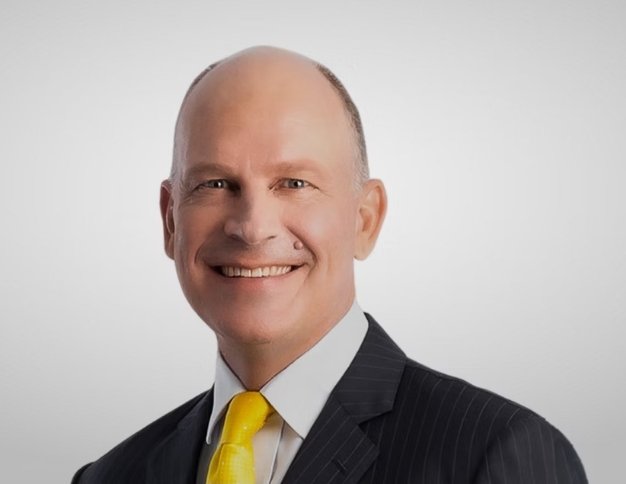
On the right is Air India’s current CEO - New Zealander Campbell Wilson whose appointment in 2022 attracted no such backlash in India. Wilson hails from Christchurch, arguably the most racist city in New Zealand.
Former RG Kar Chairman Dr. Santanu Sen has resigned from his TMC post, exposing how his own daughter, who is a doctor, was targeted by goons. He admits he was forced into silence. If a top leader's family wasn't safe in Bengal, who was?
The complete silence of the pseudo-secularist and feminist brigade is a deafening hypocrisy. Wake up and smell the coffee!
This is a total institutional collapse under the TMC government.
Shame on TMC, and shame on Mamata Banerjee!
#RGKarHospital #WestBengal
DiffusionGemma is an open, experimental model that brings our text diffusion research to Gemma 4. It’s a racehorse 🏇achieving up to 4x faster inference by generating entire blocks of text simultaneously vs predicting token-by-token (word-by-word) output!