DfR Solutions, the developer of Sherlock, the industry's only automated design reliability analysis software, and a leading provider of reliability and quality services, is now part of ANSYS, the global leader of engineering simulation software. https://t.co/qLkinWWSRV
Is standards-based testing lithium-ion batteries sufficient to guarantee battery safety and reliability? DfR explains how you can test high manufacturing quality and ensure the reliability of batteries in your applications https://t.co/BllFU1vgWZ
Join CEO Dr. Craig Hillman in Boston next month at the MD&M BIOMEDevice Conference to learn the fundamentals of designing a reliable embedded device and the most common pitfalls encountered by the system designer https://t.co/HGOZkYQmpU
Semiconductor manufacturers must account for differences in how automotive OEMs and their suppliers qualify integrated circuits compared to consumer products. Discover how BLR testing plays a critical role in the process https://t.co/po9uZutc2h
“Fan manufacturers design products that pass the test. And some fans are very good at passing these tests. So, what’s the problem? Fans keep failing.” The current testing of fans is insufficient, DfR proposes a solution https://t.co/3tJ8RxOlKA
Join our live webinar tomorrow hosted by Nathan Blattau! Learn what package types are the most susceptible thermal cycling fatigue and explore which factors to consider when designing a thermal cycling robust electronic product https://t.co/OqpYdbiP4e
Discover how using a Physics of Failure approach throughout the design process ensures product reliability and, ultimately, enhances speed to market #DfRInsight https://t.co/1mV4AGi0MM
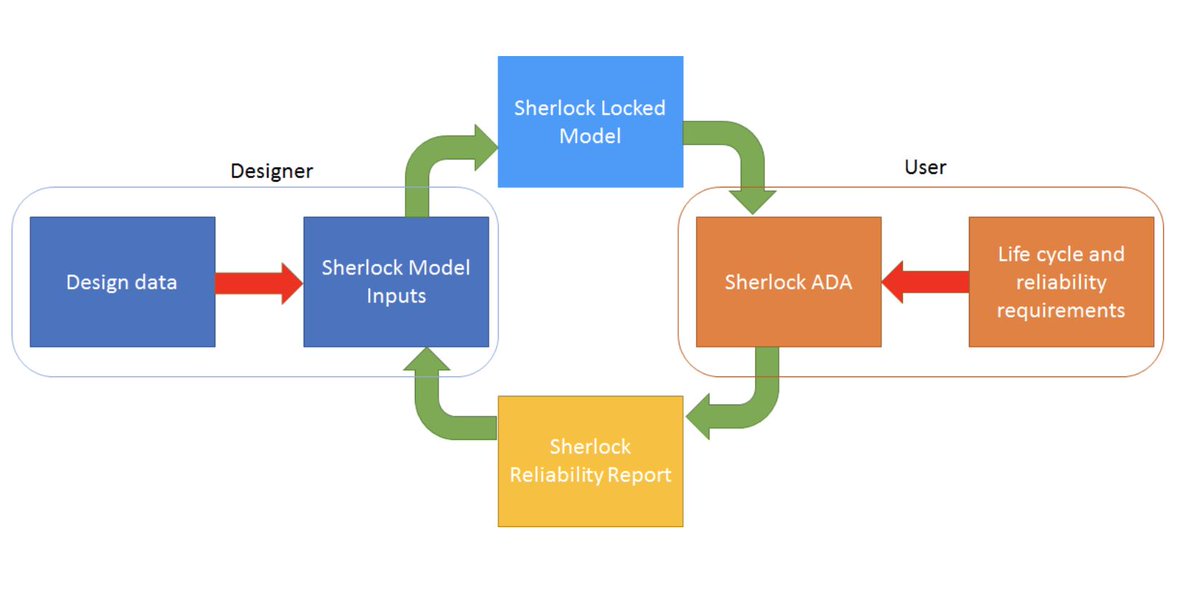
The Sherlock 6.1 Locked IP Model is changing the way OEMs, systems integrators and suppliers communicate and how their designs travel https://t.co/Uw3H5eTIB6
Sherlock 6.1 can generate a full-scale detailed model of PCBs and run them through thermo-mechanical analysis in a matter of minutes. Learn more about how the latest version of Sherlock is transforming the automotive environment https://t.co/ixbn6re1n0
Our design review process provides designers across various industries with a blueprint for navigating the dichotomy between protecting intellectual property and ensuring the reliability of a product via a reliability consultant https://t.co/MHwkrnLlt1
Using Physics of Failure techniques, you can evaluate the impact of environmental stresses to determine failure mechanisms and predict product lifespan under actual operating conditions https://t.co/erQ4dTdv1Y
Our next live webinar with Nathan Blattau is one week from today! Learn what package types are the most susceptible thermal cycling fatigue and explore which factors to consider when designing a thermal cycling robust electronic product https://t.co/RO6XLHN91V
An increasing number of companies are noticing that the classic solder fatigue calculation models do not seem to capture all the possible risks of failure. What are the most common models to calculate risk of failure and what are they missing? https://t.co/Q0781kzcX0
Semiconductor manufacturers must account for differences in how automotive OEMs and their suppliers qualify integrated circuits compared to consumer products. Discover how BLR testing plays a critical role in the process https://t.co/sWvwfO8d87
For decades, the electronics industry depended on gold for wire bonding. Copper wire offers a plentiful, low-cost alternative to gold, but the transition can be difficult. Learn more about copper wire and the role Sherlock can play in its implementation https://t.co/s68VW1FELn
Underfill is used in flip chip applications to reduce thermal stresses solder bumps experience. Careful consideration to the underfill material properties and intended use environments must be made to assess the relative reliability improvements they offer https://t.co/PRf9X9wqGU