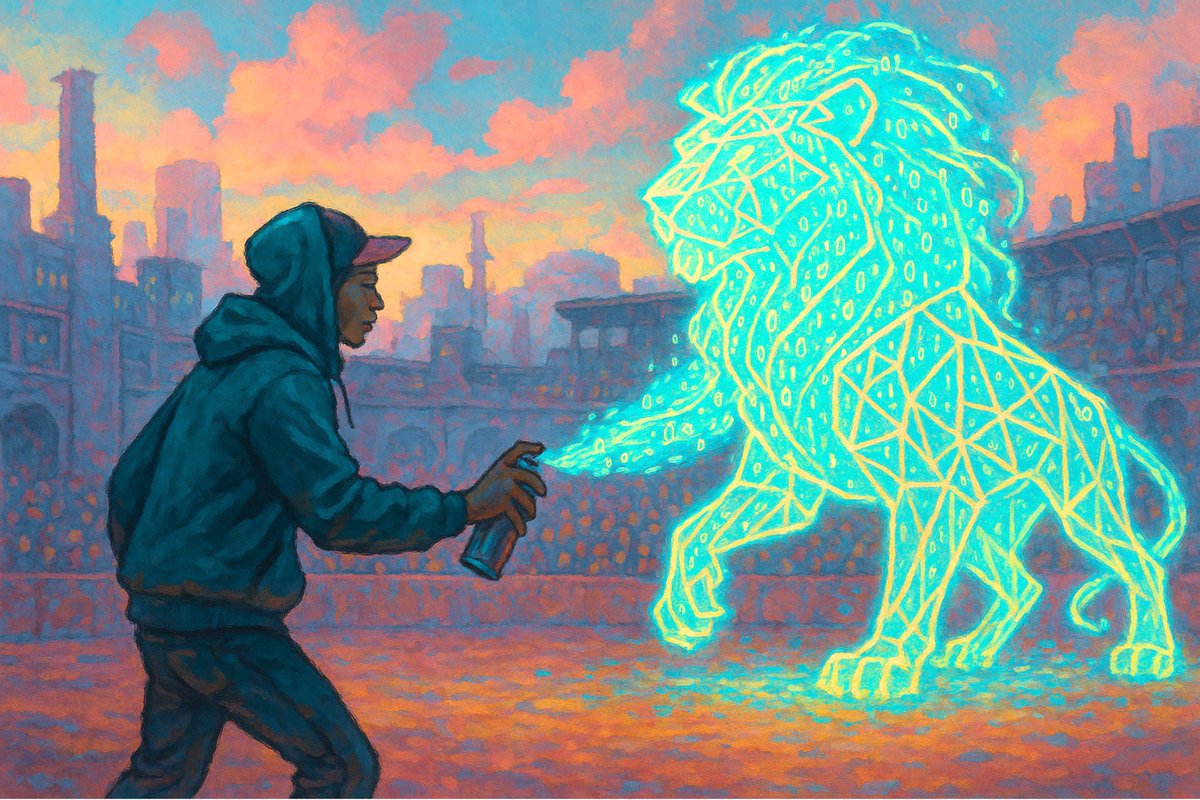
The future does not build itself.
At DHStx, we create the conditions for market-changing ideas to take root and scale.
We are a venture studio and accelerator built for the next era of innovation.
Join up.
🔗 https://t.co/fC87xUt4C8
#DHStx#DisruptiveInnovation#Blockchain
DaleyWest Consulting launches at the intersection of healthcare, strategy, and AI. Helping practices, clinics, and startups grow with systems that last, while care stays personal. Learn more: https://t.co/rHdCLeYee8 #HealthcareInnovation#AIinHealthcare#MedicalLeadership
Too many voices have been excluded by old models of business and tech norms. Daley House Stacks is shifting that reality.
We invite you to join us at Zo House. Join us in co-creating a future where innovation and community grow together. 🦄
https://t.co/k2eoXngEkn
#FutureOfWork #InclusiveInnovation #AIForGood
For 200+ years, machines replaced labor. Now, exosuits, AR, and neural interfaces extend it. The next leap is not robots alone but humans + machines together: safer, more adaptive, more resilient.
https://t.co/wnLtBY4M31
#FutureOfWork#Augmentation#Resilience
@neiltyson Stars collapse without equilibrium. So do financial systems. Record highs mean little if the foundation is brittle. Who dares to solve the riddley-riddle?
@gatesfoundation@APNews For too long, women’s health has been an afterthought. Putting real investment behind it is not just overdue, it is one of the smartest ways to strengthen economies and create healthier societies.
My thoughts about recent in-person web3 events (ETHCC, Dubai, ETH Denver) from the perspective of attendees and also event hosts:
1. In-person events are 10x - 1000x less efficient / scalable for knowledge transfer vs digital content.
Example: a video clip usually costs ~50x less to produce and receives ~100x as many viewers as an in person talk.
2. Therefore in-person events should optimize for experiences, entertainment, relationships, 1:1 conversations.
Traveling across the world and meeting someone, building a friendship with someone, or gaining each other's trust is much more valuable than sitting and listening to another panel that should have been a podcast.
3. The exception is for big announcements or extremely high quality content, people, and presentations.
People are bored of sitting and watching the same information rehashed (especially when that information is easily accessible online, at their convenience) and will be much less likely to attend your event if programming is like this.
4. Hackathons on the other hand offer a lot more value for people who attend in person. Working hands-on with team members + having a large amount of knowledgable people within arms reach is something that can't easily be replicated virtually.
Downsides are that they are usually short (2-3 days) and only accessible to a very small percentage of people, those who have the money, time, and ability to travel.
5. On the other hand, virtual hackathons are valuable because they allow everyone in the world to participate without restrictions.
They also last much longer, giving the devs much more time to cook, and to polish their product. They are also usually less expensive, especially if they are managed in-house, and allow the teams hosting them to not lose 100% of their focus during that time and can instead offer ad hoc support.
I also echo 4 & 5 for workshops.
6. If you're a company, you can probably accomplish most of your in-person goals with 4 large regionally-specific showings (events like ETHCC for Europe), and a handful of 1-off smaller events for individuals on your team to attend.
TLDR:
1. ~4 strategic regional in-person events per year is probably good enough (one in each USA, Europe, APAC, <other>)
2. Optimize for in-person experiences
3. Digital technical content scales 100x
4. Hold both virtual and in-person hackathons, lean into the positives of each
AI’s appetite for energy is reshaping grids. Authenticity tech becomes the watermark of trust. Crypto liquidity circles the rails of verifiable computing.
Somewhere in-between, an entirely new operating system for society forms.
https://t.co/th8yOJL0ko
#FutureOfTech