“Metallica is not here like some other entertainers to influence you with their bullshit”
- James Hetfield showing true leadership this weekend! Great to see a musician willing to resist the current thing mob. 🤘
“Metallica is not here like some other entertainers to influence you with their bullshit”
- James Hetfield showing true leadership this weekend! Great to see a musician willing to resist the current thing mob. 🤘
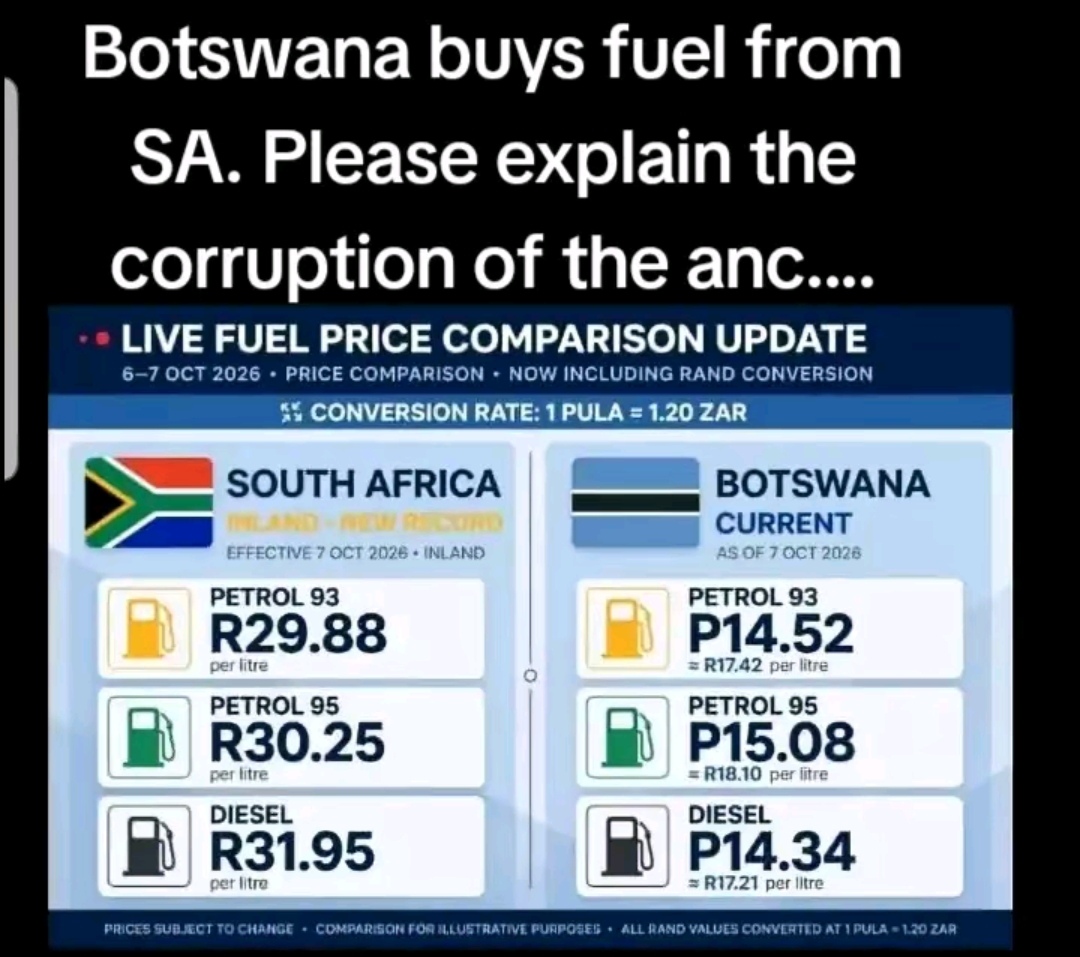
Botswana buys fuel in South Africa.
Diesel in South Africa= R31.95
Botswana= R14.34
Petrol unleaded
South Africa= R29.95
Botswana = R14.50
Petrol leaded
South Africa= R30.32
Botswana = R15.05.
Paraffin litre
South Africa= R31.85
Botswana= R13.
Hi. My name is Christo.
I may act like I am fine. But I am not.
This morning I paid almost R5 per unit of electricity and over R30 per litre of petrol.
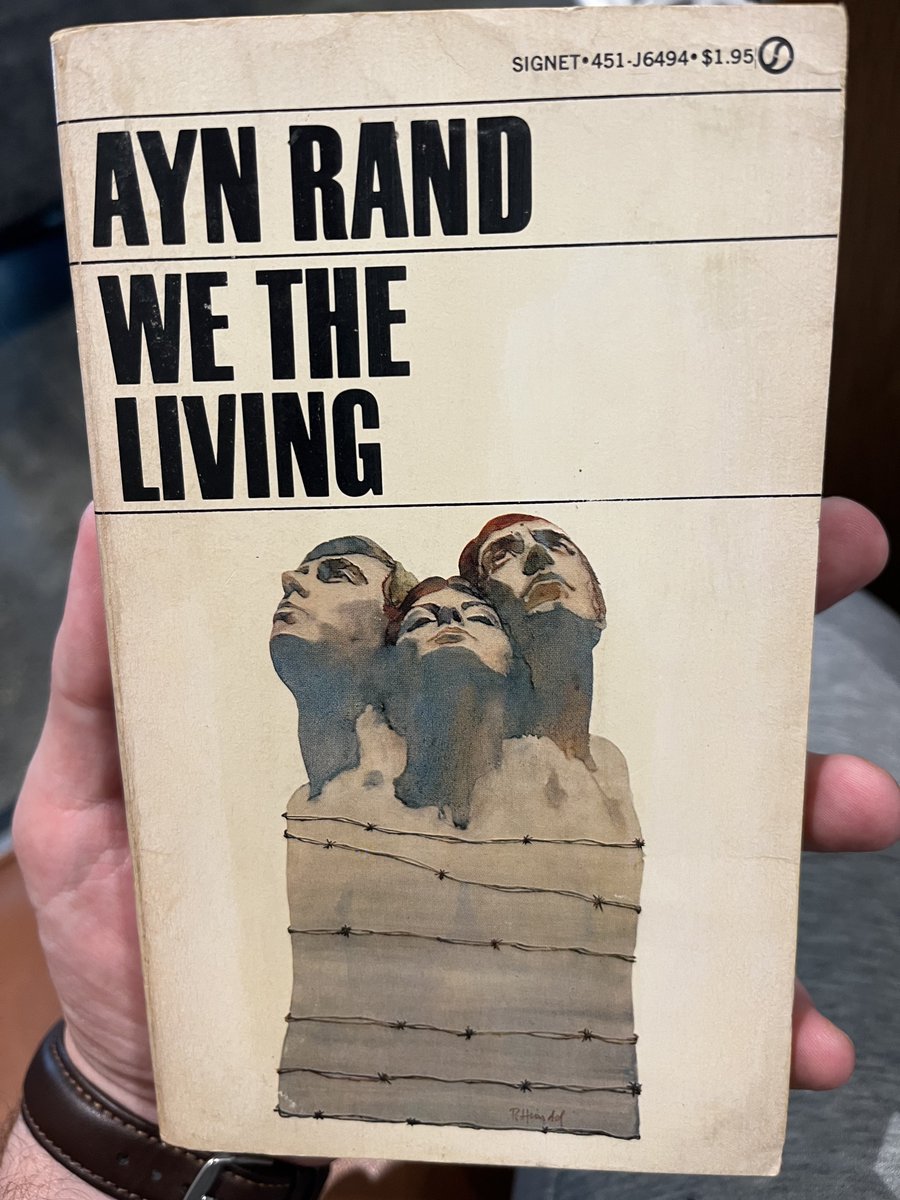
Ayn Rand finished We the Living in 1936, the novel is the cleanest fictional autopsy of what collectivism does to actual human beings. She lived it. Born Alisa Rosenbaum in St. Petersburg in 1905, she watched Red Guards seize her father's pharmacy on Nevsky Prospect, leaving the family to scrape through the famine years. The book is her least ideological and most personal: no John Galt speeches, just Kira Argounova trying to study engineering while the Soviet state strangles every path she takes.
The economics sits underneath every scene. When the Bolsheviks abolished private trade, they did not abolish scarcity. Rather, they abolished the price signals that let anyone allocate scarce goods. Kira stands in bread lines because central planners cannot calculate what a market computes automatically through profit and loss. The result is rationed potatoes, confiscated apartments, and jobs handed out by Party loyalty rather than competence. Rand dramatized the calculation problem that Ludwig von Mises had already proven unsolvable, and she did it with a food shortage instead of an equation.
The regime demands not just Kira's labor, but her soul. She must inform, conform, and recite the collective catechism to survive, and the state treats her refusal as sabotage. When the government owns all property, it owns you, because you cannot eat without its permission. Economic control and political control are the same control.
American publishers rejected the manuscript for years (too anti-Soviet for the fashionable 1930s intelligentsia, who still admired Stalin), and it sold modestly until Rand's later fame pulled it back into print. Its diagnosis holds everywhere a planner promises abundance through compulsion: Venezuela's empty shelves after 2014, Cuba's ration books, Zimbabwe, which was turned from a paradise into a giant shithole. Every regime that mistook confiscation for production.
At La Cabaña prison in 1959, Che Guevara presided over tribunals that executed somewhere between 156 and 550 men, many after trials lasting minutes. Appeals were theater. "Judicial evidence is an archaic bourgeois detail," he wrote, which is a convenient position when you are the one holding the rifle.
The man despised markets with the same enthusiasm he despised due process. As head of Cuba's National Bank, he destroyed the peso, printing money and signing the new bills simply "Che" to show his contempt for the whole institution of sound currency. Cubans paid for this in bread lines.
He built labor camps too. The UMAP camps, opened in 1965, held homosexuals, Jehovah's Witnesses, and anyone the regime labeled counter-revolutionary. Forced labor under armed guard. These people needed "moral correction".
Leftists wear his face on a T-shirt, advertising a man who wanted to abolish the very commerce that printed the shirt. He called money a bourgeois disease. He loved the firing squad and hated the price system, which makes sense, because both let strangers coordinate without a commissar's permission.
A killer. Economically illiterate. Incapable of reason. No wonder the left idolizes him.
Socialism concentrates power, and concentrated power concentrates wealth. Hugo Chavez spent two decades screaming about imperialist oligarchs while his own daughters accumulated the kind of fortune that would embarrass a Rockefeller.
Maria Gabriela Chavez holds assets estimated at $4.2 billion, making her Venezuela's wealthiest individual by a comfortable margin. Her father nationalized over 1,200 private companies between 2002 and 2012.
The mechanism is straightforward: When the state controls production, distribution, currency, and courts, political proximity becomes the only productive investment. You don't build a business; you cultivate a minister. Chavez's inner circle stole through socialism, using currency controls, preferential exchange rates, and state contracts as the instruments.
Meanwhile, the Venezuelan poverty rate crossed 80 percent in 2024. Infant mortality climbed. The bolivar collapsed so completely that Venezuelans began pricing transactions in dollars just to preserve basic calculation.
Ludwig von Mises proved mathematically in 1920 that socialist planners cannot rationally allocate resources without prices generated by voluntary exchange. No prices, no signal. No signal, no coordination. Shortages follow as surely as math follows addition.
This while Venezuela sits atop the world's largest proven oil reserves. Poverty there is entirely manufactured. Chavez's family lives in Caracas and Miami on wealth extracted from people who cannot buy protein. The ideology that promised to eat the rich ended with the people eating the zoo animals.
Capital flees taxation the way water flows downhill: By the physics of human choice.
When France raised its top income tax rate to 75% in 2013, Gerard Depardieu moved to Belgium and eventually took Russian citizenship. Eduardo Saverin renounced his U.S. citizenship before Facebook's 2012 IPO. These were transactions. Rational actors doing math.
Impose a cost on production and you get less production. Impose a cost on capital and capital relocates. The political class treats this as betrayal. Supply and demand applies to jurisdictions.
Cayman Islands, Monaco, Dubai, Singapore: these places didn't stumble into prosperity. They built low-tax, low-regulation environments and capital came to them. Singapore's top income tax rate sits at 24% with no capital gains tax at all. The result is a per capita GDP that buries most of Europe.
High-tax jurisdictions run the same experiment in reverse. You raise rates, your most mobile earners leave first, then your businesses restructure, then your tax base erodes, so you raise rates again on whoever remains. The spiral ends with a population that cannot leave because it has nothing worth taxing.
California has lost over 500,000 residents net to other states since 2020. Illinois has shed population for nine consecutive years. The people staying aren't the founders and investors. They're the ones who can't afford to move.
Tax havens don't cause this dysfunction. They simply make it visible by giving capital somewhere better to go.
For every 1000 rand you pay for fuel.
R340 goes to the ANC government in tax
R480 goes to the actual fuel costs
R180 goes to operations costs.
You pay nearly as much tax on fuel as you do for the actual product.
🤡