Con el liderazgo del Dr. Pardo, estamos seguros de que la #EMCS@URosario seguirá consolidándose como una de las mejores del país. Su compromiso con la docencia, investigación y extensión será fundamental para alcanzar los objetivos estratégicos propuestos para los próximos años.
“It doesn’t make any difference how beautiful your guess is. It doesn’t make any difference how smart you are, who made the guess, or what his name is. If it disagrees with experiment , it’s wrong” - Richard Feynman.
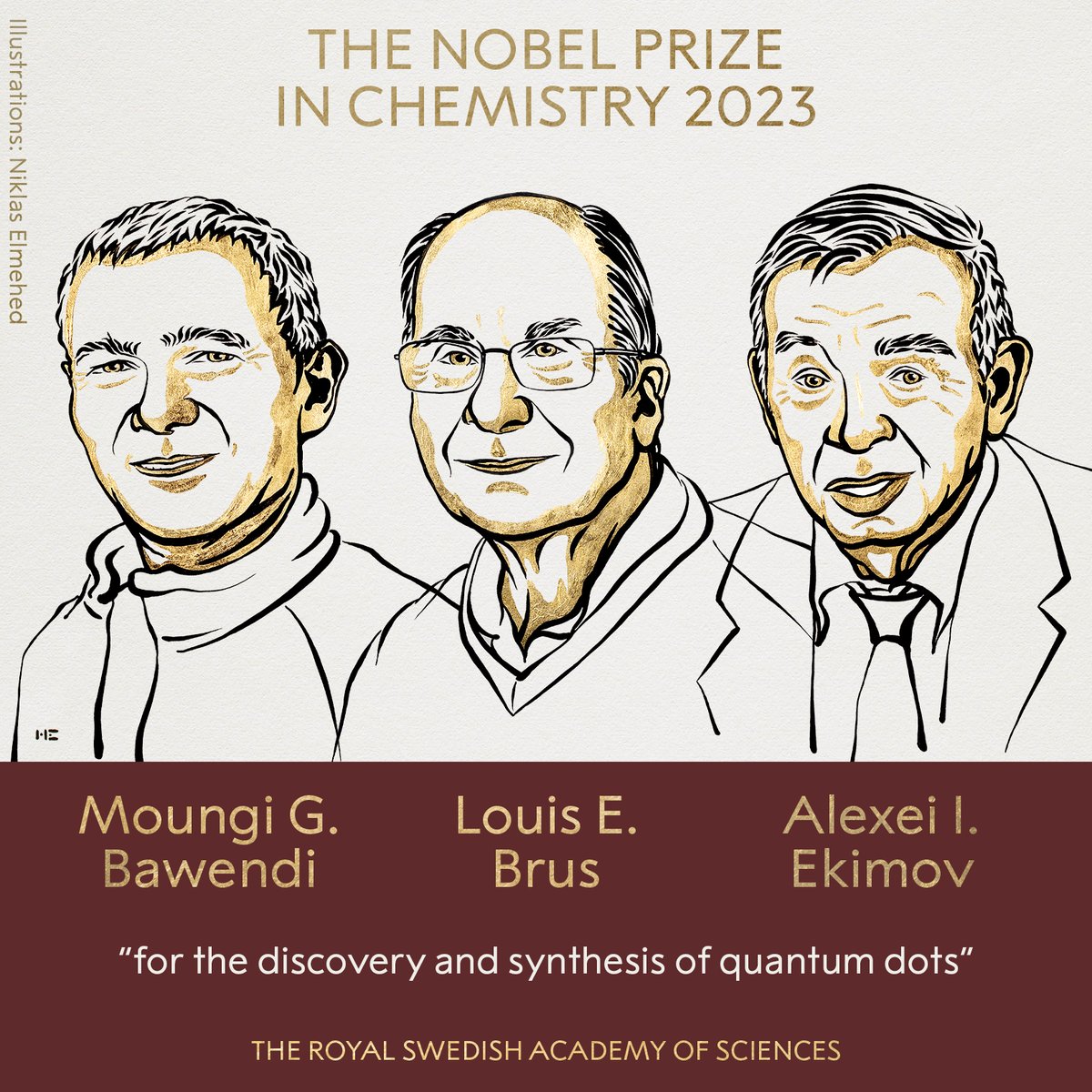
BREAKING NEWS
The Royal Swedish Academy of Sciences has decided to award the 2023 #NobelPrize in Chemistry to Moungi G. Bawendi, Louis E. Brus and Alexei I. Ekimov “for the discovery and synthesis of quantum dots.”
Nature rejected her paper for not being original,
University of Pennsylvania (her employer) demoted her,
and yesterday Katalin Karikó won the Noble Prize in physiology.
In mid-2000s, Karikó and her Drew Weismann submitted their paper on mRNA (messenger Ribonucleic Acid) to Nature.
Nature desk rejected their paper for being "an incremental contribution" only. The paper was later published in another journal, Immunity.
Earlier in her career at the University of Pennsylvania, Karikó was demoted because her applications for grants kept getting rejected.
But Karikó persevered and kept on going.
In 2013, she joined BioNTech, a German company founded by two scientists, Uğur Şahin and Özlem Türeci. In 2018, BioNTech partnered with Pfizer to develop mRNA vaccines against the influenza virus.
When the COVID-19 hit the world, Karikó's research helped Pfizer to produce the first vaccine against the disease.
I don't know how the Nature editors who desk rejected Karikó's paper and the Penn administration who demoted her feel about Karikó Nobel Prize.
Takeaway: Many academics and scientists worry about getting published in "prestigious" journals. Instead of worrying about prestige, we should try to put our work out as quickly as possible like Karikó did.
Once you put your work out without caring about prestige, two good things happen:
1. Your work will lead to newer opportunities.
2. You will start getting feedback from the scholarly community, which you can use to iterate and improve.
Here's another interesting Nobel Prize story.
Peter Higgs, a British physicist, joined the University of Edinburgh in 1956. By 1964, Higgs has published his groundbreaking work about subatomic particles.
After 1964, Higgs published less than 10 papers.
When his department would ask him how many papers, he published in a given year, he would reply "None."
It happened so often that he stared feeling like an "embarrassment to the department."
The University of Edinburgh, however, never fired Higgs because in 1980 he had been nominated for the Nobel Prize.
Higgs retired in 1996 and stayed on as an emeritus professor at Edinburg.
In 2012, experiments conducted at the CERN laboratory confirmed Higgs work and the existence of Higgs Particle.
And in 2013, Higgs was awarded the Noble Prize in physics and the University of Edinburgh got rewarded for being patient.
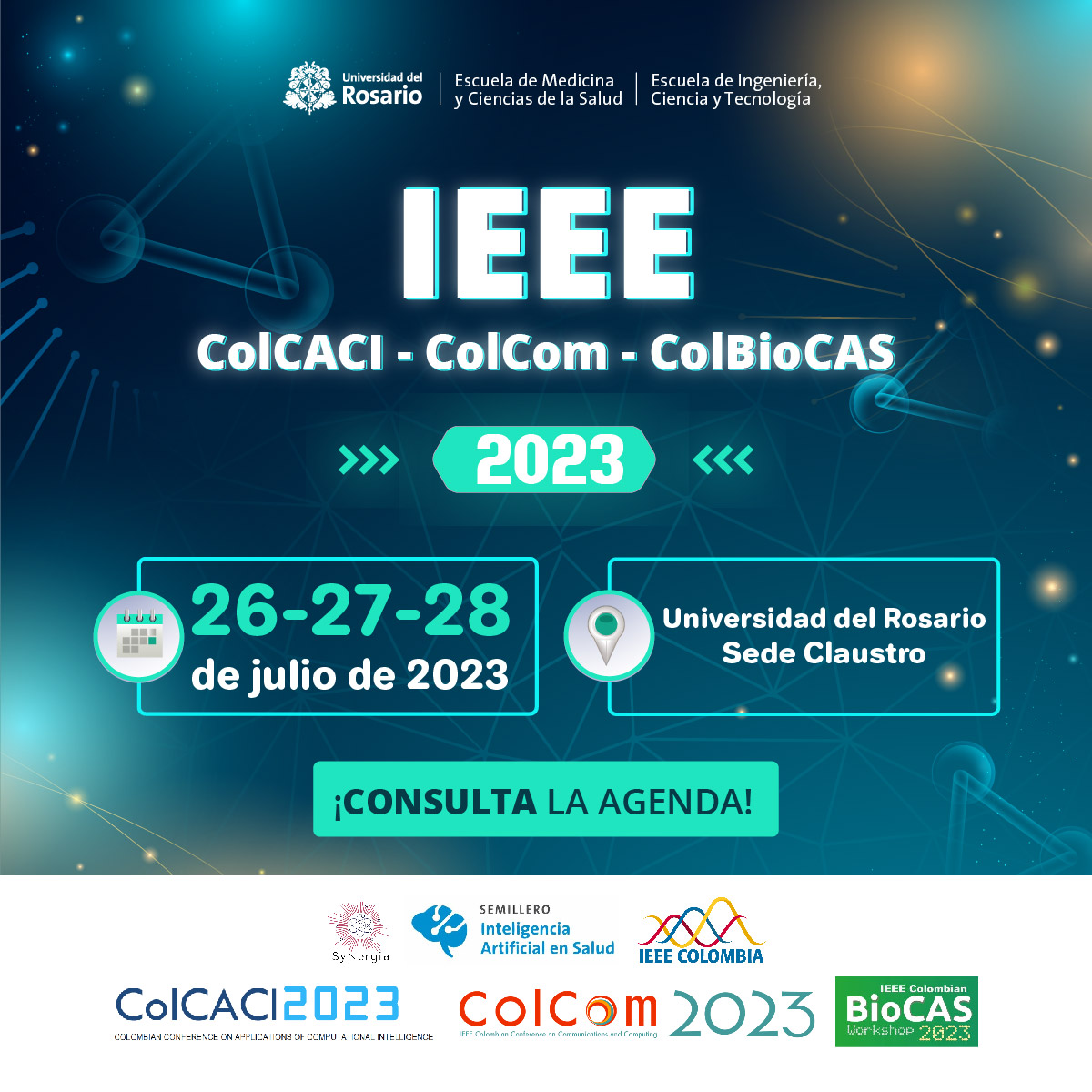
¡Participa en el IEEE ColBioCAS 2023, IEEE ColCACI 2023 y IEEE ColCom 2023!
La #EMCS y la @EICT de la @URosario te invitan a este espacio de encuentro entre las áreas de ingeniería y ciencias de la salud. 🦾⚕️💡
Consulta la agenda e inscríbete en 👉 https://t.co/wIxoEvBkQt
"Estoy muy agradecida por lo andado, por los frutos de esas primeras cosechas, un emergente laboratorio de síntesis de nanomateriales, un semillero de investigación en biomateriales para aplicaciones biomédicas…." https://t.co/reuAqdfrQa
@AlejandroSanz Como dice una canción “quien le dijo que yo era siempre risa, nunca llanto”. Respirar, encontrar en la magia del mar y su música la calma, sentir y luego entregarlo al mar, y un perro!
@ClaudiaLopez con los retrasos y mala planificación de pueblos como Tocaima y Apulo, los pares no tuvimos mucho chance de entrar. Realmente ayuda en algo ese pico y placa?