The first project to deliver a working product will have a major advantage.
I follow many projects in this space, and the challenges others are facing—network abuse, onboarding a large number of service providers, and even weight verification—are significant.
What stands out to me is how smoothly Dolphin seems to be handling these issues. The team appears highly experienced and knowledgeable. It’s almost as if they already know where the weak points are and are proactively strengthening the project before those problems can emerge.
GONKA @gonka_ai vs Dolphin @dphnAI $POD $BASE 🧵
The original vision behind GONKA sounded a lot like Bitcoin:
Millions of idle gaming GPUs around the world contributing compute power.
Reality?
Within months, the network became dominated by H100s, H200s, and B200s costing hundreds of thousands of dollars.
Mass participation was gone.
Meanwhile, Dolphin appears to be solving many of the problems that decentralized AI networks have struggled with for years.
1/ Dolphin isn't just a token.
It's a 7-person AI lab that spent 2+ years building uncensored open-source models.
Those models are already integrated into Venice and handle uncensored inference requests.
Training infrastructure:
• Targon (Bittensor SN4)
• 1,500+ H200 training hours
• $70M+ worth of NVIDIA hardware
2/ The biggest failure of decentralized compute has always been architecture.
Most networks use a 1:1 rental model:
User rents a specific GPU.
Node must stay online.
This completely excludes the world's largest compute resource:
Idle gaming GPUs.
3/ Dolphin's answer is Peer-to-Pool.
Nodes can join and leave at any time.
Gamers run the software when they're not gaming and shut it off whenever they want.
No penalties.
No Linux requirement.
Only a fraction of GPU resources are used.
The pool absorbs the volatility.
4/ Verification is where most decentralized AI projects fail.
GONKA experienced validator gaming:
Miners briefly activated hardware, passed validation, then disappeared while collecting rewards.
Dolphin designed a multi-layer verification system specifically to prevent this behavior.
5/ The tokenomics are unusual.
The team operates as a DAO without equity ownership.
100% of network revenue is used to buy $POD from the open market.
If revenue exceeds emissions, buybacks create net buying pressure.
Simple.
6/ This isn't a "coming soon" story.
• Public beta: Oct 2025
• Production V1: Apr 2026
• Workflow V2: deploying now
• Public API: expected in 4–6 weeks
The network is already live.
7/ Real adoption matters.
Dolphin powers all uncensored chat requests on Venice.
Whenever a Venice user requests unrestricted output, the request is routed to a Dolphin model.
That's actual usage, not a future roadmap.
8/ Current metrics:
• 10 consecutive weeks of on-chain volume growth
• 14.5x volume increase in 3 weeks
• 35% holder growth in 48 hours
• Public API approaching
Yet $POD still trades at a fraction of comparable AI-DePIN valuations.
Whether the market eventually notices is another question.
But the architecture is worth paying attention to.
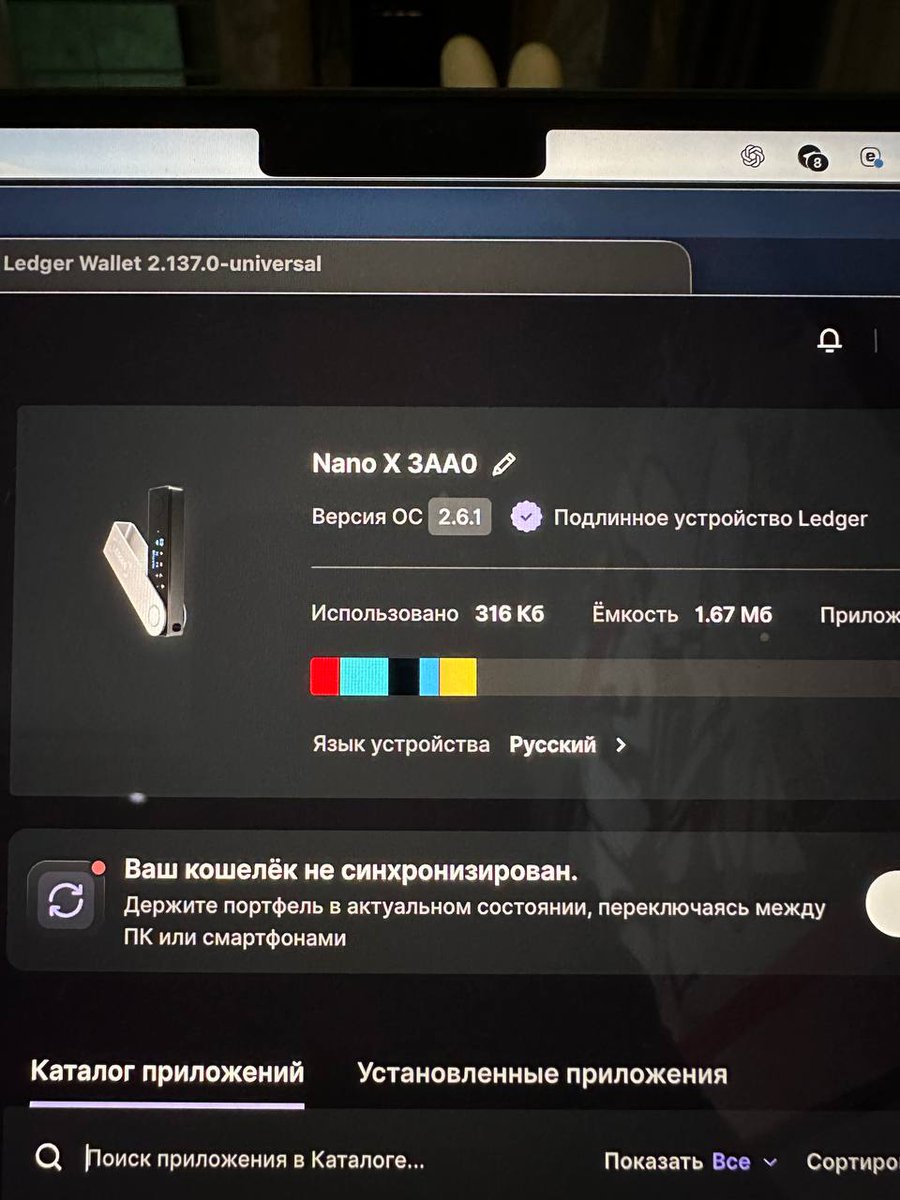
@beingnej When unplugged, it does not respond to buttons at all.
The device shows a “battery problem / battery cannot charge” message.
Firmware is updated to the latest version.
I have tried battery calibration and reset, but the issue persists.
@Akunsambilan01@Ledger I have the same problem @Ledger@LwalletHQ they refuse to return the money
They offer some kind of unofficial, semi-legal recovery scheme that doesn't help.
https://t.co/4TcdznZbZ9
Many valuable thoughts and the Lieberman brothers' current vision for the #Gonka project.
🚀 The brothers are actively negotiating with crypto industry representatives in Abu Dhabi.
🚀 They expect a capacity increase of over 10,000 GPUs in the network by the end of the year, and plan to exceed 100,000 GPUs by summer. The long-term forecast is to increase network capacity to 1 million GPUs within a year (remember, the network currently has 6,000 GPUs).
🚀 Specialized GPUs for AI are expected to appear by mid-year. which will be tens and hundreds of times more productive than the H100.
🚀 In an interview with Margulan, the investment amount was stated to be around 1 million, with investment amounts often growing. He wants to buy up all available GPU in Kazakhstan.
🚀 Bitfury has invested 50 million, and at the current rate of development, they are ready to invest around 1 billion next year.
🚀 They plan to implement request encryption within three months, and voice and video models are also planned for February-March, which will pave the way for active developer participation in the network.
🚀 The network's growth is significantly ahead of the brothers' forecasts.
🚀 A large number of requests from large companies are already being received by the network. Daniil predicts that at a certain point, demand may exceed supply.
🚀 Over the past year, the brothers have visited 33 countries, where they have actively met with government agencies and startup representatives.
🚀🚀🚀Incredible Atmosphere
https://t.co/DzQrGPqQai