Why does that matter? Well, when we’re navigating the real world, we have to remember things despite inevitable distractions. This helps us understand how our brain does that. 8/
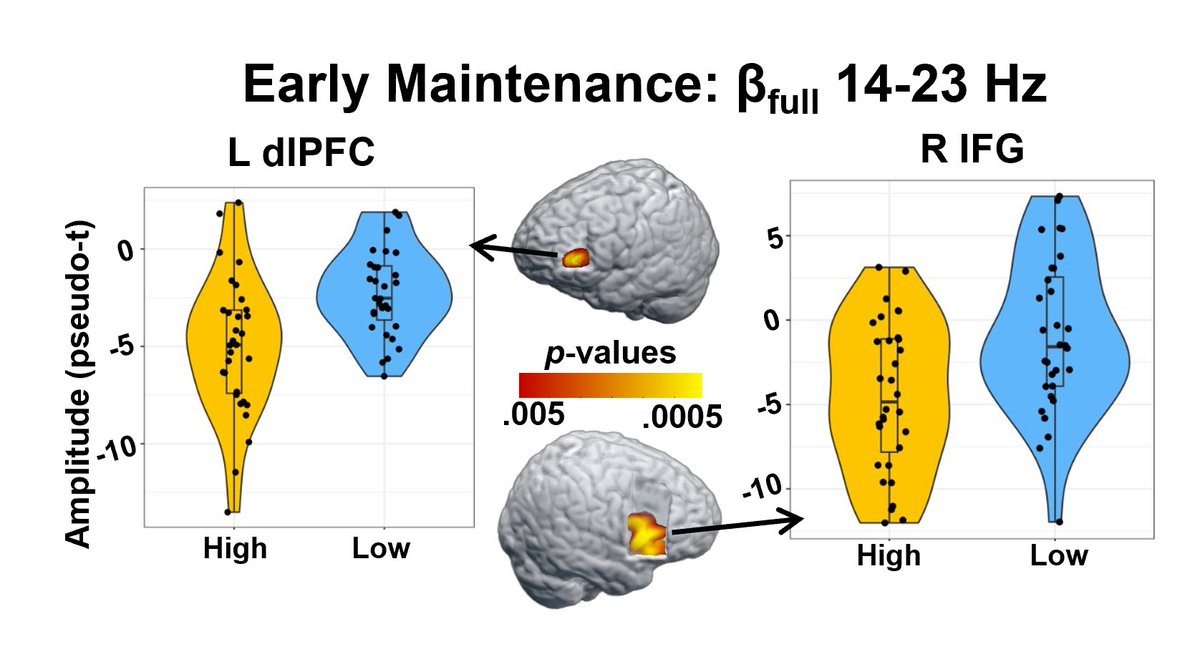
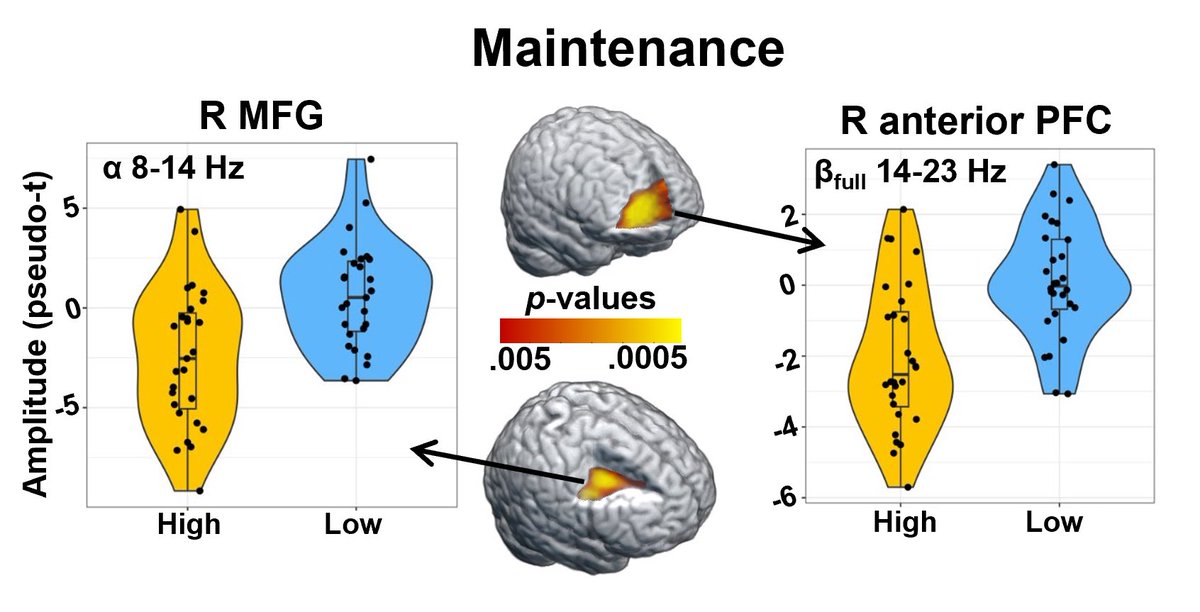
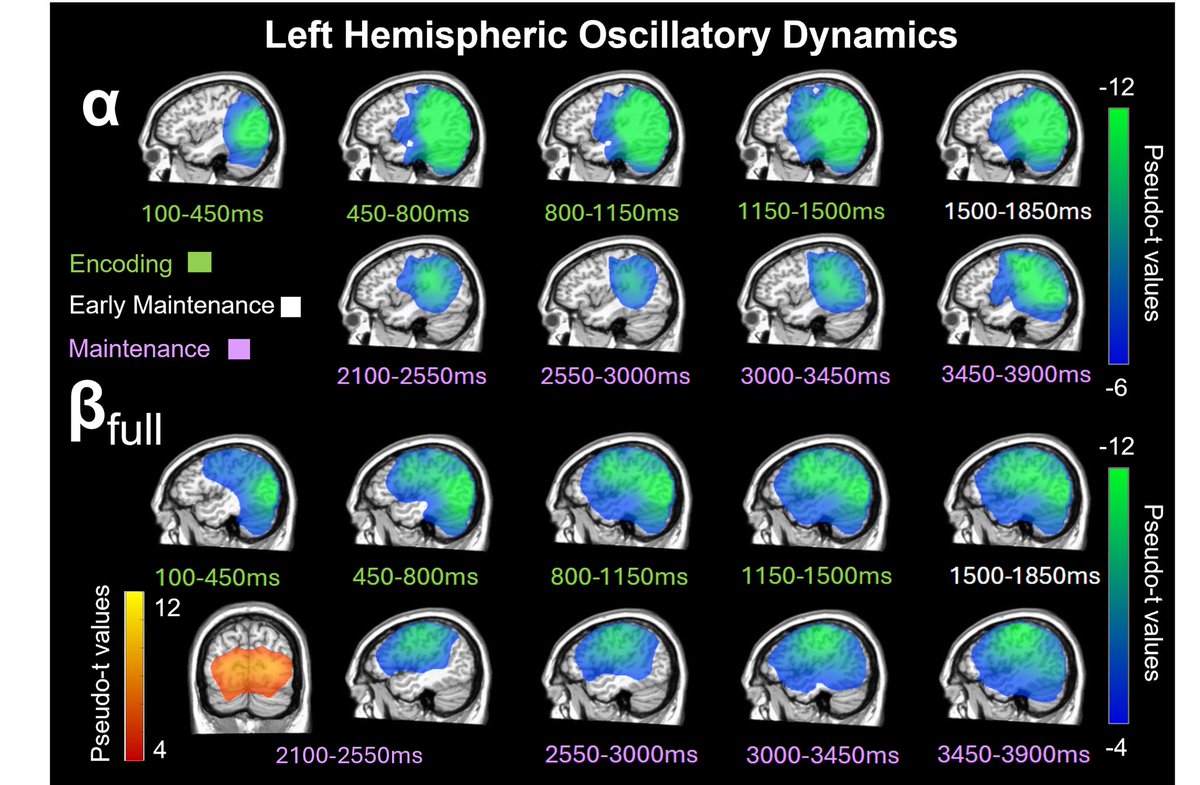
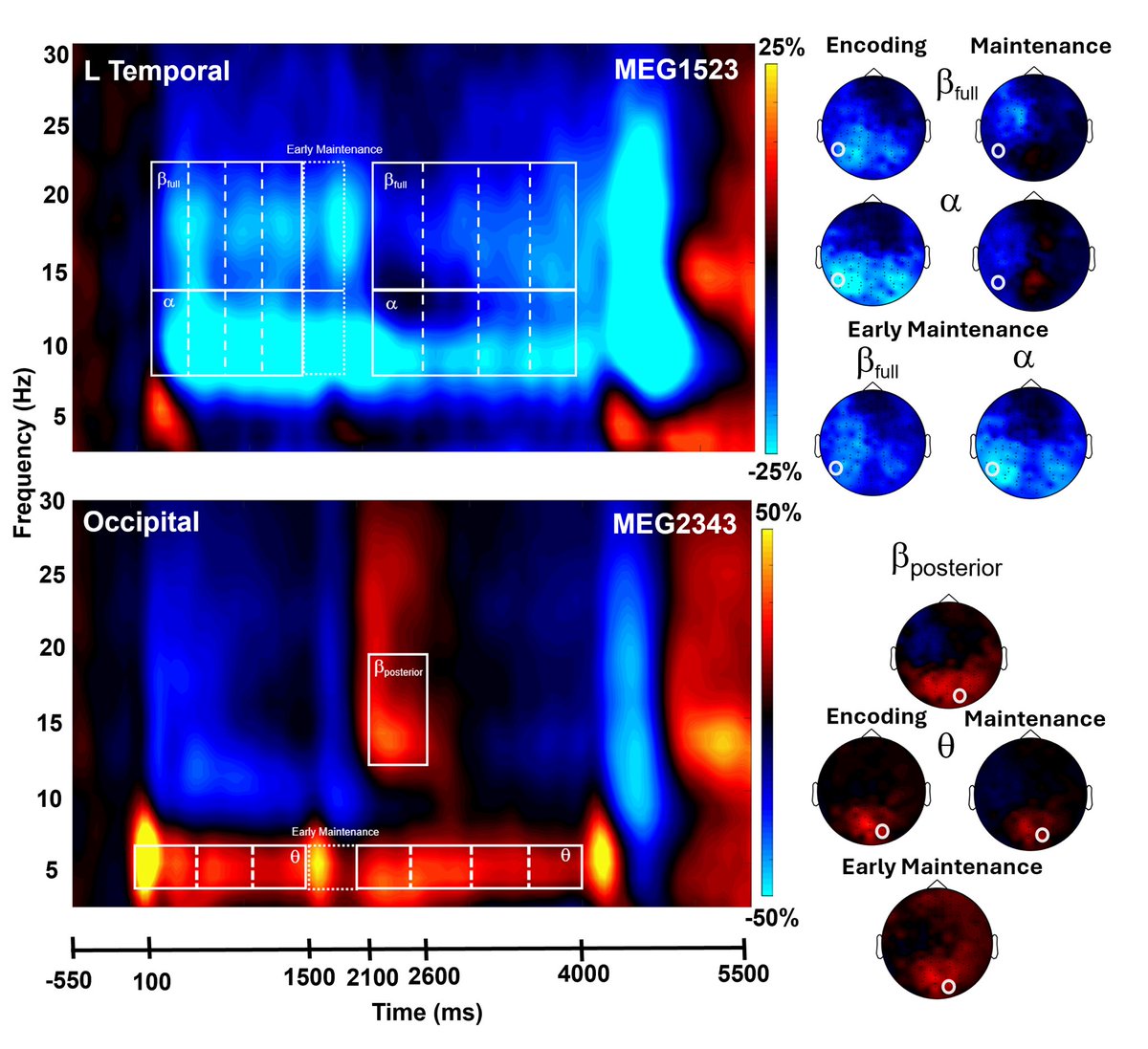
Aside from maintaining memory of that first grid, this is also when the distractor appears. Frontal regions are known to be involved in inhibitory control, so we think that what we’re seeing is more functional inhibition than maintenance alone. 7/
When we looked at the difference in conditions between low- and high-distraction, we saw increased activity in the frontal lobe during our high-distraction condition in both alpha and beta during maintenance 6/
We saw that, over time, this activity moved from the occipital towards the left parietal, and this was a decrease from baseline (with a brief increase in occipital beta activity) 5/
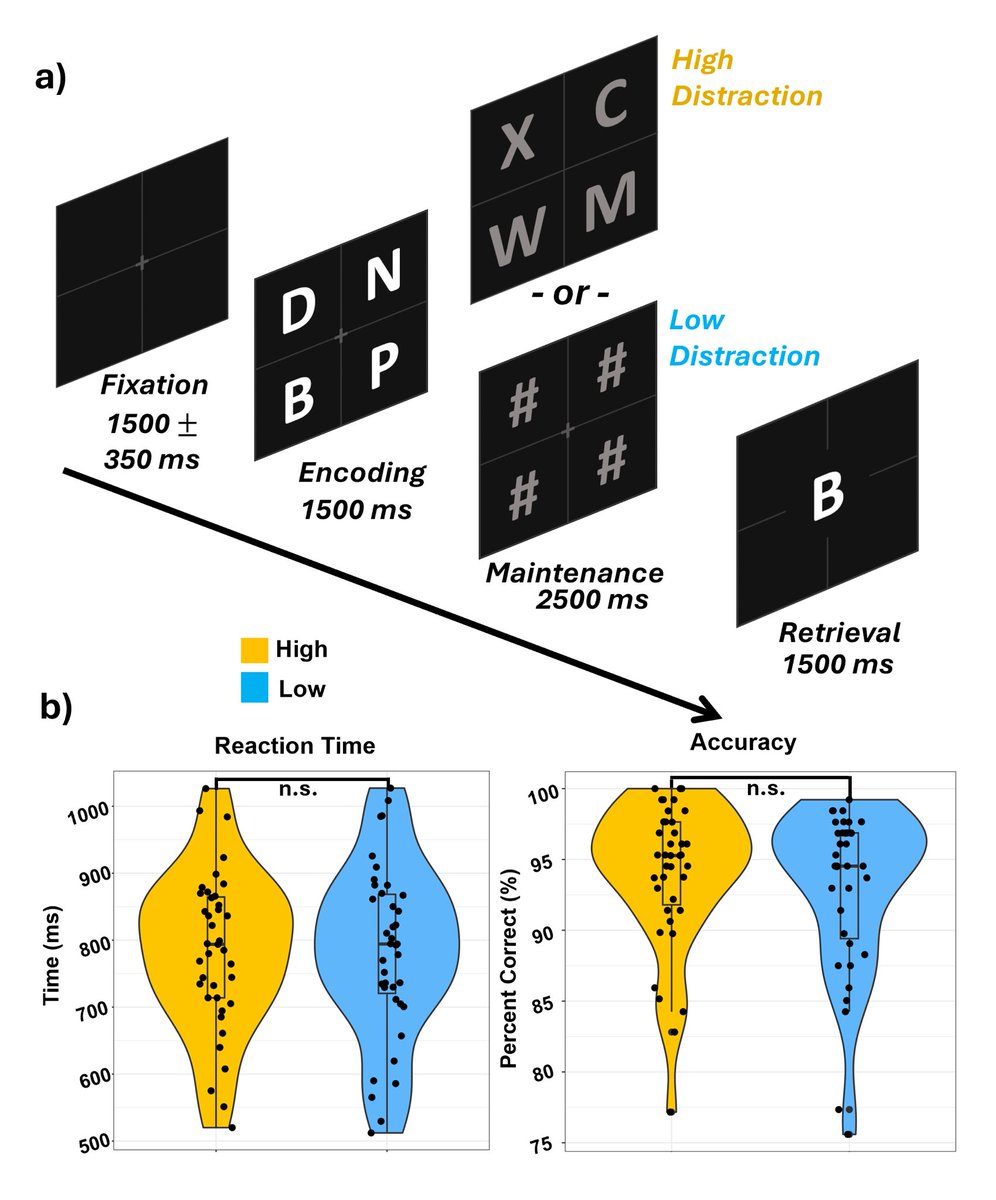
Participants completed viewed a grid of 4 letters, then either a second grid of 4 letters or 4 # signs. They then saw a single letter and indicated if this was in the first grid or not. The idea was that viewing letters (vs #) would be harder (high- versus low-distraction). 3/
We used magnetoencephalography (MEG) to examine brain activity in 46 healthy adults. For a brief explainer on MEG, check out this blog post I wrote with @KnowingNeurons https://t.co/ShjOYj5J8b 2/
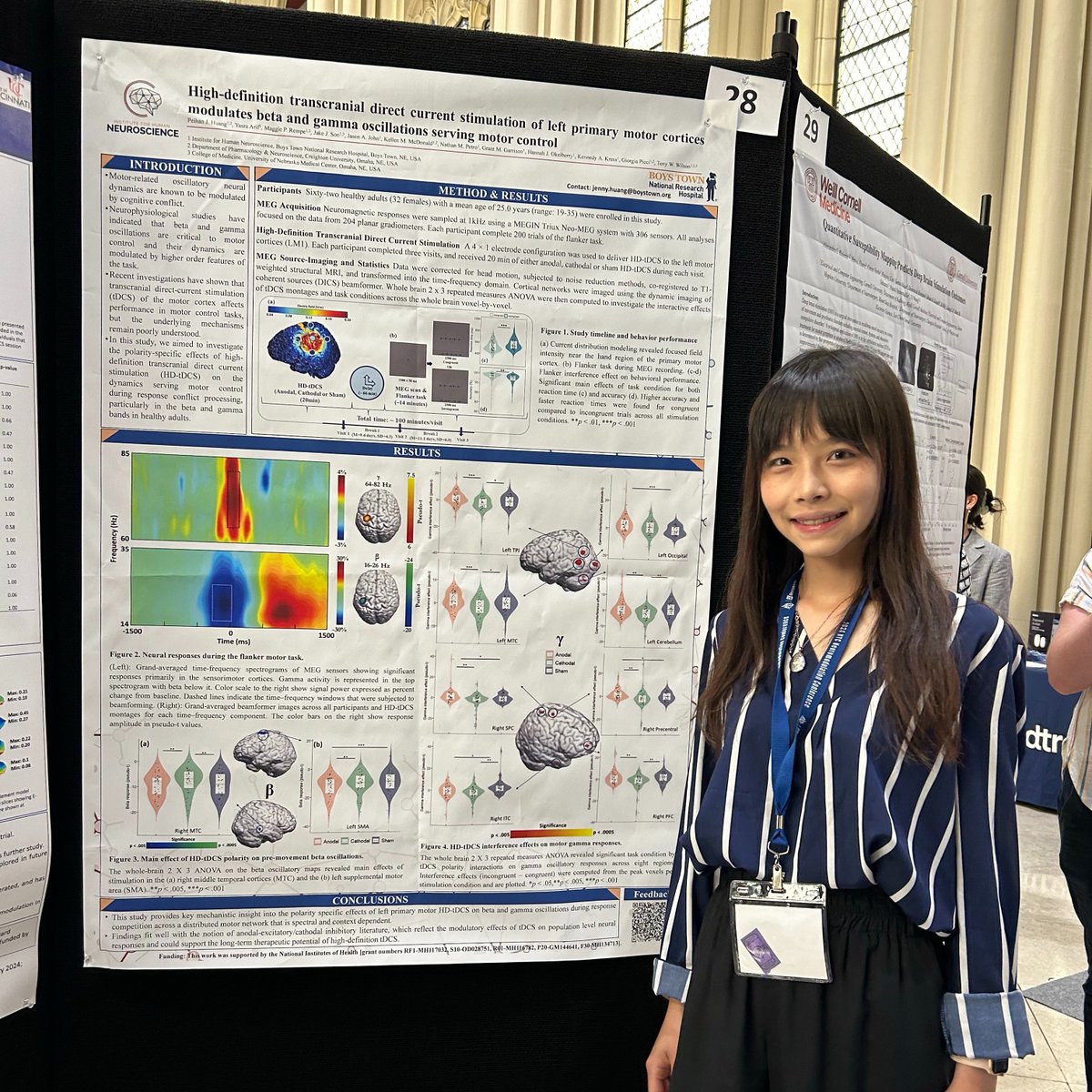
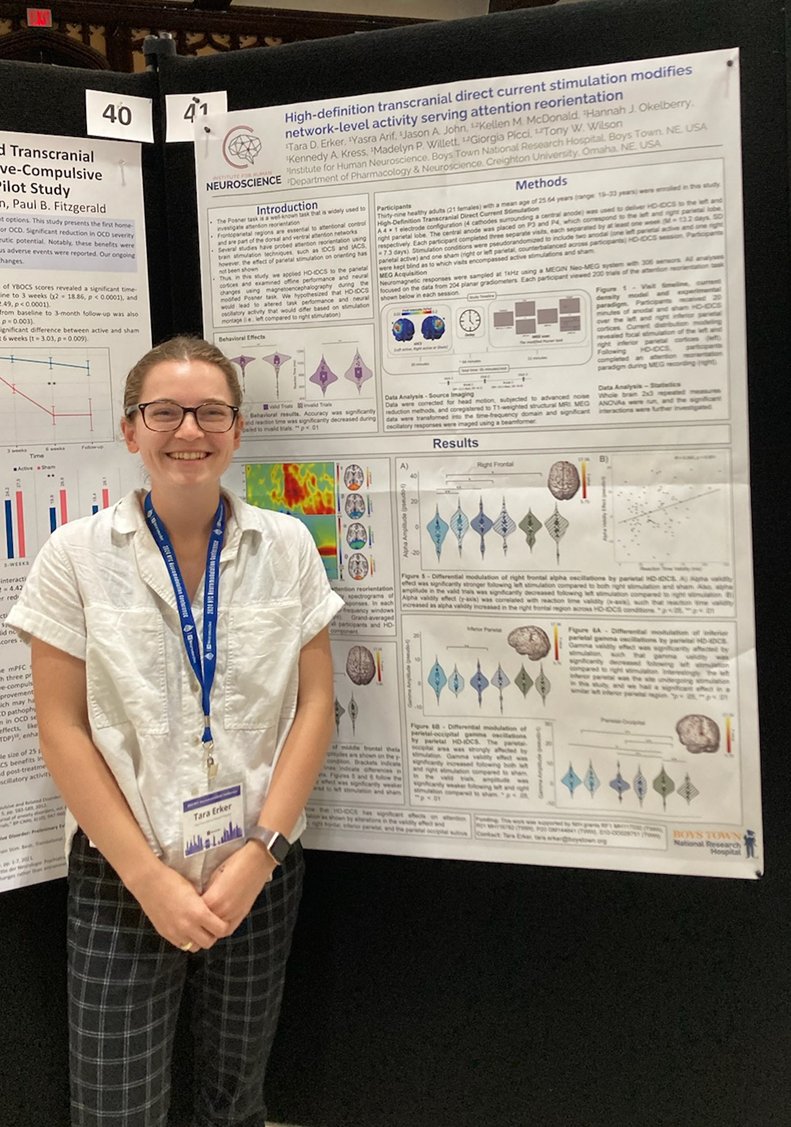
Peihan J. Huang, an RA in @Diconlab presenting her poster "High-definition transcranial direct current stimulation of left primary motor cortices modulates beta & gamma neural activity during response competition" at #NYCN2024#IHNconferences#IHN#neruoscience#neuroimaging
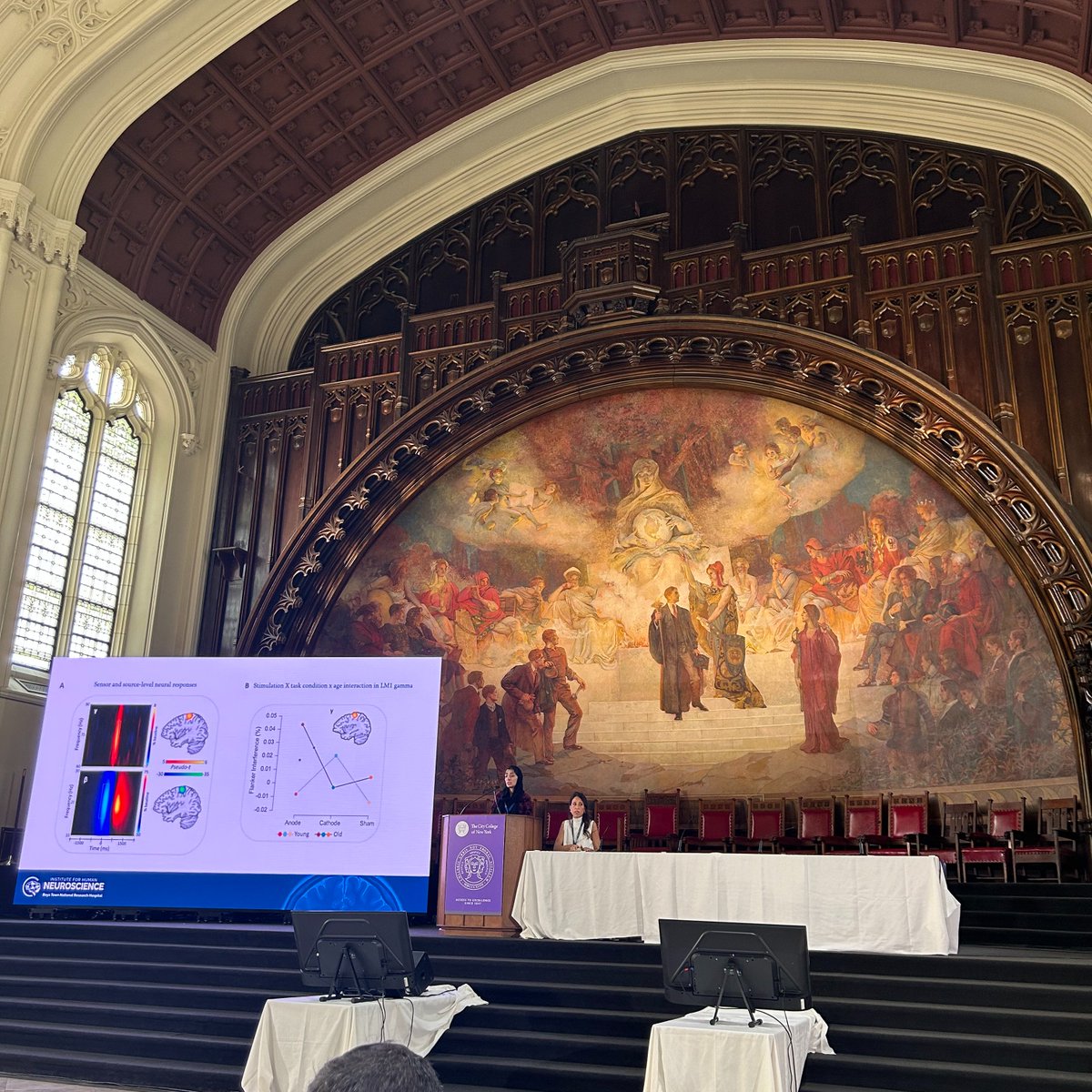
Dr. Yasra Arif presenting this morning, "High-definition transcranial direct current stimulation of the motor cortices induces polarity-dependent effects on neural oscillations within the distributed motor circuitry - young vs older adults"
#NYCN2024#IHNconferences#IHN