A hungry dog will always go much further than one that is always well fed. The people who achieve the most aren't always the most talented, they're often the ones who wanted it bad enough to keep pushing long after everyone else stopped. #GBRS#gbrsgroup
On September 13, 2007, Lieutenant Jason Redman, a US Navy SEAL, led an assault team on a high-stakes mission outside Fallujah, Iraq, to capture a high-value Al-Qaeda operative.
As the team advanced, they were ambushed with heavy machine gun and small arms fire. Redman was struck multiple times, with rounds tearing through his left elbow and shattering his jaw, exiting through his nose.
Despite being shot seven times and sustaining catastrophic injuries, he fought valiantly alongside his team, ensuring their survival. With little cover, the team called in a "Danger Close" AC-130 gunship strike, one of the closest fire missions of the Iraq War, to neutralize the enemy. Redman's leadership and resilience under fire allowed the entire team to return home alive, earning him the Bronze Star with Valor and the Purple Heart.While recovering at Bethesda Naval Medical Center, Redman faced 37 surgeries, 1,200 stitches, 200 staples, and 15 skin grafts, losing his sense of smell and much of the mobility in his left arm.
Tiffany Zaloudek joined the U.S. Air Force after the events of September 11, 2001, motivated by a desire to serve her country.
With a background influenced by her father's emphasis on preparedness, she pursued a career as a Survival, Evasion, Resistance, and Escape (SERE) specialist. In this role, she trains military personnel in essential skills like finding food, building shelters, evading capture, and navigating harsh environments such as forests, deserts, and oceans.
After 18 years of service, she became the first female SERE specialist to achieve the rank of Chief Master Sergeant, the highest enlisted rank in the Air Force.
Kudos to Tiffany! 🇺🇸
US Army Green Beret Nick Lavery.
Wounded in Afghanistan in 2013, lost his leg, and refused to quit again and again.
He became the first Special Forces operator to return to combat as an above-the-knee amputee. Silver Star recipient, and proof that resilience is a weapon too.
@NoodleHairCR7 Not sure about that, I've been to quite a few games there and plenty at St James' Park, Newcastle.
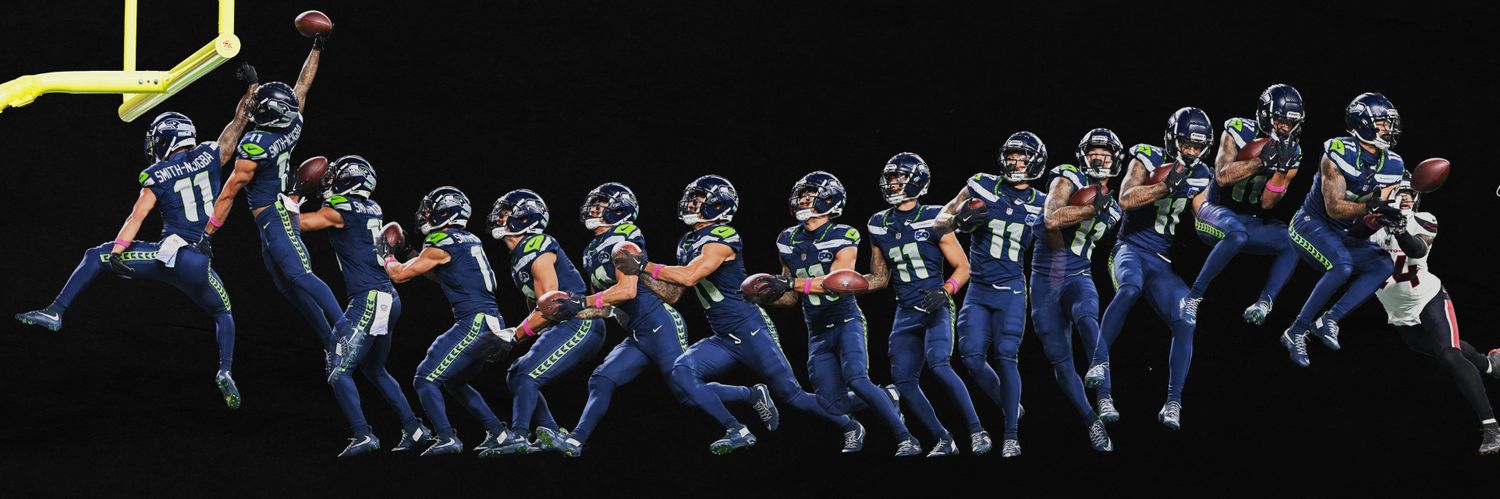
Seattle might win on sheer volume, but they're probably on par for aura.
Footage of former British 22 SAS operator Christian Craighead during the DusitD2 hotel complex terrorist attack on January 15, 2019.
His actions were captured on camera and quickly spread worldwide. People began referring to him as "Obi-Wan Nairobi."
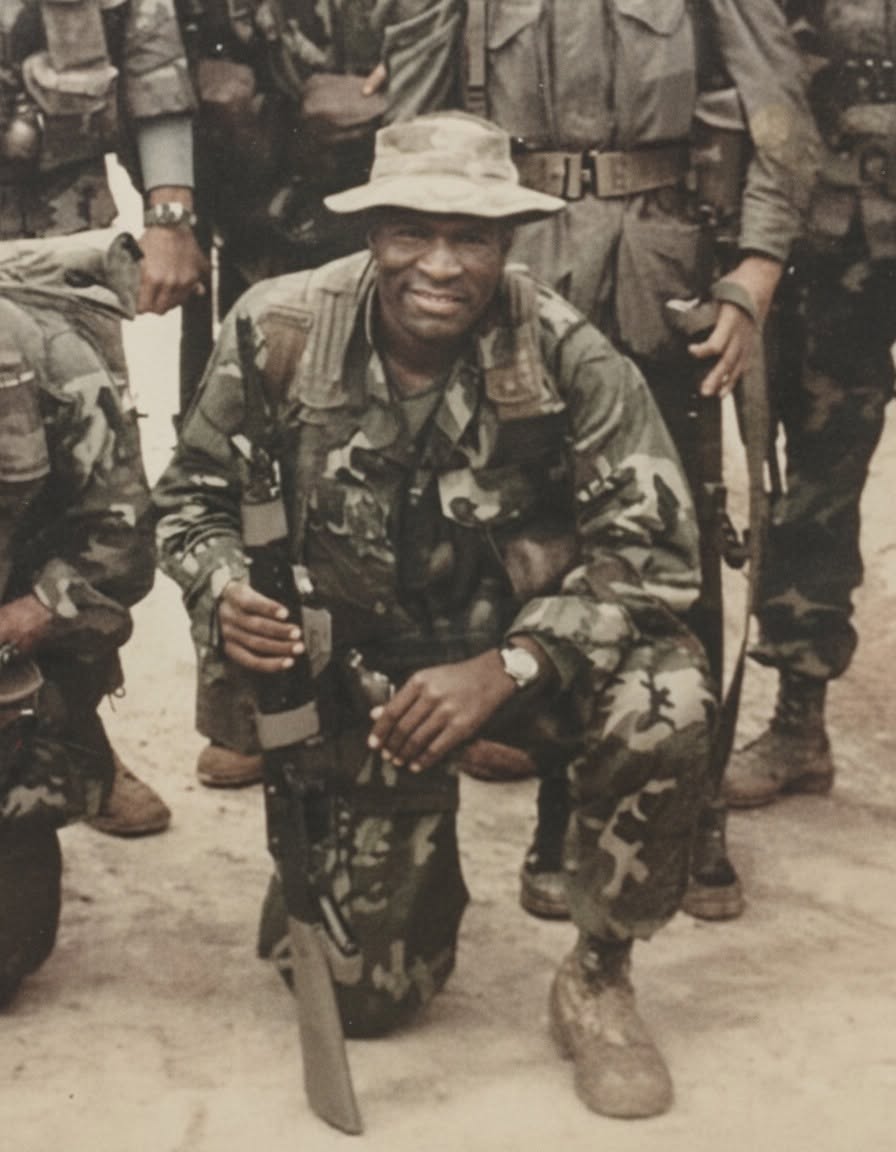
Today on June 18, President Trump will award the Medal of Honor to retired Recon Marine Major James Capers Jr. for his heroism during a 1967 ambush in Vietnam.
Major Capers was shot twice and suffered 17 shrapnel wounds and other injuries during the April 1967 ambush.
Not only did Capers lead his team to safety, but he twice tried to get out of the helicopter carrying the rest of his teammates so that it would be light enough to take off, and had to be pulled back inside by his men.
Major Capers is the first Black Marine to lead a reconnaissance company and to receive a battlefield commission.
The 1967 ambush began when hidden explosives detonated. Capers suffered shrapnel wounds to his abdomen and other parts of his body and a broken leg. Despite his wounds, he ordered a mortar strike on the team’s position to keep the enemy at bay.
Then, even after losing a significant amount of blood and being administered morphine, he led his team to a helicopter landing zone. When a helicopter landed, Capers refused to get on board unless the crew took the body of the team’s military working dog.
Capers was originally awarded the Bronze Star with “V” device for his heroism, which was upgraded to the Silver Star in 2010.
Today on June 18, 2026, President Trump will award the Medal of Honor to retired US Army Green Beret Major Nicholas Dockery for his actions in Afghanistan, 2012.
On 2 October 2012, Lieutenant Dockery’s element of Afghan and US forces was ambushed by a large group of Taliban fighters who engaged the platoon with rifle, machine gun and RPG fire.
In contact, Dockery moved back and forth several times over open ground attempting to rally and reinforce the Afghan units with his own small element. Hearing that one of his Soldiers was wounded, Dockery moved inside a courtyard to defend the small isolated group of US Soldiers.
He assaulted into the next room, killing one enemy fighter. Surrounded by more enemy fighters, Dockery rallied the remaining 4 US Soldiers and continued to defend the courtyard.
As the enemy continued their assault, RPG and grenade blasts suppressed the fire team. Attempting to regain the momentum, Dockery led a counter attack to clear the courtyard, using his body to shield a Soldier from an enemy grenade explosion.
The enemy again attacked the compound with 10 additional fighters. RPG fire and grenades wounded the entire element and destroyed the last covered position of Dockery’s team.
Noticing that one of his NCOs was missing, Dockery moved into a nearby alley and found 2 enemy fighters dragging away an unconscious US Soldier. He assaulted the two fighters and killed them both in close combat, and then began CPR and first aid on the Soldier, ultimately saving his life.
Dockery then moved to the roof of the compound, still under enemy fire, and fired smoke grenades to mark his position for friendly helicopter gunships to suppress the remaining enemy.
Dockery continued serving after his deployment, earning the Green Beret and leading Special Forces teams in some of the military's most demanding assignments.