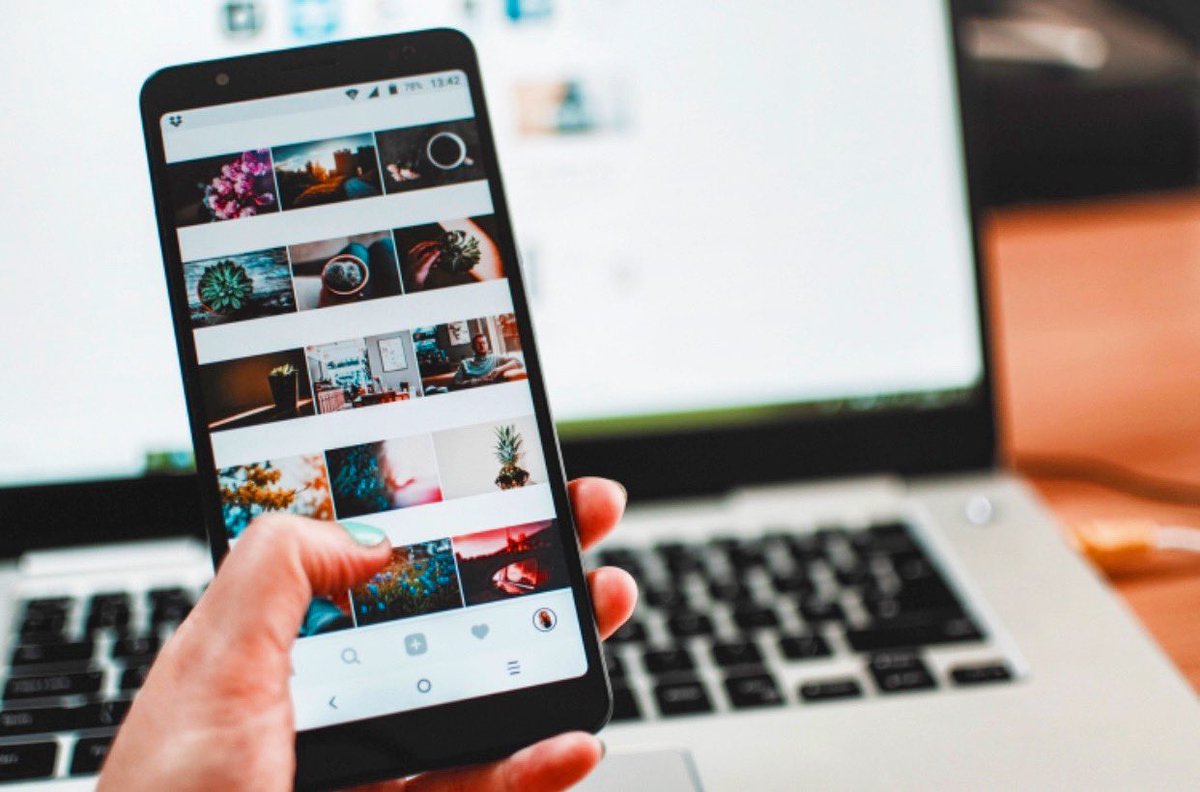
Win a free Dig Detox Case!
To enter, retweet and follow us.
Block your phone's radiation to promote health and peace of mind.
Winners will be chosen at random on 15/08/20.
Compatible with iPhone 7, 8, SE2020, X, XS, XS Max, XR, 11, 11 Pro Max
*Visit our website for our T&Cs*
60% of us consider ourselves hooked on devices, and are trying to cut down usage, although <50% are successful, according to Deloitte’s Consumer Survey. Queensland University researchers have found a significant rise in people blaming their smartphones for poor productivity.
The average Brit scrolls through their smartphone at a pace of 5.149 miles per year. This equates to 22.7 meters (!) per day per person. Collectively (and perhaps most shockingly), the population of the UK is scrolling 210 millions miles each year.
The ‘endless scroll’ feature mimics the ‘infinite soup bowl’ study: if a bowl of soup automatically refills, people eat significantly more due to the absence of stopping cues. Similarly, endless scrolling deprives users of stopping cues: our minds can’t catch up with our impulses
3.5 billion people use a smartphone worldwide, whilst the US population check their phones around 80 times each day. Most us spend 4 hours on our phones every day – one-quarter of our waking lives. Are you conscious of how long you spend on your devices each day?
Smartphone interface designers employ “behavioural design”; techniques that ensure our smartphones are pleasurable to look at and engage with. The constant urge to reach for our devices is thanks to their slick appearance and polished glow. Have you heard of behavioural design?
“Behind every screen on your phone, there are a thousand engineers that have worked to try to make it maximally addicting". Designing features that prolong our usage is far from surprising: when we visit apps regularly, advertising revenue flows into the pockets of tech companies
Facebook's founding president announced that the company had set out to consume as much user time as possible, and that it was "exploiting a vulnerability in human psychology". Once we’ve clicked on an app it is the platform designers who take control. https://t.co/SrBofWxkXU
It’s no coincidence that the colour red is used widely to drive engagement via notifications: red is a trigger colour used to signal importance. Not only is it the most vivid colour for ocular perception, but it lights up areas of the brain that other colours do not.
The colour red triggers a greater galvanic skin response than other colours. Long before the dawn of iPhones, it was culturally acknowledged that the colour red signals importance (warning signs, traffic lights, and fire) Are you drawn to the red colour of notifications?
In 2006, Aza Raskin designed the endless scroll feature seen on a host of social media apps. Before this invention, social media users would have to click to the next page to access more content, but now, the page never ends, subtly encouraging us to scroll endlessly.