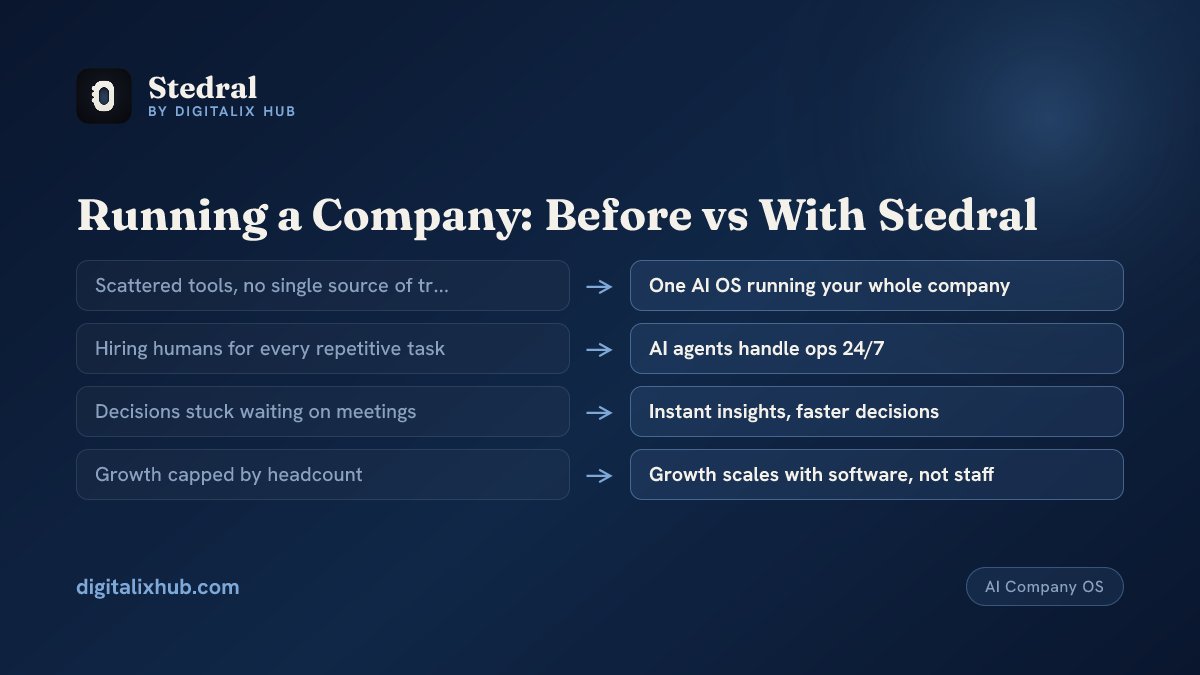
Your whole AI company, on autopilot. Digitalix Hub is the AI production OS — agents that run your marketing, sales, support & ops. One price, no per-seat.
CrowdStrike just shipped an "emergency stop" button for AI agents gone rogue.
That should tell you something: the same industry selling you autonomous agents is now building kill switches for them.
Why? Because researchers just documented attackers using AI agents to pull
Common advice: automate the clean decisions first, save the judgment calls for humans.
Backwards, and here's where it breaks.
Picture the easy win — auto-approve refunds under fifty bucks. Clean rule, ships in an afternoon, everyone claps.
Three weeks later you're the one manually approving half those refunds anyway, because nobody automated the part where you decide what actually counts as "under fifty for a good reason" versus someone gaming the threshold.
The rule was trivial. The judgment hiding inside the rule wasn't.
So you end up doing more hands-on review than before you automated anything, just on a smaller, sneakier set of cases that all look identical from the outside.
What this actually teaches: automation doesn't remove judgment calls, it concentrates them
@trycentinela Exactly right — naive restore can clobber a newer human edit. Ours timestamps writes and diffs before revert, not blind rollback. Still, what's your fix for two correct edits racing each other?
Question I don't see founders asking enough: when your agent is wrong, how fast can you undo it?
Everyone obsesses over stopping mistakes before they happen. Better prompts, tighter permissions, more review steps. Fine, do all that.
But the agents running Digitalix Hub make calls all night. Some will be wrong. The thing that actually matters isn't whether a bad call happens, it's whether reversing it takes thirty seconds or a support ticket and three apologies.
Most ops stacks have zero undo button. You built for prevention and shipped nothing for recovery.
What's your rollback actually look like right now. Not in theory. The last time something went sideways, how long did it take to fix it.
Every SaaS contract you've signed has one assumption baked into the price: a human will log in.
Per-seat pricing isn't really pricing software. It's pricing a human being's attention. $49 a seat makes sense when a person opens the CRM, checks the pipeline, updates a status, closes the tab. The seat is a proxy for a human doing the work.
Now the agent does the work. It reads the lead, updates the field, sends the follow-up, closes the ticket. Nobody logs in under that seat most days. You're still paying for it though, because the pricing model hasn't caught up to who's actually operating the tool.
This is the real shift behind "AI company OS" talk, and it's more boring and more important than the demos make it look. Agents doing cooler tricks inside the same software stack is the small version of this story. The bigger one: the unit of value is moving from seats occupied to actions completed, and most pricing pages haven't noticed yet.