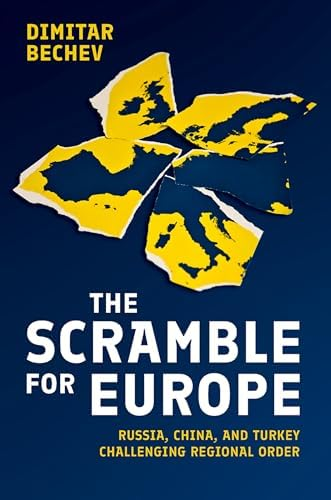
From the book's introduction titled Future Is Not What It Used to Be: "“Europe, once the shaper, is now being reshaped by the very world it sought to influence and finds itself on the defensive.”
The US, Russia and Ukraine are at the table in Abu Dhabi. Europeans are largely on the sidelines.
As I argue in Scramble for Europe, EU (+UK) has gone from shaping the international order to defending its place within it.
Question is whether Europe can recover its agency.
Why Medinsky?
Russia's delegation to Abu-Dhabi is led by Vladimir Medinsky. He is not a career diplomat, but he has plenty of experience negotiating with Ukraine. He has been involved since 2022, including the talks in Istanbul. You could say Medinsky has been there since the very beginning of this so-called negotiating process. In that sense, his appointment to lead the talks in Abu Dhabi comes as no surprise.
What matters far more is something else. Medinsky is the living embodiment of Putin's views on Ukraine. In those views, Ukraine is an artificial construct with no national, cultural or historical tradition of its own behind it. Ukrainian culture is treated as a regional variant of a common Russian culture, and the Ukrainian language as a dialect of Russian. As an amateur historian, Medinsky devotes himself to justifying this version of the past. The same line runs through Russia's history textbooks, which he helps write.
Putting a man like this at the head of any delegation to talks with Ukraine shows clearly how Putin regards both Ukraine and the negotiating process itself. The Russian leadership is making it plain that it does not see Ukraine as an equal partner. More than that, it denies Ukraine any independence at all. Putin intends to decide Ukraine's fate with those he considers its masters: the United States. In his mind, Washington controls both Ukraine and Europe, which he also refuses to recognize as an independent player. And Europe itself, unfortunately, is still doing far too little to prove its agency through action.
That makes the makeup of the delegation a political signal. When Putin wants a serious conversation, he is perfectly able to send people whose main job is the professional conduct of foreign policy, not the embodiment of historical grievances against the other side. These people may be weathervanes through and through, but they know how to negotiate and how to change course when their bosses tell them to.
The first meeting of the renewed Russia–US dialogue, in Riyadh in February 2025, was attended by Lavrov and Ushakov. The men sent to talk to Rubio and Mike Waltz, then the US national security adviser, held senior positions in the foreign policy system. Dmitriev was somewhere nearby too, but he has a separate task: to work on American negotiators like Witkoff and Kushner, and through them, Trump. He is counting on their overconfidence, their ignorance and their belief that any political problem can be solved with a business deal.
There was another example. In May 2025, Europe and Ukraine demanded that Putin agree to a 30-day ceasefire and threatened new sanctions if he refused. To get out from under this ultimatum, Putin proposed resuming direct talks in Istanbul. Zelensky said he was ready to come in person. Putin sent Medinsky. Apart from a prisoner exchange, the meeting produced nothing. There was no ceasefire, and the war went on, just as Putin had intended.
Medinsky on Ukraine, Dmitriev on the United States: this division of roles says a lot about who the Kremlin intends to negotiate with and what it intends to negotiate about.
Western experts and journalists sometimes ask whether personnel changes can tell us anything about where Russian policy is heading. My answer is always no. Any Russian official will carry out Putin's orders. Replacing the person who carries them out changes nothing by itself. For the course to change, either Putin has to go, or he has to decide to change it himself. The second is hard to count on.
The choice of envoy, however, does tell you what kind of mandate he has been given and how the other side is regarded. There is a difference between being ready to discuss the terms of an agreement and intending to present demands, and that difference shows, among other places, in who sits on the delegation. A man who has devoted himself to arguing that Ukraine has no historical legitimacy arrives at the talks with a very specific political message.
Medinsky at the head of the Russian delegation is a sign that Putin intends to dictate his will to Ukraine. He is still pursuing the same goals he has been pursuing for years. In this setup, the negotiations are one more tool for imposing his terms.
As negotiators meet in Abu Dhabi to discuss an end to the war, it's helpful to reflect back on the war's origins. The @kennaninstitute has conducted an extensive series of interviews on these origins with policymakers, journalists and scholars. See below.
https://t.co/KRF3NkpSiu
Not clear what the US means by “Nato-like security guarantees” and why Russia would agree to that. If it’s a mutual defense security treaty ratified by the US Senate, Ru went to war to prevent just that. Everything else is merely Trump’s promise valid for 2 years.
Another thread on Serbia, based on my new @Carnegie_Europe paper
Serbia has entered a new political era after 2 years of mass protests,the student-led movement has won power.But removing an autocrat is easier than dismantling the system that sustained him. Real test starts now.
Post-Vučić Serbia:
- Rule of law gains, as SNS clientelist networks come under pressure.
- The new majority might prove fragile, giving Vučić chances to rebuild some support.
1/3
5/5 Don't expect a geopolitical u-turn.
Serbia is unlikely to sanction Russia,recognise Kosovo or abandon economic ties with China. EU ties will improve,but foreign-policy continuity will persist.
Central question isn't whether Serbia changes sides but if it restores democracy.
🧵FEW NOTES ON THE UPCOMING TALKS
How exactly do we measure Russia's willingness to engage in more substantive negotiations? By the seniority of its delegation? By the individuals involved? Or by the actual substance of its negotiating position?
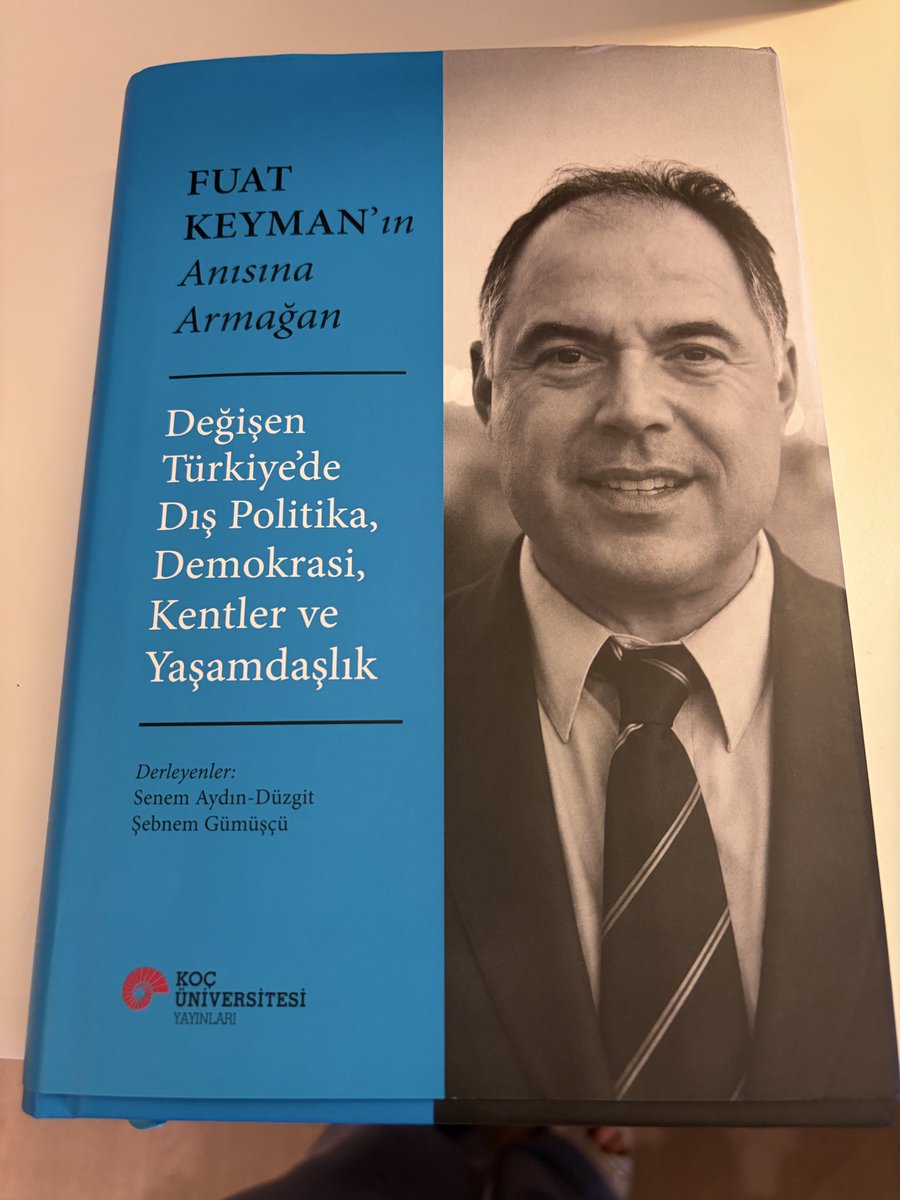
Bu hafta sevgili Şebnem Gümüşçü ile derlediğimiz Fuat Keyman Hocamıza armağan kitap Koç Üniversitesi Yayınları tarafından basıldı. Anamed’de yaptığ��mız kiyap etkinliğinde Hocamızın mirasını ve kitabını yoğun bir katılımcı ilgisi sayesinde etraflıca konuşma fırsatı bulduk.