Type 2 diabetes is treated as one disease. A data-driven analysis says it is at least five, and they carry different risks to different organs.
Researchers ran cluster analysis on 8,980 newly diagnosed adults from a Swedish cohort using six routine measures (age at diagnosis, BMI, blood sugar (HbA1c), GAD antibodies, and estimates of insulin production and insulin resistance).
Five subtypes emerged and replicated in three more cohorts:
- severe autoimmune (overlaps type 1)
- severe insulin-deficient
- severe insulin-resistant
- mild obesity-related
- mild age-related
The insulin-resistant group had the highest risk of diabetic kidney disease. The insulin-deficient group had the highest risk of retinopathy, the eye complication. Yet they had been prescribed broadly similar treatment.
This is a clustering study showing different risks at diagnosis. It is not a trial proving that treating by subtype improves outcomes. But it makes a strong case that a single glucose number can hide very different diseases.
Ahlqvist et al., Lancet Diabetes Endocrinol 2018.
Try this sweet creamy #lowGI soup, Velvetty carrot & cauli chowder, so comforting on these cold, rainy, winter days. #diabetes#diabetics#LowCarbRecipes https://t.co/bgfOnkC9Xd
Studies say adhering sensors on the abdomen offer best accuracy but you hv to weigh that agst risk to cgm sensor
e.g. I do stacks of core exercise so it is not an option.
Likewise, when you choose where to place it (arm v tummy) - sensor care/stability is vital for good readings.
CGM stickers are a good safeguard for your sensors, cost about $2 (AUD) & last about a week - so you need two for the lifespan of the sensor. Removing/reapplying them is a bit tricky & you have to firmly but gently press on the sensor while v gently peeling the old sticker off.
That placement increases risk of bumping the sensor & to counter that, I use Rocktape sensor stickers to keep any impacts further out than the edge of the sensor. They cover an area of about 2-3”, overlapping the sensor (about an inch wide) all the way around by about an inch.
Libre’s instruction clip has a woman attaching a sensor in the centre of her tricep.
Imo that may lead to false compression lows
I try to apply mine just slightly towards the inside of my arm to reduce any risk of false lows while sleeping - the real ones are annoying enough!
Good almond milk is the key ingredient from yesterday’s recipe for Vanilla almond pannacotta.
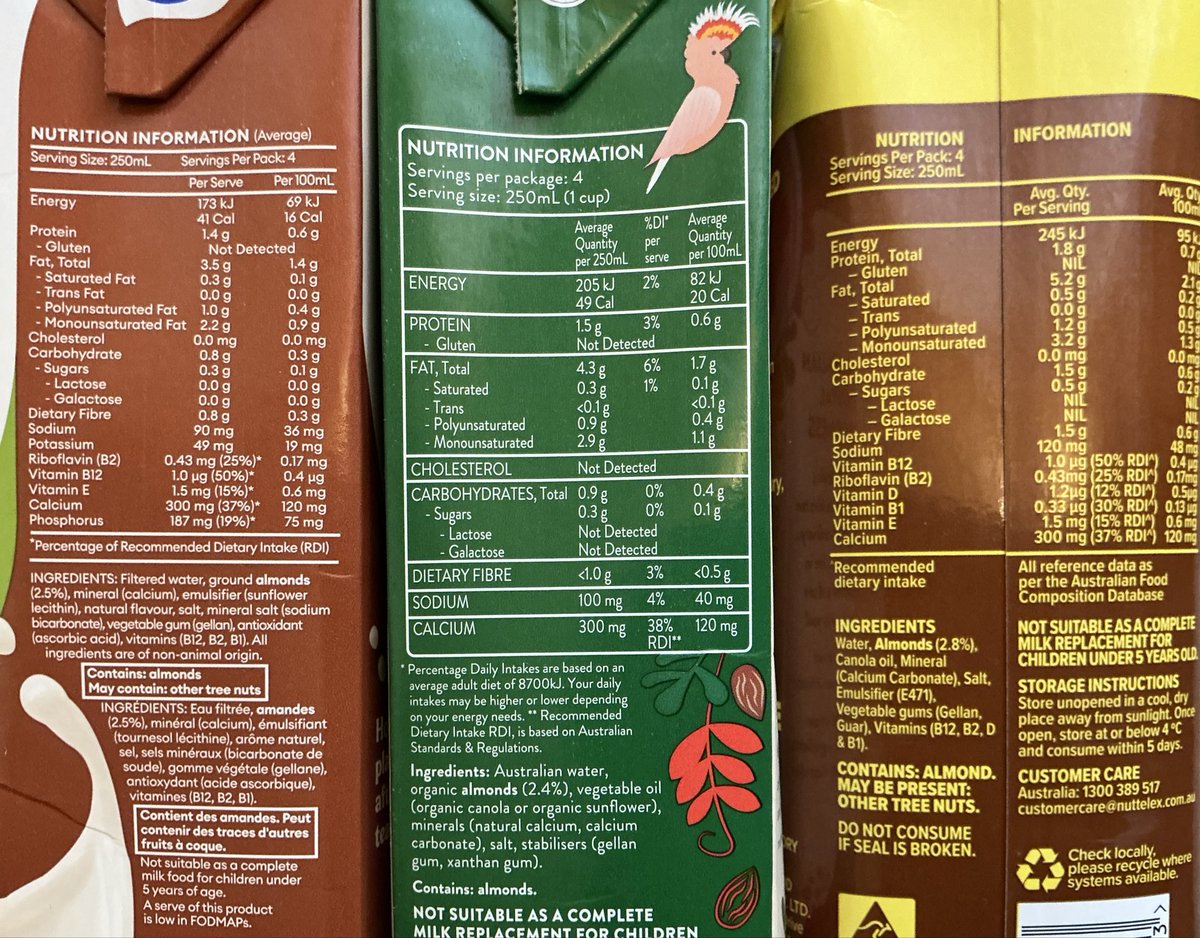
These brands are all ok but the 1 on the left has the mildest taste & as such is the most versatile
- it also has the lowest energy count - important for #lowGI. #recipes#healthyFood
#Diabetics need to be familiar w products they intend to use.
Pic below - 3 brands of *unsweetened* almond milk, low-high energy count (L-R) - SoGood, Australia’sOwn &Nuttelex.
Obv the GI you save by using the lowest, gives you more leeway w the GI of other ingredients
#recipe
#Diabetics need to be familiar w products they intend to use.
Pic below - 3 brands of *unsweetened* almond milk, low-high energy count (L-R) - SoGood, Australia’sOwn &Nuttelex.
Obv the GI you save by using the lowest, gives you more leeway w the GI of other ingredients
#recipe
Interstitial #bloodGlucose readings for right handers with a sensor on the right arm were higher 96% more often than when worn on the left
& about 21% for left handers wearing their sensor on the right arm. #diabetes#CGM#MedTech
https://t.co/dBTMzptLPP
There are no perceivable differences in taste or texture between the 100% rice and 100% bean vermicelli noodles.
A simple tweak in ingredients can make such a big difference to control of your BGLs. Plan it out. #lowGI#lowCarbRecipes
As always, don’t forget to always check all your planned #recipe ingredients against the Uni of Sydney’s #diabetes gold-standard resource, https://t.co/8nYnuxOAGE before cooking & definitely before eating.
#lowGI#lowCarbRecipes
Interstitial #bloodGlucose readings for right handers with a sensor on the right arm were higher 96% more often than when worn on the left
& about 21% for left handers wearing their sensor on the right arm. #diabetes#CGM#MedTech
https://t.co/dBTMzptLPP
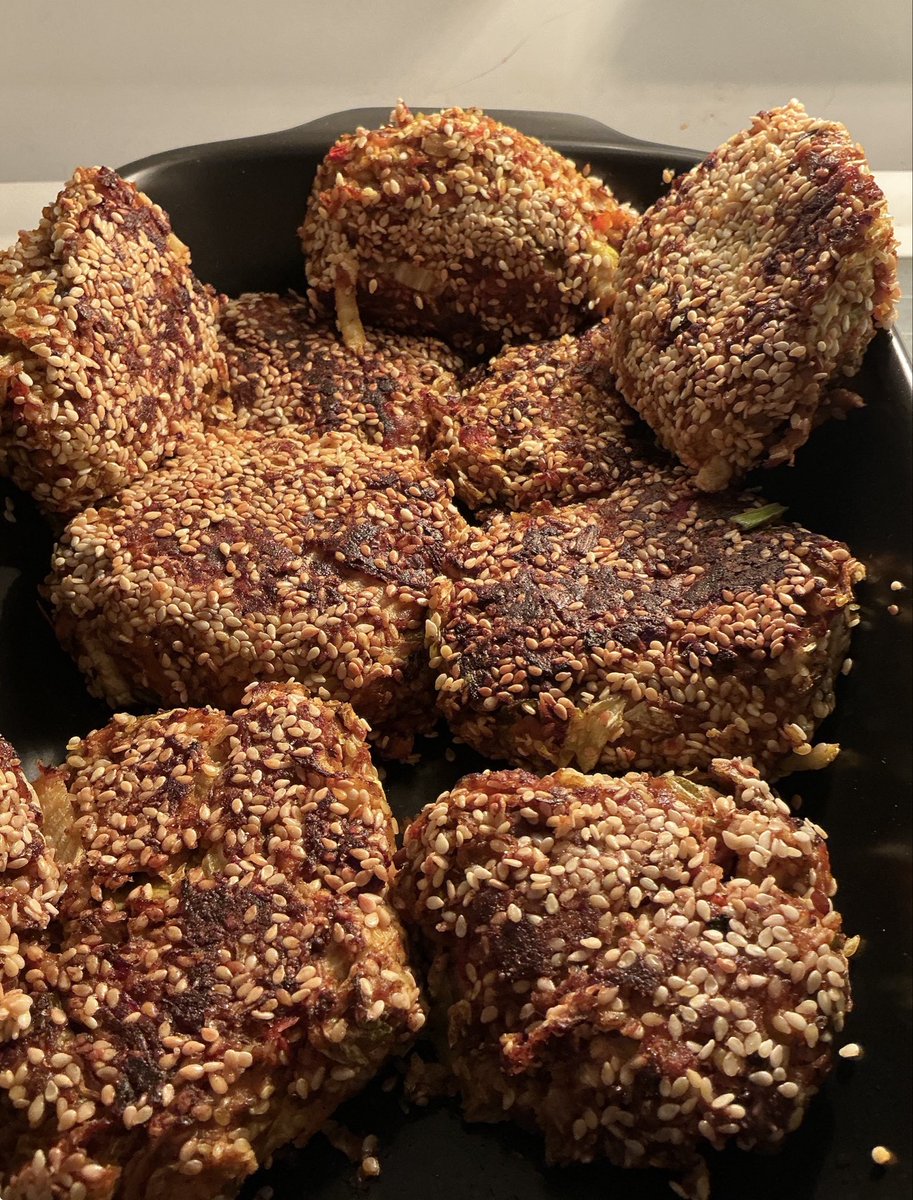
#LowGI hi-fibre meatballs (sorry vegans) make an appearance on Dining #Diabetic this week.
The recipe is versatile - use your choice of mince - I’m using #Kangaroo, for its MEGA high #iron & #protein hit with virtually zero fat. So perfect for #diabetics.
#HealthyFood#LowCarb