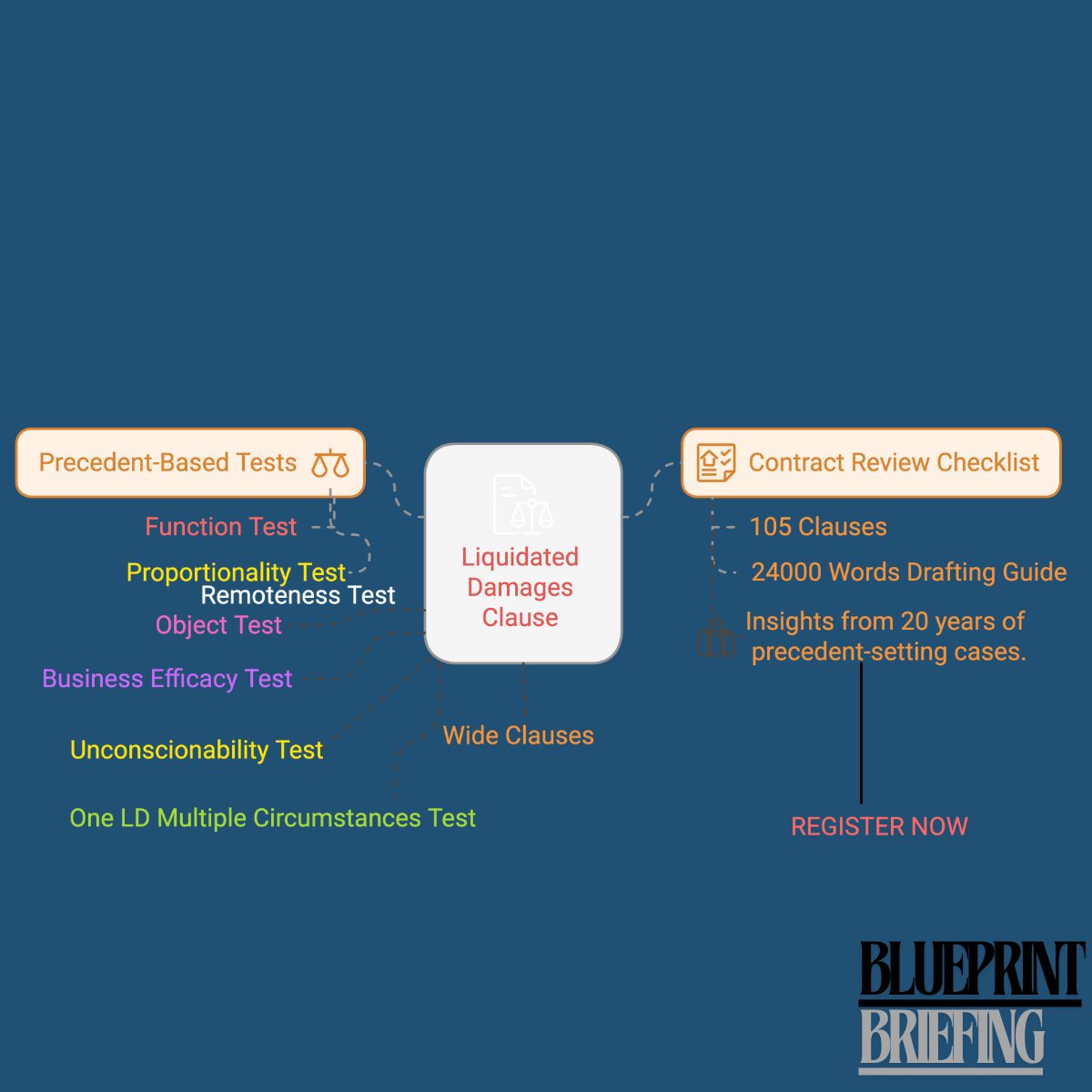
9 Tests To Check if your Liquidated Damages Clause will Fail before Courts.
✅Want to avoid costly contract mistakes?
➡️ 𝗥𝗲𝗴𝗶𝘀𝘁𝗲𝗿 𝗳𝗼𝗿 𝗮 𝗳𝗿𝗲𝗲 𝗖𝗼𝗻𝘁𝗿𝗮𝗰𝘁 𝗥𝗲𝘃𝗶𝗲𝘄 𝗖𝗵𝗲𝗰𝗸𝗹𝗶𝘀𝘁 (𝟭𝟬𝟱 𝗰𝗹𝗮𝘂𝘀𝗲𝘀) 𝗰𝗼𝗻𝘁𝗮𝗶𝗻𝗶𝗻𝗴 𝗮 𝟮𝟰𝟬𝟬𝟬 𝘄𝗼𝗿𝗱𝘀 𝗗𝗿𝗮𝗳𝘁𝗶𝗻𝗴 𝗚𝘂𝗶𝗱𝗲 𝗵𝗲𝗿𝗲: https://t.co/N5JH0E51kG
If Your Clause Fails any Test. It will fail before courts. Here are Precedent Based 9 Tests developed by Common Law Courts:
1. 𝗙𝘂𝗻𝗰𝘁𝗶𝗼𝗻 𝗧𝗲𝘀𝘁: - Whether LD clause seeks damages for secondary obligation?
2. 𝗧𝗲𝘀𝘁 𝗼𝗳 𝗣𝗿𝗼𝗽𝗼𝗿𝘁𝗶𝗼𝗻𝗮𝗹𝗶𝘁𝘆: - If the clause imposes disproportionate recovery, ignoring magnitude and seriousness of breach. Is it compensatory or penal?
3. 𝗥𝗲𝗺𝗼𝘁𝗲𝗻𝗲𝘀𝘀 𝘁𝗲𝘀𝘁: - Whether recovery is remote to the legitimate interest of the employer/ owner towards primary obligation.
4. 𝗧𝗵𝗲 𝗢𝗯𝗷𝗲𝗰𝘁 𝗧𝗲𝘀𝘁: - If the clause punishes the defaulter just for the default/breach without actual damage.
5. 𝗕𝘂𝘀𝗶𝗻𝗲𝘀𝘀 𝗲𝗳𝗳𝗶𝗰𝗮𝗰𝘆 𝗧𝗲𝘀𝘁: - Does the clause serve any legitimate business interest protected by contract?
6. 𝗨𝗻𝗰𝗼𝗻𝘀𝗰𝗶𝗼𝗻𝗮𝗯𝗶𝗹𝗶𝘁𝘆: - Assuming business interest is served whether the LD clause makes provisions which is extravagant, exorbitant or unconscionable.
7. 𝗢𝗻𝗲 𝗟𝗗 𝗳𝗼𝗿 𝗠𝘂𝗹𝘁𝗶𝗽𝗹𝗲 𝗘𝘃𝗲𝗻𝘁𝘀: Same sum is payable for breach of different covenants indicates LD is not a pre-estimated sum for any particular breach as damage cannot be same for many circumstances.
8. Merely because sum prescribed is less than actual damage sustained does not make it a penalty or an objectionable clause.
𝙍𝙚𝙢𝙚𝙢𝙗𝙚𝙧: 𝙐𝙣𝙚𝙦𝙪𝙖𝙡 𝙗𝙖𝙧𝙜𝙖𝙞𝙣𝙞𝙣𝙜 𝙥𝙤𝙬𝙚𝙧 𝙤𝙛 𝙩𝙝𝙚 𝙥𝙖𝙧𝙩𝙞𝙚𝙨 𝙖𝙙𝙙 𝙛𝙪𝙚𝙡 𝙩𝙤 𝙩𝙝𝙚 𝙛𝙞𝙧𝙚.
9. 𝗦𝘄𝗲𝗲𝗽𝗶𝗻𝗴 𝗖𝗹𝗮𝘂𝘀𝗲𝘀 A wide clause providing for recovery for every breach howsoever small.
Masterclass on Construction Law:
Your delay claim has forensic analysis, perfect documentation, and world-class software.
Why did the arbitrator still reject it?
5 traps that defeat delay claims:
1. Apportionment Trap
2. Causative Potency Confusion
3. Prevention Principle Blindspot
4. Obverse Problem
5. Burden of Proof Collapse
Learn the exact framework English Courts apply to challenge your delay reports and perfect documentation to reject delay claims.
Learn how to present the evidence and apply the Malmaison approaches changed by Water Lily, North Midland and City Inn's cases.
Save your claims!
What You'll Learn:
- The exact legal framework courts use (not industry assumptions)
- Why your documentation strategy fails arbitration
- How to spot claim vulnerabilities before they cost millions
- Real case studies showing where professionals fail
- 30-day action plan to apply these principles immediately
Duration: 45 minutes (30-min framework + case studies + live Q&A)
Join here: https://t.co/bTqhtpAG3L
9 Tests To Check if your Liquidated Damages Clause will Fail before Courts.
✅Want to avoid costly contract mistakes?
➡️ 𝗥𝗲𝗴𝗶𝘀𝘁𝗲𝗿 𝗳𝗼𝗿 𝗮 𝗳𝗿𝗲𝗲 𝗖𝗼𝗻𝘁𝗿𝗮𝗰𝘁 𝗥𝗲𝘃𝗶𝗲𝘄 𝗖𝗵𝗲𝗰𝗸𝗹𝗶𝘀𝘁 (𝟭𝟬𝟱 𝗰𝗹𝗮𝘂𝘀𝗲𝘀) 𝗰����𝗻𝘁𝗮𝗶𝗻𝗶𝗻𝗴 𝗮 𝟮𝟰𝟬𝟬𝟬 𝘄𝗼𝗿𝗱𝘀 𝗗𝗿𝗮𝗳𝘁𝗶𝗻𝗴 𝗚𝘂𝗶𝗱𝗲 𝗵𝗲𝗿𝗲: https://t.co/N5JH0E51kG
If Your Clause Fails any Test. It will fail before courts. Here are Precedent Based 9 Tests developed by Common Law Courts:
1. 𝗙𝘂𝗻𝗰𝘁𝗶𝗼𝗻 𝗧𝗲𝘀𝘁: - Whether LD clause seeks damages for secondary obligation?
2. 𝗧𝗲𝘀𝘁 𝗼𝗳 𝗣𝗿𝗼𝗽𝗼𝗿𝘁𝗶𝗼𝗻𝗮𝗹𝗶𝘁𝘆: - If the clause imposes disproportionate recovery, ignoring magnitude and seriousness of breach. Is it compensatory or penal?
3. 𝗥𝗲𝗺𝗼𝘁𝗲𝗻𝗲𝘀𝘀 𝘁𝗲𝘀𝘁: - Whether recovery is remote to the legitimate interest of the employer/ owner towards primary obligation.
4. 𝗧𝗵𝗲 𝗢𝗯𝗷𝗲𝗰𝘁 𝗧𝗲𝘀𝘁: - If the clause punishes the defaulter just for the default/breach without actual damage.
5. 𝗕𝘂𝘀𝗶𝗻𝗲𝘀𝘀 𝗲𝗳𝗳𝗶𝗰𝗮𝗰𝘆 𝗧𝗲𝘀𝘁: - Does the clause serve any legitimate business interest protected by contract?
6. 𝗨𝗻𝗰𝗼𝗻𝘀𝗰𝗶𝗼𝗻𝗮𝗯𝗶𝗹𝗶𝘁𝘆: - Assuming business interest is served whether the LD clause makes provisions which is extravagant, exorbitant or unconscionable.
7. 𝗢𝗻𝗲 𝗟𝗗 𝗳𝗼𝗿 𝗠𝘂𝗹𝘁𝗶𝗽𝗹𝗲 𝗘𝘃𝗲𝗻𝘁𝘀: Same sum is payable for breach of different covenants indicates LD is not a pre-estimated sum for any particular breach as damage cannot be same for many circumstances.
8. Merely because sum prescribed is less than actual damage sustained does not make it a penalty or an objectionable clause.
𝙍𝙚𝙢𝙚𝙢𝙗𝙚𝙧: 𝙐𝙣𝙚𝙦𝙪𝙖𝙡 𝙗𝙖𝙧𝙜𝙖𝙞𝙣𝙞𝙣𝙜 𝙥𝙤𝙬𝙚𝙧 𝙤𝙛 𝙩𝙝𝙚 𝙥𝙖𝙧𝙩𝙞𝙚𝙨 𝙖𝙙𝙙 𝙛𝙪𝙚𝙡 𝙩𝙤 𝙩𝙝𝙚 𝙛𝙞𝙧𝙚.
9. 𝗦𝘄𝗲𝗲𝗽��𝗻𝗴 𝗖𝗹𝗮𝘂𝘀𝗲𝘀 A wide clause providing for recovery for every breach howsoever small.
Masterclass on Construction Law:
Your delay claim has forensic analysis, perfect documentation, and world-class software.
Why did the arbitrator still reject it?
5 traps that defeat delay claims:
1. Apportionment Trap
2. Causative Potency Confusion
3. Prevention Principle Blindspot
4. Obverse Problem
5. Burden of Proof Collapse
Learn the exact framework English Courts apply to challenge your delay reports and perfect documentation to reject delay claims.
Learn how to present the evidence and apply the Malmaison approaches changed by Water Lily, North Midland and City Inn's cases.
Save your claims!
What You'll Learn:
- The exact legal framework courts use (not industry assumptions)
- Why your documentation strategy fails arbitration
- How to spot claim vulnerabilities before they cost millions
- Real case studies showing where professionals fail
- 30-day action plan to apply these principles immediately
Duration: 45 minutes (30-min framework + case studies + live Q&A)
Join here: https://t.co/bTqhtpAG3L
How to derive implied obligation of employer for sub-contractors breach?
The question:
Who bears the responsibility for delay - DBS for sub-contractors’ default or the main software contractor - TCS?
The issue was whether sub-contractors delay in supplying the infrastructure constituted the employers delay?
The court’s was faced with the task of determining implied obligation of DBS and if it constituted Authority Cause under clause 38 below:
AUTHORITY Cause: any breach by the AUTHORITY of any of the AUTHORITY's Responsibilities (except to the extent that it is the result of any act or omission by the AUTHORITY to which the CONTRACTOR has given its prior consent).
There was no direct contractual responsibility of DBS for sub-contractors default.
The court was tasked to find if an implied responsibility of DBS can be inferred?
The court observed following facts between parties dealing:
A specific allocation of third-party responsibility within the contractual mechanism means that parties chose specific text of the contract to impose obligation or responsibility.
A general responsibility of DBS outside the contractual mechanism is therefore inconsistent with ‘primary management responsibility’ of TCS.
TCS was excluded to bring claim under clause 44.2 which related to computing environment. The computing environment can only mean to include DBS sub-contractors over which DBS had no control.
The court held that textual consistency within the contractual clauses must support implication of an obligation/ responsibility.
Meaning of the word responsibility in clause 38 does not mean general responsibility for any breach but specific responsibility consistent with the text of the contract.
DBS was therefore not responsible for sub-contractors breach on which TCS could base its claim for delay because when parties have chosen specific allocation of responsibility for breach and TCS was excluded to bring the claim under clause 44.2 relating to computing environment - a general responsibility for sub-contractors delay on DBS cannot be implied.
READ THE DETAIL ANALYSIS HERE:
https://t.co/CZJlGl4cFs
Why program management tools cannot win disputes?
Here's why:
- Your beautiful delay report becomes evidence the employer uses against you.
- Your contractual analysis is incomplete.
- Your claim misses legal tests courts actually apply.
Tools generate output. The framework provides direction.
Without the framework:
- Your timeline analysis doesn't reference dominant cause test
- Your causation discussion doesn't reference Adyard principles
- Your prevention analysis misses how Multiplex actually works
- Your documentation doesn't answer the four causation questions
The difference between a tool-generated report and a strategically-framed legal argument is often £50,000-£100,000 in claim value.
An Advanced Construction Law Course that covers entire Hudson, Keating and every importanct case: https://t.co/MdJpBQxXyc
A surgeon has the best tools—scalpels, retractors, monitors. But a surgeon without surgical training is just a person with sharp objects.
#ConstructionLaw #Courses #Construction #Arbitration
E-book Download: 'CROSS-BORDER CONSTRUCTION LAW'
🎁 𝗟𝗶𝗺𝗶𝘁𝗲𝗱 𝗟𝗮𝘂𝗻𝗰𝗵 𝗢𝗳𝗳𝗲𝗿: Only For the first 25 Downloads!
📚 𝗜𝗻𝘁𝗿𝗼𝗱𝘂𝗰𝗶𝗻𝗴: 𝗖𝗿𝗼𝘀𝘀-𝗕𝗼𝗿𝗱𝗲𝗿 𝗖𝗼𝗻𝘀𝘁𝗿𝘂𝗰𝘁𝗶𝗼𝗻 𝗟𝗮𝘄 𝗘𝘀𝘀𝗲𝗻𝘁𝗶𝗮𝗹𝘀
✅ 50+ critical topics - precedent-based, zero theoretical fluff
✅ Instant clarity - locate any topic, get comprehensive overview in seconds
✅ 4,000 pages condensed - I've read Hudson's and landmark cases so you don't have to
✅ Pure application - just answers, just essence, just results, no theories and no legal jargons.
🔥 𝗪𝗮𝗻𝘁 𝘁𝗼 𝗟𝗲𝗮𝗿𝗻 𝗔𝗱𝘃𝗮𝗻𝗰𝗲𝗱 𝗟𝗲𝗴𝗮𝗹 𝗣𝗿𝗶𝗻𝗰𝗶𝗽𝗹𝗲𝘀 𝘁𝗵𝗮𝘁 𝗚𝗼𝘃𝗲𝗿𝗻 𝗖𝗼𝗻𝘀𝘁𝗿𝘂𝗰𝘁𝗶𝗼𝗻 𝗜𝗻𝗱𝘂𝘀𝘁𝗿𝘆?
This e-book isn't just standalone value – it's your essential preparation for Advanced Construction Law Training.
Download Now! https://t.co/jCmJ5Cfqpt
#Ebook
#Construction
#ConstructionLaw
#Arbitration
#ProjectManager
Your program management training, construction templates and softwares are merely tools you employ - can become liabilities if used without legal strategy.
Here's why:
- Your beautiful delay report becomes evidence the employer uses against you.
- Your contractual analysis is incomplete.
- Your claim misses legal tests courts actually apply.
Tools generate output. The framework provides direction.
Without the framework:
- Your timeline analysis doesn't reference dominant cause test
- Your causation discussion doesn't reference Adyard principles
- Your prevention analysis misses how Multiplex actually works
- Your documentation doesn't answer the four causation questions
The difference between a tool-generated report and a strategically-framed legal argument is often £50,000-£100,000 in claim value.
Tools are free. Strategy is valuable.
An Advanced Construction Law Course that covers entire Hudson, Keating and every importanct case: https://t.co/MdJpBQxXyc
A surgeon has the best tools—scalpels, retractors, monitors. But a surgeon without surgical training is just a person with sharp objects.
#ConstructionLaw #Courses #Construction #OnlineEducation
E-book Download: 'CROSS-BORDER CONSTRUCTION LAW'
🎁 𝗟𝗶𝗺𝗶𝘁𝗲𝗱 𝗟𝗮𝘂𝗻𝗰𝗵 𝗢𝗳𝗳𝗲𝗿: Only For the first 25 Downloads!
📚 𝗜𝗻𝘁𝗿𝗼𝗱𝘂𝗰𝗶𝗻𝗴: 𝗖𝗿𝗼𝘀𝘀-𝗕𝗼𝗿𝗱𝗲𝗿 𝗖𝗼𝗻𝘀𝘁𝗿𝘂𝗰𝘁𝗶𝗼𝗻 𝗟𝗮𝘄 𝗘𝘀𝘀𝗲𝗻𝘁𝗶𝗮𝗹𝘀
✅ 50+ critical topics - precedent-based, zero theoretical fluff
✅ Instant clarity - locate any topic, get comprehensive overview in seconds
✅ 4,000 pages condensed - I've read Hudson's and landmark cases so you don't have to
✅ Pure application - just answers, just essence, just results, no theories and no legal jargons.
🔥 𝗪𝗮𝗻𝘁 𝘁𝗼 𝗟𝗲𝗮𝗿𝗻 𝗔𝗱𝘃𝗮𝗻𝗰𝗲𝗱 𝗟𝗲𝗴𝗮𝗹 𝗣𝗿𝗶𝗻𝗰𝗶𝗽𝗹𝗲𝘀 𝘁𝗵𝗮𝘁 𝗚𝗼𝘃𝗲𝗿𝗻 𝗖𝗼𝗻𝘀𝘁𝗿𝘂𝗰𝘁𝗶𝗼𝗻 𝗜𝗻𝗱𝘂𝘀𝘁𝗿𝘆?
This e-book isn't just standalone value – it's your essential preparation for Advanced Construction Law Training.
Download Now! https://t.co/jCmJ5Cfqpt
#Ebook
#Construction
#ConstructionLaw
#Arbitration
#ProjectManager
How to structure delay report for arbitration?
Check your delay report if it achieves what courts have required?
Have you tied each event to contemporaneous evidence? (Balfour Beatty Construction Ltd v. London Borough of Lambeth — Apr 12, 2002).
- Have you proven actual impact on the controlling/critical path and explained why the effect was not coincidental? (Mirant Asia‑Pacific Construction — Apr 20, 2007).
- Have you addressed concurrency and apportionment explicitly and shown a legal/commercial basis for any global claim? (John Doyle Construction Ltd v. Laing Management (Scotland) LTD — Jun 11, 2004) (SJW Facades Ltd v Bowen Construction Ltd & Anor — Feb 3, 2009).
- Have you justified your methodology as backward‑looking and evidence‑based? (Tata Consultancy Services Ltd v Disclosure and Barring Service — May 17, 2024).
Master Construction Law here: https://t.co/MdJpBQxXyc
#ConstructionLaw
#Construction
#Arbitration
#ContractManager
#ProjectManagement
Your program management training, construction templates and softwares are merely tools you employ - can become liabilities if used without legal strategy.
Here's why:
- Your beautiful delay report becomes evidence the employer uses against you.
- Your contractual analysis is incomplete.
- Your claim misses legal tests courts actually apply.
Tools generate output. The framework provides direction.
Without the framework:
- Your timeline analysis doesn't reference dominant cause test
- Your causation discussion doesn't reference Adyard principles
- Your prevention analysis misses how Multiplex actually works
- Your documentation doesn't answer the four causation questions
The difference between a tool-generated report and a strategically-framed legal argument is often £50,000-£100,000 in claim value.
Tools are free. Strategy is valuable.
An Advanced Construction Law Course that covers entire Hudson, Keating and every importanct case: https://t.co/MdJpBQxXyc
A surgeon has the best tools—scalpels, retractors, monitors. But a surgeon without surgical training is just a person with sharp objects.
#ConstructionLaw #Courses #Construction #OnlineEducation
You can be legally bound to meet project requirements without ever signing a formal contract? Most people think a written agreement is the only way to create legal obligations.
In the 2012 Cleveland Bridge UK Ltd v. Severfield Rowen Structures, the Court said:
"In the absence of a formally executed contractual programme, reasonable and clearly communicated requirements can bind a contractor to performance obligations."
6 key conditions that transform ordinary communications into binding legal obligations:
1. Clear articulation of requirements - well documented in communication.
2. Contractors affirmative response - C should not reject or dispute requirements as unachievable.
3. Communicated requirements should reflect a rational assessment of achievable goals - the stage and progress of work offers context to assess this principle.
4. The contract program/ requirements communicated must be realistic and not aspirational.
5. No outstanding critical information - The contractor must have complete information to perform his work for instruction to be binding.
6. Commercial understanding - The communication must reflect a professional understanding of delivery dates and deliverables.
Clear documented communications - can create binding obligations.
2 Principles of Interpretation Of Contract - Recent Changes
1. The weight given to text vs context depends on the nature and quality of the drafting and the sophistication of the parties.
2. Where language is “opaque” and either interpretation leaves some surplusage, the court chooses the construction that best fits the overall scheme and commercial logic.
See more here: https://t.co/MdJpBQxXyc
ConstructionLaw
Construction
Arbitration
CivilEngineer
ProjectManagement
2 Principles of Interpretation Of Contract - Recent Changes
1. The weight given to text vs context depends on the nature and quality of the drafting and the sophistication of the parties.
2. Where language is “opaque” and either interpretation leaves some surplusage, the court chooses the construction that best fits the overall scheme and commercial logic.
See more here: https://t.co/MdJpBQxXyc
ConstructionLaw
Construction
Arbitration
CivilEngineer
ProjectManagement
You can be legally bound to meet project requirements without ever signing a formal contract? Most people think a written agreement is the only way to create legal obligations.
In the 2012 Cleveland Bridge UK Ltd v. Severfield Rowen Structures, the Court said:
"In the absence of a formally executed contractual programme, reasonable and clearly communicated requirements can bind a contractor to performance obligations."
6 key conditions that transform ordinary communications into binding legal obligations:
1. Clear articulation of requirements - well documented in communication.
2. Contractors affirmative response - C should not reject or dispute requirements as unachievable.
3. Communicated requirements should reflect a rational assessment of achievable goals - the stage and progress of work offers context to assess this principle.
4. The contract program/ requirements communicated must be realistic and not aspirational.
5. No outstanding critical information - The contractor must have complete information to perform his work for instruction to be binding.
6. Commercial understanding - The communication must reflect a professional understanding of delivery dates and deliverables.
Clear documented communications - can create binding obligations.
@MasonJoe777@TrumpUpdateHQ You economy will crash. Your children just know drug's and guns they don't go to uni. I wish you return all Indians...we welcome them in our economy the country is doing fabulous. We want them back rather😊😊😊