It’s been a minute.
2015–2018
- Exited FreeCharge. Spent time learning and investing.
- Pondered about: Why can't trust be rewarded? Started with $1M of personal capital.
- Launched CRED to reward people for paying credit card bills on time.
2019–2025
- Built a system run by a team that values ownership, judgment, and craft.
- Grew from 0 to 17M members by aligning incentives with behaviour.
- Built several products during COVID lockdowns.
- Raised $900M+ from global investors. Did 4 ESOP buybacks.
- Made Indiranagar and IPL ads slightly more interesting.
- Received a full stack of regulatory licences.
- Lost 35 kilos.
- Scaled from 0 to ~$325M ( ~₹3,200 crore) in annual revenue across payments, lending, insurance, commerce, wealth, and credit cards.
2026
- First profitable quarter (yet occasionally asked what our business model is)
- Raised another $900M from Meta in primary and secondary capital.
- Announcing our 5th ESOP buyback.
Today
CRED is ready for its next phase. I am stepping back and @miten steps in as interim CEO, partnered with an incredibly talented team. He has been heading strategy and finance and suffering me since 2020. I’m stepping away from the operating role and will continue as a shareholder. My commitment doesn’t change. Just the role.
Extremely grateful to our members, partners, regulators, and investors who made this possible. And to our board, Shailendra, Micky, Saurabh for their extraordinary conviction.
Team CRED, I’ll still expect you to be a 10x version of yourselves.
As for me, I’ll be joining Meta to lead WhatsApp globally.
Meta comes in as a minority investor in CRED. No access to member data.
While it’s come very far, the delta between WhatsApp today and its full potential is massive. I look forward to working with Mark, Chris, and the leadership across Meta for the next step in WhatsApp’s journey. Will, thank you for scaling something the world relies on quietly, and for making this transition smooth.
Onwards.
A lot of you have asked me to consolidate my book recommendations.
I’ve put them all in one place, categorized by topic, and will keep updating the list.
Link below
> you’ll never start a rocket company
> you’ll never build your own engines
> you’ll never be able to use off-the-shelf parts
> you’ll never survive three launch failures
> you’ll never reach orbit
> you’ll never win NASA’s trust
> you’ll never launch cargo to the ISS
> you’ll never compete with Boeing
> you’ll never compete with Lockheed
> you’ll never make rockets reusable
> you’ll never land a rocket vertically
> you’ll never land one on a drone ship
> you’ll never reuse a booster
> you’ll never fly the same booster 10 times
> you’ll never fly the same booster 20 times
> you’ll never fly the same booster 30 times
> you’ll never recover and reuse the fairing
> you’ll never lower launch costs
> you’ll never launch every month
> you’ll never launch every week
> you’ll never launch multiple times a week
> you’ll never carry astronauts
> you’ll never replace Roscosmos
> you’ll never fly civilians to orbit
> you’ll never manufacture satellites at scale
> you’ll never build the biggest constellation ever
> you’ll never make satellite internet work
> you’ll never make satellite internet fast
> you’ll never make satellite internet affordable
> you’ll never serve rural customers
> you’ll never serve aircraft and ships
> you’ll never build a methane rocket engine
> you’ll never make full-flow staged combustion work
> you’ll never build the most powerful rocket ever
> you’ll never build a rocket bigger than Saturn V
> you’ll never build it out of stainless steel
> you’ll never launch Starship
> you’ll never separate Super Heavy and Starship
> you’ll never relight Raptor in space
> you’ll never bring Super Heavy back
> you’ll never catch a booster with Mechazilla tower arms
> you’ll never launch 85% of mass to orbit worldwide
> you’ll never change the economics of space
> you’ll never force the entire industry to copy you
> you’ll never win
> you’ll never IPO
Congratulations to @elonmusk and the SpaceX team. You did what countless people said was impossible, and you did it time and time again.
Today is your day. You deserve this. May it be a glorious one.
Some of the biggest yachts in the world are owned by waste management billionaires.
Playbook: Start with one garbage truck, roll up every small hauler, lock in recurring revenue, consolidate for decades, go public, then reward yourself with a superyacht.
Trash to Cash.
steak too juicy
lobster too buttery
concierge too attentive
picket fences too white
ocean view too unobstructed
yacht too big
inheritance too generational
private jet too direct
espresso too single origin
neighborhood too safe
marriage too stable / loving
oppression too difficult to locate
Mohnish Pabrai on @FoundersPodcast.
"[David Senra] is a far better reader than I am."
"I'm getting insights about a book from the podcast that I never got when I read the book [myself]."
You need to Grave Dance
Sam Zell made billions buying real estate at the point of maximum institutional panic.
Namdar applied the same thesis to dying malls at industrial scale and built a billion-dollar empire.
Dyson is a $25 billion company.
It is 100% owned by James Dyson.
No investors. No venture capital. No public shareholders.
But there was a time when he had no job and his wife was working to keep the house running.
In 1974, James Dyson left a steady engineering job at a company called Rotork to start his own business. He'd spent four years there designing boats. Stable salary. Respected employer. He walked away from all of it to make a better wheelbarrow.
That company eventually failed. By 1978, he was running a workshop on borrowed time and that's when a broken vacuum cleaner changed everything.
He was vacuuming his house when the suction died mid-clean. He opened the bag clogged with fine dust. The machine lost power every time the bag filled more than a third of the way. He was paying for something that failed at its only job.
At his factory, he'd seen an industrial cyclone, a cone that spun air at high speed to separate paint particles from the air. No bag. No filter. Just centrifugal force and a clean exhaust.
He thought: what if you did that to a vacuum cleaner.
He didn't know it would take five years and 5,126 prototypes to find out.
His wife Deirdre taught art to keep the family going. They remortgaged the house to fund his experiments. Then again. Then a third time. Every prototype got a number. Every failure got documented, not just that it failed, but exactly how, and exactly what he'd change next.
5,126 times he built something that didn't work.
5,126 times he went back to the workshop.
By prototype 5,127, the cyclone geometry was right. Constant suction. No bag. No power loss. It picked up what every other vacuum left behind.
He was 32. He had a working prototype and no idea what to do next.
He went to every major manufacturer. Hoover. Electrolux. Every big name.
They all said no.
One Hoover executive later admitted they'd looked at it, understood exactly what it was, and passed because it would kill their replacement bag revenue. The vacuum cleaner bag market was worth over $500 million in Europe alone at the time. They knew his machine worked. That was precisely why they declined.
He spent years being rejected. Banks wouldn't lend. Investors wouldn't back a product the entire industry had already reviewed and passed on.
Then a Japanese company licensed it. Sold it for the equivalent of £3,500 a unit. It appeared in design galleries. Won awards. It made him just enough to keep going.
In 1993, the Dyson DC01 went on sale in Britain. By early 1995, it was the best-selling vacuum cleaner in the country.
He was 46 years old.
Here's what the story is actually about.
He built a $25 billion company without giving away a single share to an outsider. No VC round. No IPO. No co-founder dilution. Just a remortgaged house, a wife's teaching salary, and 5,126 failed experiments.
Most founders at his level had given away 60-70% of their company long before reaching scale. Dyson gave away nothing because he had nothing anyone wanted to invest in. The rejection that looked like a curse was the thing that kept him whole.
Since 2018 alone, the Dyson family has collected £5 billion in dividends. Not from selling the company. From never selling it.
In 1999, Dyson sued Hoover for copying his cyclone technology with their Triple Vortex vacuum. The High Court ruled that Hoover had deliberately copied a fundamental part of his patented design. Hoover agreed to pay £4 million in damages.
He said it wasn't about the money.
It was about the executives who'd looked at his machine, understood exactly what it was, and chosen bag revenue over building something better.
Dyson wanted them to know he remembered.
🚨NEW Long Strange Trip episode: David Senra, creator of @FoundersPodcast
David has studied the minds of more generational company builders than anyone alive, from Jesus of Nazareth to Jensen Huang.
I sat down with him to reverse engineer the psychological frameworks of history's greatest titans.
6 Lessons on the Unfiltered Reality of Iconic Founders.
1. Taste is real, and it starts with shutting up and actually listening.
2. On Negative Self-Talk: Many elite CEOs are fueled in their early days by a dark, chaotic mind and intense self-criticism. They categorically refuse to sleep on their wins, obsessing over everything that is currently broken. I was guilty of this at Hubspot. To survive a multi-decade career without self-destructing, that initial fuel source must eventually convert from negative anxiety into a love for the craft.
3. We need to stop trying to heavily manage or over-advise elite entrepreneurial talent. The greatest founders are irrepressible forces of nature who will relentlessly hunt down the specific knowledge and frameworks they need to win. They are not passively discovered by the market or by venture capitalists; VCs can't help them out of a bad year. They violently force the world to recognize their existence.
4. Small egos don't build big companies. Elite founders are driven by control, not money. Money is just a side effect.
5. Co-Founder Dynamics: Despite the modern dogma that you need a balanced co-founding team to succeed, historical precedent shows that a singular driving force almost always takes over. From Henry Ford operating as an autocrat to Steve Jobs refounding Apple alone, the equal partnership rarely stands the ultimate test of time. Even brilliant minds like Charlie Munger recognized they had to deliberately subjugate their own massive egos to support a singular talent like @WarrenBuffett .
6. Focus is the whole game: "Mute the world and build your own" as he says. True focus is your willingness to say no to incredibly good ideas because they distract from the truly great ones.
00:00 Introduction
01:11 Focus Above All
01:50 Dana White UFC Focus
04:19 Focus vs Obsession
05:05 Origins in Childhood
06:07 Coppola and His Father
08:48 Assholes and Archetypes
11:14 Autism and Originality
14:55 Immigrant Drive and Grit
16:38 Bet on the Founder
17:52 Solo vs Partners
23:20 Negative Self Talk Fuel
26:39 Platform Shifts and Founder Mode
28:07 Dell Versus IBM
30:02 Infinite Leverage Edge
31:38 Focus Versus Speed
34:20 Taste And Listening
40:52 Founder Traits And Balance
54:22 Closing Takeaways
(link to episode in comments 👇)
This sounds completely made up… but it’s 100% real
A young banker bought his family’s bankrupt firm for one franc.
Builds a multi-billion empire snapping up ignored African ports and media assets.
One of Europe’s greatest dealmakers.
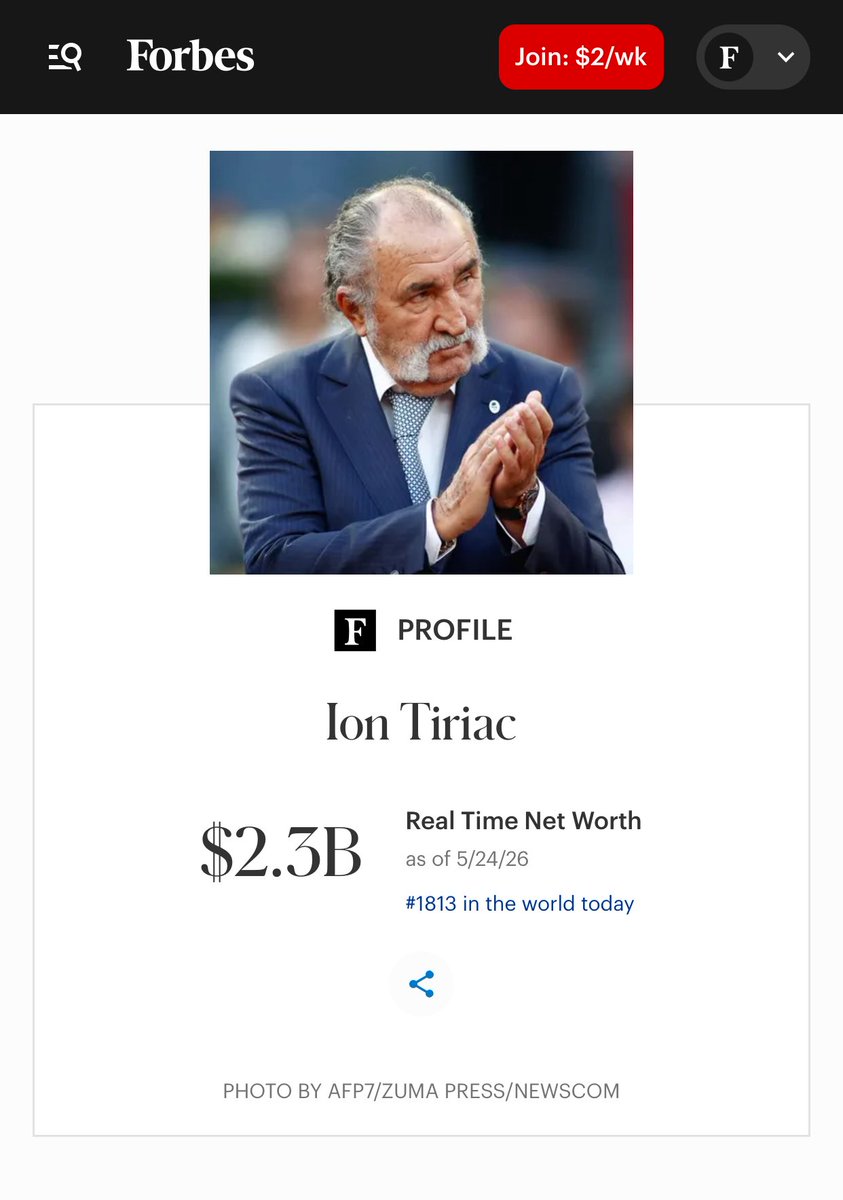
Forbes released its latest Billionaire Athletes list.
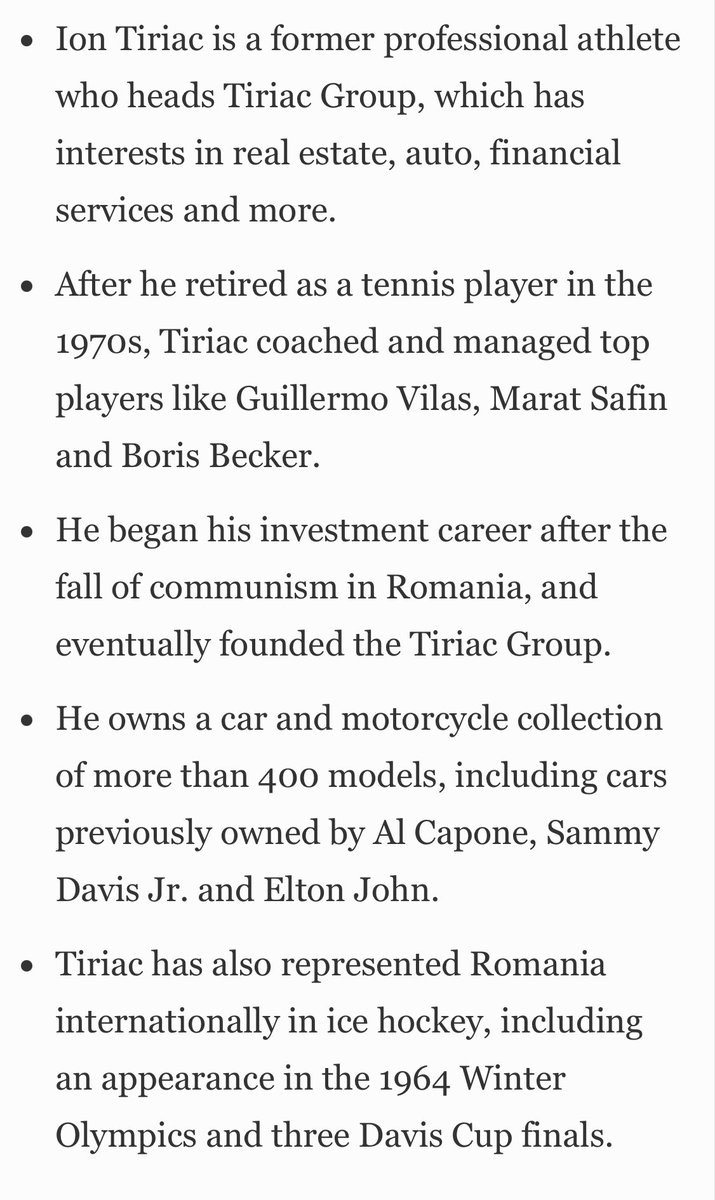
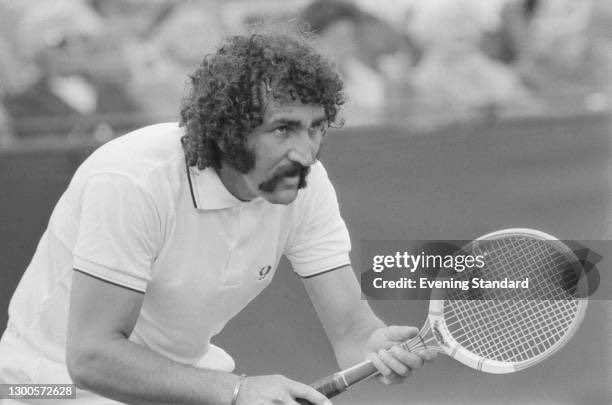
Found out about Ion Tiriac. Did a quick read and he might have the craziest sports-to-banking magnate story ever:
▫️in 1960s, played on Romania’s Olympic ice hockey team
▫️then became top 10 men’s tennis player
▫️retired and managed top tennis players in 1980s (eg. Boris Becker)
▫️became TV star in West Germany and endorsed Western brands like Miller Lite
▫️when Communism collapsed in Romania, Tiriac brought his business know-how and Western connections back home
▫️in 1990, he founded the first private bank in post-Communist Romania (Ion Tiriac Bank)
▫️his fame allowed him to raise funds from thousands of local citizens and get support from European reconstruction funds
▫️expanded empire into insurance, auto and retailing
▫️sold final 45% stake in bank to Italy’s UniCredit for €700 million (he first started selling stake in 2005)
The 87-year old also had some glorious nicknames: “The Brașov Bulldozer” (his style of tennis play and city he was born) and “The Count” (Romanian heritage and baller moustache).
Bridge Billionaire
Matty Moroun bought the Ambassador Bridge which handles 25% of all US-Canada trade for only $30M in 1979.
~$60M/year cash machine with huge margins and insane pricing power.
Now worth 1.5 to 3 billion.
Family still owns it.