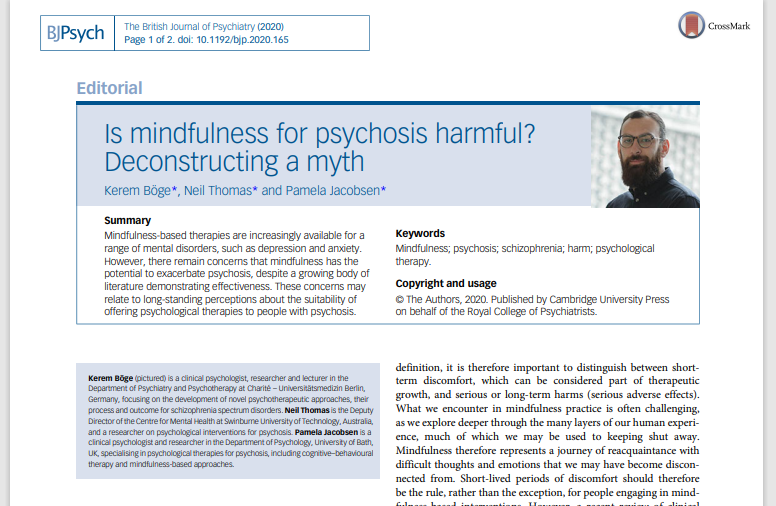
Editorial published today in #BJPsych: Is #mindfullness for #psychosis harmful? Deconstructing a myth.
Free to view editorial: https://t.co/pWgUbaTq6m
Authors: Kerem Böge, @neilthomas3182 , @pamelacjacobsen
I enjoyed this thoughtful and honest account from a psychiatrist of making decisions about forced treatment and the moral dilemmas this raises https://t.co/30vctXk06h
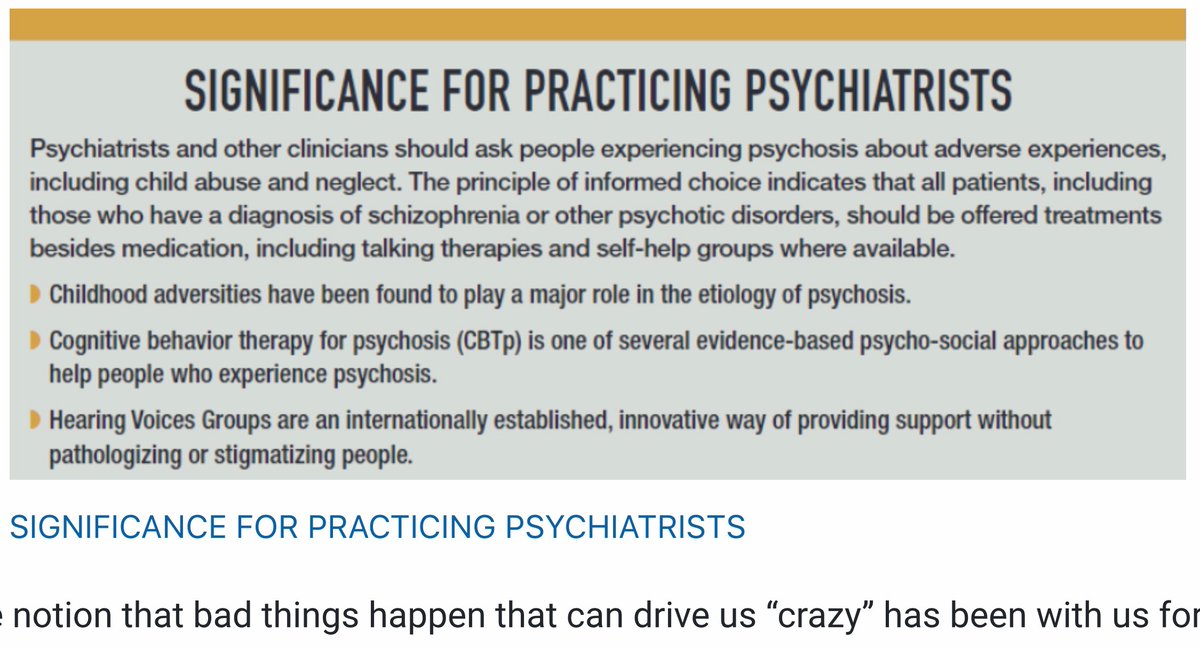
Happy to see our article on trauma & psychosis (and how both CBT & #HearingVoicesGroups can be useful) in the Psychiatric Times (a popular mag distributed to around 50,000 psychiatrists). Huge thanks to co-authors @ReadReadj & Tony Morrison! https://t.co/Z5O34ubDDj
@joannamoncrieff I have met several people who took daily high doses of paracetamol. They claimed an euphoric effect. One said: 'it reliefs my pain'......The body-mind question....
'Causal explanations of people who experience "#psychosis" ve been under researched+dismissed as ‘lack of insight’. Rather than dismiss as ‘lack of insight’ it's respectful+productive to listen n adjust our understanding n services accordingly' #Mhealth
https://t.co/fi73rRvsL8
@Jennife01082775 @benzosarebad@DrEvgenyLegedin I do not believe in the concept of ‘mental illness’ at all, sorry. In the 9 years I worked with clients, I never once met a person whose so-called ‘illness’ couldn’t be explained by trauma or adversity.
There is nothing similar between physical illness & ‘mental illness’.
Interesting and important study summarised by Mad In America. Many of the studies advocating long-term antidepressant treatment to avoid relapse did not control for withdrawal, and now this👇
It's now possible to apply for our international Open Dialogue foundation training, starting in London in October. We have two wonderful trainers joining us. Petra Hohn from Stockholm and Anni Haase from Lapland. For more info and to apply click here: https://t.co/WW6bhNPlDo