Brights Zoo in Tennessee welcomed Kipekee, a reticulated giraffe calf born without spots due to a rare genetic mutation. The spotless youngster has become a viral ambassador for giraffe conservation. https://t.co/CH0sQyah2E
They live only in one corner of Madagascar.
They’re matriarchal, forage day and night, and eat everything from fruit to cicadas.
But shrinking forests are forcing them to travel farther and risk more.
Stress is rising. Parasites are up. Infant survival is down.
Conservationists are planting trees, training local patrols, and hand-rearing orphans.
Still, time is tight.
Some researchers fear they could vanish within five years.
And yet, their story is one of resilience too. https://t.co/pz5T4lwg6R
It looks like it walked out of a painting. But this is a real animal, hiding in the heart of Africa.
The bongo is one of the largest and most elusive forest antelopes on Earth. Its chestnut coat and white pinstripes help it vanish into dense jungle light. Males grow spiraled horns, and both sexes are known for being shy, silent, and surprisingly fast.
Despite their size, bongos are rarely seen in the wild. They move at night, avoid open spaces, and can melt into the undergrowth within seconds.
One of nature’s most stylish introverts. 🌿
They look like mice with a nose job. But they’re not mice—and definitely not shrews.
These are elephant shrews, or sengis, tiny insectivores found across Africa. That long snout? It’s a precision tool, twitching nonstop as they search for ants, termites, and spiders. Their legs are built more like antelope, letting them dart and zigzag faster than you'd think.
Despite the name, they’re more closely related to elephants and aardvarks than rodents.
A house mouse couldn’t keep up. 🐘🐜
It looks like a raccoon. Walks like a cat. Climbs like a lemur. But it’s none of those.
The red panda is in a league of its own—literally. It belongs to its own family (Ailuridae) and is more closely related to skunks and weasels than to the giant panda it shares part of its name with.
Native to the Himalayas and parts of China and Myanmar, it lives in trees, loves bamboo, and uses its big fluffy tail as a built-in blanket.
The face says cartoon. The biology says mystery. 🐾
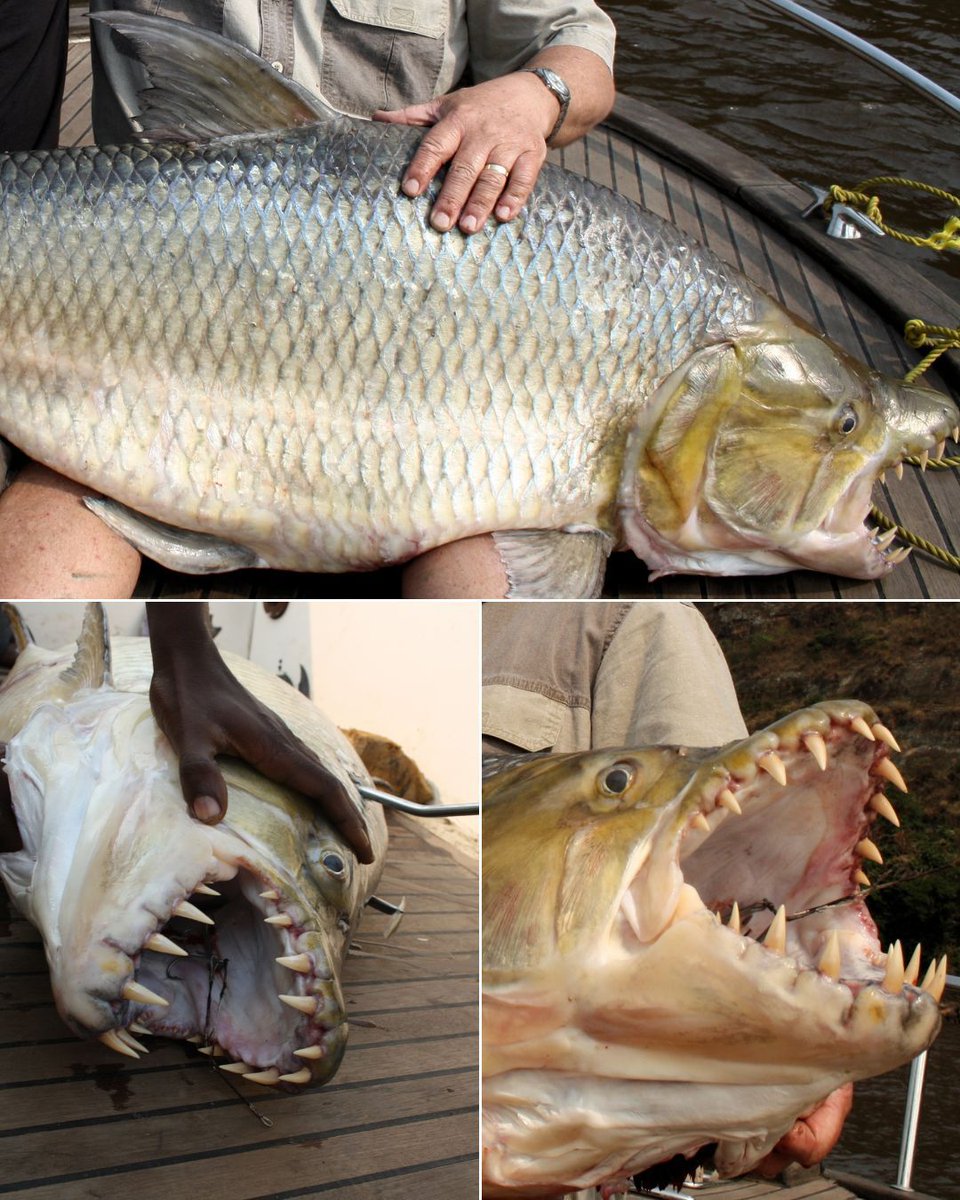
If river monsters were real, this would be one of them.
The goliath tigerfish prowls the Congo River Basin and Lake Tanganyika with bone-crushing jaws and razor-sharp teeth that interlock like a bear trap. It’s fast, aggressive, and can grow over 5 feet long.
With a mouth full of fangs and a name to match, it’s one of the only freshwater fish known to pose a real threat to humans—not because it hunts them, but because it’s fearless and territorial.
Not your average catch of the day. 🐟💀
He lost his penis in a ritual gone wrong.
Doctors in South Africa gave him a new one.
Six months later, he became a father.
This isn’t fiction. It’s the world’s first successful penis transplant. 🧵
Ozzy Osbourne once shot 17 of his own cats.
Later, he rescued a burned dog, cuddled Pomeranians, and defended cats in a PETA campaign.
The real redemption arc wasn’t on stage—it was at home.
👇
With lashes like a model and a voice like a drum, the Abyssinian ground hornbill is unforgettable. But its slow family life is putting it at risk. Why this strange, grounded bird might not survive a world that moves too fast. 🪶 https://t.co/rGkHG5xRqp
Ozzy Osbourne once shot his own cats. Years later, he was rescuing a burned dog and sleeping beside chihuahuas. His evolution from animal horror to unexpected tenderness is stranger than fiction—and somehow, true.
👉 Read the full story: https://t.co/iOEfAkpRtg