USDC lending on Solana is splitting.
Jupiter Lend took in supply and the rate compressed toward 5% on roughly $475M.
Kamino lost some deposits, utilization stayed around 86%, and the rate moved up to about 3.9%.
Same chain, same asset, different flow.
Utilization is still doing most of the work on the rates.
A quiet catastrophe season is the cleaner outcome for the book.
Fewer events means less claims pressure on the portfolio.
NAV still moves with actual performance and what hits, but a light season removes one of the bigger variables.
The 2026 Atlantic hurricane season is shaping up to be one of the least active in modern history.
Despite ten named storms, only one has reached hurricane strength as of November 11, with accumulated cyclone energy 83% below normal, according to the National Hurricane Center.
Cross-chain swaps still force wallet connect just to see rates.
Across is currently warning people not to connect because of a domain issue.
Alternatives like @MiraDex don’t require wallet connect or KYC. You see the expected output first, then send from your own wallet.
Been thinking this model makes more sense for a while now.
Running an ONyc loop usually means managing PT conversion, collateral, borrows, and rolls yourself.
This vault just packages that into one deposit.
You still get the reinsurance yield and fixed-rate side, plus the leverage, without handling every step.
Early depositors also get extra points and a small incentive pool.
The structure is cleaner.
Introducing the OnRe Yield Plus Vault, curated by @AllezLabs.
Built on @ExponentFinance, the vault combines reinsurance-backed yield with fixed-rate markets and onchain leverage through a single deposit.
Most people will just see $100M in fixed-rate loans and move on.
On Morpho Midnight one wallet put up a big chunk of the supply.
A few borrowers make up most of the loans, mostly against BTC, and the rates are still under what you’d pay floating on Aave.
The headline number is easy.
What actually matters is how concentrated that book is and what happens when the bigger positions roll or leave.
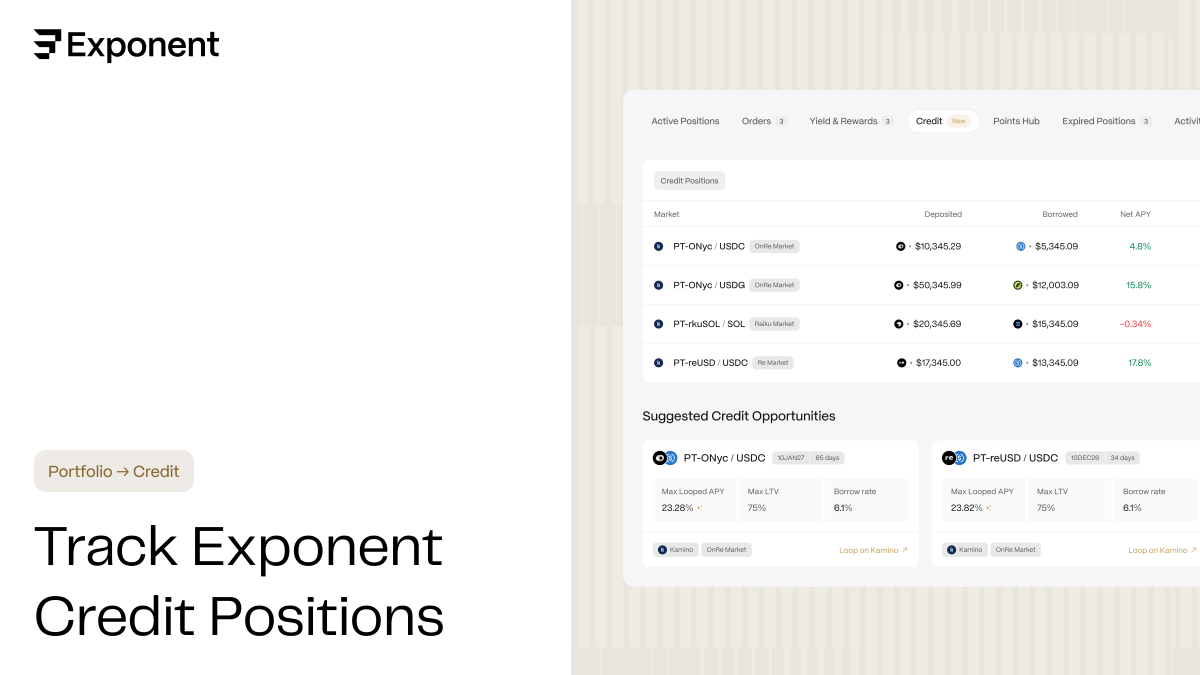
You can track ONyc credit positions properly now.
Fixed ones and the senior-protected ones still act pretty different when liquidity or rates shift.
One locks the yield side, the other cushions the downside a bit.
Dashboard just makes it less annoying to keep an eye on.
Credit positions on @kamino are now visible in the Exponent Portfolio
Exponent structured products bring distinct collateral profiles, from fixed yield to Senior protection, with Net APY, LTV status and oracle data now easy to monitor
Track credit positions in the Credit tab ↓
Most points campaigns just reward holders or depositors.
The ones that also pay lenders and loopers while the campaign is live are doing something different.
They’re paying both sides of the market for keeping liquidity available.
That doesn’t remove the underlying risks, but it does change who gets compensated while the book is open.
Running a metis sequencer needs 20k+ and actual node work
ENKI lets you stake any amount and still get the same rewards
No ops, No lockup, Still the yield
Red days are when flexibility matters most.
With ENKI, eMetis keeps your METIS liquid, while seMetis gives you access to Metis Sequencer yield.
No need to choose between staying flexible and putting METIS to work.
Capital that was stuck can move again
Deposits, Withdrawals, and Loans are all open
That’s the part that actually matters for people sitting in positions
Update: Deposits and withdrawals for all vaults are now restored, along with full loan management functionality.
We will be publishing a full technical post-mortem soon.