🚨TESLA JUST FOUND A WAY TO BUILD THE WORLD'S BIGGEST AI SUPERCOMPUTER WITHOUT BUILDING A SINGLE DATA CENTER
The answer was sitting in millions of driveways the whole time… your parked car.
The entire AI industry has hit a wall.. And it's not chips.. It's power..
Building AI data centers now means waiting years for grid connections.. The Stargate project from OpenAI and Oracle is spending up to $500 billion to build 7 gigawatts of capacity.. And it'll take years to come online..
Tesla just realized it already has 7 gigawatts.. Sitting in its Supercharger network.. Already built.. Already connected to the grid.. Already permitted..
So on June 18, 2026, Tesla quietly filed a trademark for something called MEGAPOD.. Modular AI data center hardware designed to drop straight into existing Supercharger sites..
No land to buy.. No years-long grid queue.. No new power plants.. They just bolt compute onto infrastructure they already own..
But that's the small idea..
Here's the radical one..
The average car sits parked and unused about 95% of its life.. And every modern Tesla already has a powerful AI chip inside it.. Built for self-driving..
So Tesla wants to link millions of parked cars into one massive distributed supercomputer..
The math is staggering.. If Tesla hits 100 million vehicles, and each contributes about 1 kilowatt of compute.. That's 100 gigawatts of AI processing power..
That dwarfs every data center on earth combined.. And the real estate, the power, and the cooling were all already paid for.. By the people who bought the cars..
Your Tesla is liquid-cooled.. Plugged in overnight.. Doing nothing.. It's basically a sleeping computer in your garage..
And Tesla's plan is to let you rent it out..
Owners could earn passive income, free Supercharging, or discounts on Full Self-Driving in exchange for leasing their car's idle computing power while they sleep..
Your car stops being a depreciating asset.. And starts earning money while parked..
This is the part competitors can't copy..
OpenAI has to spend half a trillion dollars and wait years for power.. Tesla already has the grid connections, the batteries to stabilize them, the chips, and millions of cooled computers sitting idle in driveways worldwide..
Everyone else is trying to build a giant brain in one place..
Tesla is turning the entire planet into one.
What matters most is the unsustainable gilts yield at 10 year and 30 years. That is the real opposition and ultimate deciding force, which may precipitate a general election if the status quo does not allow a peaceful transition and grass roots pressure valve release.
Yesterday morning on Downing Street it felt like things were about to tip over the edge. When we were told by No10 that the agenda for Cabinet was going to focus on international affairs and not leadership - we didn't believe it. But that is exactly what Keir Starmer did.
In perhaps the most Keir Starmer move ever, he was saved by process. He told Cabinet that if anyone wanted to raise his leadership they could see him afterwards, one on one. And then refused to meet them.
Now this morning Team Starmer are saying the moment of peril has passed. They say Streeting doesn't have the numbers and Burnham doesn't have a seat.
But are those two things true?
This morning - Wes Streeting - is going to finally get his meeting with the Prime Minister. What happens will be critical. Will he ask the PM to set out a timetable for his exit? Will he resign? Will he launch a leadership bid?
But in truth today might NOT be the day that Streeting acts. That's because it's the King's Speech later in the morning - a big set piece event where the government lays out its legislative priorities. Streeting - and others - may not want to derail the etiquette of that event - given the involvement of the King.
Which all means that Keir Starmer might have a bit of time in hand... He's saying he's going nowhere - that the rebels don't have the numbers.
Lyndon B Johnson says the first rule of politics is learning to count - and we'll find out soon who's done their sums right.
@SophyRidgeSky What matters most is the unsustainable gilts yield at 10 year and 30 years. That is the real opposition and ultimate deciding force, which may precipitate a general election if the status quo does not allow a peaceful transition and grass roots pressure valve release.
9/ The big bet is that efficiency gains, revenue acceleration, and alternative power (SMRs, gas co-location, etc.) will close the gap in 2–3 years.
But the polycrisis + energy shock adds serious downside risk most forecasts ignore.
AI is incredibly powerful.
The physics and economics just got a lot harder.
Energy is becoming the ultimate forcing function!
[ENDS]
7/ Don’t forget the hardware time-lag reality: 5-year backlogs on high-voltage transformers, switchgear, and grid-tie gear. Only ~5 GW of the 12 GW US data centre capacity announced for 2026 is actually under construction. GPUs ship fast — power infrastructure does not.
8/ Bottom line: the numbers still don’t add up.
$1T+ Capex.
$200B+ annual finance + depreciation before OpEx.
Power bottlenecks + energy-price pressure making every new watt more expensive.
Revenue growth is real and fast… but still far behind the investment curve.
5/ Result? OpEx explosion.
Power is already 20–30%+ of data centre operating costs. Higher energy prices create a brutal structural headwind for training and inference. The AI buildout itself is driving up the very energy costs it depends on — a vicious self-reinforcing loop.
6/ This slams straight into Steps 10 & 11: Inflation → Rising interest rates.
That $1T+ AI Capex is now being financed at higher rates than models assumed. The amortisation maths gets ugly fast: hardware depreciation + financing already dwarfs the ~$84B annualised LLM revenue run-rate.
3/ Now layer on the accelerant: rising energy, oil, and gas prices.
Fuel isn’t just Step 1 — it’s the multiplier turbocharging the entire chain. AI data centres are one of the fastest-growing power hogs on the planet.
4/ AI is already driving ~17% of new US power demand growth. Projections show it could double or triple by 2027. Natural gas still powers ~40% of the grid in key regions. Every oil/gas spike hits electricity bills hard.
2/ Capex = Capital Expenditure — the massive upfront bets on long-term assets like data centres, GPUs, power plants, transformers & grid infrastructure.
OpEx = Operating Expenditure — the ongoing day-to-day running costs (especially electricity, cooling, labour).
In AI, Capex has hit $1T+ globally this year (including China). This is the huge bet on AI’s future.
Brilliant Hegelian framing — withholding synthesis forces the contradiction into the open. But with BRICS accelerating de-dollarisation and alternative oil pricing, does a prolonged Hormuz disruption risk eroding the petrodollar faster than it extracts real allied contributions? Does the arbitrage prize still hold if global oil flows shift away from USD dominance?
Brilliant exposure of the drone-Patriot cost chasm that's quietly ending the American way of war and defence. But if Iran can manufacture the equivalent of $12B in US interceptors for just $120M, does this asymmetry force a full doctrinal pivot to low-cost autonomous defences, EW, or hardened dispersal — or does it render expeditionary power projection in the Gulf economically unsustainable against any peer adversary?
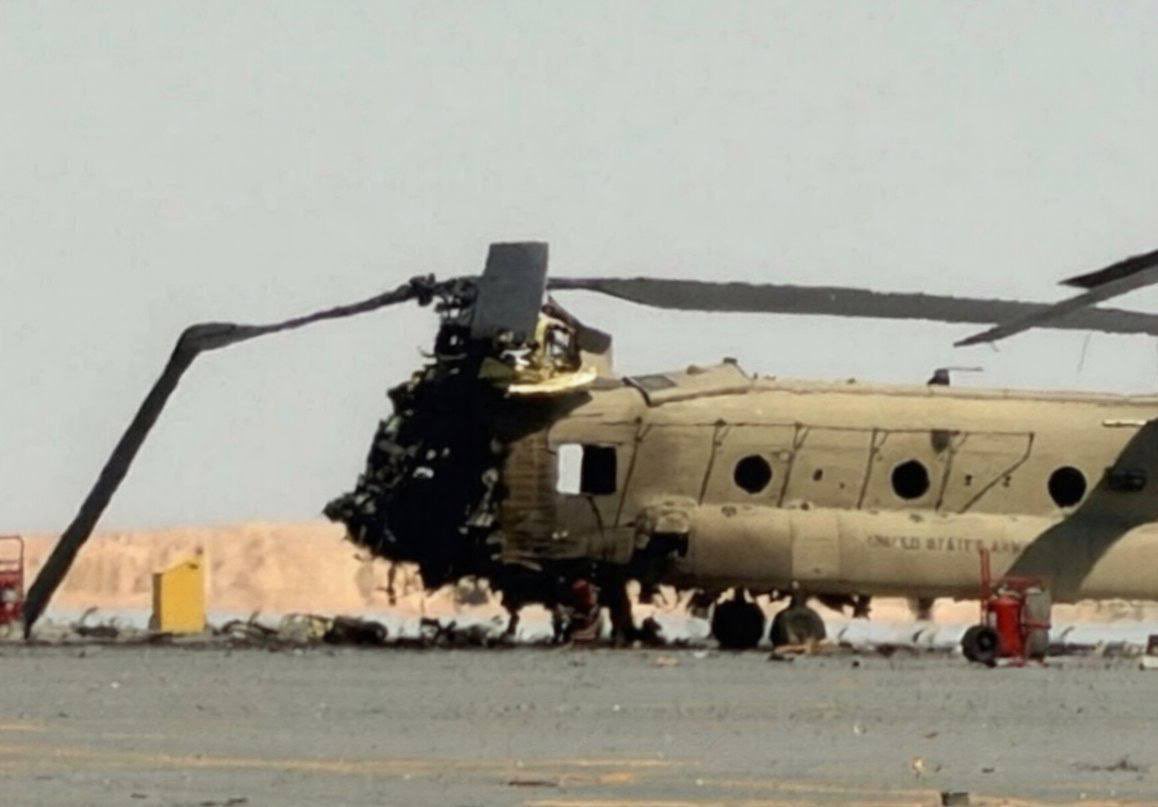
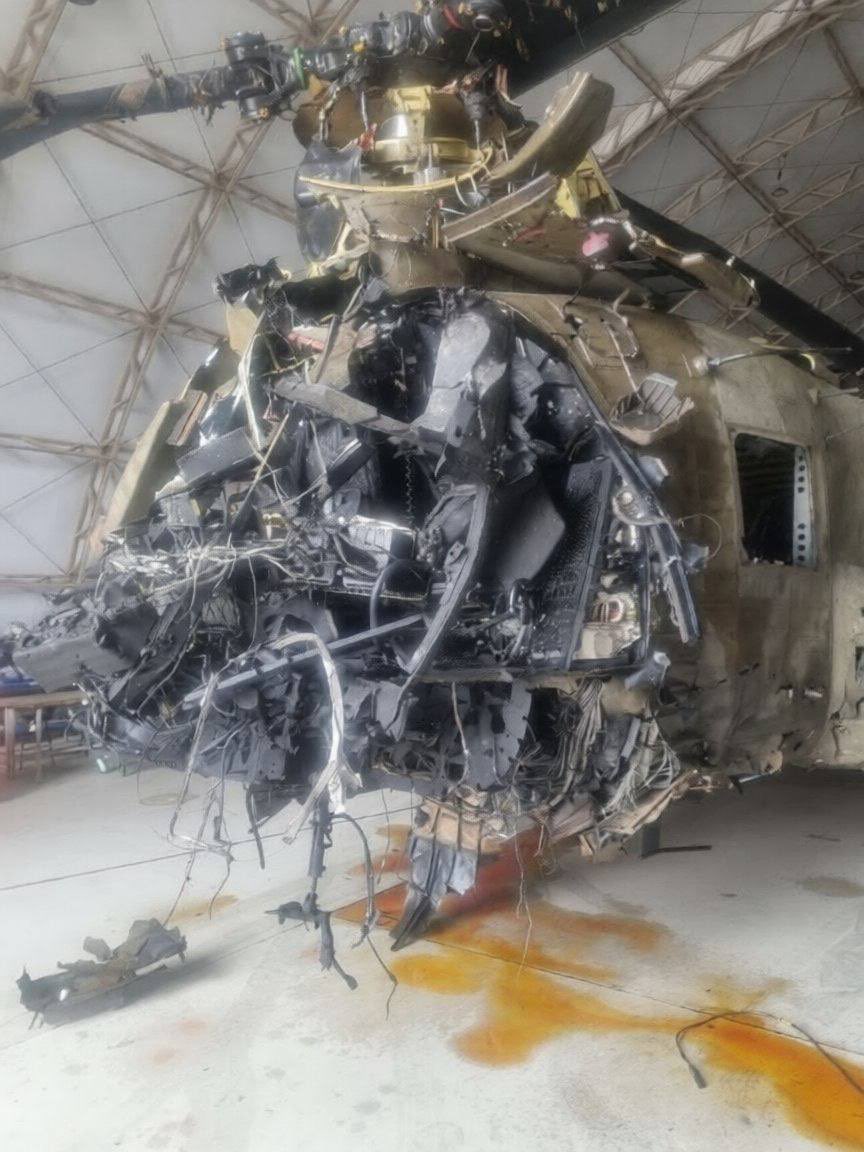
JUST IN: Satellite imagery from Camp Buehring in Kuwait & other photos circulating on X shows collapsed helicopter hangars with CH-47 Chinook wreckage visible inside. The hangars were not hardened. The helicopters were not dispersed. The drones that destroyed them cost less than the tyres on the aircraft they hit.
This is the arithmetic that is quietly ending the American way of war. A Patriot PAC-3 interceptor costs $4 to $5 million. An Iranian Shahed drone costs $20,000 to $50,000. Iran does not need to overwhelm the shield with quality. It overwhelms it with volume. Send 100 drones at a base. The Patriot battery intercepts 90. The cost of interception: $400 million. The cost of the drones intercepted: $2 million. The cost of the 10 that get through: helicopter hangars in ruins, Chinooks burning, six soldiers dead at the port on March 1, and a logistics chain that now cannot move what it needs to where it needs it.
On March 10, Iranian strikes targeted the AN/TPY-2 radar in Jordan and the AN/FPS-132 radar in Qatar. These are the eyes of the THAAD and Patriot systems. Iran did not try to outrun the interceptors. It tried to blind the radar that guides them. The AN/TPY-2 costs approximately $1.4 billion per unit. The missiles aimed at it cost a fraction. The asymmetry is not a gap. It is a chasm. And the chasm runs in one direction: every exchange depletes the defender faster than the attacker.
Now connect the Chinooks to the F-15E. The CH-47 is the US Army’s primary heavy-lift helicopter. It moves troops, ammunition, fuel, and equipment across the theatre. When an F-15E goes down inside Iran and a combat search-and-rescue mission requires sustained logistics support, the Chinooks are part of the supply chain that keeps the rescue helicopters fuelled, armed, and operational. The hangars that collapsed at Camp Buehring in March contained aircraft that the war needs in April. The destruction of the fleet preceded and compounded the crisis it was built to manage.
The shield fails in two directions simultaneously. At Camp Buehring, drones penetrated the Patriot screen and destroyed helicopters on the ground. At Habshan in Abu Dhabi, the shield worked perfectly and the gas plant caught fire from the debris of successful interceptions. The defence either lets threats through or creates its own damage from the wreckage of what it stops. Either way, infrastructure burns. The physics does not distinguish between a warhead that penetrates and a booster that falls after interception. Both weigh several hundred kilogrammes. Both are subject to gravity. Both start fires.
Iran has identified the economic equation that no Pentagon budget can solve without changing the architecture entirely. As long as interception costs 100 to 250 times more than attack, every salvo is a net transfer of wealth from the defender to the attacker. The $1.5 trillion defence budget proposed this week includes $12 billion for Project Vault to replenish stockpiles. At current exchange ratios, $12 billion buys approximately 2,400 PAC-3 interceptors. Iran can produce the drone equivalent for $120 million. The stockpile replenishment programme is a rounding error on the cost of the problem it was designed to solve.
The Chinooks are burned. The radars have been targeted. The interceptors are depleting. And the pilot who needs rescuing is in the mountains of a country that has learned to win by making victory more expensive than defeat.
https://t.co/dAOBBMsgDS
Brilliant exposure of the drone-Patriot cost chasm that's quietly ending the American way of war and defence. But if Iran can manufacture the equivalent of $12B in US interceptors for just $120M, does this asymmetry force a full doctrinal pivot to low-cost autonomous defences, EW, or hardened dispersal — or does it render expeditionary power projection in the Gulf economically unsustainable against any peer adversary?
Brilliant Hegelian framing — withholding synthesis forces the contradiction into the open. But with BRICS accelerating de-dollarisation and alternative oil pricing, does a prolonged Hormuz disruption risk eroding the petrodollar faster than it extracts real allied contributions? Does the arbitrage prize still hold if global oil flows shift away from USD dominance?
Food for thought.
Trump, Hormuz and the End of the Free Ride
For half a century, Western strategists have known that the Strait of Hormuz is the acute point where energy, sea power and political will intersect. That knowledge is not in dispute. What is new in this war with Iran is that the United States, under Donald Trump, has chosen not to rush to “solve” the problem. In Hegelian terms, he is refusing an easy synthesis in order to force the underlying contradiction to the surface.
The old thesis was simple: the US guarantees open sea lanes in the Gulf, and everyone else structures their economies and politics around that free insurance. Europe and the UK embraced ambitious green policies, ran down hard‑power capabilities and lectured Washington on multilateral virtue, secure in the assumption that American carriers would always appear off Hormuz. The political class behaved as if the American security guarantee were a law of nature, not a contingent choice. Their conduct today is closer to Chamberlain than Churchill: temporising, issuing statements, hoping the storm will pass without a fundamental reordering of their responsibilities.
Trump’s antithesis is to withhold the automatic guarantee at the moment of maximum stress. Militarily, the US can break Iran’s residual ability to contest the Strait; that is not the binding constraint. The point is to delay that act. By allowing a closure or semi‑closure to bite, Trump ensures that the immediate pain is concentrated in exactly the jurisdictions that have most conspicuously free‑ridden on US power: the EU and the UK. Their industries, consumers and energy‑transition assumptions are exposed.
In that context, his reported blunt message to European and British leaders, you need the oil out of the Strait more than we do; why don’t you go and take it? Is not a throwaway line. It is the verbalisation of the antithesis. It openly reverses the traditional presumption that America will carry the burden while its allies emote from the sidelines.
In this dialectic, the prize is not simply the reopening of a chokepoint. The prize is a reordered system in which the United States effectively arbitrages and controls the global flow of oil. A world in which US‑aligned production in the Americas plus a discretionary capability to secure,or not secure, Hormuz places Washington at the centre of the hydrocarbon chessboard. For that strategic end, a rapid restoration of the old status quo would be counterproductive.
A quick, surgical “fix” of Hormuz would short‑circuit the dialectic. If Trump rapidly crushed Iran’s remaining coastal capabilities, swept the mines and escorted tankers back through the Strait, Europe and the UK would heave a sigh of relief and return to business as usual: underfunded militaries, maximalist green posturing and performative disdain for US power, all underwritten by that same power. The contradiction between their dependence and their posture would remain latent.
By declining to supply the synthesis on demand, and by explicitly telling London and Brussels to “go and take it” themselves, Trump forces a reckoning. European and British leaders must confront the fact that their energy systems, their industrial bases and their geopolitical sermons all rest on an American hard‑power foundation they neither finance nor politically respect. The longer the contradiction is allowed to unfold, the stronger the eventual synthesis can be: a new order in which access to secure flows, Hormuz, Venezuela and beyond, is explicitly conditional on real contributions, not assumed as a right.
In that sense, the delay in “taking” the Strait, and the challenge issued to US allies to do it themselves, is not indecision. It is the negative moment Hegel insisted was necessary for history to move. Only by withholding the old guarantee, and by saying so out loud to those who depended on it, can Trump hope to end the free ride.
If Larry Fink’s $14 trillion binary collapses into $150 oil because Trump’s “no turning back” leaves the Strait of Hormuz as Iran’s toll booth, which countries will first enter recession and which will first suffer grave fuel and food emergencies?
JUST IN: The man who manages $14 trillion just said this war ends in one of two ways. $40 oil or $150 oil. Abundance or global recession. There is no middle outcome. The Strait of Hormuz decides which world we live in.
Larry Fink, CEO of BlackRock, told the BBC on March 25 that if Iran reintegrates into the global community and its oil returns to markets, prices could fall to $40 a barrel, producing what he called “abundance and growth.” If the war ends but Iran “remains a threat to trade, to the Strait of Hormuz, to GCC coexistence,” oil could stay above $100 and approach $150 a barrel for years. When asked what sustained $150 oil means, he answered in three words: “We will have global recession.”
Parse what the largest asset manager on Earth just said. He did not say recession is possible. He said recession is the consequence of one of two binary outcomes, and the variable that determines which outcome materialises is a 34-kilometre waterway through which 20 percent of the world’s oil transits. The same waterway that Iran is currently converting into a toll booth. The same waterway whose commander was killed yesterday while his successor activated within hours. The same waterway where 26 ships have paid up to $2 million each in yuan for IRGC-escorted passage since March 13. The variable is not monetary policy. It is not fiscal stimulus. It is not AI productivity. It is a strait.
Fink’s framework confirms what this series has demonstrated at the molecular level. The diesel powering Australian haul trucks, the sulfuric acid leaching Congolese copper, the helium cooling Taiwanese lithography, the urea synthesising AdBlue, the nitrogen fertilising corn, the LNG charging the electric vehicles that were supposed to make all of this irrelevant: every molecule either transits Hormuz, is refined from something that transits Hormuz, or is a byproduct of processing something that transits Hormuz. Fink is not warning about oil. He is warning about the periodic table of industrial civilisation held hostage by a chokepoint one side is bombing and the other is legislating into permanent law.
$14 trillion manages the world’s retirement funds, sovereign wealth, and pension obligations. When the man allocating that capital says “recession,” it is not commentary. It is positioning. BlackRock’s Investment Institute views the war as a “volatility shock” and is “leaning against indiscriminate de-risking.” They are not selling. They are hedging. They are watching the strait. Every institutional investor on Earth is now doing the same calculation. The calculation has one input: Hormuz.
Read Fink’s binary against the day’s other developments. Trump posted “NEVER FORGET” about NATO at 6:16 AM. At 6:39 he said Iran is “begging.” Pakistan is relaying a 15-point proposal and keeping the last two Iranian diplomats alive on a four-day timer. The UAE rejected a ceasefire and demanded full dismantlement while reaffirming $1.4 trillion in US investments. And the man who manages more money than any human being in history went on the BBC and said: the outcome is binary. $40 or $150. Abundance or recession. The strait decides.
The molecules do not care about scenarios. If the strait opens with Iran reintegrated, Fink’s $40 world arrives. If it opens with Iran still threatening, $150 arrives and the recession hits the poor first, emerging markets second, retirement funds third. There is no portfolio that does not contain the chokepoint.
$14 trillion just said the quiet part out loud. The world economy is a function of one variable. The variable is 34 kilometres wide. Both sides are still fighting over it.
https://t.co/iFmUcarGdV
If Trump’s “no turning back” pulls the trigger on the protected negotiators who alone keep the backchannel alive, whose children will be affected the most when the Strait of Hormuz seals shut for a protracted period in 2026 and beyond?
Pakistan just saved the last two people on Earth who can end this war from being killed by the country that started it.
Reuters confirmed, citing a Pakistani official: Israel had developed detailed plans, including movement coordinates, to assassinate Iranian Foreign Minister Abbas Araghchi and Parliament Speaker Mohammad-Bagher Ghalibaf. Pakistani intelligence intercepted the plans. Islamabad delivered an urgent message to Washington: if you eliminate these two, there is no one left to talk to. The only figures remaining who can negotiate a ceasefire will be dead, and full control passes to hardcore IRGC commanders who have no interest in talking and every interest in keeping the toll booth open, the missiles flying, and the strait closed.
Washington listened. The US intervened directly with Israel. Araghchi and Ghalibaf were temporarily removed from the joint target list for 4-5 days. WSJ confirmed the window. The back channel is now open. Pakistan is relaying a 15-point American proposal to Tehran. Turkey & Egypt are supporting the effort. Foreign Minister Ishaq Dar confirmed all of this publicly on March 26.
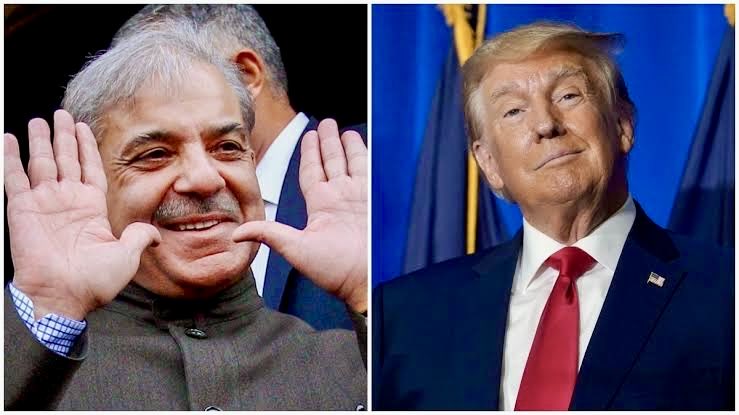
Process what just happened. The country whose Prime Minister stood at a podium last month and called Donald Trump “genuinely a man of peace” and “the savior of South Asia” and nominated him for the Nobel Peace Prize just used its intelligence apparatus to prevent an Israeli strike that would have collapsed the last diplomatic off-ramp in a war that is destroying the global economy. Pakistan did not send warships. Pakistan did not fire missiles. Pakistan sent a message. And the message worked.
NATO did not do this. NATO was asked to send warships to reopen the Strait of Hormuz. Germany said “this is not our war.” France said it would participate after fighting ends. The UK said it has no plans. Trump posted “NEVER FORGET” at 6:16 this morning. Thirty alliance members with $1.6 trillion in combined defence spending provided what Trump called “absolutely nothing.” Pakistan, with a GDP smaller than Belgium’s and a defence budget funded partly by Chinese loans, provided the intelligence intercept that kept the negotiation alive.
The contradiction is the architecture. The alliance Trump built to fight this war refused to fight. The country Trump praised for flattering him is the country now brokering the peace. NATO debates mandates. Pakistan relays proposals. NATO cites escalation risks. Pakistan takes escalation risks. The 15-point American proposal is being deliberated in Tehran right now because a Pakistani intelligence officer picked up the phone and told Washington that killing the foreign minister would end the conversation permanently.
The strait is still closed. The toll booth still collects in yuan. The helium is still offline. The diesel is still rationed. The sulfuric acid is not arriving. The cluster bomblets are still falling on Kfar Qasim. The IRGC commander who built the Hormuz corridor is dead and the corridor is still operating. Nine thousand targets destroyed and Hormuz has not reopened. The $200 billion bought kinetic supremacy. It did not buy a ceasefire. The ceasefire, if it comes, will be brokered not by the alliance that spent $1.6 trillion on defence but by the country that spent a phone call on diplomacy.
Islamabad has offered to host the talks. A possible summit: VP Vance with Ghalibaf or Araghchi. The window is four to five days. It expires around March 29 to 31. If the talks fail, the targets go back on the list. The coordinates are already plotted. The pilots are already briefed. And the only thing standing between the last two Iranian diplomats and an Israeli precision munition is a message from a country that most of the world forgot was involved.
The molecules do not care who brokers the ceasefire. The molecules need the strait open. The strait needs a conversation. The conversation needs two people alive. Those two people are alive because Pakistan made a phone call.