Geçen sene @hkkcan ile birlikte geliştirmeye başladığımız ama RAM fiyatlarının kontrolden çıkması nedeniyle hemen üretime geçemediğimiz ilk linux tabanlı kartımız nihayet hazır. Genelde şu ana kadar hep MCU tabanlı kartlar geliştiriyorduk radyo amatörleri için. Fakat bu sefer ki kartımız daha kuvvetli bir işlemci gerektiriyordu kullandığımız uygun maliyetli radyo modülü ile 2m AFSK sinyallerini çözebilmek için. Bizim için çok farklı ve güzel bir deneyim oldu. Detaylı bilgi için : https://t.co/PouwJ5WH5g
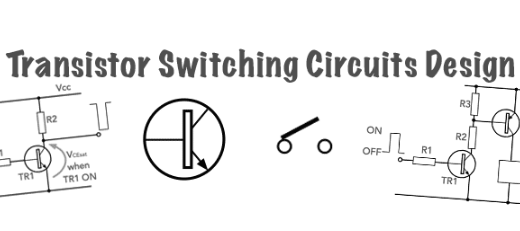
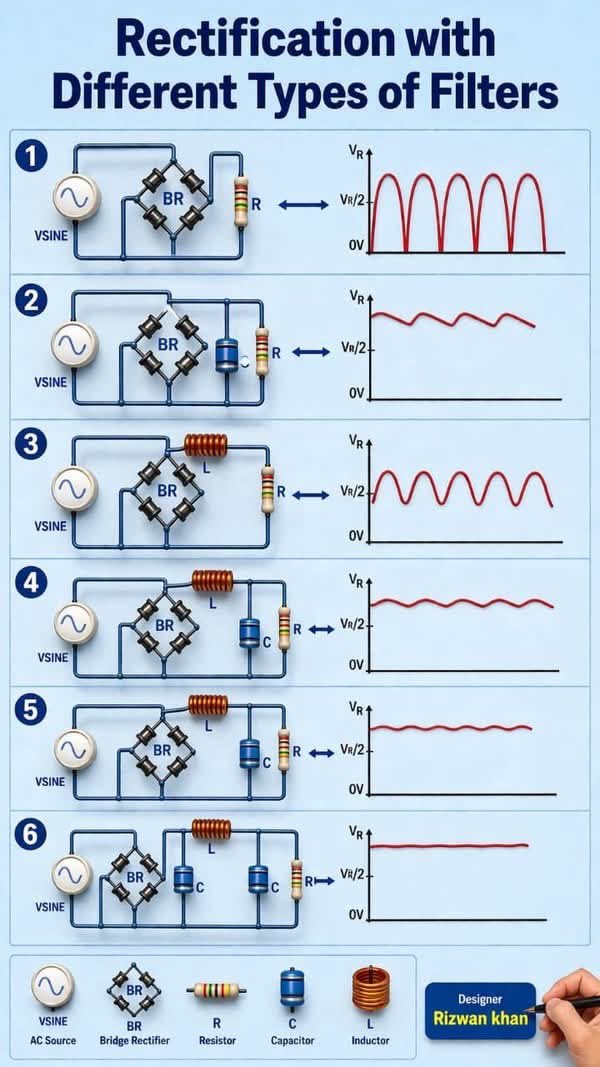
The Transistor as a Switch: Back to Basics
We often talk about transistors as amplifiers—the building blocks of audio gear and signal processing. But arguably the most common use of the bipolar transistor in modern embedded design is much simpler: The Electronic Switch.
Whether you’re driving a relay, an LED, or a small motor from a microcontroller pin, understanding how to drive a transistor into saturation is a fundamental skill for any hardware engineer.
I’ve just updated my guide on using the transistor as a switch, covering the essential principles of getting it right.
Key concepts for a reliable design:
✅ Saturation vs. Active Region: How to ensure your transistor is fully "ON" to minimize heat and maximize power efficiency.
✅ The Importance of Base Resistors: Why you should never connect a microcontroller pin directly to the base of a BJT.
✅ Choosing the Right Driver: Understanding gain and collector current limits to keep your circuit robust.
If you’re working on an Arduino, Raspberry Pi, or any custom PCB project, this is the "bread and butter" of your design workflow. Getting the switching logic right is the difference between a reliable prototype and a burned-out component.
Read the full breakdown on my Electronics Notes website: 👉 https://t.co/5uDVXZXGbA
Quick poll: When you’re driving a load from a microcontroller, are you reaching for a BJT, a MOSFET, or a dedicated driver IC? Let me know your go-to components in the comments! 👇
#ElectronicsEngineering #PCBDesign #EmbeddedSystems #CircuitDesign #Transistors #HardwareDevelopment #EngineeringTips #MakerSpace
Quick Linux Tip #7
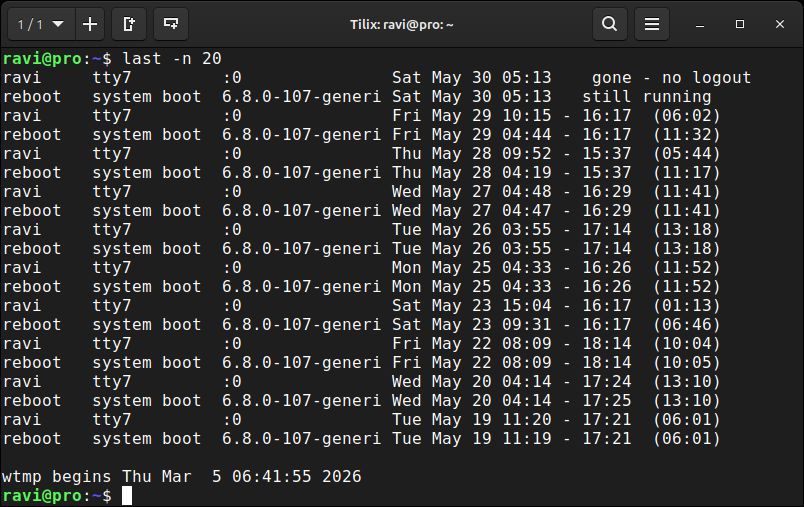
Need to know which user logged in, from where, and when on your Linux server?
Use:
$ last -n 20
It shows the last 20 login sessions with username, source IP, login time, and session duration.
Run lastb instead to see failed login attempts, which is the first thing to check when you suspect a brute force attack.
Two commands, and you know exactly who has been on your server and who has been trying to get in.
Follow @tecmint for more #Linux tips
This one definitely qualifies for the often-cited "Kids today will never know"…
The original release of Windows 95 famously came on 28 (!) floppy disks. Because the operating system required roughly 40 MB (nothing now, but pretty big back then) of space, and each standard 3.5" floppy disk only held 1.44 MB of data, the massive set was Microsoft's way of supporting older computers that lacked CD-ROM drives, which were still quite expensive at the time.
Installing Windows 95 required hours of manually swapping disks, and a single corrupted disk could ruin the entire process - the horror!
Downloading and installing 40 MB today would take just a few seconds. Back then, it took half an afternoon (or longer if you hit that dreaded corrupted disk).
144 MHz Halo Antenna
Construction and Analysis of a Low Cost Omni directional Horizontally Polarized Antenna for 144 MHz By: Dr. Carol F. Milazzo, KP4MD
Complete Details & More: https://t.co/8iJ3H9gJwI…
Actually have functional user-friendly mobile APRS messaging now with this battery backed-up Baofeng Mobilinkd Android frankensystem. Messaging with W4KRS in the Casey's parking lot at lunch thru this window mount antenna.
CHINESE CRYPTO TRADER POSTED A NEURAL NETWORK VISUALIZATION ON TIKTOK AND ACCIDENTALLY SHOWED THE SYSTEM MAKING HIS POLYMARKET TRADES FOR HIM IN REAL TIME
Blue connection lines everywhere, hidden layers stacked vertically, neurons firing across the screen and a tiny label in the middle that most people ignored on the first watch - “Bitcoin XVIII”.
He framed the video like a normal AI experiment. Virtual aquarium simulation. Reinforcement learning. “Teaching the network survival behavior.” That was the caption.
Pause at 0:16
profil:https://t.co/rsSdAkSNPD
The model was not learning fish behavior.
The labels inside the hidden layer matched live Bitcoin prediction markets almost perfectly - price windows, directional probabilities and volatility ranges mapped directly into the network nodes while the simulation kept running in the background.
Then people found the wallet.
$367,385 profit in 30 days. 1,988 predictions. Biggest single win: $183,000. Almost every active position tied to Bitcoin range markets with entry prices between 94 and 98 cents - exactly the kind of low volatility spreads an automated system farms continuously without human input.
The comments turned into a detective board within an hour. Someone slowed the TikTok to 0.25x, stitched together every visible frame of the neural network screen and started matching the hidden layer labels against the active Polymarket positions on the wallet.
The timing matched too closely.
While viewers thought they were watching an AI visualization, the model was quietly classifying live market conditions in the background and routing trades automatically into different probability buckets depending on short term BTC movement.
The TikTok got 11K views.
The repost showing the wallet crossed 600,000 overnight.
By morning people were already cloning the interface, rebuilding the network layout and trying to figure out why almost every position on the account sat between 96 and 99 cents with unusually high sizing.
The original creator deleted nothing.
The wallet is still active.
Fastest way to copy-trade:https://t.co/Tfp053L9CB
Found a fantastic tool for visualizing low-level hardware: Antares Digital Circuit Learning Platform!
Built a simple 1-bit magnitude comparator to play with the simulation. Incredibly handy if you're learning or teaching CS foundations.
https://t.co/ORr2FF2xZA
Bambu Labs has just effectively bricked every printer that does not send their prints through Bambu Labs servers for them to spy on you.
These are expensive, top of the line printers that many people including myself rely on as a source of income.
I now have about $1,000 dollars of hardware sitting at my home that is useless unless I allow a Chinese company to spy on me and steal my designs.
@BambulabGlobal would you like to explain this crap?
@BambuLabSupport any comment?
@FTC this HAS to be illegal especially for a foreign company to do to American consumers. Is it possible to ban them from selling printers in the US entirely if they insist on using them to spy on US citizens and steal our work?
@bbb_us this is a horrific business that preys on its customers. If you look through my profile I have tagged them in many concerns which they have ignored. How do I go about filing a formal complaint against them?
MIT open-sourced an AI model that converts photos into fully editable CAD programs and it quietly kills the $150/hour CAD modeling industry.
Just upload a sketch or photo and it generates the full parametric 3D model. exportable as STL. ready for manufacturing.
→ no SolidWorks license
→ no weeks of modeling
→ no CAD engineer needed
100% Open Source
I used to have this radio and then upgraded to the 940. Both were great radios! 73 de Robert K3RRR
Steve Cannon: "This is what happens when you don't use your radio for a while."
Why is a 5/8 wavelength antenna widely used when a 3/4 wavelength would give a better match?
The 5/8 wavelength antenna is very popular at VHF where it provides excellent performance and gain over a quarter wave vertical.
But why is a length if 5/8 wavelength chosen?
It is well known that when a dipole antenna is extended beyond a half wavelength, the radiation pattern changes. Initially more energy is focussed at right angles to the axis of the conductors of the antenna, but then a point is reached where side lobes start to form and the energy at right angles to the conductors starts to fall.
Radio Equipment
It is found that the optimum point for the maximum radiation at right angles to the conductors occurs at a point where the dipole is about 1.2 times a wavelength.
Rather than using a dipole, if a vertical using a ground plane for the second element of the antenna, then it equates to a length of about 5 / 8 wavelength, λ.
This raises the issue of matching it because 5/8 wavelength does not give a good match 50 ohms.
For most applications, it is necessary to ensure that the antenna provides a good match to 50Ω coaxial cable. This is very important if power is not to be reflected back to the transmitter and then be absorbed.
It is found that a 3/4 wavelength vertical element provides a good match, and therefore one solution for providing a good impedance match for the 5/8 wavelength vertical antenna is to make it appear as if it was a 5/8 radiator but have the electrical length of a 3/4 element.
In this way it radiates like a 5λ/8 radiator, but has the impedance of a 3λ/4 antenna.
This is achieved by placing a small loading coil at the base of the antenna to increase its electrical length. Additionally a small capacitor is also added to cancel out any remaining reactive elements.
By achieving a good match and better radiation pattern, the 5/8 wavelength antenna is an ideal solution for many mobile systems.
Read more about this antenna on my website. Link in the comments.
#antennas #verticalantenna #mobilecommunications #electronicsnotes
Awesome Robotics! 💾
Building your own robot just got a lot easier.
MathWorks have released an open-source GitHub repository packed with robotics resources for anyone interested in getting hands-on.
The repo includes examples for robot arms, ground vehicles, and drones, with projects that show how to connect with ROS and ROS2 or even deploy Simulink models directly as ROS nodes.
There are also more advanced demos, like modeling off-road environments and testing navigation algorithms in photorealistic simulations.
Everything is well-documented, with tutorials and links that make it easy to go from concept to prototype. 📑
Whether you’re a student, researcher, or just curious, there’s material here for every level. And since it’s an open community project, you can not only explore but also share your own contributions.
For anyone looking to learn robotics by doing, this is a solid place to start!
Here’s the link: https://t.co/2KyP6YMFny
~~
♻️ Join the weekly robotics newsletter, and never miss any news → https://t.co/GoA3ZuwoPB
The Yagi or should it Yagi-Uda Antenna: what you must know.
Ever wonder why that classic rooftop TV antenna looks the way it does?
It’s called the Yagi-Uda antenna, and despite being invented nearly a century ago, it remains one of the most successful RF antenna designs in history.
But there’s a fascinating bit of history behind its name that many people don't know.
While we usually just call it the "Yagi," the design was actually developed in the late 1920s by Professor Shintaro Uda in Japan.
Because his original papers were written in Japanese, the design didn't gain international traction until his student, Hidetsugu Yagi, published the concepts in English.
Yagi never intended to take all the credit, which is why it is formally recognized today as the Yagi-Uda antenna!
How does it work?
At its core, a Yagi antenna focuses radio frequency power into a tight, directional beam using three types of elements:
1️⃣ The Driven Element: Typically a half-wave or folded dipole where power is directly applied.
2️⃣ The Reflector: Placed behind the driven element to reduce rear interference and bounce signal forward (adding ~4-5 dB of gain).
3️⃣ The Director(s): Shorter elements placed in front to pull and focus the signal even further.
Why is it still so popular?
🔹 High Directivity & Gain: It maximizes transmitted power where it’s needed and cuts down on unwanted interference when receiving.
🔹 Simple, Robust Construction: Built using straightforward straight rods, making it mechanically robust and easy to mount.
Engineering is often about finding the perfect compromise—balancing gain, beamwidth, and physical size.
For VHF frequencies and above, the Yagi-Uda antenna still hits the absolute sweet spot.
Want a deeper dive into the calculations, impedance matching, and full specs? Check out my website - link in the comments.
#RF #Wireless #Telecommunications #ElectricalEngineering #AntennaDesign #techhistory #antennas