Meta-learning lets you tune hyperparameters with SGD! When @jonLorraine9 told me this, I thought it was too good to be true. The catch is you need large hypernetworks, but you can mostly avoid that by jointly training the hypernet and hyperparams: https://t.co/ECxb1Wk1Rr
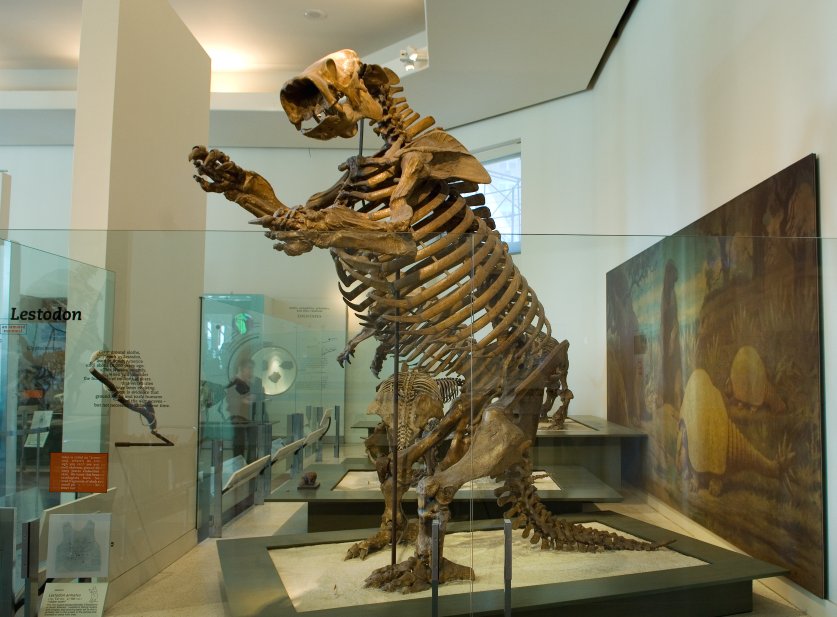
Next time you eat guacamole, thank a giant ground sloth: the Lestodon! These 15-ft animals ate avocado whole, traveled, and then pooped, depositing the pits in new places. Most mammals couldn't handle large seeds, so it was up to megafauna to disperse (and fertilize!) avocados.
@compubrains@NeuralNetNews Would be definitely interesting to see what one could accomplish with that. Maybe recreation of ANN architectures using real-neuron like units, and see if that is capable of even simple nonlinear computations. Problem would be as always the credit assignment on the neurons
Although humans are excellent face-recognition machines, there is apparently a lo of information relevant to the gender recognition task that is not used, as shown by deep networks that surpass humans in recognizing a given gender from the subjects face https://t.co/biC3ZmrBAM
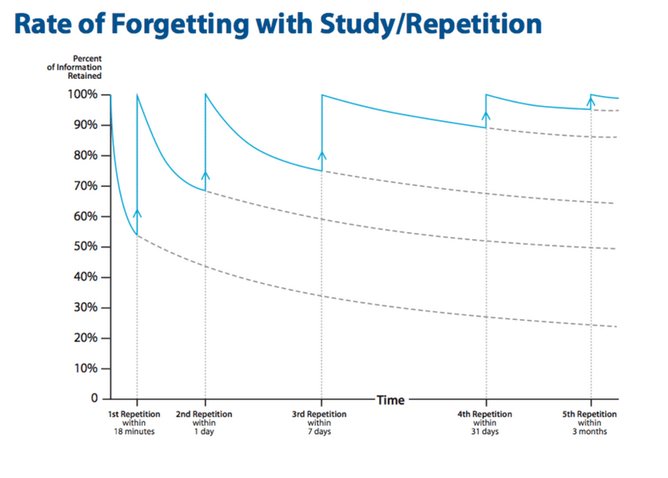
Human memory is sparser than usually thought. To improve efficiency, we may have to find a trade-off between remembering and new learning. Sparsity of memory is included in this model of human knowledge acquision https://t.co/vvZyqtmKGK
Modeling decision-making, by predicting which information source is relevant for a given task. Information flow is here also measured in continuous time, so the model can predict how a tasks difficulty affects reaction-time and performance https://t.co/FTfsqIuzd3
This model is able to reconstruct brain activity from stimuli, and stimulus features from brain activity. Even interaction between subjects through prediction of brain activity from another subject's brain activity. https://t.co/7ztTl1quHw
Understanding the differences between humans and deep nets in visual recognition through characterization of what makes each one make mistakes. Humans are affected by different types of visual noise (fourier phase scrambled noise) than AI (gaussian pixel). https://t.co/lSD4SODUH2
This research group develops a 'neurorobot', which uses biologically constrained spiking networks to orientate in an unknown environment, thus displaying intelligent behavior using a more biologically relevant deep learning model https://t.co/emsviL4dBO
@KrithikkaRavi Interesting. Very confident statements predicting global market until 2025. Do you know if these reports can be accessed for free or only buying?
Automatic fetal brain extraction (from MRI images!) is a though task as the fetus can be in any position and so its brain. Getting good images of the brain and further segmentation could be important for early abnormality detection https://t.co/B0z6kJ6tEj
@compubrains@NeuralNetNews What do you mean with artificial neurons exactly? I guess if you would call a transistor an artificial neuron, the network would be a microprocessor/computer (very powerful model!). I have not heard of mechanistic models of neuron with own ions gradients and action potentials
Spiking neural networks are another variety which simulates more the workings of real neurons. Training is a challenge because of the discrete nature of the system and difficulty in gradient based optimization. Here another training mechanism is proposed https://t.co/pbnqeDxthZ