Sam Neil.
Kind, wise, impish, graceful, warm.
The last time I saw him I took the opportunity to tell him he was an inspiration to me.
Rest in Peace Sam.
One of the most dangerous ideas in politics is that good intentions create prosperous societies.
Bernard Mandeville, in one of the most scandalous and important books in intellectual history, argued almost exactly the opposite.
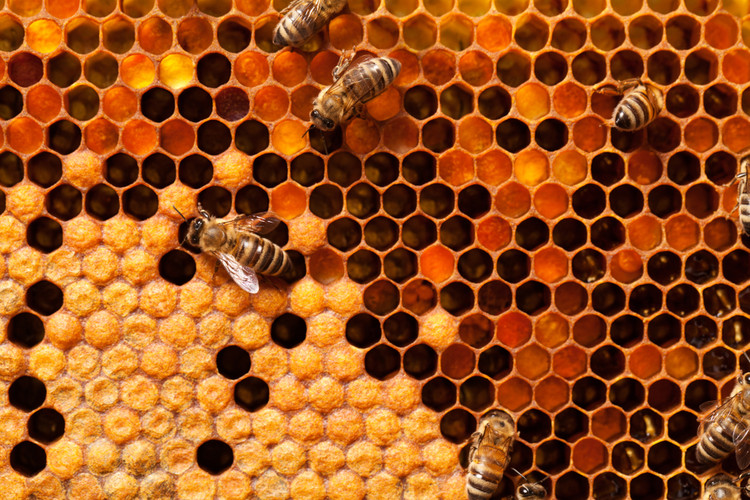
In his 1714 book The Fable of the Bees: or, Private Vices, Public Benefits, Bernard Mandeville told the story of a prosperous beehive where every bee was driven by vanity, greed, luxury and self-interest. The hive flourished with industry, trade, innovation and wealth precisely because of these private vices. Then, one day, the bees suddenly became virtuous and frugal. Demand collapsed, workers lost their jobs, and the once-thriving society descended into poverty and stagnation.
Mandeville’s provocative thesis was that what was often thought of as private vices often produce public benefits. Self-interested behaviour - when channelled through markets - creates far more prosperity and social cooperation than deliberate attempts at collective virtue or moral perfection.
This insight was revolutionary. It showed that the pursuit of personal gain does not lead to chaos, but to order and abundance. People working to satisfy their own desires end up producing goods and services that benefit others. Greed for profit drives innovation. Vanity fuels demand for quality and beauty. Self-interest, not altruism, powers the division of labour and economic progress.
Adam Smith would later refine this idea into the famous “invisible hand”. But Mandeville stated the uncomfortable truth more boldly: a society that tries to suppress self-interest in the name of virtue usually ends up poorer and less civilised.
The Fable of the Bees is a powerful defence of commercial society which reminds us that what left-wing moralists condemn as vice is frequently the engine of human flourishing.
@clairlemon Missing the point. People suspect that these weren’t creative choices, but budgetary ones. Losing a fundamental myth and the great Nolan to Hollywood ideology, at the same time, is what upsets people and drives all kinds of nutty discussions.
Diese rechtswidrige Praxis muss endlich aufhören. Es gibt keine Begründung, Menschen den Zugang zu elementaren Dienstleistungen zu verwehren, außer man befürwortet einen diktatorischen Staat.
Führende Grünenpolitiker sind unzufrieden mit dem Softie-Image und haben ein Manifest für ein neues Männerbild verfasst: Flexen im Fitnessstudio und PS-starke Autos sind ab sofort erlaubt. Als Mittel gegen den Rechtsruck. https://t.co/qi1lOBzluA
Massive Supreme Court victory for women’s sports!
In two landmark rulings, the Court has upheld the women’s sports laws of West Virginia and Idaho, which define “sex” by biology—not identity.
The Court ruled that the word “sex” in Title IX means biological sex: a huge win for reality and common sense. It also ruled that the Equal Protection Clause allows states to protect women’s sports, reversing court rulings that sided with gender activists and forced states to let men compete with women.
This is a victory for every girl who refused to stay quiet in the face of injustice. Men cannot be women, and no drug erases the male athletic advantage. I'm grateful to Attorneys General @Raul_Labrador and @mccuskeyforwv and our clients for their courage in defending basic biological truth.
Policies that ignore that truth hurt people—especially women and girls. In West Virginia, plaintiff B.P.J. defeated more than 470 girls over 1,400 times, won the women’s state championship in shot put, and sexually harassed our client Adaleia Cross in the girls’ locker room.
After today’s decision, the 27 states that have enacted laws protecting women’s sports can confidently enforce them. And the 23 states still on the sidelines have run out of excuses.
Protect women’s sports. Our girls have waited long enough.
The most influential immigrant group in American history is the one nobody argues about, because almost nobody remembers it was them.
Start at the beginning. The Continental Army was a half-trained mess until Baron von Steuben, a Prussian officer, showed up at Valley Forge and drilled it into a real fighting force. The freedom of the press you take for granted traces back to John Peter Zenger, a German immigrant printer whose 1735 trial established that you can't be jailed for printing the truth. German-Americans were shaping this country before there was a country.
Then look around your own life. Your Christmas tree is German. The hot dog (Frankfurt), the hamburger (Hamburg), the pretzel, the delicatessen, all German. Kindergarten is German, the word and the idea, brought over and opened by Margarethe Schurz. Blue jeans came from Levi Strauss of Bavaria. Heinz ketchup, Steinway pianos, Oscar Mayer, and the big four beers, Budweiser, Pabst, Miller and Schlitz, were every one founded by German immigrants.
The Brooklyn Bridge was engineered by John Roebling, born in Prussia. The Santa Claus you picture every December, plus the Republican elephant, were drawn by Thomas Nast, a German immigrant. Pfizer was founded by Charles Pfizer, who arrived from Germany in 1848. Boeing was built by the son of a German immigrant. John Jacob Astor showed up from Germany with next to nothing and became America's first multimillionaire. Charles Steinmetz, a disabled immigrant nearly turned away at the border, went on to make modern electrical power possible.
And it kept going. Wernher von Braun designed the rocket that put America on the moon. Einstein was German. Carl Schurz, a refugee, became a Union general and the first German-born US Senator. Eisenhower commanded D-Day and won the White House under a name once spelled Eisenhauer. Babe Ruth was a German-American kid from Baltimore.
Here is the kicker. German is the single largest ancestry group in the entire United States, around 44 million people, bigger than Irish, English or Italian. The biggest thread in the whole American fabric, and somehow the quietest.
They never asked for parades. They just trained the army, freed the press, engineered the bridges, founded the companies, built the rockets and lit up the Christmas mornings, then blended in so completely you forgot they were ever the "other." That might be the most American story there is.
I love people who are intellectually omnivorous.
The kind who can discuss folklore, black holes, bird migration, poetry, and grocery store pricing in a single conversation without getting lost.
In my recent Germany military diplomacy trip, I was able to visit BMW museum in Munich.
Obviously, this is a great piece of machinery and has a lot of history to it - good, bad and ugly.
If, when you say regulation, you mean the dead and clammy hand of the commissar—the gentleman who has never in his life built a single thing, drafting rules to govern a thing he cannot define, to be enforced by men who cannot read them; if you mean the form in triplicate, the impact assessment upon the impact assessment, the compliance officer who breeds, in the warm dark of the org chart, further compliance officers unto the third and fourth generation; if you mean the moat—the deep cold moat that the giant digs around his own castle and christens, with a perfectly straight face, public safety—the drawbridge he hauls up behind himself the very instant he is across, lest any hungrier and hungrier man should follow; if you mean the precautionary principle, which, had it governed our grandfathers, would have banned the wheel pending further study of the hill, and left us yet shivering and raw in the mouth of the cave, blessing its excellent ventilation; if you mean the European disease—that magnificent open-air museum of a continent, which produces in our time precisely two things in great abundance, and they are regulation, and the eloquent and well-footnoted regret of cultivated men explaining at length why they have produced nothing else; if you mean the license required to think, the permission slip for honest arithmetic, the king’s wax stamp pressed upon the forehead of every new idea before it may draw its first breath; if you mean the agency dispatched, with trumpets, to slay a single dragon, which arrives at the cave, surveys the accommodations, and moves in—and spends the ensuing century laying eggs and devouring the very villagers it was sworn to defend; if you mean the startup that perishes not of the market’s honest verdict but of the filing fee, the genius decamping by the next tide to a freer and warmer shore; if you mean the law that arrives, faithful as the swallows, exactly one whole epoch too late—helmeted, plumed, and magnificently armed—to regulate the stagecoach—then certainly, my friends, I am against it.
But—but, my friends—if, when you say regulation, you mean instead the humble steel guardrail upon the mountain road at midnight, the very thing you curse on the easy days and bless on your knees the one night the fog comes down; if you mean the brakes—for it is the brakes, and not the engine alone, that permit a sane man to drive fast and yet arrive alive—and the buttress, without which no cathedral was ever flung so high, but only in spite of which, but because of which; if you mean the meat inspector, who is the single homely reason a man may eat a sausage in this republic without first composing his last will and testament; if you mean the firebreak cut clean through the forest before the dry season of the burning, the smallpox cordon, the buoy that marks the channel, the rule of the road that lets ten thousand strangers hurtle past one another in the dark at fearful speed and arrive, by its quiet grace, every one of them home; if you mean the honest scale and the true weight, the reason a pound is a pound and a dollar a dollar from Natchez to Nome; if you mean the firm and decent wall between the counterfeit voice and the widow’s bank account, between the deepfaked candidate and the ballot box on the eve of the vote, between the loosed and loveless machine and the schoolyard it neither knows nor pities; if you mean the simple plank of law that says the strong shall not, in the gray dawn, feed the weak quietly into the furnace and sell the rising smoke as progress; if you mean, in the end, the one slender thread of trust without which no citizen will ever dare to use the marvelous thing at all—for where there is no rule there is no trust, and where there is no trust there is no commerce, and a miracle that no man dares to touch is no miracle, but only a handsome and expensive ghost—then certainly I am for it.
This is my stand. I will not retreat from it. I will not compromise one inch of it.
Elon Musk is now a trillionaire. They’re driving Brink’s trucks loaded up with cash to his house as we speak. He took all the money from the rest of us and they’re just letting him get away with it. It’s an outrage. I’m shaking with righteous anger.
We hear it as consumption. But it's almost all for allocation. This is a huge issue we need to get past.
Name anyone you would rather see allocate 1T+.
Well done.