@ABBeditor@pbl1972 Yet, I have heard thinking along the lines that fewer bigger cows will be better for the environment because there will be less methane emitters…
🤷🤦
@PeterRobins350 Soil samples are good when standard testing of macros NPKS and for pH, EC. Trace elements are better done with tissue samples.
Alternatively the more expensive EAL or SWEP lab analysis for complete soil testing is a respectable alternative.
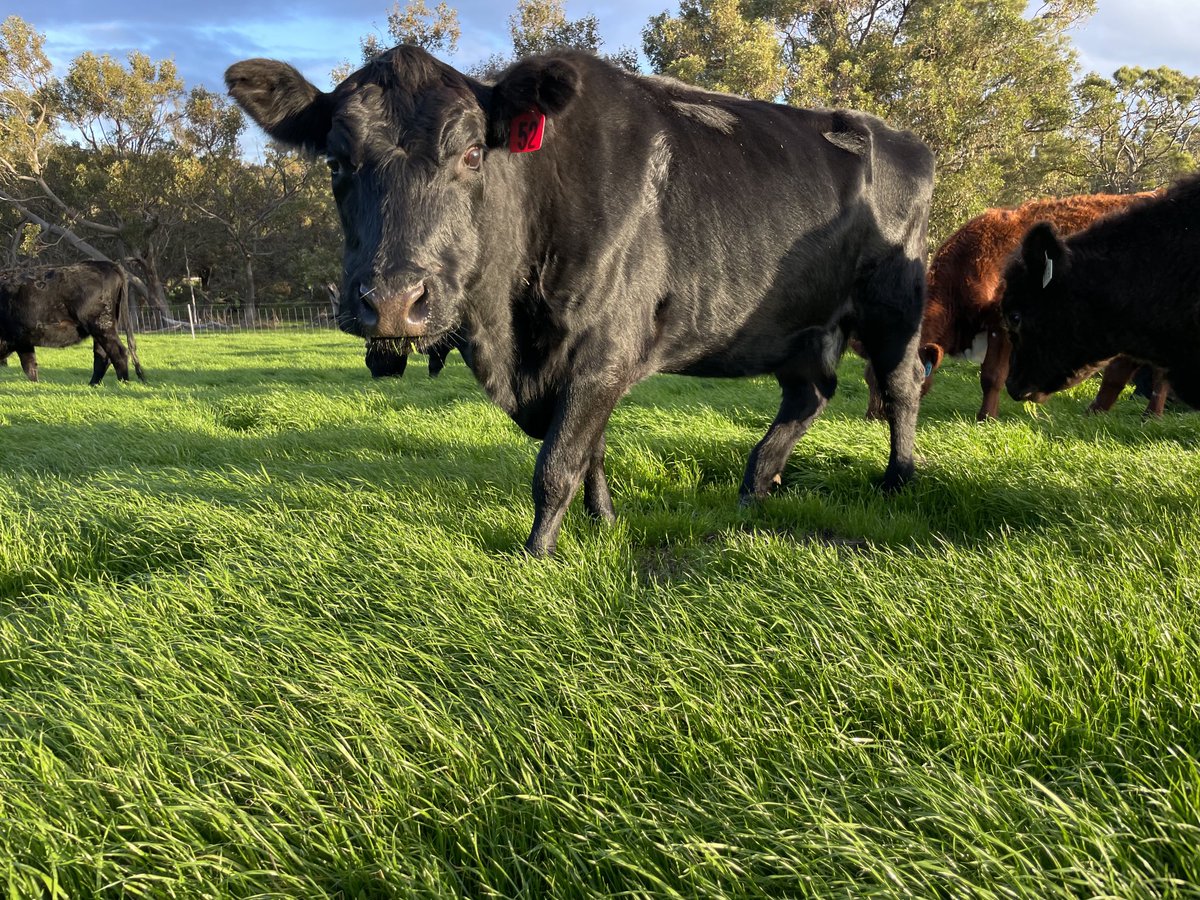
@pbl1972@severnangus@ConygreeFarm@LizGenever@CarbonCallFarm@PastureForLife The spring surplus will be carried into the dry season - we will be deliberately leaving some paddocks to set seed and others not according to our pasture improvement plans. The photo in the post was sown to perennials this autumn. The total graze will now allow them to express.
@pbl1972@ConygreeFarm@LizGenever@CarbonCallFarm@PastureForLife I recommend reading Man,Cattle and Veld by Johann Zietsman for more context. We currently on 1-2 moves a day. Grazing management is more forgiving than aiming for high residual-which is essential selective grazing… our recovery period is now over double of what we used to!
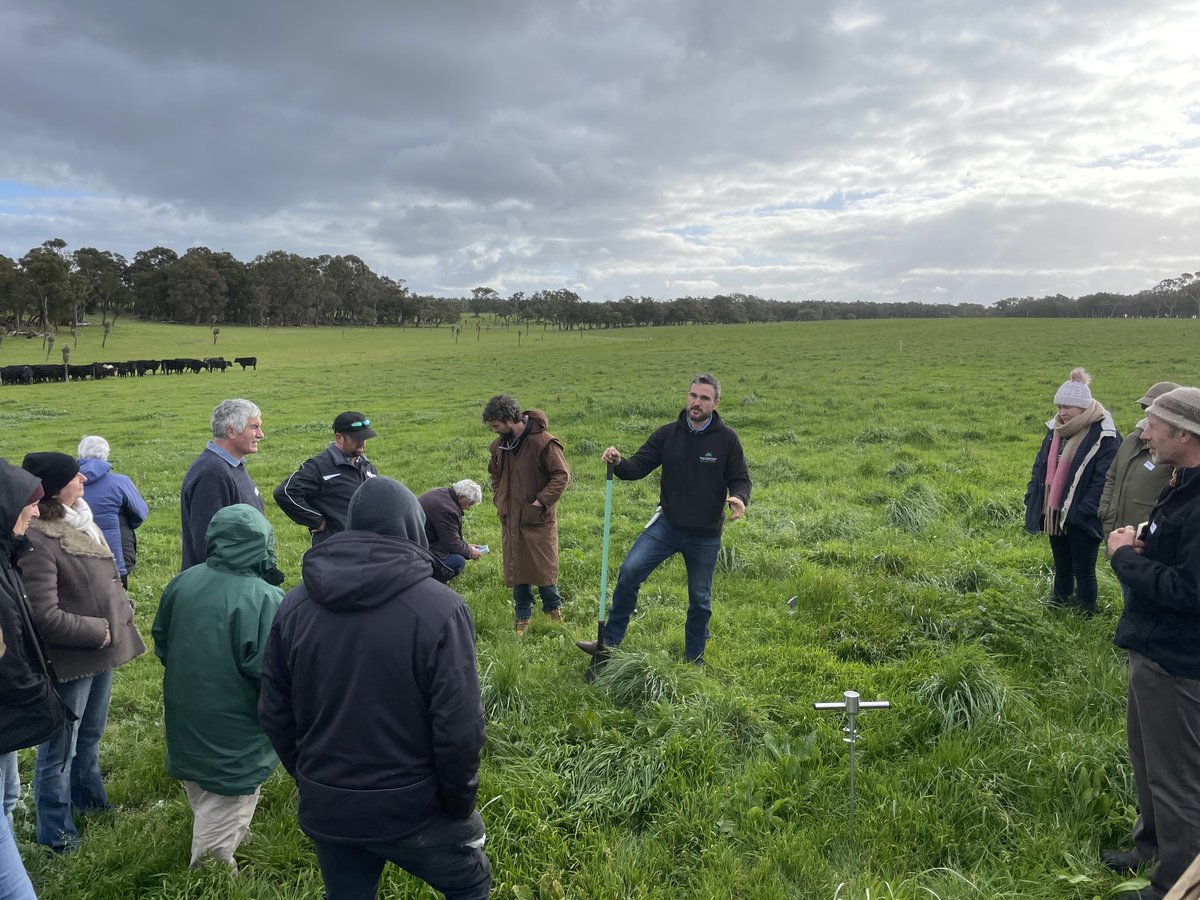
Really great day hosting Grant Sims, Proff Lyn Abbott and Torbay Catchment. Supported by SoilWise, talking all things soil health and plant diversity, through cover cropping and perennials.
@pbl1972 Good idea if you have two boxes on the seeder. I am having success cross sowing annual species over perennial in the same year. Two passes of the seeder is more tractor time but I don’t see that as a negative...
@pbl1972 Have cocksfoot in a few paddocks that are sandier. Gravel pit has clay in B horizon now which I thought would suit Phalaris better.
Hope you get a good drink this week!
@pbl1972 Chicory definitely won’t like wet feet. I just sowed a renovated gravel pit ( now shallow gravely loam over clay) with holdfast, pantain, Rosabrook, Persian and shogun - see what happens...