@MichelRansart@michelhenrion@GLBouchez Ce n’est pas très cher, vous savez. Vous pouvez en acheter quand vous voulez. Un cerveau par contre, c’est plus difficile…
@GLBouchez Expliquer aux gens une idéologie ne vaut pas du temps pas du temps passé avec votre fils, croyez-moi. Vous ne changerez pas le monde, relaxez vous un peu. C’est tout ce que je vous souhaite pour cette fin de l’année 😉
@wduyck Si vous estimez qu'il s'agit de mensonges et de désinformation, c'est que vous n'avez rien compris à l'OTAN ou alors, que vous préférez fermer les yeux.
@Sen_the_marxist Exactement ! Ils sont encore trop réactifs au fonctionnement actuel et pas assez enthousiasmants par rapport à leur vision de la société
Alors @GLBouchez et @FranckenTheo ... Est-ce que vous vous êtes rendu compte que vous vous êtes fait avoir comme des bleus ? L'avenir le prouvera et serez politiquement punis en 2029.
In October 1985, federal agents surrounded a private jet on a runway in North Carolina and arrested a man thousands of people called God.
On board, they found nearly a million dollars in jewelry.
Five years later, he had nine words carved on his grave.
Some people call them the most arrogant words ever written. I think they might be the truest.
The man was Osho.
Back then his followers called him Bhagwan, a word Hindi speakers use for God. He was a former philosophy professor who told people not to renounce life but to celebrate it. Sex, dance, laughter and meditation, all in one. He called it:
Zorba the Buddha.
The West loved him, and thousands moved to his commune in Oregon. Every day he was driven past them in one of his 93 Rolls-Royces.
Then, in 1985, it all collapsed. His secretary and her inner circle were convicted of crimes that included poisoning hundreds of people. He was never charged with that, but he was deported on immigration charges, and 21 countries refused to let him in.
Back in India, he dropped the title Bhagwan. "Enough is enough," he said. "The joke is over."
A few weeks before he died, in 1990, he dictated his epitaph.
Never born. Never died. Only visited this planet Earth.
But here is the part almost nobody notices.
He never said this was true only of him. He once asked his listeners if they had ever seen themselves die. "It is always somebody else who dies."
Now the honest part. I'm not here to defend him. The jewelry was real, and so were the people who got hurt. His followers will say I'm being unfair to him. His critics will say I'm giving him a platform.
But a sentence doesn't become false because of who said it.
Think about what that means.
You have never experienced your own birth. You know the date because someone told you. Every memory you have, you were already there.
You have never experienced your own death either. Only other people's.
Try to find, from the inside, the moment you began. Not the date, the moment. You'll keep arriving at a time when you were already here.
Most of us live as a biography. A name, a date, a story that ends on another date we'd rather not think about.
He had all three on his grave, and still wrote "only visited."
You can spend your whole life arguing about the man.
Or you can check whether the sentence on his grave is true for you.
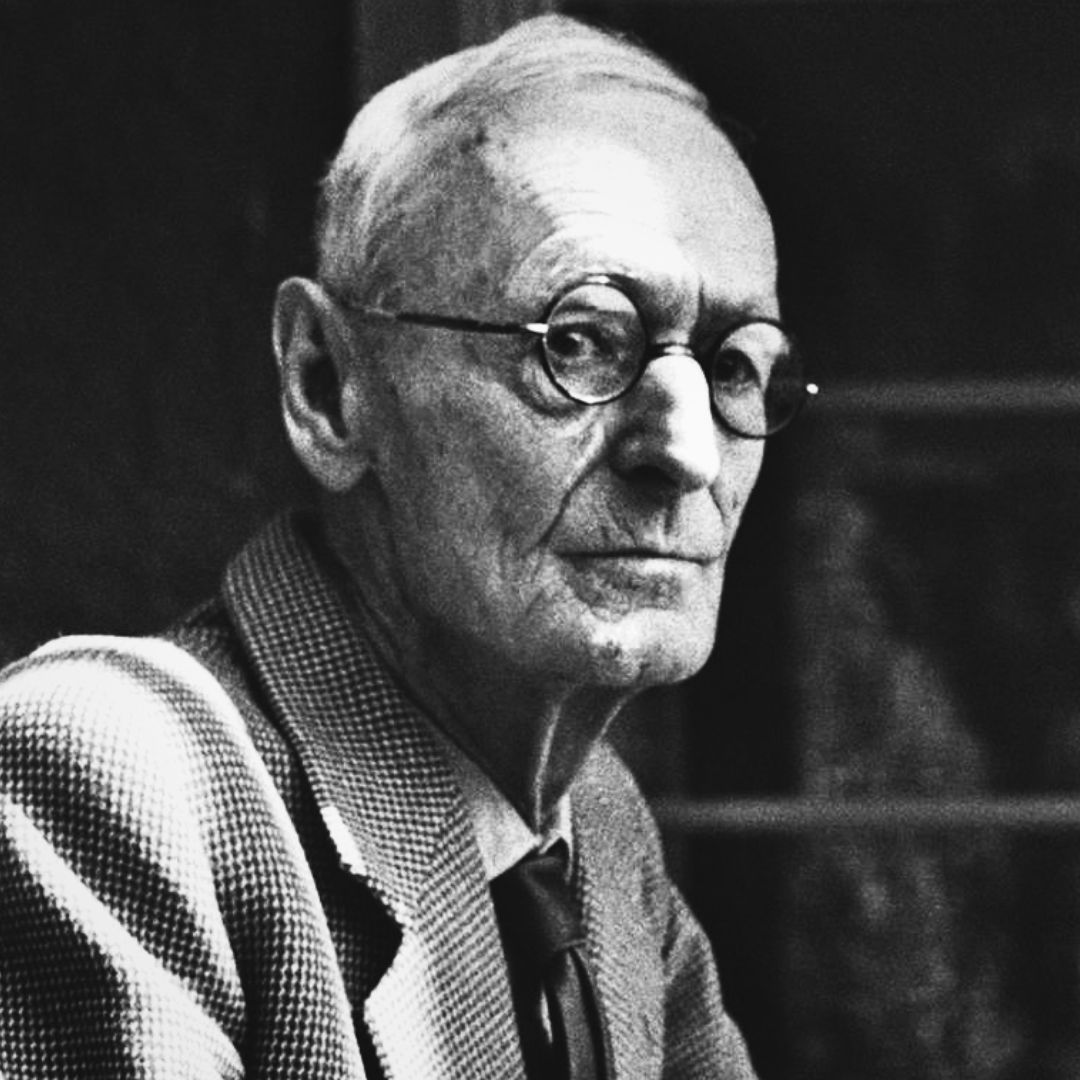
“Whoever wants music instead of noise, joy instead of pleasure, soul instead of gold, creative work instead of business, passion instead of foolery, finds no home in this trivial world of ours.”
— Hermann Hesse
@va20531@b_belgian Il faudrait vous envoyer en corée du Nord ou au Vietnam pour voir ce que c'est une dictature communiste, cela vous éviterait de dire des bêtises (là-bas ce ne serait simplement pas possible de faire des tweets pareils).
@SGurbuz__ La défense protège la population, dites-vous. Très bien. Mais qui décide de ce qu'il faut acheter, à quel prix, à qui et avec quel contrôle démocratique ?
L'invoquer comme une évidence morale pour soustraire des milliards au débat budgétaire, voilà qui est assez commode
In the 1970s, seekers from Europe and America climbed a narrow staircase in a crowded Bombay neighbourhood to sit with an old man in a tiny room.
He had no ashram, no organisation and no credentials.
For most of his life, he had sold cheap cigarettes.
His name was Maruti Kambli. He was born in 1897, grew up in a village, and moved to Bombay as a young man to support his family after his father died.
He started as a junior clerk. Then he opened a small shop selling bidis, the cheap hand-rolled cigarettes of India’s working poor. In time he owned eight of them. He married and had four children.
Nothing about him looked spiritual..
In 1933, a friend took him to meet a teacher named Siddharameshwar Maharaj.
The teacher gave him one instruction. You are not what you take yourself to be. Find out what you are. Stay with the simple sense of "I AM," and give your attention to nothing else.
Most people would have nodded and gone home.
Maruti did exactly what he was told.
Between customers, while counting money, while walking home, he kept returning to that bare feeling of being.
Not "I am a shopkeeper."
Not "I am a father."
Just "I am."
Three years later, his teacher died.
In 1937, Maruti left Bombay and wandered across India for about eight months. On the journey home, something in him settled for good. As he later put it, nothing was wrong anymore.
But here is the part almost nobody knows.
He went back to the shop.
He kept selling cigarettes for almost thirty more years.
He lost his wife, and later a daughter. He kept going to work, and he kept answering anyone who climbed up to his little room with a question.
The world would come to know him as:
Nisargadatta Maharaj.
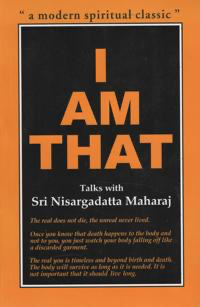
In 1973, a Polish-born seeker named Maurice Frydman translated his talks into English. The major publishers turned the book down, so a small Indian press printed it instead.
It was called I Am That. Today it is considered one of the great classics of non-duality.
And the people who climbed his stairs got the same answer the shopkeeper got in 1933.
Ask him about chakras, past lives or visions, and he would wave it away and turn you back to the one who was asking.
Think about what that means.
One of the clearest teachers of the 20th century never lived in a cave. He never wore robes. He never left his street. The instruction that changed his life fit between two customers.
Most of us are waiting for the right conditions.
> The retreat.
> The quiet house.
> The year we’ll finally have time.
As if what we are can only be found somewhere else.
He didn’t need a different life.
He needed to find out who was living this one.
@GLBouchez@marinebss@lesoir Ce ne sont pas des illégaux que je vois. Des jeunes sans avenir, des personnes qui ont perdu leur emploi et qui se réfugient dans l’alcool…