@MadelaineLucyH this makes the assumption that men aren't sex pests. they fuck pumpkins and couch crevices, of course they will throw away what they're doing to have sex at any time. they're animals on their best days.
@roisenav we are only assuming they're doing it for validation. but i have to agree, im not really in favor of trans women or men breast feeding because i do not trust males around children.
@roisenav@strawbmatcha16 i'm well aware of the beauty and science of breast feeding. co-breast feeding and wet nursing is already a thing and has been a thing for a long time.
the topic here is male breast feeding.
@roisenav@strawbmatcha16 when males do occasionally lactate, it is the same as female breast milk because we are human beings, not separate species.
it's just in fewer supply.
@jamwithfruit@iamMickeyFine@glitteryfem how? pre transition? a straight man would never date a male that has done nothing to appear female. because he's straight, and not attracted to male bodies.
@Rosaria__lxm a pregnant woman should delight these men because they cry and cry about birth rates. yet they find them repulsive.
you should worship the ground your pregnant wife walks on. she should be the most beautiful person you've ever seen.
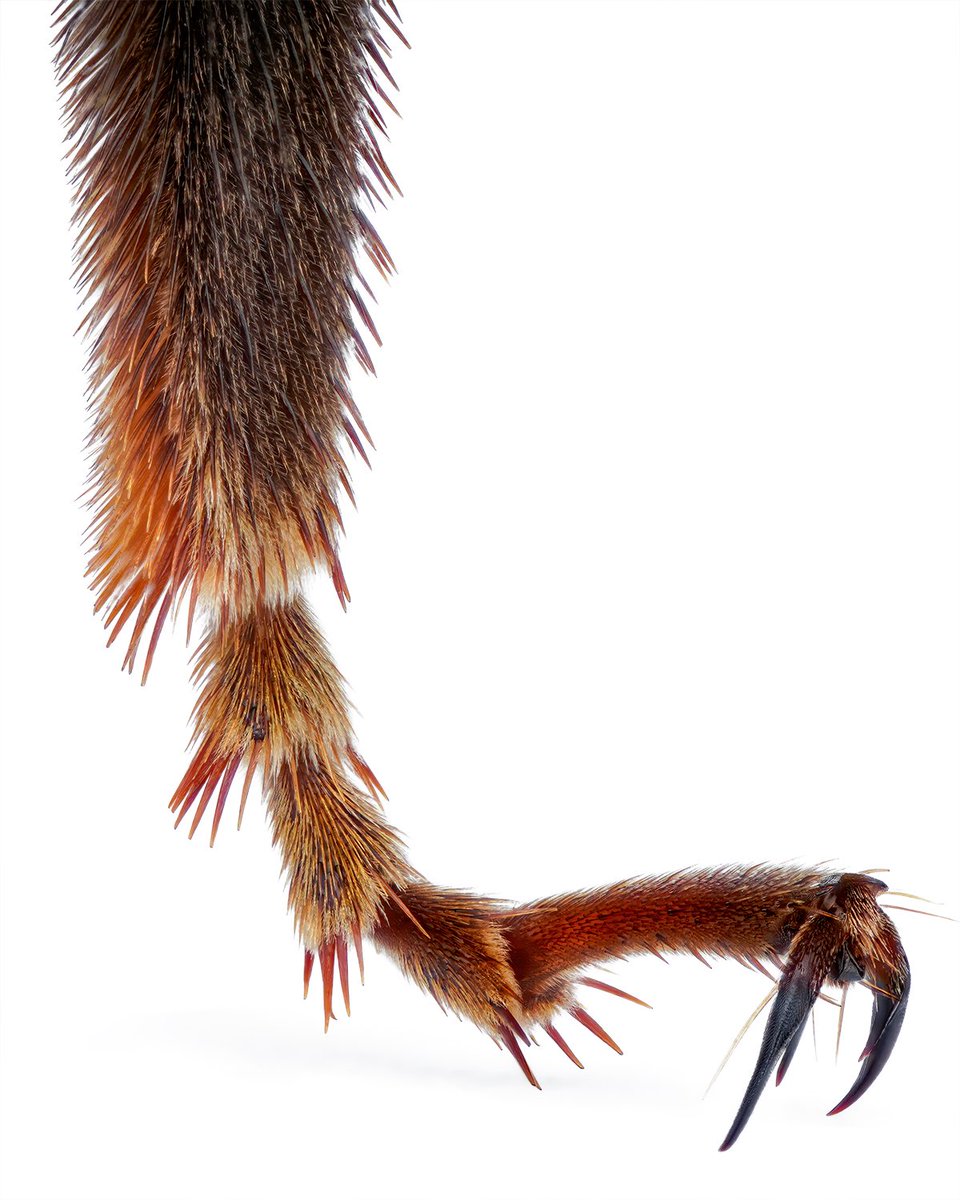
Insect feet mostly are a short chain of tarsal segments ending in claws. Some end in a single hook. Some carry paired claws, padded lobes, combs of spines, or dense fields of adhesive hairs. Same class of structure. Completely different solutions.
At this magnification the differences stop looking ornamental. The foot is where an insect meets the surface, and the surface is never one thing. Bark, leaf, flower, prey, soil, and the body of another insect each ask for a different grip. Claws lock into roughness. Pads and setae hold on smoothness. Spines brace, rake, or keep the leg from slipping sideways. A foot built for walking is not a foot built for holding, climbing, or seizing.
Comparative work across orders shows that segment count, claw shape, pad size and the hairs between them occupy a very large design space. There is no single hidden insect foot underneath the variation. The legs we notice first are usually the long ones, or the ones with colour. The working end is easier to miss. That range is old. Once legs could specialise, the tip split into hooks, cushions, brushes, and tools that are barely feet at all. Joints, sockets, pigment and structural colour repeat as themes, not as copies.
This is why insect feet keep rewarding extreme macro work. The subject is not rarity. It is variability packed into millimetres.