Full Address by President Bola Ahmed Tinubu upon receiving the @NGSuperEagles and the full contigent of Team Nigeria who secured second place at the just concluded African Nations Cup.
The Federal Government is moving to make 112 Nigeria’s single, nationwide toll-free emergency number, replacing fragmented emergency lines and improving the speed of response to fires, accidents, medical crises and security emergencies.
According to NCC Executive Vice Chairman Aminu Maida, 112 already operates as a toll-free emergency number, meaning callers do not need airtime, and it can work even without a SIM card, provided there is network signal in the area. Calls are routed to the nearest emergency call centre, with 35 centres currently in operation, including Abuja, while Lagos operates its own centre.
In conclusion, measures are being taken to reduce industrial costs, attract investment and position Nigerian businesses for greater competitiveness in African and international markets.
- Government is working to reduce the high cost of power faced by manufacturers while addressing infrastructure and logistics challenges.
- In partnership with the African Development Bank, about $368 million has been activated to support infrastructure and services across over 70 industrial clusters.
- Reforms, incentives and improved policy direction under the Tinubu administration are being used to make Nigeria a more attractive destination for investors.
- Manufacturers and investors are benefiting from tax reforms, import duty exemptions and incentives for machinery and industrial equipment.
- About 131 companies covering 220 products have received African Quality Marks, helping Nigerian products meet standards and compete more effectively in international markets.
Ongoing measures to strengthen Nigeria’s industrial sector, improve access to finance, deepen public-private collaboration and revive critical manufacturing value chains.
- The Industrial Revolution Work Group is addressing key challenges including power, affordable long-term finance, bureaucracy, regulatory bottlenecks, skills and training.
- Ministerial roundtable now focused on improving access to affordable long-term financing and addressing challenges such as bank guarantees.
- The Bank of Industry disbursed about ₦250 billion in 2025, with MSMEs accounting for the majority of beneficiaries.
- BOI has raised another ₦250 billion in 2026, with an ambition to scale funding towards ₦1 trillion.
- The administration has established a stronger working relationship between government and the private sector in addressing industrial challenges.
- Five strategic objectives; the first 90-day implementation report showed that all five strategic objectives of the Nigerian Industrial Policy had been activated across relevant sectors.
- Government is working to reactivate the cotton-to-textile value chain, connecting cotton farmers with textile ginneries and other stakeholders.
Ongoing measures to strengthen Nigeria’s industrial sector, improve access to finance, deepen public-private collaboration and revive critical manufacturing value chains.
- The Industrial Revolution Work Group is addressing key challenges including power, affordable long-term finance, bureaucracy, regulatory bottlenecks, skills and training.
- Ministerial roundtable now focused on improving access to affordable long-term financing and addressing challenges such as bank guarantees.
- The Bank of Industry disbursed about ₦250 billion in 2025, with MSMEs accounting for the majority of beneficiaries.
- BOI has raised another ₦250 billion in 2026, with an ambition to scale funding towards ₦1 trillion.
- The administration has established a stronger working relationship between government and the private sector in addressing industrial challenges.
- Five strategic objectives; the first 90-day implementation report showed that all five strategic objectives of the Nigerian Industrial Policy had been activated across relevant sectors.
- Government is working to reactivate the cotton-to-textile value chain, connecting cotton farmers with textile ginneries and other stakeholders.
Senator John Enoh outlined the pathway toward Nigeria’s $1 trillion economy target by 2030.
- The Nigerian Industrial Policy places production and value addition at the centre of efforts to transform the economy.
- The Ministry of Industry has committed to releasing regular 90-day implementation reports to track progress and maintain accountability.
- The Bank of Industry released its first-ever Annual Development Impact Report for 2025, reflecting greater focus on measuring the impact of industrial financing.
- Government is working to increase the contribution of different sectors of the economy through stronger production, industrialisation and value addition.
- The reforms introduced since President Bola Ahmed Tinubu assumed office in 2023 have helped create greater economic stability.
- Nigeria’s 4.43% GDP growth represents progress considering where the economy came from, the country is aiming much higher, towards 6%, 7% and beyond.
Senator John Enoh outlined the pathway toward Nigeria’s $1 trillion economy target by 2030.
- The Nigerian Industrial Policy places production and value addition at the centre of efforts to transform the economy.
- The Ministry of Industry has committed to releasing regular 90-day implementation reports to track progress and maintain accountability.
- The Bank of Industry released its first-ever Annual Development Impact Report for 2025, reflecting greater focus on measuring the impact of industrial financing.
- Government is working to increase the contribution of different sectors of the economy through stronger production, industrialisation and value addition.
- The reforms introduced since President Bola Ahmed Tinubu assumed office in 2023 have helped create greater economic stability.
- Nigeria’s 4.43% GDP growth represents progress considering where the economy came from, the country is aiming much higher, towards 6%, 7% and beyond.
The Minister of State for Industry Senator John Enoh highlighted Nigeria’s renewed industrial policy, improving manufacturing performance and the Tinubu administration’s efforts to address key constraints facing the sector, particularly power and electricity.
- A new Nigerian Industrial Policy was launched on February 17, 2026, providing a clear roadmap for industrial development.
- The policy was approved by the Federal Executive Council in the last quarter of 2025, marking the first major industrial policy in several decades.
- Manufacturing growth accelerated to 3.24% in Q2 2026, up from 1.60% in Q2 2025.
- Manufacturing Sector recorded successive improvements from Q1 to Q2 2026, signalling gradual recovery in the sector.
- The industrial policy prioritises a combination of grid electricity, gas power and renewable energy to provide more reliable energy for industries.
- The Ministry of Industry established a platform bringing together manufacturers and the organised private sector to address critical challenges affecting industry.
- The Idu Industrial Cluster is being developed as a model for improving industrial power supply, with government working with Wellbeck and other partners on the initiative.
- Unlike previous years, Nigeria now has a clear industrial policy and implementation plan to guide the sector’s growth.
The Minister of State for Industry Senator John Enoh highlighted Nigeria’s renewed industrial policy, improving manufacturing performance and the Tinubu administration’s efforts to address key constraints facing the sector, particularly power and electricity.
- A new Nigerian Industrial Policy was launched on February 17, 2026, providing a clear roadmap for industrial development.
- The policy was approved by the Federal Executive Council in the last quarter of 2025, marking the first major industrial policy in several decades.
- Manufacturing growth accelerated to 3.24% in Q2 2026, up from 1.60% in Q2 2025.
- Manufacturing Sector recorded successive improvements from Q1 to Q2 2026, signalling gradual recovery in the sector.
- The industrial policy prioritises a combination of grid electricity, gas power and renewable energy to provide more reliable energy for industries.
- The Ministry of Industry established a platform bringing together manufacturers and the organised private sector to address critical challenges affecting industry.
- The Idu Industrial Cluster is being developed as a model for improving industrial power supply, with government working with Wellbeck and other partners on the initiative.
- Unlike previous years, Nigeria now has a clear industrial policy and implementation plan to guide the sector’s growth.
The Federal Government, in partnership with the International Fund for Agricultural Development (IFAD) and state governments, is accelerating food production, reducing poverty and creating employment opportunities for young people in the Niger Delta through the Livelihood Improvement and Family Enterprises Project in the Niger Delta (LIFE-ND).
The multimillion-dollar intervention has positively impacted more than 60,000 beneficiaries across the nine participating Niger Delta states, equipping young people with skills and productive assets to establish and grow agribusinesses. Current project data also show increased agricultural production, higher enterprise profits and strong adoption of improved agricultural technologies.
The Nigerian Army has graduated 924 newly trained Borno State Forest Guards after six weeks of intensive military training in Jos, Plateau State, equipping them with the skills needed to strengthen security across forested communities in Borno.
The training covered weapon handling, shooting, patrol techniques, physical fitness, discipline and tactical awareness. The guards also demonstrated their readiness through simulated ambush operations, tactical manoeuvres and live-firing exercises, displaying precision and coordination.
The Federal Government, through the National Credit Guarantee Company (NCGC), is expanding access to finance for micro, small and medium-sized enterprises (MSMEs), manufacturers and individuals, as part of efforts to drive inclusive economic growth and job creation.
Since its establishment in May 2025, NCGC has expanded its partnerships from five to about 18 banks, catalysing up to ₦100 billion in credit guarantees and providing access to finance for more than 67,000 Nigerians, including over 11,700 women.
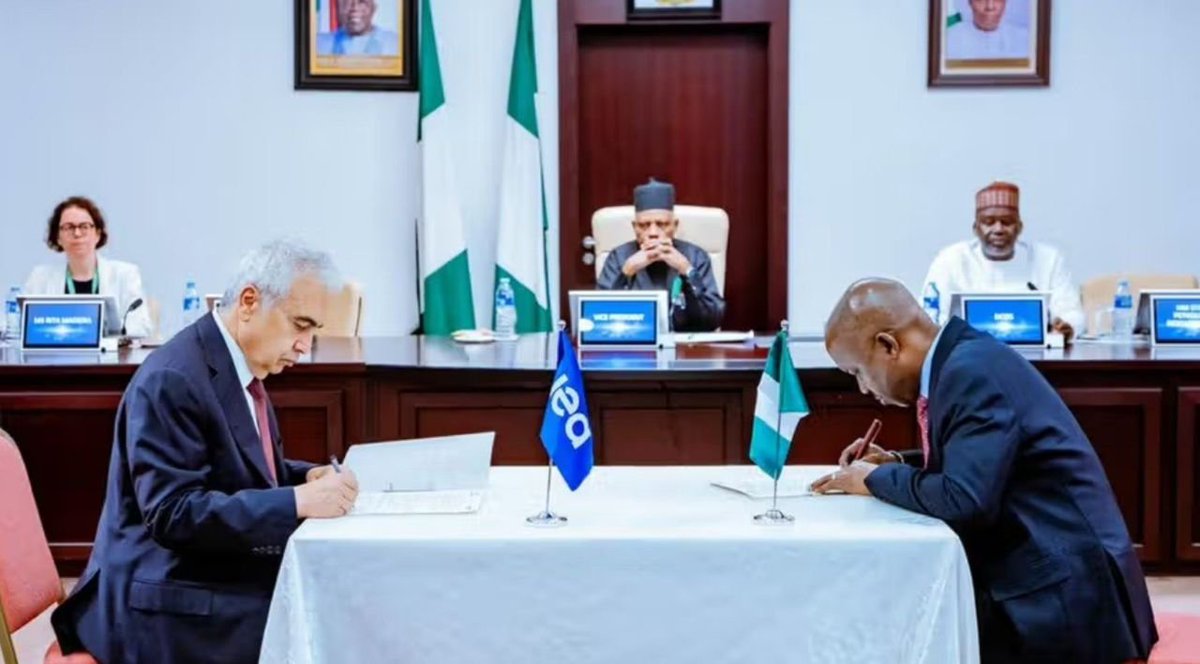
Nigeria and the International Energy Agency (IEA) have signed a joint work programme to strengthen energy policy, investment and energy security, following Nigeria’s admission into the Paris-based agency as an association country.
The partnership will give Nigeria access to the IEA’s expertise, data and institutional knowledge, while supporting work on energy data and policy, clean cooking, methane abatement and the development of Nigeria’s gas resources to strengthen energy security and economic growth.
The Federal Government has launched Nigeria’s first National Land Transportation Policy since independence, establishing a framework to integrate road, rail, ports, inland waterways and urban transport into a more efficient national transportation system.
The policy is designed to improve connectivity, support economic growth and enhance the quality of life of Nigerians by ensuring that different modes of transportation work together rather than develop in isolation.
The naira is expected to end the year at 1,290 per dollar from 1,328.92 per dollar, according to the average forecast of four analysts surveyed by Bloomberg. That would extend its 8% gain so far this year to almost 12%, marking its strongest annual advance since at least 2018.
https://t.co/xCEBC9sSPd
Nigeria’s economy recorded real GDP growth in Q2 2026, marking the strongest quarterly growth since 2024 and reinforcing the country’s positive growth trajectory.
- GDP Growth: 4.43% in Q2 2026, up from 4.23% in Q2 2025.
- Nominal GDP: ₦119.29 trillion.
- Services Sector: Grew by 4.60%, contributing the largest share of real GDP.
- Agricultural Sector: Grew by 4.39%, supporting the non-oil economy.
- Information & Communications Sector: Expanded by 9.62%.
- Arts, Entertainment & Recreation Sector: Recorded strong growth of 11.93%.
- Oil Production: Reached 1.72 million barrels per day, the highest since 2022.
- Oil Sector: 7.31% real growth in Q2.
- Non-oil economy: Grew by 4.31%.
From strengthening national institutions and expanding Nigeria’s gas economy to reducing transportation costs, reforming football administration, improving security coordination and plugging loopholes in public payroll systems, the week reflected a continued focus on building a more secure, efficient and prosperous Nigeria.
🎥 Watch the past week's highlights of #PBATWeekInReview⤵️
HEADSUP: Nigeria’s Gross Domestic Product (GDP) grew by 4.43% year-on-year in real terms in the second quarter of 2026, up from the 4.23% recorded in the corresponding quarter of 2025, according to the National Bureau of Statistics (NBS).
The latest growth figure represents a 0.20 percentage-point increase compared with the same quarter last year, indicating a modest strengthening in economic activity.
According to the NBS, the agricultural sector recorded stronger growth during the quarter, while services also expanded. However, industrial growth slowed significantly compared with the corresponding period in 2025.
September 1st, 2026
The future is digital, resilient, and growing.
Here are #TheHeadlines stories driving national progress today:
📌 Stronger GDP Growth: Accelerating to 4.43% in Q2 2026.
📌 Record Diaspora Inflows: Nearing the $1 Billion monthly milestone via IMTOs.
📌 Global Talent Expansion: The new 'Hire from Nigeria' campaign aims to unlock 1 Million global jobs over 5 years.
📌 Tech & Infrastructure Push: Targeting $750M in cloud investment alongside a massive 90,000km fibre network rollout.
It's Reader's Delight!
STATEHOUSE PRESS RELEASE
PRESIDENT TINUBU BEGINS THREE-WEEK LEAVE
President Bola Ahmed Tinubu will depart Abuja today for Europe to begin a three-week vacation as part of his annual leave.
His first stop will be London, United Kingdom.
President Tinubu is expected to return home after the working vacation to join the hectic campaign for the January 2027 election.
Bayo Onanuga
Special Adviser to the President
(Information and Strategy)
August 30, 2026
President Bola Ahmed Tinubu departs Abuja today for Europe to begin a three-week vacation as part of his annual leave
He is expected to return home after the working vacation to join the hectic campaign for the January 2027 election.
"It is a well deserved leave, the President has had several months engaged in state activities and we have seen monumental changes in the economy and so many other things pertaining the affairs of the country...it's important the President refuels, and even as he would be on leave, he will still be engaging in state matters on daily basis"
- Mr Sunday Dare, Special Adviser on Media and Public Communications to the President, speaks on the Mr President's 3weeks annual leave.


![PBATMediaCentre's tweet photo. [NEWSLETTER 📩] – August 31, 2026.
Vol. 121…
Closing the Gaps, Accountability in action https://t.co/ongmjkiQhT](https://pbs.twimg.com/media/HRCTJGuWcAE0-LE.jpg)
![PBATMediaCentre's tweet photo. [NEWSLETTER 📩] – August 31, 2026.
Vol. 121…
Closing the Gaps, Accountability in action https://t.co/ongmjkiQhT](https://pbs.twimg.com/media/HRCTJGpXcAAlzBJ.jpg)
![PBATMediaCentre's tweet photo. [NEWSLETTER 📩] – August 31, 2026.
Vol. 121…
Closing the Gaps, Accountability in action https://t.co/ongmjkiQhT](https://pbs.twimg.com/media/HRCTJGpWQAA0gae.jpg)







![PBATMediaCentre's tweet photo. [NEWSLETTER 📩] – August 31, 2026.
Vol. 121…
Closing the Gaps, Accountability in action https://t.co/ongmjkiQhT](https://pbs.twimg.com/media/HRCTJGwXIAAoZD6.jpg)


