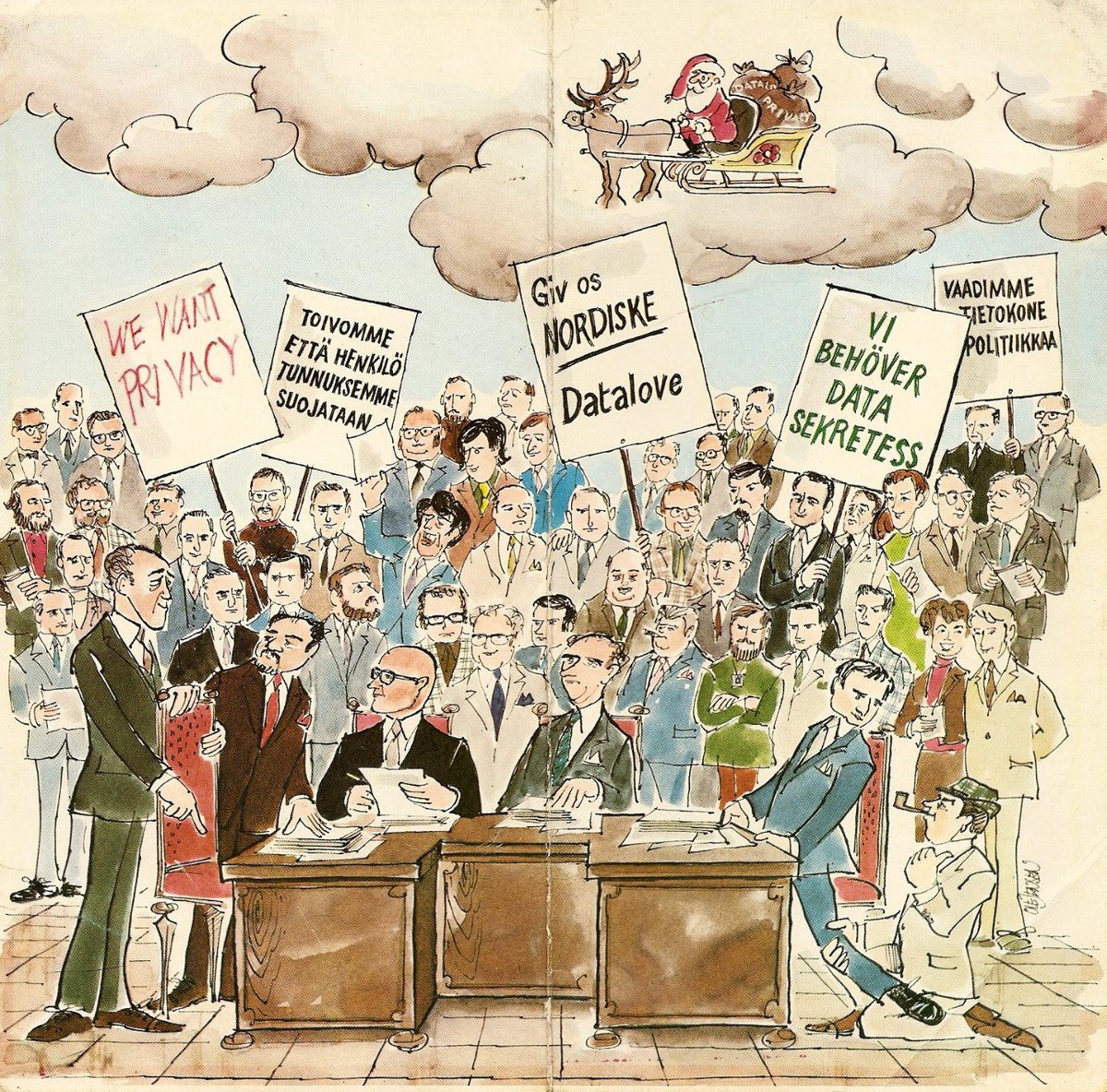
in case you miss updates from this account, beware i am now mainly updating the 'History of #dataprotection: An online anthology' here: https://t.co/mbdP5813UH
🇪🇺 🇧🇷 🌎 Join us on Tuesday 21 May for a day of discussions on ‘The Global Impact of EU’s Regulations on Platform, #AI, and #DataGovernance: The Case of Brazil - Empowering digital policies beyond EU borders’! Register for free https://t.co/BRrUodC1L3 & see you at Tour & Taxis
@gabrielazanfir@RobertJBateman i am really afraid you are extrapolating in a wrong way. but it's Friday evening in Europe so I'll disconnect myself, at the risk of giving you the last word 😁
@gabrielazanfir@montezumachavez@RobertJBateman perhaps the key point is that "it could", but it wasn't. and my intuition is that if a case like that would end up in Luxembourg, they will make the boundaries clear. so i would suggest not to panic. i do take the point that an alternative argumentation might have been possible
@gabrielazanfir@RobertJBateman is the fact that data protection applies to (some) written words "policing literature"? i trust the CJEU has no intention to silence EU residents, or people reading out loud from other countries
@gabrielazanfir@RobertJBateman the truth is that it would have been interesting to see that argument put forward to the Court. here the Court, consistently with itself, simply takes the route that the prior covid app case had started to trace.
@gabrielazanfir@montezumachavez@RobertJBateman you seem to ignore that things like prosecutors calling internet service providers from another country to receive this or that data is something that has been happening (was one of the problems they wished "to solve" with the e-Evidence package). this is not about random chats
@gabrielazanfir@RobertJBateman in relation to disclosure of data. it is not about "expressing thoughts". this was not an interview, or chatting with someone to hear their voice. disclosure = processing = interference with art7/art8, this is how the CJEU has been reasoning.
@gabrielazanfir@RobertJBateman thank God, data protection is not a religion... anyway, OF COURSE if you go back to the very origins it's all about computers, but data protection has been evolving beyond just computers, for decades now, precisely to provide effective protection to individuals
@montezumachavez@gabrielazanfir not really... i'd say the best known and traditional example and problem are public authorities calling companies on the phone asking for data that cannot be given otherwise... imagine if that was not falling under data protection for some reason
@gabrielazanfir it's quite like the one about the covid app... the point is one can't start separating little actions, saying "this is processing, now this is not processing but a side thing we do"...
@l_dallacorte @gabrielazanfir but people we always knew processing is anything you do to data! imagine if destroying data was processing but not reading data...
The second in-person event of the DPSN this year will take place in Leiden!
Make sure to get in touch if you will be there and would like to present your work and learn from others in a chilled environment.
Check the link below for more information: https://t.co/M8wymhhikD
Interested in exploring how to use data rights in education for understanding digital infrastructures and their impacts?
Join us for a 1-day workshop in BXL, 9feb
https://t.co/XqtJzHHjhM