"Sometimes, it's the little moments that bring the biggest joy! Witnessing my handwritten note featured in the Notability app has me over the moon with happiness. 🌈 Grateful for this delightful surprise! #Notability#SmallJoys#FeaturedNote#Happiness" 😄🌟
Meet the new Notability ✨
Introducing our most immersive & sleek experience yet! We’re excited to announce Notability version 14.0 on the App Store, redesigned for all of YOUR notetaking needs. (1/3)
A professor at MIT spent his life studying uncertainty.
Near the end, he compressed everything into a single one-hour lecture.
No buzzwords. No heavy theory.
Just a clear explanation of how prediction really works.
Not long after, he was gone.
This is that talk.
The idea at its core is simple but powerful:
prediction isn’t about being certain
it’s about understanding probabilities
Most people will scroll past it.
A few will see it and start thinking differently.
Save it.
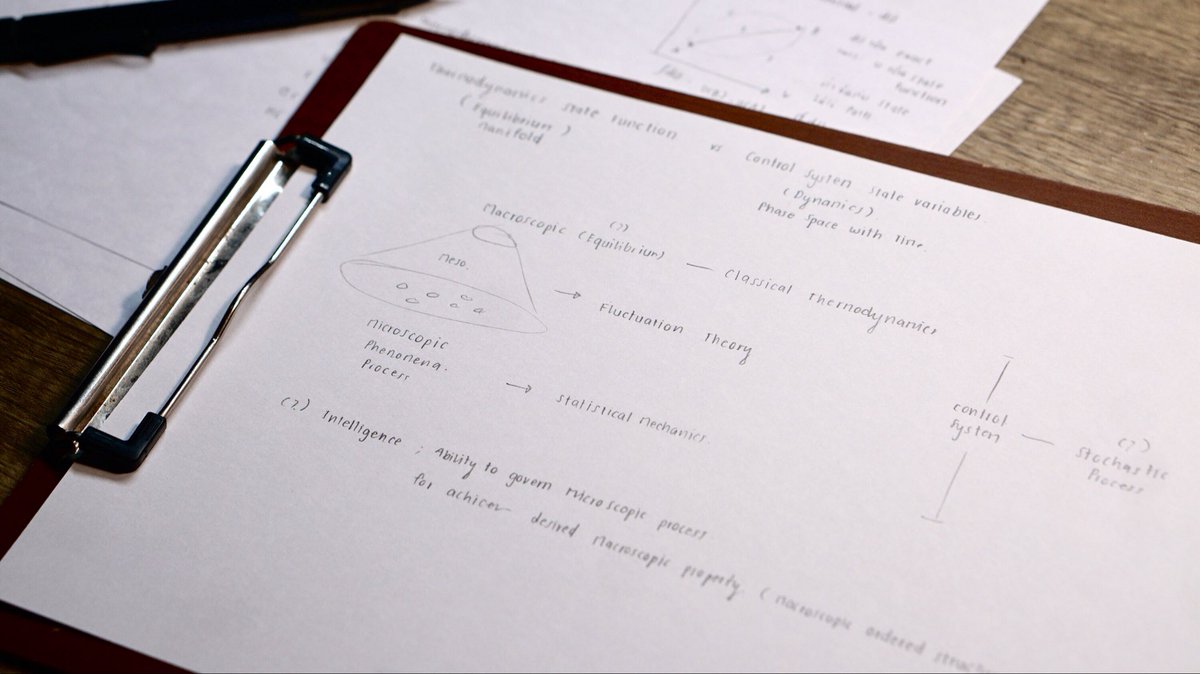
Life is a Dynamical Systems
- F(x,t) Natural Dynamics,Aging,Entropy Accumulation
- u(t) Every decision,action,attention you choose to invest.
Intelligence = Optimal Control of your own trajectory.Creativity = Discovering u(t) that expands the manifold itself.
#DynamicalSystem
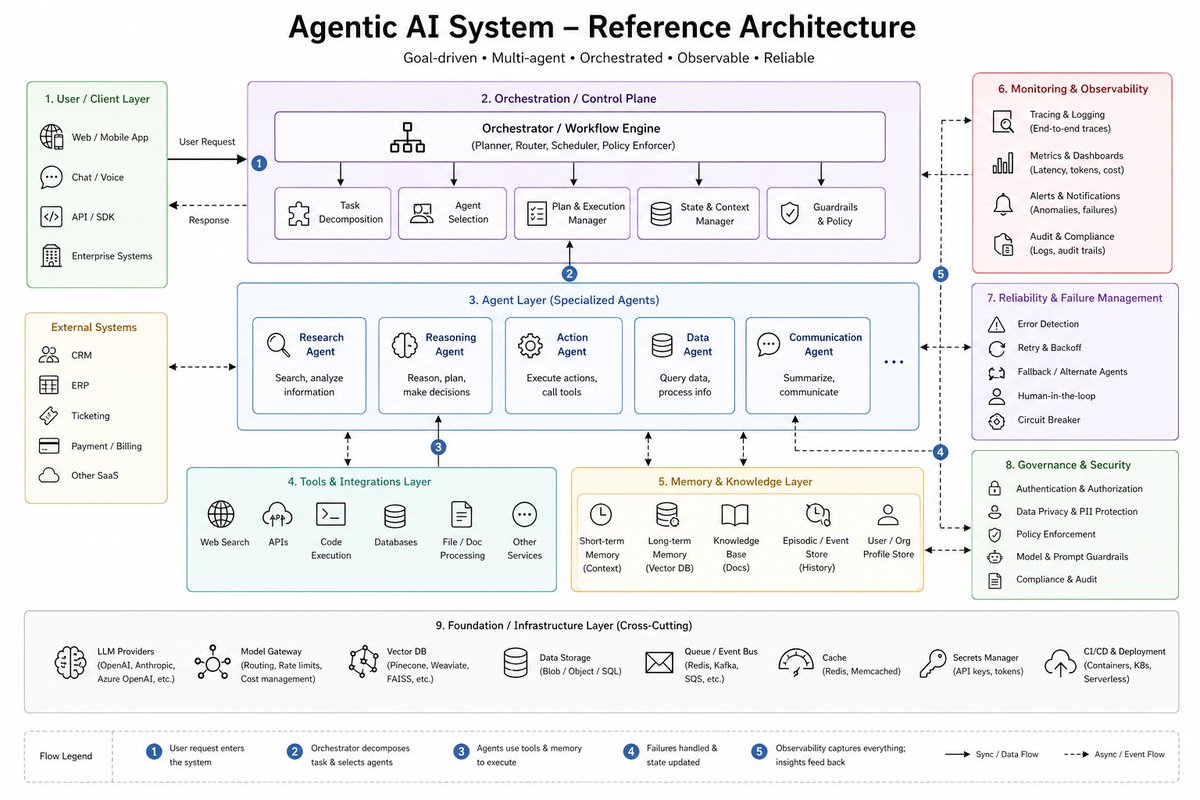
After reading @AnthropicAI blog on Agentic AI. spent some time to create a mental model to understand how to design, and explain Agentic AI architecture
Define a task/goal - what you want agent to do achieve?
1. Orchestration layer : it is your control panel
3. Agents layer: this layers made of agents (multi /specialised)
4. tools: your tools are made of this layer (web search, DB, APIs etc)
5. memory: this is the brain to store information - long or short term etc.
6. monitoring : This is the most crucial to monitor each and every step
7. Reliability & failure management: identify errors, retry, fallback, involve human
8. Governance and security: compliance, audit, auth etc.
Random heat fluctuations usually limit computing efficiency. But what if that same noise could help power computation?
A new study explores thermodynamic computing—an emerging approach to more efficient computing. https://t.co/KyA1AbXSS1
@molecularfndry
The built and natural worlds around us are full of examples of diversity from small, incremental evolutionary changes. Keyboard designs offer slightly different key spacing and press stiffness; two species appear almost identical, save for a slight change in body size. But sometimes, something entirely original appears. So, how do radically different entities come to be? How does the world produce true novelty?
In his new book, The Origins of the New, SFI External Professor Doug Erwin argues that the generation of novelty, and not just the mundane speciation that we are familiar with, is a central topic in science.
https://t.co/7fEwDHG4Vj
📢Hiring in Generative AI + Biomolecular Modeling!📢
We have just released Proteina-Complexa - what's next? Join us and help us build it! 🚀
🧬 We have developed the Proteina models, ReaSyn, GenMol, and are excited about everything Generative AI + Molecular Modeling.
Details👇
The grid is in crisis. A century-old system for generating, distributing, and regulating electricity is struggling to cope with electrification, decarbonization, rising demand from data centers, and rapid technological change.
At a recent SFI working group, researchers and practitioners explored how a complex adaptive systems approach could help build a more resilient, adaptive grid. “Piecemeal solutions aren���t enough,” says SFI External Professor Seth Blumsack. “How is the grid system organized as a whole? How can we address whole-systems problems?”
https://t.co/L3LiORQ2Ux
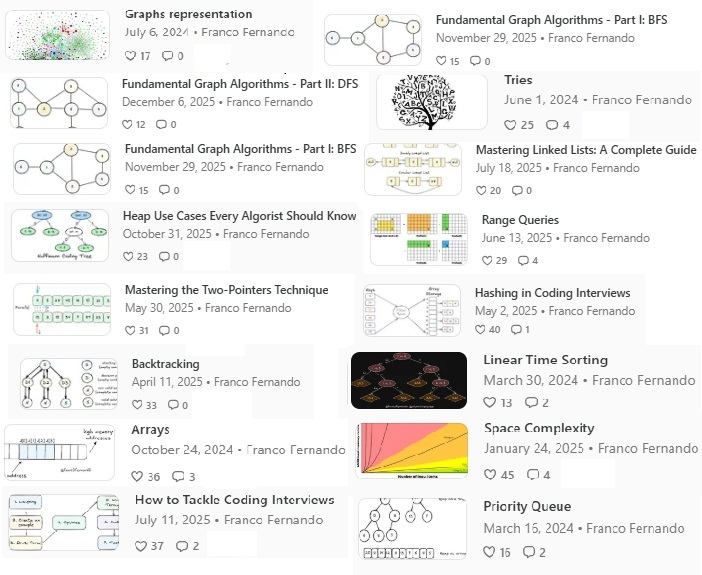
There is a reason why Algorithms and Data Structures are hard for many software engineers.
It's not because they're not capable, but they simply miss a lot of pre-requisite knowledge.
If you want to learn dsa from first principles, read these 16 articles (links below):
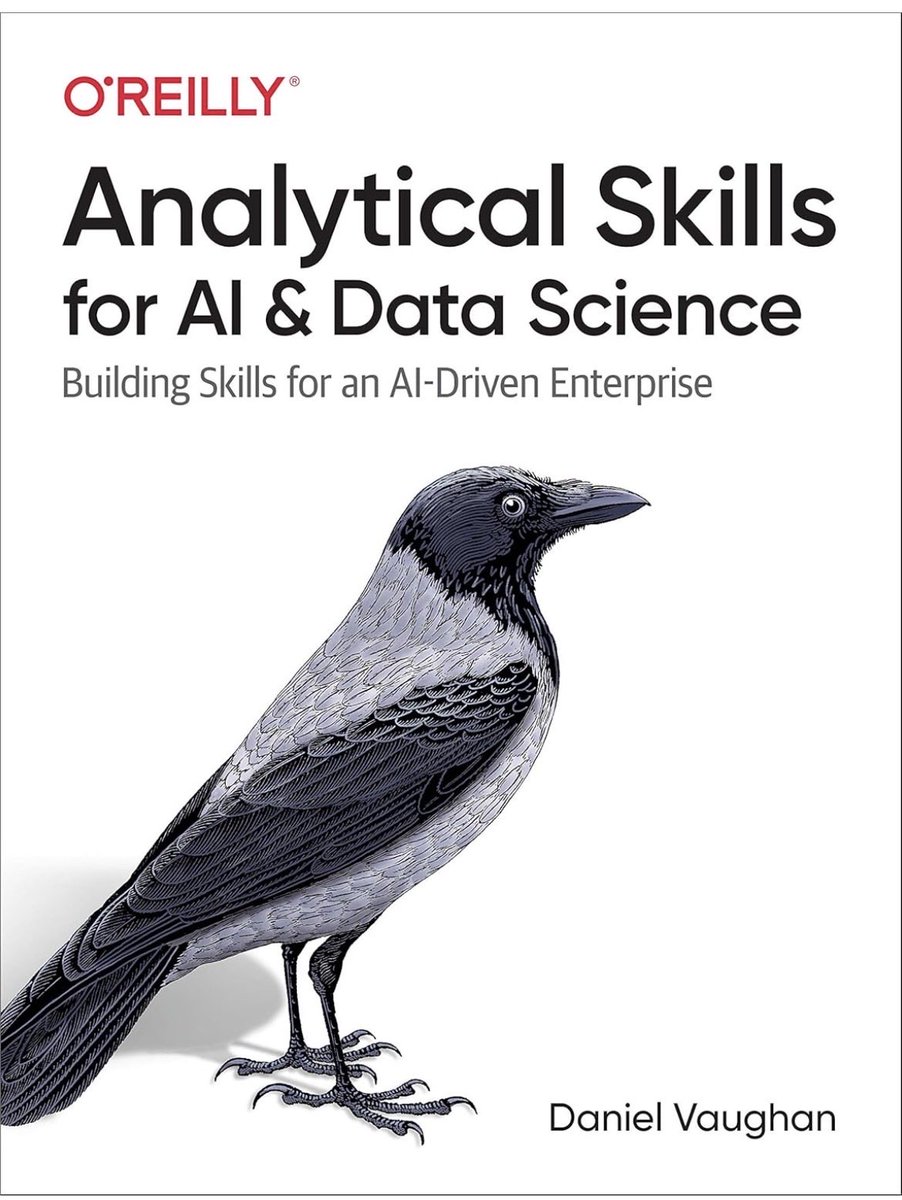
Analytical Skills for AI and Data Science — Building Skills for an AI-Driven Enterprise: https://t.co/9Rd1EwAUdv
…helps practitioners to create value from AI and data science using an analytical skillset — each chapter illustrates how each skill works across a collection of use cases.