Food from Grass: Genetics and Digital Twins to optimize ruminant agricultural sustainability https://t.co/lTYDnfAGQU for @UKDairyDay showcasing the best genetics, husbandry and technology for milk production
Enjoyed the talk by @Pathh1 and Trude Schwarzacher on endogenous pararetroviruses at #IBC2024. I still fondly recall my time in their lab @uniofleicester as a master's student, learning from the best in cytogenetics. Grateful to them for guiding me toward what I now love so much!
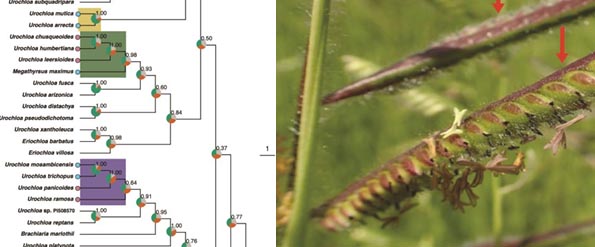
As part of a special issue on 'African Flora in a Changing World', give our paper on the evolution of forage grasses in the African genus Urochloa a read! Lots of polyploidy, lots of convergence, lot of fun 🌾
Our diploid oat genome assembly is now published
Liu Q, Xiong G, Wang Z, Wu Y, Tu T, Schwarzacher T, Heslop-Harrison JS. 2024. Chromosome-level genome assembly of the diploid oat species Avena longiglumis. Scientific Data 11: 412. https://t.co/5G3nhNRBgU https://t.co/6B14YONzLU
The website for the American #Oat Workers' Conference (AOWC) in Saskatoon, Canada, next July is now up! https://t.co/fbYY7pv224 Anyone anywhere who works with #oats is welcome to attend the meetings. Details of the program will be available in the coming months.
📣CONFERENCE ALERT‼️
Next year we’re organizing the PLANT MEIOSIS MEETING🎉
In Poznan, Poland😎
On September 4-6, 2024🤩
Mark this date on your calendar‼️
If the words MEIOSIS and PLANTS make you shiver, this meeting is just for you🤯
More details coming soon‼️‼️
@jrossibarra@CedarWarman Also biased, but https://t.co/JlQ4xJbVA6 @jjdeveg @dr_PTom 10Gb RNA-seq from 111 Urochloa forage grass lines shows diverged ecotypes/subpopulations of polyploids and with the apomictic character can be utilized in breeding fixed hybrids
Our latest on Chrysanthemum genomes @fengjiao11 Graph-based clustering/k-mer analysis classify repetitive motifs. Surprisingly few tandemly repeated sequences, lots of low-complexity derived from transposable elements #genomics#repetitivedna#transposableelements@annbot
New publication alert! The genome assembly of Musa beccarii & evolution of banana family genomes: extensive chromosomal rearrangements & genome expansion, by Zheng-Feng Wang @m_rouard@GaetanDroc leder Xue-Jun Ge🍌🧬1/6 #GenomeAssembly#Musaceae#Evolution https://t.co/nLb4253huC
🧬 #AoBPolyploidyWeek
Complex polyploid and hybrid species in an apomictic and sexual tropical forage grass group: genomic composition and evolution in Urochloa (Brachiaria) species by Paulina Tomaszewska and co-authors in @annbot#openaccess
👉 https://t.co/1TZgHs2HAX 1/2
Publication of Annals of Botany Special Issue with 17 papers on Polyploidy in Ecology and Evolution this afternoon https://t.co/EcX3O6SWuq (all papers free). Qing Liu, @trudeschw and my Preface-Review on consequences and enabling role of polyploidy is https://t.co/ypE4Z5eyYK
In a new #PhDBlog, Kate writes about her trip to Colombia, where she worked with collaborators at @BiovIntCIAT_eng, to gain local knowledge and practical experience with local growers and experts in common bean crops.
➡ https://t.co/wwCxjPLKrq
@katdenjam@NRPBIODTP @jjdeveg
New Research: Oat chromosome and genome evolution defined by widespread terminal intergenomic translocations in polyploids: Structural chromosome rearrangements involving translocations, fusions and fissions lead to evolutionary… https://t.co/zRUHxPGwQu #PlantScience#PlantSci
Our paper on Cenchrus with Priyanka Rathore, @dr_PTom et al. differentiating the two ancestral genomes in the allotetraploid and showing 5-methylcytosine methylation sites at most retrotransposon sites on the chromosomes in the 2n=39 line studied
From Priyanka Rathore, Vishnu Bhat & @dr_PTom retroelements (red) and anti-methylcytosine (green) in tetraploid 4x allopolyploid topical forage grass: Repetitive DNA sequence landscape and DNA methylation in chromosomes of apomictic Cenchrus ciliaris https://t.co/GdBd66BOD8
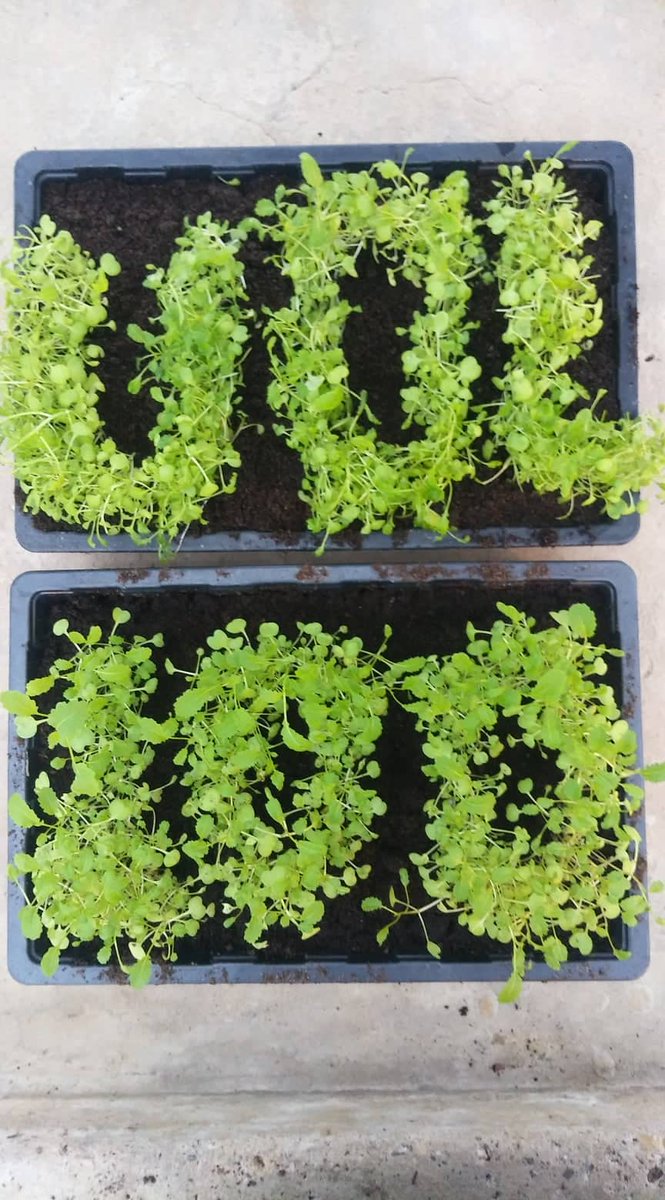
University of Leicester celebrating 100Years of success! we molecular cytogenetics research group @ Dept. Genetics and Genome Biology, UOL. celebrate this amazing moment preparing this using our research materials (28days old 1000 Brassica juncea seedlings).
Very happy to celebrate #WomenInScience today. Extra special thanks to the brilliant scientists I work with: first author publications from Qing, Paulina, Janet, Shuyu, Katja, Neha, Iza, Trude, Ana-Claudia, Adel and Dinaiza over the last couple of years.