A phenomenal career draws to a close.
@StuartBroad8, your relentless spells and unwavering dedication will forever be etched in cricket's annals. A fitting end to your career. Enjoy the next innings!
1/7
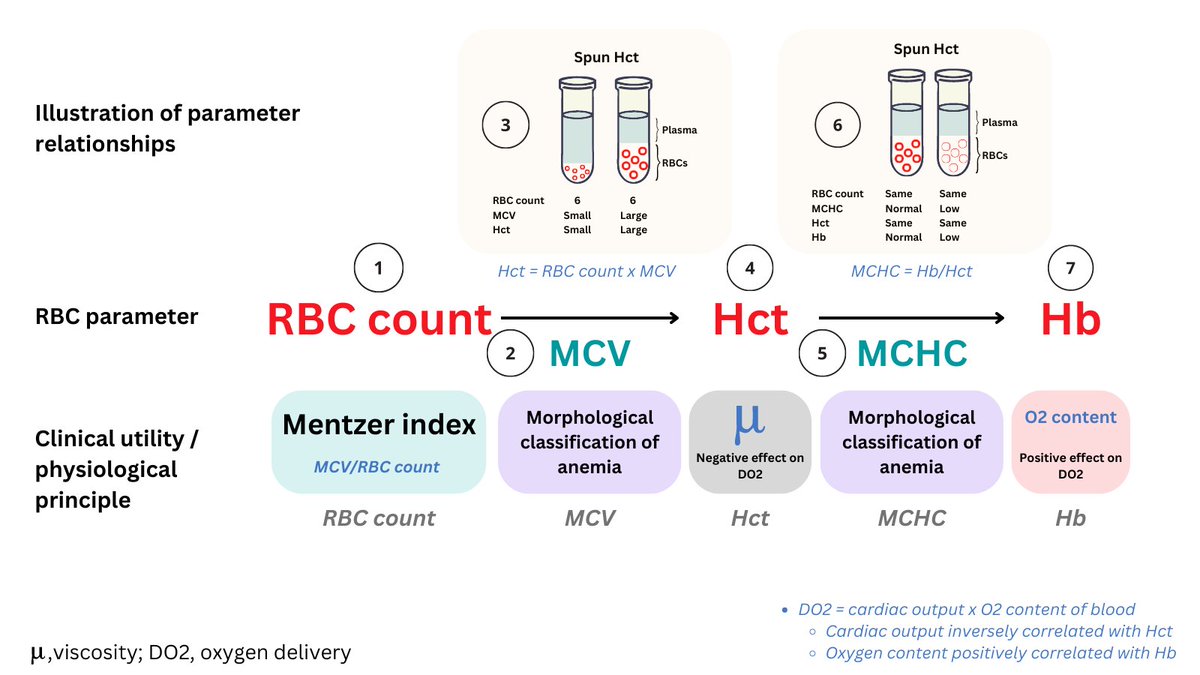
OVERVIEW OF RBC PARAMETERS
Here is a fun graphic that ties together the relationships between RBC parameters:
1. RBC count gives us no information about Hct or Hb, but it can be used to help distinguish between thal minor and iron deficiency anemia (e.g., Mentzer index).
Simple parameters that can be used to assess cardiac (heart) fitness
There are multiple investigations such as ECG, echocardiogram, TMT and CT coronary angiogram that can be used to assess heart health.
However, here I would list some simple assessments that can indicate a good heart health (and are associated with lower risk of heart attack and death in future).
1. Resting heart rate (HR)
Resting HR is a good measure of cardiac fitness.
The lower the resting HR, better it is.
Lower resting HR is associated with lower risk of heart attacks, strokes and all-cause death.
2. Lower HR during running
If two people run at the same pace, the one with lower HR during the run has better cardiac fitness.
One should aim to run at 70-85% of maximum HR (where maximum HR is 220 minus age).
Another simple formula for ideal HR during running is 180 minus age.
3. Heart rate recovery (HRR)
After stopping the run (or any aerobic exercise), the heart rate drops.
The faster the HR returns to baseline, the better it is.
The reduction in HR during the first minute after stopping running is a good measure of cardiac fitness.
In most people with good cardiac fitness, HR would reduce by 20 bpm or more at the end of 1 minute after stopping running.
If the drop is <12 bpm, it indicates poor cardiac fitness, and is associated with a higher risk of diabetes, high BP, heart attack, stroke and death in future.
4. Resting Blood pressure (BP)
The ideal resting BP is 120/80 mmHg. For resting BP also, the lower the better. However, it should be above 90/60 mmHg.
Both high BP and low BP are associated with higher risk of heart diseases and stroke.
5. Exercise induced increase in BP
It is normal for BP to increase during exercise. However, the normal upper limit is 190 mmHg in women, and 210 mmHg in men.
If systolic BP increases to >190 mmHg in women, and >210 mmHg in men, it is abnormal; and is associated with higher risk of heart attack and death in future.
Take home message
HR and BP at rest, during exercise and after exercise- are all important parameters to determine cardiac fitness.
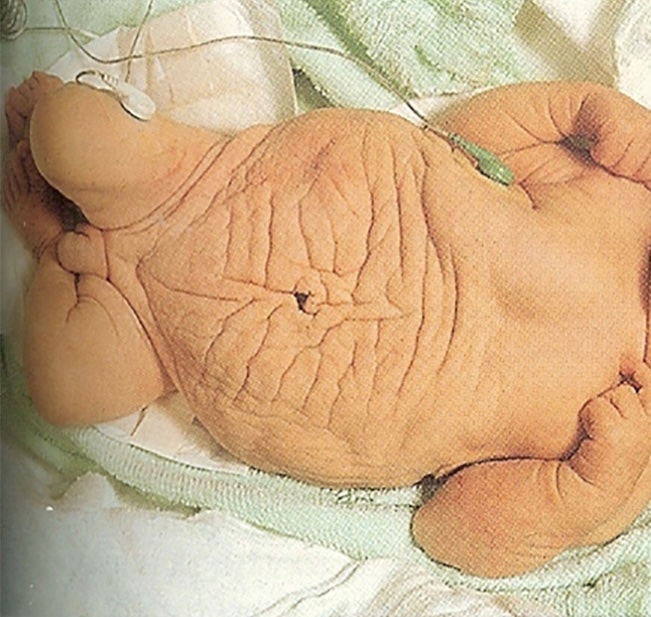
A newborn infant was noted to have wrinkled appearance of the abdomen. Exam w/palpable masses in the inguinal area. What is the likely diagnosis? (Image: Storm Anaesthesia) #Medtwitter
A man in his 40s presented with persistent fever & cough. Sputum exam is negative for mycobacterium. BAL shows gram (+) branching filaments & the organism is partially AFB positive. Skin exam & CXR findings are shown. What is the likely diagnosis and treatment?
A 32-year-old female awoke with profound blurriness in the right eye. She has also constant joint aches, frequent headaches, neck pain. She also noted recurrent oral ulcers & a recent genital ulcer. What is the likely diagnosis? #Medtwitter (Image: derm advisor)
Sensory Innervation of the Foot 🦶🦶🦶
🦶 The foot is innervated by five nerves - the posterior tibial (PTN), superficial peroneal, deep peroneal and sural nerves (which originate from the sciatic nerve) and the saphenous nerve (a branch of the femoral nerve).