This week Dralvia analyzed 29.18M+ phishing feed records.
We turned the noise into signal:
- who attackers impersonated,
- who they targeted,
- what infrastructure they used, and what defenders should check now.
Weekly Threat Digest is live 👇
https://t.co/LyDEx0EFmr
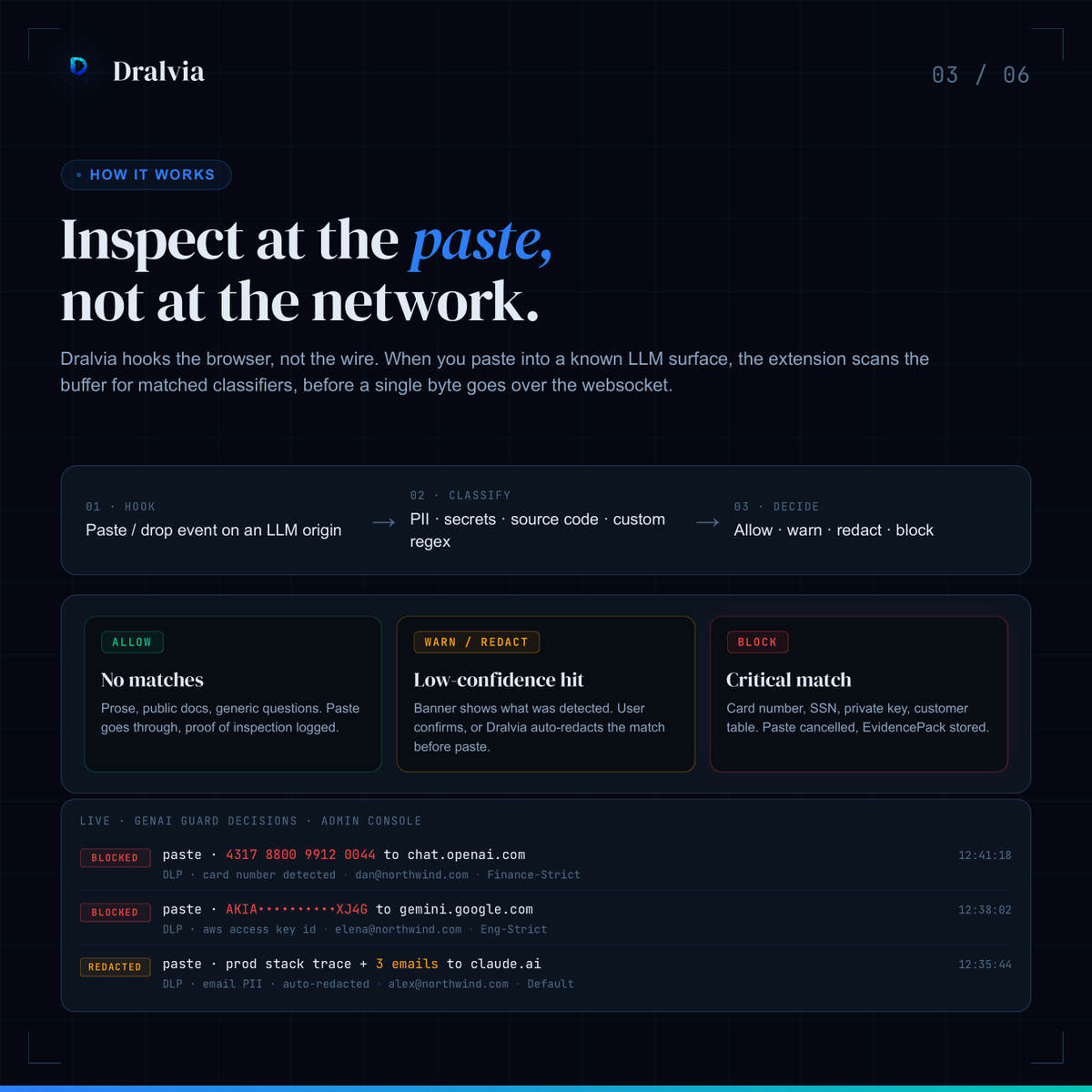
A data leak can now start with a simple Ctrl V.
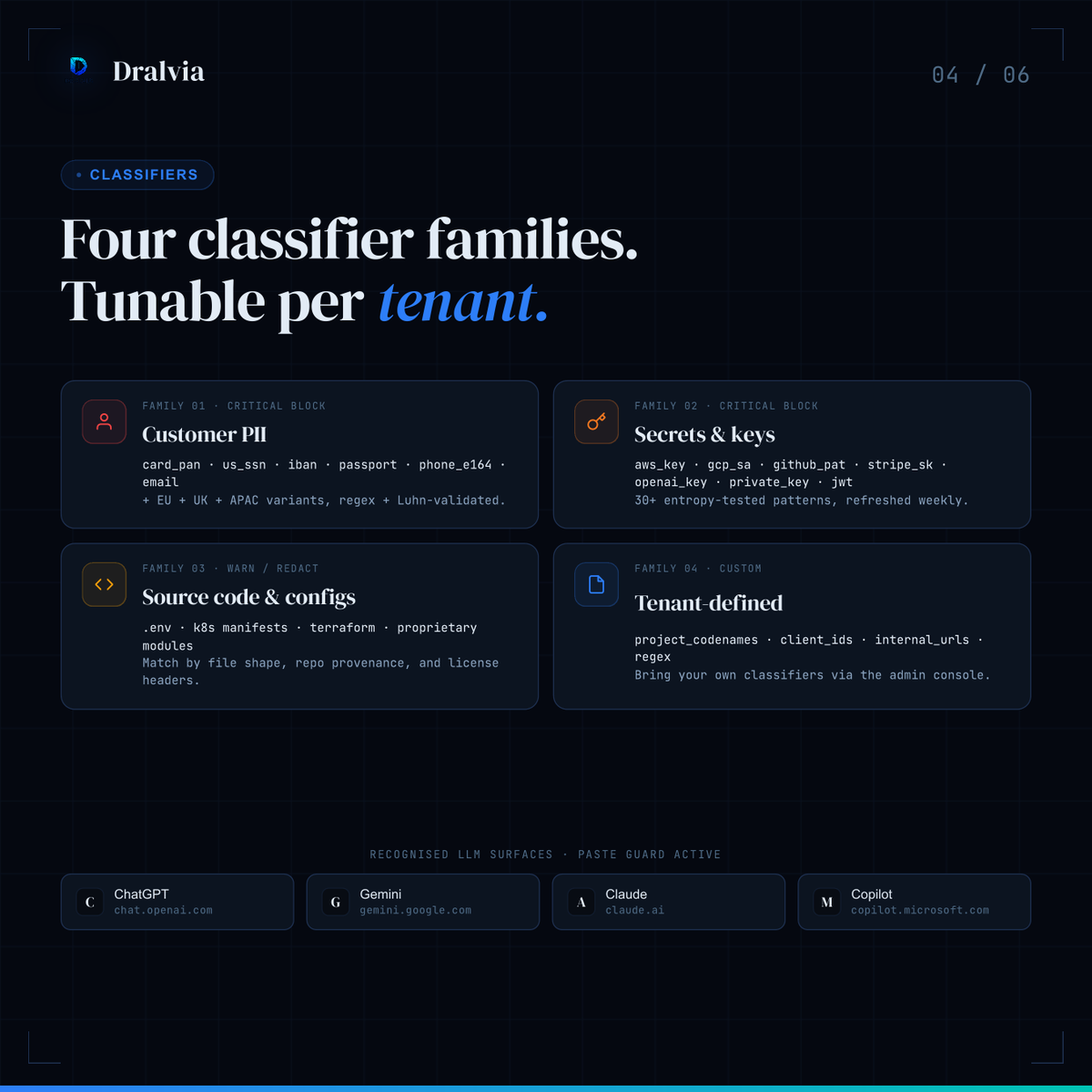
Someone pastes customer data, API keys, source code, or internal docs into an AI tool.
Dralvia GenAI Guard catches it before it leaves the browser.
AI should make teams faster.
Not turn every prompt into a security risk.
This week Dralvia analyzed 28.3M+ phishing feed records.
We turned the noise into signal:
- who attackers impersonated,
- who they targeted,
- what infrastructure they used, and what defenders should check now.
Weekly Threat Digest is live 👇
https://t.co/ilMkHK5wmg
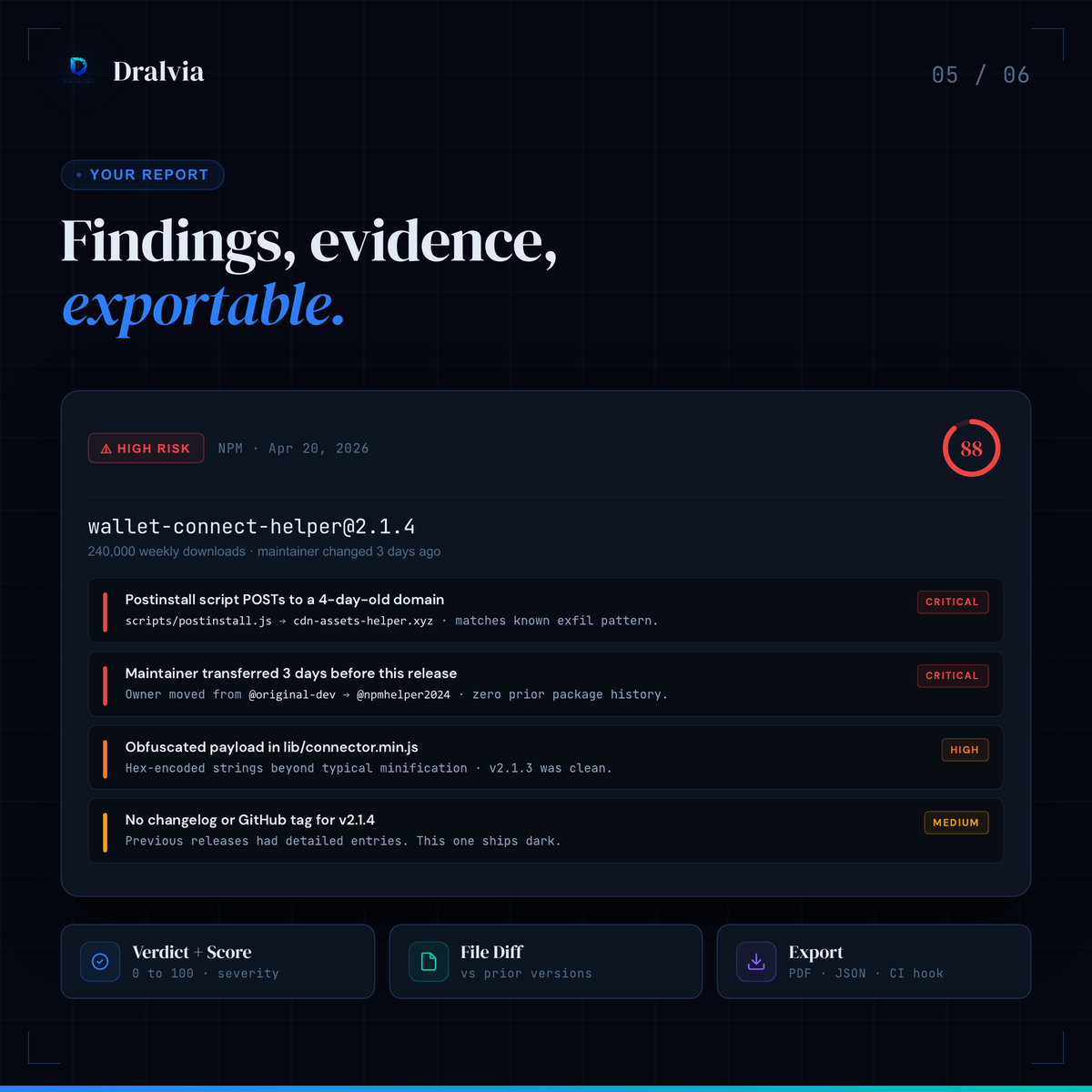
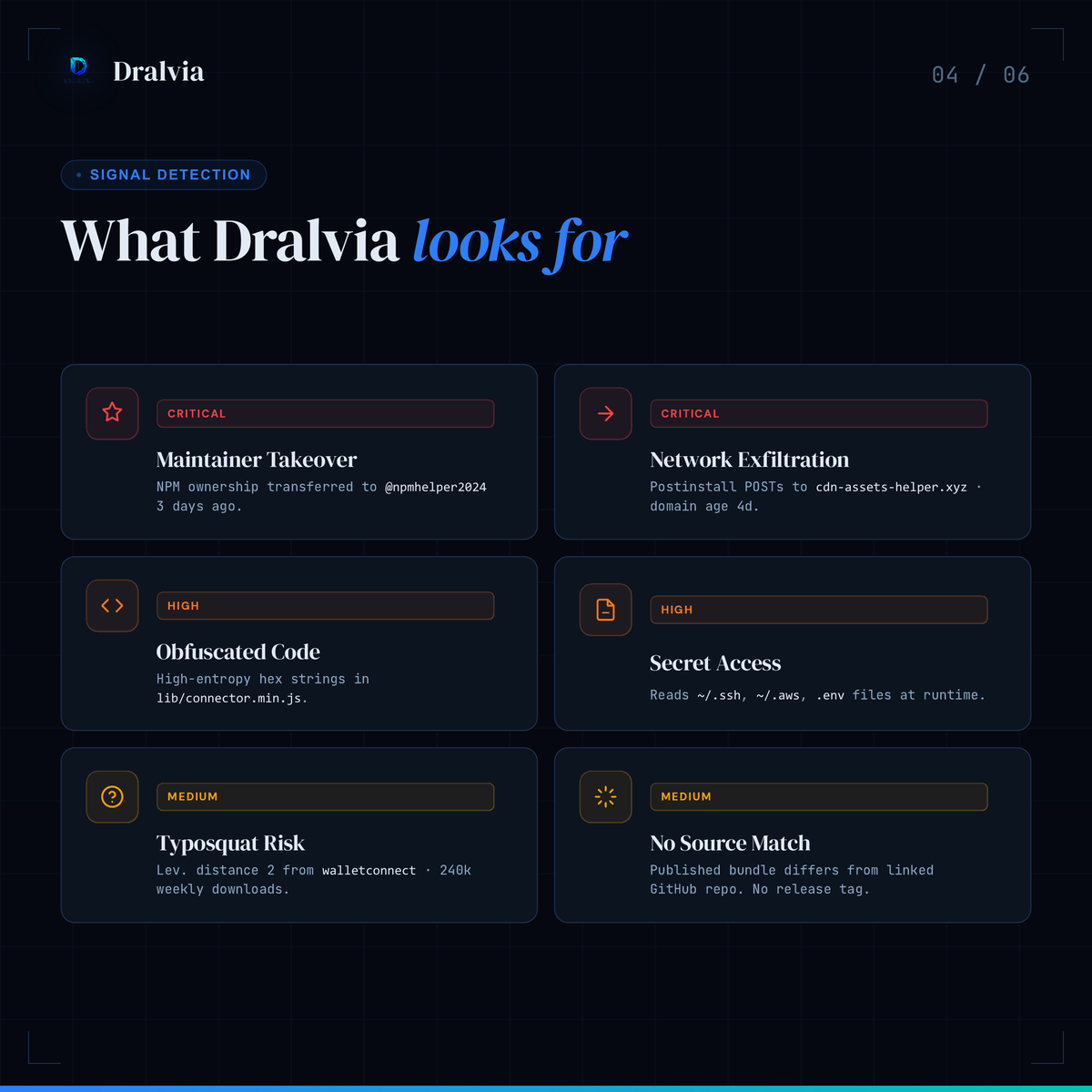
npm said 0 vulnerabilities.
The postinstall script still stole your secrets.
CVEs are not enough for modern supply chain attacks.
https://t.co/M2s70aMqdJ
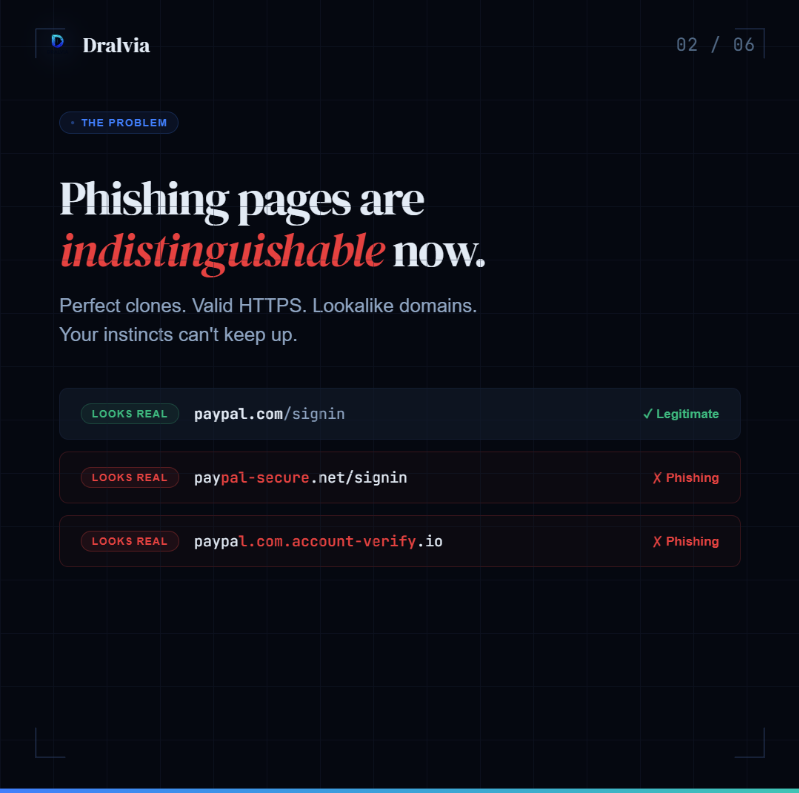
Most phishing links look completely legitimate now.
HTTPS alone means nothing.
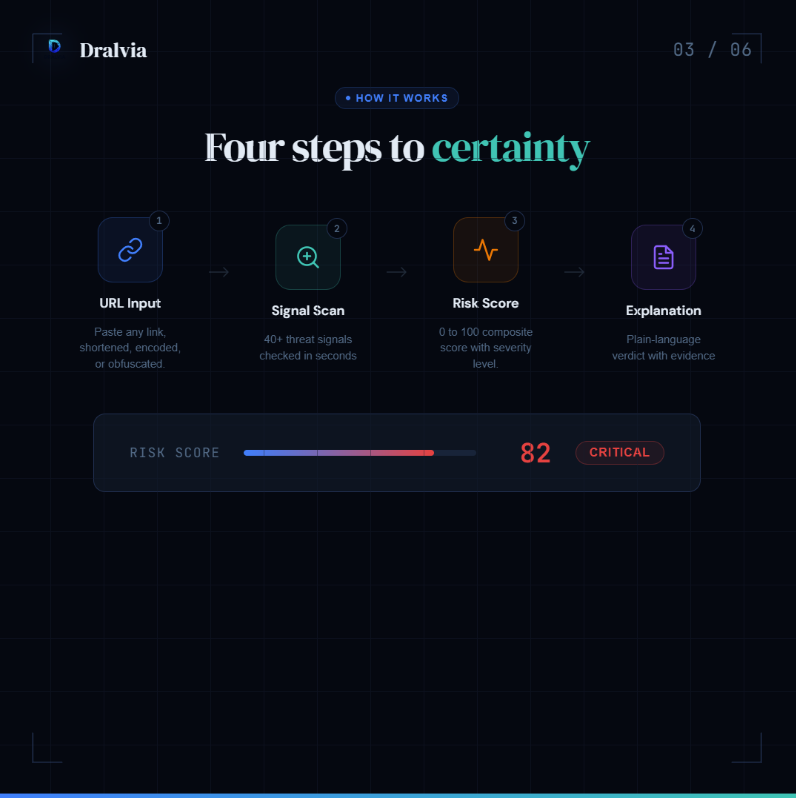
Dralvia analyzes URLs using 40+ threat signals and explains why something is risky.
No install. No account.
https://t.co/W70vCFOYiS
#cybersecurity#phishing#infosec
Most threats do not look dangerous at first.
A phishing page can look normal.
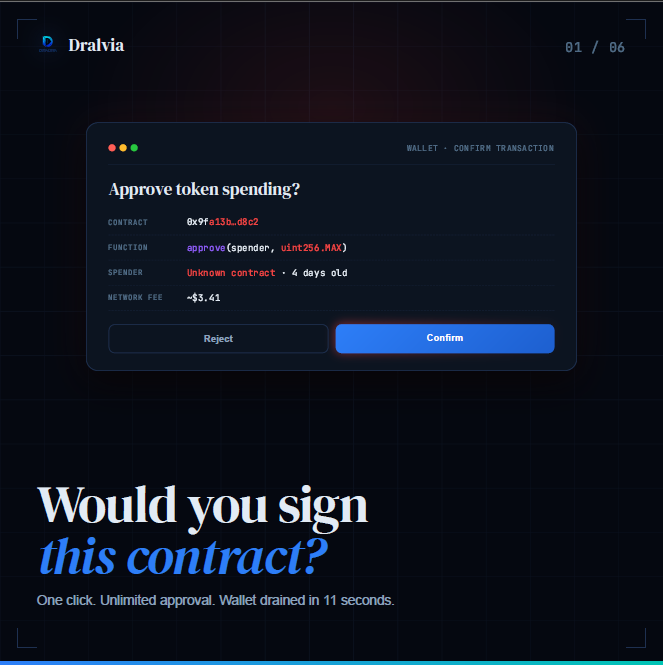
A wallet approval can feel routine.
A repo can look harmless.
That’s why we built Dralvia.
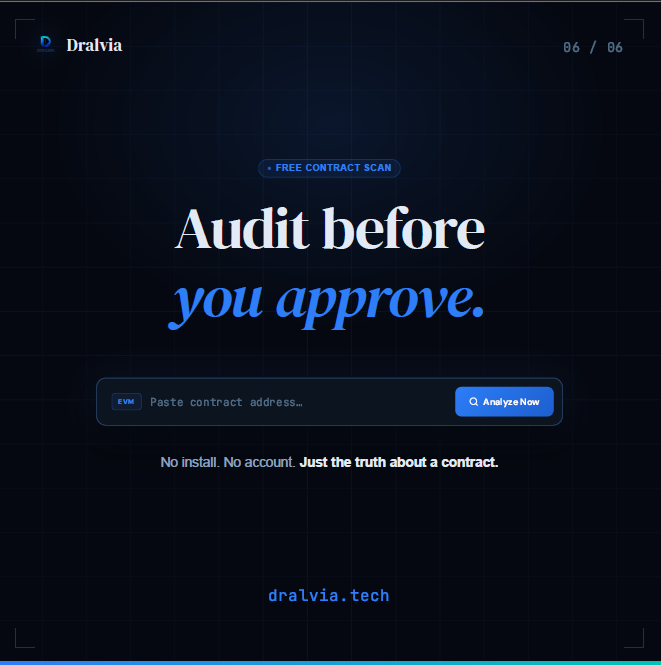
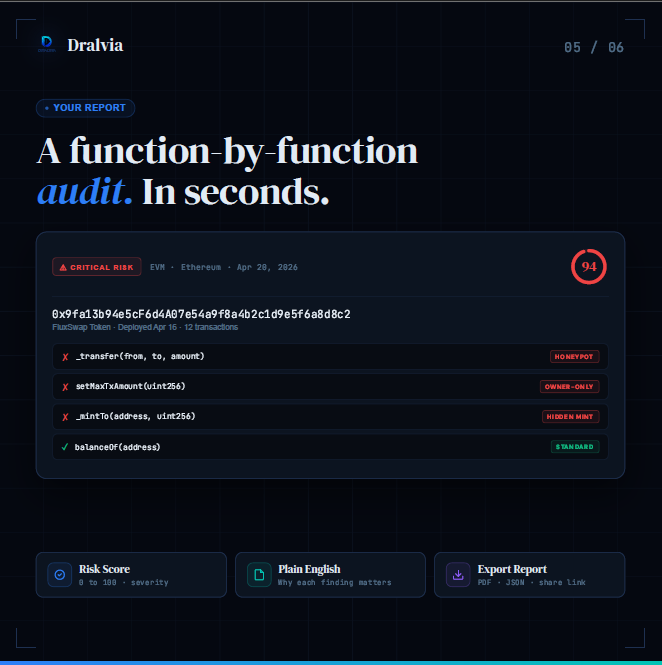
Inspect suspicious URLs, domains, contracts, wallet actions, and repos before trust becomes exposure.
We just crossed 300,000 URL scans in Dralvia.
That number means a lot to us, because every scan represents a moment where someone chose to check before trusting.
Thank you to everyone testing, breaking, using, and supporting Dralvia so far.
#CyberSecurity#Phishing#Startups
Looking for free early testers for Dralvia.
No cybersecurity knowledge needed. Students, beginners, founders, devs, crypto users, and curious people are welcome.
We want honest feedback: what works, what’s confusing, what’s useful, and what’s missing.
Reply or DM if interested.