My thesis research exploring the implementation of Emotion Coaching with @jovenmateo and @EdBaines1 has just been published with open access 👏🏼 Available here :https://t.co/LwQDJmXUy6 @EmotionCoachUK
Business is extracting hundreds of millions of pounds a year from children's social care, at a time when the whole system is on the verge of financial collapse. Vulnerable children and families are being exploited.
It doesn't have to be this way.
When and how does a baby’s love begin?
The truth is that your baby begins falling in love with you even before you meet, becoming aware of (and learning to prefer) your voice during the final months in utero. (It may feel strange, but seriously, talk to your bump.)
After birth, the attachment process grows.
Your engaged and responsive caretaking, your tenderness, your smiles, your kisses, and even your smell draw your newborn closer.
And there is NOTHING your baby loves to look at more than YOUR face.
Their adoring gaze is a sign of your secure attachment. But your face is also highly instructional.
Your baby studies you carefully - looking for clues about your emotional state (which informs what theirs should be), how you form language, and so much more.
I’ve rarely seen a video that capture’s an infant’s love/attachment as beautifully as this one from TheRiceFam4Life on TT.
Those eyes tell you all you need to know about the special bond this one has with her father.
Just beautiful.
'The mantra that every teacher is a teacher of SEND and every leader is a leader of SEND is key to a whole-school approach': @MargaretMulhol2 from @ASCL_UK welcomes Labour placing responsibility for SEND and AP within the DfE’s schools group
https://t.co/XchcSPBoi8
Want to see a baby make 60 million neural connections? 🧠
Look no further than this fantastic video.
As they bide a little time in the car, our hero and his dad engage in this lovely “serve and return” interaction.
And it’s hard to tell which of them is loving it more.
If you’re a new parent or grandparent, know that these face-to-face, back-and-forth interactions are one of the very best ways to light up your baby’s developing brain.
At birth your baby’s brain is home to up to 100 billion neural (nerve) cells - but depends heavily on early experiences and interactions to help create the connections between them that will go on to undergird language and more sophisticated forms of cognition.
During the earliest months of life researchers estimate that these neural connections occur at a rate of one million per second - meaning that 60 million or more occur over the course of this beautiful one minute conversation.
Talk, talk, talk to your baby. The payoff will be huge.
This loving father and son duo was shared to TT by smileybunch.
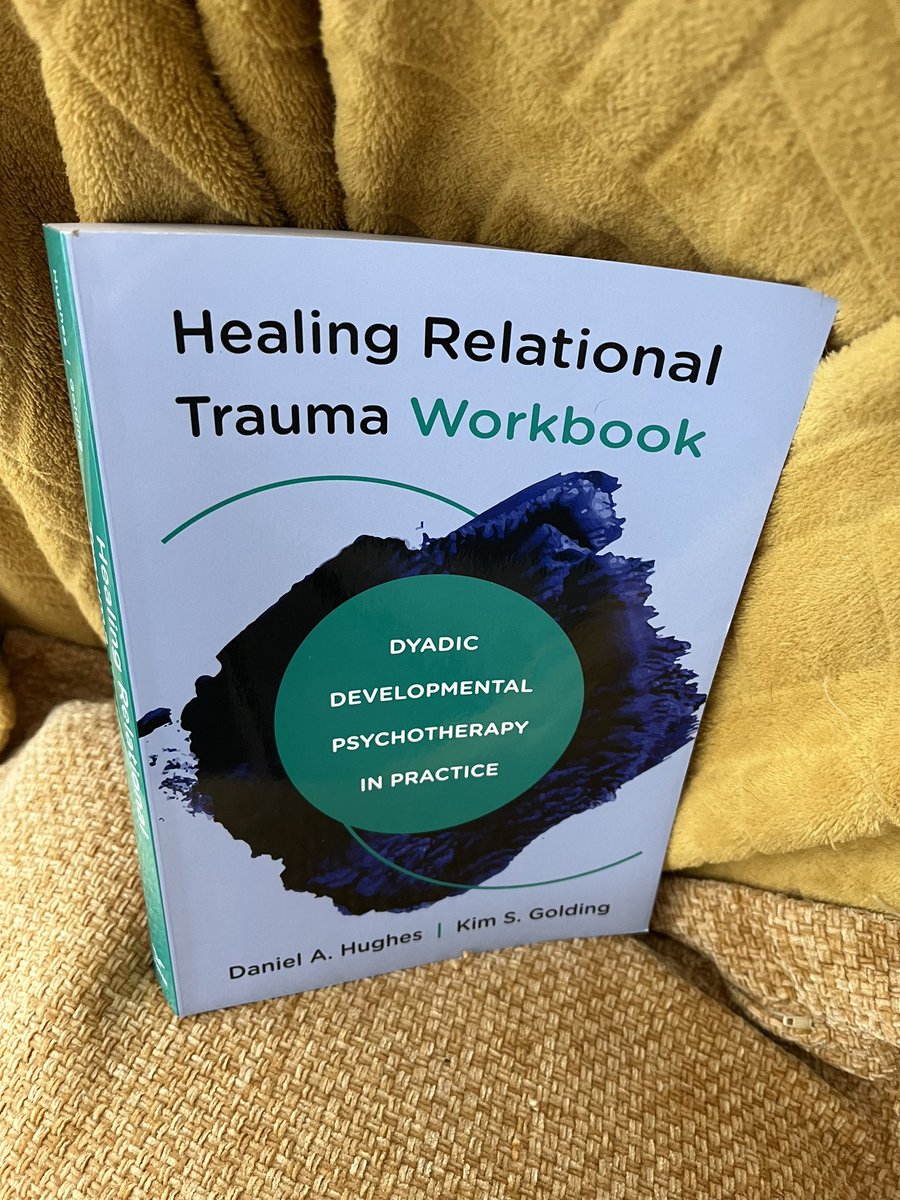
To celebrate the release of The Healing Relational Trauma Workbook next week I am giving away one copy. Follow, like and retweet for a chance to win. International okay. Winner announced end of February.
EPs are instrumental in developing the use of EC in England @AEPsychologists We are recruiting for a fantastic new national project with with @EducEndowFoundn & @NatCen - a RCT! Do you know of any EY settings who might get involved? https://t.co/oPsILtMtXY
25 years ago New Labour were elected into power.
Ten weeks later they brought forward a HUGE White Paper, Excellence in Schools, covering all parts of school reform.
I've read back over it today & it's quite something!
So, what did it say & what can we learn from it? 🧵...
A whole day with the wonderful @Samanth23606147 sharing and engaging in conversations about Emotion Coaching and the hard work of our colleagues in schools 🙌🏼
Full day Emotion Coaching training starting with a wonderful video from Mr Ian Wright and the teacher who heard him. Words have meaning which can last a lifetime! #ianwright0#betterneverstops
Why do our schools use public humiliation and shame to control children’s behaviour? Here’s what children tell me about that - and the effects it had on them. 1/
We are expanding our assistant team! Come and join us to focus on preventative work with children, families and schools as part of our new EAPDR process.
4 posts for 1 year initially , soulbury AEP scale 2-5. A unique opportunity.
https://t.co/0hxQxBTJpd
‘Suppressing fidgeting by automatically treating it as unacceptable behaviour deprives pupils of an opportunity to refocus...but allowing pupils to fidget for long periods, at the expense of their work, is also unhelpful,’ explains @mr_englishteach
https://t.co/0jPICZArJm
Make schools more rigid. Insist that children stop playing years before they are ready for it. Impose a one size fits all system on everyone - and when it doesn't work for an increasing number, say that they are the problem, not the system. https://t.co/tiH0D3y4aw