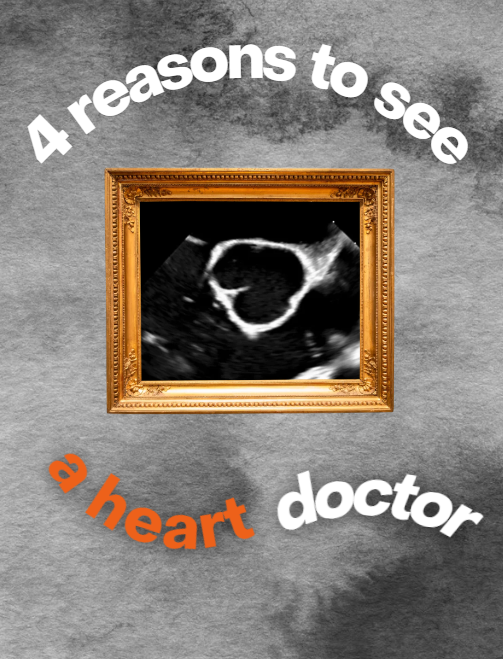
This malformation occurs during birth when the septum fails to properly close during fetal development. As a result, the atria have the ability to communicate, creating a shunt.
Pt had:
-Severe complex 100% occlusion of the left PTA
- Severe complex stenosis 100% of the peroneal artery.
- Severe stenosis of the left TPT.
I did laser atherectomy and balloon angioplasty.
Here are some images illustrating the intervention.
Recent PFO closure. If you are not familiar with PFO I have included diagram. While similar in presentation to ASD, PFO is not congenital and can worsen over time with comorbidities. #cardiology
"Cardiologist"..."Heart Doctor".... if you were to talk to someone 50+ years old with cognitive dissonance towards visiting a Cardiologist, what would you tell them? How could you meet them on their level? Do you think you could beat the dissonance? #medicine#RuralDevelopment
❤️ Venous Return vs Cardiac Function: Who Really Drives the Circulation?
For decades, intensivists have debated whether cardiac output (CO) is determined primarily by the heart or by venous return (VR). The answer is that both are inseparable components of the same system. At steady state, the heart can only pump the blood that returns to it.
Key physiological concepts:
🔹 Venous return is driven by the gradient between mean systemic filling pressure (Pmsf) and right atrial pressure (RAP).
🔹 Pmsf depends on stressed blood volume and venous tone.
🔹 Cardiac output equals venous return at equilibrium.
🔹 The operating point of the circulation is where the cardiac function curve intersects the venous return curve.
Clinical implications:
✅ In septic shock, vasodilation reduces effective circulating volume and venous return. Fluids increase stressed volume, while vasopressors recruit blood from the unstressed to the stressed compartment, restoring venous return and cardiac output.
✅ In cardiogenic shock, the failing heart becomes the major limitation. Increasing venous return often raises filling pressures more than cardiac output, worsening congestion and pulmonary edema.
✅ Venous congestion itself may impair organ perfusion even when cardiac output appears preserved.
The practical message is simple:
📌 Low cardiac output is not always a pump problem.
📌 Low venous return is not always a volume problem.
📌 Effective hemodynamic management requires identifying whether the primary limitation is venous return, cardiac performance, or both.
Understanding the interaction between Guyton physiology and Frank-Starling physiology remains essential for fluid therapy, vasopressor selection, and shock management in the ICU.
#CriticalCare #Hemodynamics #Shock #SepticShock #CardiogenicShock #ICU #POCUS #FluidResponsiveness #CardiacOutput #IntensiveCare
Reference 📚
Cecconi M, Ostermann M, Pinsky MR. Venous return versus cardiac function: who drives the circulation? Intensive Care Medicine. 2026. DOI: 10.1007/s00134-026-08499-y.
This nail finding may be the first clue to an underlying:
- Cardiac disease
- Pulmonary disease
- Infectious disease
- Malignancy
What is the finding called? 👇
79 y/o M was found to have AVA of 0.48cm^2, mean systolic gradient 40mmHg, and peak systolic velocity of 4 m/sec. I performed trans-aortic-valve-replacement (TAVR). Here is the before and after. #aorticvalve#cardiology#valvereplacement