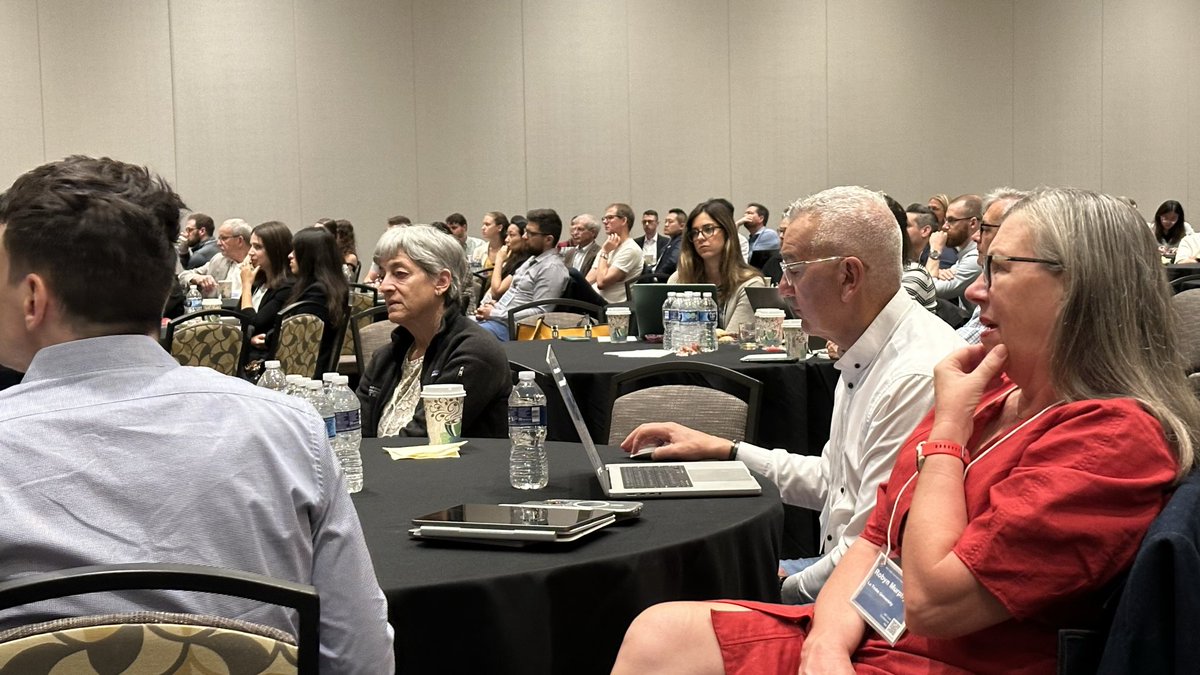
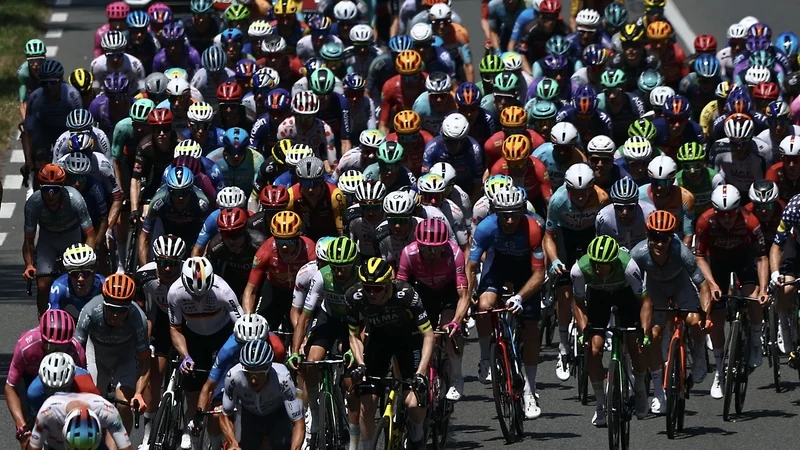
What does cycling the @LeTour do to your body? The cycling race is one of the best demonstrations of how far the human body can be pushed before biology begins to fight back, explain @NortonNutrition & @DrBPCarson@PessLimerick@UL@Researchirel https://t.co/Ob5Tw9DGjj
I’m pleased to report that our efforts to make regulatory agencies and journals distinguish between basic experimental studies in humans and clinical trials have scored a first win!
https://t.co/5hyFqxPFr5
We're recruiting an @srp_diabetes Postdoctoral Fellow to investigate mitochondrial function and exercise adaptation in type 2 diabetes. The project builds on our recent multi-omic discoveries in skeletal muscle.
https://t.co/kOWKntRfoo
#Type2Diabetes#Metabolism#Postdoc
🚨 We are hiring a PhD and a Post-doctoral assistant at the Ghent Muscle Lab (Ghent University, Belgium) with strong interest in muscle & exercise physiology, bioinformatics, metabolomics or molecular biology.
Apply by June 30.
https://t.co/wJ6JPReFxe
https://t.co/bXdt0n5n06
Tim, with respect, several of these don't hold up. Going through them.
1/ The "no RCT longer than 4 weeks" criterion is convenient but doesn't dissolve the contrary evidence. Burke's Supernova series (J Physiol 2017, J Physiol 2021, MSSE 2021) consistently showed impaired economy and race performance in elite athletes at 3 to 3.5 weeks. Your reply is that longer adaptation would reverse this. That is itself an unproven hypothesis. You are requiring receding goalposts, which is exactly the move you accuse the field of making.
2/ "Only elite athletes" cuts both ways. Your foundational RCTs are in recreational athletes doing capacity tests. The 5 to 7% ATP-yield-per-litre-O2 deficit (Krogh and Lindhard 1920, which you cite) shows up only at intensities that recreational athletes cannot sustain. Dismissing elite data while resting your case on recreational time-to-exhaustion is the double standard, not the rule against it.
3/ The SGP/LGP framing is a useful lens. The 16 lines of evidence include real contributions. They also include retrospective reinterpretations of studies whose original authors drew the opposite conclusion, rat models you criticize when others lean on them, and the "88%" claim that arithmetically gives 84% in your own Table 8 (105/125). I went through the Zenodo file line by line. The pattern is real, the framing is generous.
4/ The "cake problem" is not a strawman. Volek, Noakes and Phinney 2015 (Eur J Sport Sci) argued fat adaptation eliminates CHO dependence. If 10 to 20 g/h carbs during exercise is now required, that founding claim has collapsed. Ketones do not rescue it: Whitfield et al 2021 (MSSE 53:776-784) showed acute ketone ester plus LCHF impaired race walk performance.
5/ The biochemistry. Less ATP per litre O2 from fat is settled. At the oxidative ceiling that determines elite endurance pace, that deficit shows up as lost speed. None of the 16 lines of evidence engage with this directly. They route around it.
6/ On agenda. You were a high-CHO advocate for 35 years before reversing. The same charge of motivated reasoning applies symmetrically. I have no books to sell, no nutrition company shares, and no foundation downstream of the conclusion.
7/ "Bottom line" is a summary, not a fixed verdict. Carbs yield more ATP per litre O2. Fat oxidation tops out around 2 g/min even after weeks of keto adaptation. Elite marathon pace demands more energy per minute than fat can supply. Every elite marathoner, Kipchoge included, ingests 80 to 100+ g/h of carbs during competition. When the evidence changes I will update. Until then, carbs win at the top end. That is a conclusion, not an advertisement.
Mechanistic mechanisms for the glycogen-fatigue link that have nothing to do with rigor are well documented and you know this: SR Ca2+ release (Ørtenblad et al 2011, J Physiol 589:711; Gejl et al 2014, MSSE 46:496), subcellular pool depletion (Jensen et al 2020, J Physiol 598:4271), and downregulated PDH and glycogenolysis after fat adaptation (Stellingwerff et al 2006, AJP-EM 290:E380). The TAT you keep dismantling is not the position the field holds.
Honestly, thanks for your diatribe. But it's just more of the same.
This misrepresents the PA guidelines. The MINIMUM recs are for 150-300/75-150 mins MVPA/VPA + additional strength training on 2+ days per week. It provides a “strong recommendation” for achieving more. A bigger issue is the public don’t know what MVPA is! https://t.co/Bn6YSVQEZJ
The current physical activity guidelines are too low.
I've been saying this for a while. And a new study confirms it.
Meeting the standard 150 minutes/week was associated with only a modest ~8–9% lower cardiovascular risk.
The biggest protection occurred at roughly 560–610 minutes/week, about 3–4× higher, where cardiovascular risk was 30% lower.
We need to distinguish between the minimal activity volume required for basic protection, and the substantially higher volumes required for optimal resilience.
Now recruiting an experienced Post‑Doc in Skeletal Muscle Molecular Physiology @nih_sognsvann Oslo, Norway
Join our multi‑omics EMMA project on mitochondrial epigenetic memory in human muscle aging. 4‑year position
Start May 2026
Apply via Jobbnorge: https://t.co/XB330EbNMz
@mackinprof@pash22@drjohnm “the homogeneity of time spent in MVPA among participants goes some way towards explaining this, with the lack of variance in MVPA levels resulting in poor discrimination for the effects of this activity band” https://t.co/lpnjtIlKw3
@mackinprof@pash22@drjohnm This summarises my thoughts very well Stu. For our part we published on a cohort of older adults associations between PA intensities & cardiometabolic health markers. We saw large effects for LIPA but nothing for MVPA. Clearly LIPA not more powerful than MVPA. We concluded..
The Newgrange Winter Solstice livestream link is now available on https://t.co/3Dh65f3y5o
No matter where you are in the world, you can be a part of this extraordinary event by tuning in at 8.40am on 21 December by visiting https://t.co/vQeAtZFV6h
I hope you find time to watch
👨🔬👩🔬 CALL: YOUNG INVESTIGATOR AWARD 👨🔬👩🔬
Application deadline January 25, 2026. Winner will deliver the John Holloszy lecture at #IBEC2026!!
Details in link!
https://t.co/FHveGs4vkd