#MedStudents curious what pathologists actually do?
Join @Pathologists@KMirza and @RoseannIWu for this webinar following a real case from biopsy to diagnosis—you will see how pathology shapes clinical decisions and patient care.
🗓️ Sept 22, 2026
⏰ 5 PM PT
🔗 https://t.co/CRT1fmoSUK
#Pathology #MedEd #MedTwitter #PathMatch27 #PathTwitter
✅ Tubulocystic Renal Cell Carcinoma 🎯🧬
• Exclusive tubulocystic growth of small to intermediate-sized tubules and cysts lined by a single layer of hobnail cells
• Eosinophilic cells display enlarged, irregular nuclei, prominent nucleoli, and abundant eosinophilic cytoplasm
• Characterized genetically by a consistent gain of chromosome 17 and losses of chromosomes 9 and Y
• Usually follows an indolent clinical course with an excellent prognosis, though rare metastases are documented
❌ Clear Cell Papillary Renal Cell Tumor:
• Tubulopapillary or cystic growth of cuboidal clear cells with linearly aligned, luminal-oriented nuclei
• Stains strongly and diffusely for CK7 and exhibits a unique basolateral, "cup-like" CAIX expression pattern
• Lacks the prominent eosinophilic hobnail cells and the characteristic genetic gains/losses of tubulocystic RCC
✅ Clear cell renal cell carcinoma 🎯💎
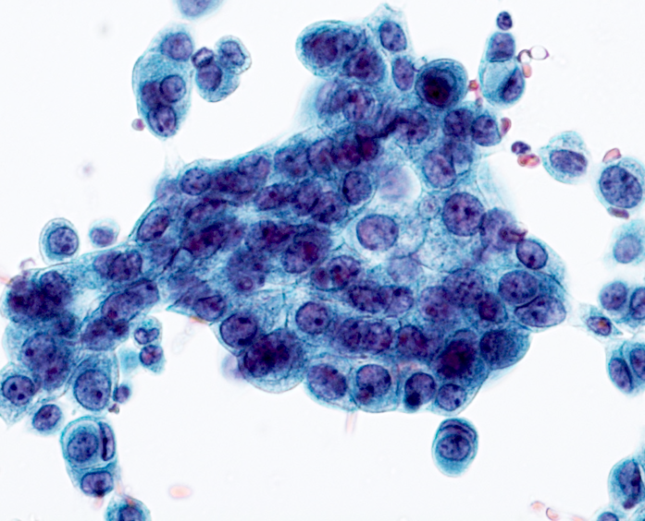
• Characteristic clusters of cells with broad, foamy, or clear vacuolated cytoplasm
• Nuclei show coarsely structured chromatin and prominent, distinct macronucleoli
• Immunoprofile shows nuclear positivity for PAX8 and membranous positivity for CD10 and RCCma
• History of renal masses and hemorrhagic background are important clinical and morphologic clues
#PathQuiz 🔬
Mass in right abdomen.
A) Adrenocortical adenoma
B) Hepatocellular carcinoma
C) Urothelial carcinoma
D) Clear cell renal cell carcinoma
#Pathology#Cytopathology
Which ancillary test result is characteristic?
A) PAX8 (+) and CD10 (+)
B) Melan A (+) and Inhibin (+)
C) Glypican-3 (+) and HepPar-1 (+)
D) GATA3 (+) and p63 (+)
✅ Low-grade Oncocytic Tumor 🎯🧬
• Solid growth of oncocytic cells with uniform, bland nuclei lacking prominent nucleoli or nuclear wrinkles
• Distinctive IHC profile: strong and diffuse CK7 positivity, while KIT is often negative or only focal
• Driven by mutations in genes of the mTOR pathway, particularly TSC1, TSC2, or MTOR
• Recognizing this newly defined entity is crucial, as it behaves in an indolent manner and overlaps with oncocytoma/ChRCC