Case Report: Localized Prostate Cancer Recurrence
🔗 Full case details: https://t.co/zskDkPxo7E
This report demonstrates the significant difference in sensitivity between MRI abdomen/pelvis, C-11 choline PET/CT, and Ga-68 PSMA PET/CT in detecting prostate cancer relapse
#ProstateCancer #RadiationOncology #RadOnc #MensHealthMonth #MHM26 #CaseStudy #RadOncEd #MedEd
pCR is prognostic.
But should it decide PMRT omission? 🤔
ReSTORE study in breast cancer:
👥 256 pts
🧬 PST → skin/nipple-sparing mastectomy + immediate reconstruction
⏱️ Median follow-up: 82 months
✅ pCR: 34%
☢️ PMRT: 56%
Key signals:
📉 pCR improved DFS
HR 0.48, p=0.008
⚠️ Baseline node-positive disease worsened LRRFS
HR 8.28, p=0.043
☢️ PMRT showed no significant LRR reduction
HR 0.74, p=0.54
My take:
pCR is powerful, but not enough to safely omit PMRT yet.
Response-adapted RT is the future, but de-escalation needs prospective proof.
🔖 Save this for breast RT discussions.
📖 Full paper in comment ⬇️
#BreastCancer #RadOnc #OncoTwitter #MedTwitter @OncoAlert@myesmo@esmo_open
Much wisdom from my friend and @ISRSy president @SahgalArjun. He’s done much to advance brain and spine SRS. And he is still advancing and publishing. #ISRS2026
PROTEUS raises a bigger question than “positive or negative.” 👀
Why did:
🔹 STAMPEDE strongly positive
🔹 ENZARAD negative
🔹 PROTEUS modestly positive
…despite all intensifying upfront therapy?
Different biology?
Different local therapy?
Different imaging era?
Or are we overtreating lower-risk “high-risk” disease?
The next generation of prostate cancer trials may be less about which ARPI… and more about who actually needs intensification.
#ASCO26 #OncoTwitter #ProstateCancer @OncoAlert@ASCO
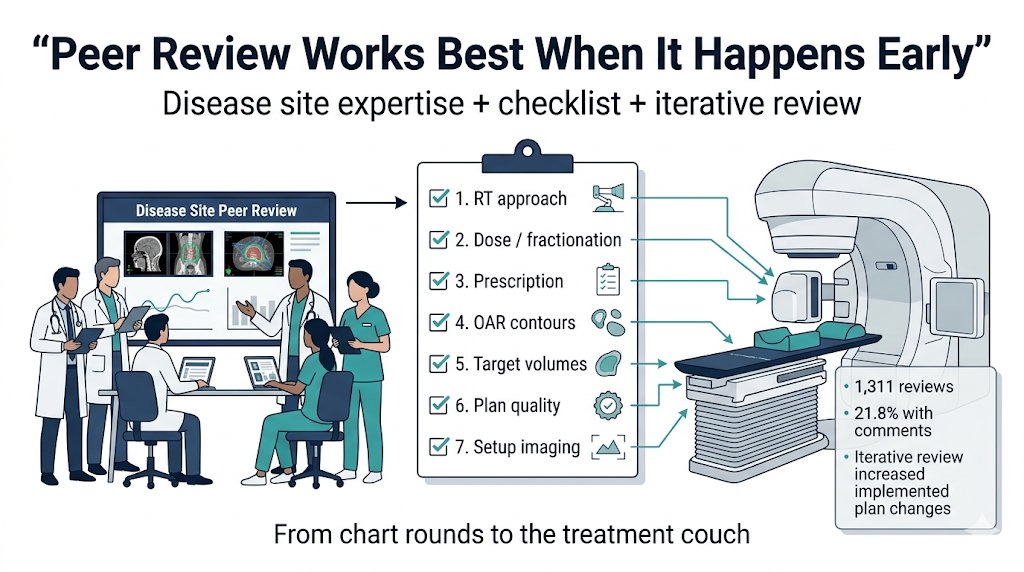
Peer review is not just “chart rounds.”
This ARO study of 1,311 disease site peer reviews shows why timing matters.
Comments occurred in 21.8% of reviews, but major required changes were rare.
The key signal?
Iterative review moved the needle.
Cases reviewed more than once were more likely to generate comments and much more likely to result in implemented plan changes than single review cases.
That feels right clinically.
If the goal is quality improvement, peer review needs to happen early enough that teams can still act on it.
Contours, OARs, setup, and plan quality all matter.
But the workflow matters too.
Earlier review.
Focused disease site expertise.
Clear checklist.
Documented follow through.
That is how peer review gets from conference discussion to the treatment couch.
#OncTwitter #RadOnc
ASCO2026: Asymptomatic brain met EGFR/ALK NSCLC any benefit upfront cranial RT on this Randomized trial?
- Upfront RT ↑↑ brain control, no benefit PFS, OS
- Selection criteria high risk (e.g. larger size) for upfront RT is key
https://t.co/1CM31nbxeL
🚨 Key update in #ProstateCancer
In metastatic hormone-sensitive prostate cancer (mHSPC) with bone metastases:
❌ Routine use of Zoledronic Acid or Denosumab for prevention of skeletal-related events (SREs) is NOT recommended.
Strong evidence from:
• CALGB 90202
• STAMPEDE
• Latest ASCO/ESMO/NCCN guidelines (2025–2026)
They DO have clear roles in:
✅ ADT-induced osteoporosis
✅ Prevention of ADT-associated bone loss
✅ mCRPC with bone metastases
Full evidence-based visual summary 👇
#Oncology #mHSPC #BoneHealth #CancerConceptsExplained
Follow @DrRupamOncology for more
Omission of ALND in #breastcancer with 1-2 sentinel nodes macrometastases - OS from SENOMAC trial - Jana de Boniface #ASCO26
Recommendation should be viewed in the context of postoperative locoregional #radiotherapy@OncoAlert#OncoAlert
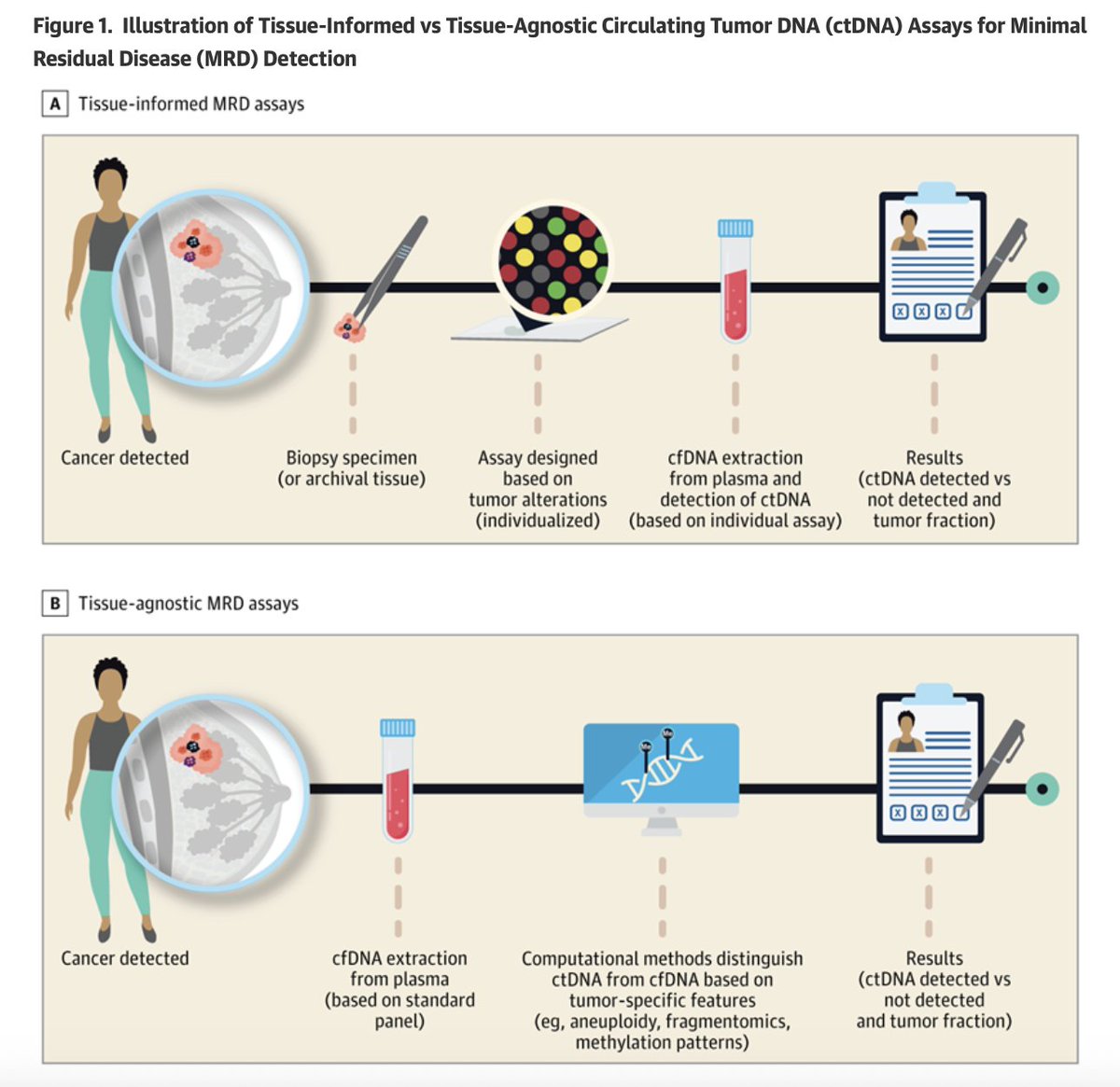
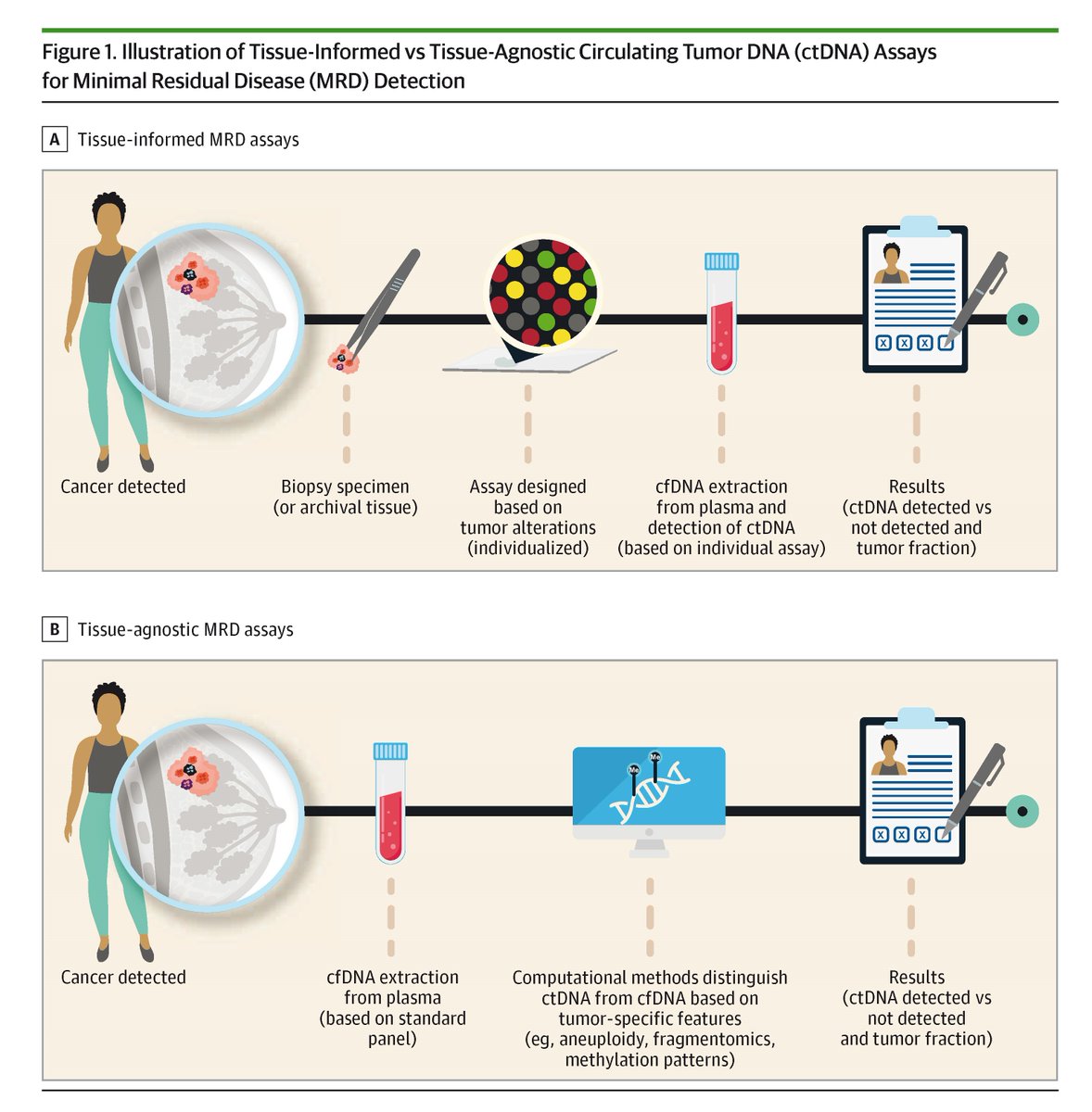
This Review examines the clinical utility of circulating tumor DNA assays for detecting minimal residual disease in patients with early-stage breast cancer.
https://t.co/aNP1IUY4sR
#ASCO26
Can we finally stop doing routine completion ALND in many patients with limited sentinel node macrometastases? 👀
The SENOMAC trial (LBA503) adds another major piece to the de-escalation story in early breast cancer.
🧵 Key findings:
• 2,766 pts with cN0 T1-3 breast cancer and 1-2 SLN macrometastases
• Randomized to:
🔹 Completion ALND
🔹 Omission of ALND
At 5 years:
✅ OS
94.4% without ALND vs 93.4% with ALND
HR 0.84 (95% CI 0.64-1.12)
✅ Breast cancer-specific survival
97.8% vs 97.3%
HR 0.86 (95% CI 0.55-1.34)
✅ Non-inferiority met for both endpoints
But the real story may be morbidity.
Patients who avoided ALND had:
✔️ Better arm function
✔️ Fewer arm symptoms
✔️ Less long-term morbidity
Importantly, SENOMAC included:
📌 Larger tumors
📌 Mastectomy patients
This makes the findings more generalizable than earlier axillary de-escalation trials.
The direction is becoming clear:
For selected patients with limited nodal disease, “less surgery” may deliver the same survival with a better life after cancer.
📖 Full abstract in comment ⬇️
#BreastCancer #Surgery #OncoTwitter #MedTwitter @OncoAlert@asco@myesmo@esmo_open@Larvol
Education - Metastatic #BreastCancer
Stereotactic Body #Radiotherapy for Oligometastatic and Oligoprogressive Hormone Receptor-Positive Breast Cancer: When and Why?
Steven J. Chmura #ASCO26
The story is not over @OncoAlert#OncoAlert
#ASCO26
🗣️ Carboplatin may finally challenge cisplatin in LA-NPC.
A randomized phase III non-inferiority trial showed:
🔹 3-year FFS: 85.7% vs 87.6%
🔹 Non-inferior efficacy
🔹 Less grade 3-4 neutropenia
🔹 Less anorexia, nausea, vomiting & nephrotoxicity
Could carboplatin become the more tolerable platinum backbone for selected patients with locally advanced nasopharyngeal carcinoma?
📖 Full abstract in comment ⬇️
#HeadNeckCancer #OncoTwitter @ASCO@myesmo@esmo_open@OncoAlert@larvol