When you're a resident, you think being a consultant means having all the answers.
Years in, you realize it's the opposite.
A good resident knows the textbook answer. A good consultant knows why the textbook answer might not work for this patient, in this context, right now.
You'll see senior doctors give different advice for the same presentation. Not because they're confused. But because they've seen enough variations to know that certainty is often a sign of incomplete thinking.
Experience doesn't make you faster. It makes you more careful about what you're certain about.
And that careful uncertainty is what keeps you humble enough to keep learning.
I see students chasing ranks, merit lists, validation from peers.
And I see the same students lose interest the moment they achieve it. Because validation was never the point.
The ones who stay engaged are the ones focused on something bigger, becoming the doctor their patients need. Understanding medicine deeply. Building competence that speaks for itself.
Validation is fleeting. Purpose is what sustains you through a 30-year career.
Study to understand. Not to be understood.
The recognition will follow. But chase the recognition and you'll burn out before you get there.
The patients who shaped me the most weren't the rare diagnoses or complex cases.
They were the ones who trusted me when they had no reason to.
The elderly patient who believed my treatment plan despite seeing three doctors before me. The anxious mother who calmed down because I took time to explain. The skeptical family that gave me a chance.
Medicine is technical. But trust is what makes it work.
You can be clinically brilliant and still lose patients if they don't feel heard.
That lesson doesn't come from textbooks. It comes from showing up with empathy, consistently.
Exciting times in Tamil Nadu.
After five decades of Dravidian duopoly, this feels like the beginning of a refreshing new chapter. The next five years will be fascinating to watch, and hopefully, better days are just around the corner.
Welcome, Vijay. You are already in the history books.
A new political era begins.
Ten years ago, access to information was the advantage.
Today, everyone has the same lectures, the same question banks, the same notes.
The advantage now is knowing what to ignore.
Student who clears isn't the one who consumed everything available. It's the one who had the discipline to say no to 80% of the noise and master the 20% that actually matters.
Unlimited access is only valuable if you know where to stop.
You can study the same number of hours as someone else and still feel behind. Not because you’re doing less, but because you’re constantly second-guessing yourself while studying.
Reading, then doubting.
Solving, then rechecking.
Moving ahead, then coming back again.
That mental back-and-forth is more exhausting than the syllabus itself.
Sometimes, progress is not about doing more.
It’s about trusting what you’ve already done and moving forward.
There are days in preparation when it feels like nothing is sticking. You read the same topic, solve a few questions, and still feel unsure.
And then, a few weeks later, you come back to the same thing and realise it doesn’t feel as difficult anymore.
You don’t remember exactly when it improved. It just… did.
Most of the progress in this phase happens like that, quietly, in the background, while you’re busy doubting it.
You're not falling behind because you're slow.
You're falling behind because you keep restarting.
New plan every Monday. New strategy every time something doesn't work instantly. New notes because the last ones "weren't good enough."
Progress isn't built on perfect systems. It's built on sticking with an imperfect one long enough to see results.
Stop resetting. Start refining.
Residency can feel overwhelming.
You constantly think about the “future you” the doctor who must know everything, do every procedure perfectly, and never make mistakes. And when reality doesn’t match that expectation, it’s easy to feel like you’re falling behind.
But here’s the truth:
You are in a learning phase.
You are supposed to struggle.
You are supposed to take time.
You are supposed to get things wrong before you get them right.
It’s normal to feel like your seniors are faster, sharper, and more confident. It’s normal to wonder, “When will I reach that level?”
But pause for a moment.
Don’t carry the weight of residency back home with you every single day. You cannot run this marathon if you never allow yourself to recover. You need time to reset, recharge, and come back stronger the next day.
Because the ones who truly make it through aren’t the ones who chase perfection every day, they are the ones who stay consistent, trust the process, and keep showing up.
Every senior or consultant you admire today once stood exactly where you are right now, unsure, slow, and learning. The only difference is that they didn’t quit on the process.
So take a breath.
Keep going.
And trust that, one day, you’ll become the doctor you’re working so hard to be.
Your batchmate who seems to know everything?
They don't. They're just better at sounding confident when they guess.
Medicine rewards people who admit
"I don't know" more than people who pretend they do.
The consultant who says "Let me check and get back to you">>> the one who makes up an answer on the spot.
Your honesty is a clinical skill.
Not a weakness.
Years of ignorance when a section of professionals was targeted and exploited.
Suddenly, when a different incident occurred, everyone started talking.
Irony.
You begin your career wanting to prove you’re capable. Then one day, you just want to be useful. That shift from validation to purpose changes everything.
Well done, India and Jemimah!
If you’ve been following women’s cricket, you know how monumental this achievement is. The Australian women’s team right now is as dominant as their male counterparts were in the 2000s, simply invincible. They entered this match with an unbelievable 70-5 win-loss record in ODIs since 2018 and hadn’t lost a World Cup match since 2017 (that loss too was against India, when Harmanpreet scored a scintillating 171).
Today, it was Jemimah’s turn, leading India to their highest successful chase, against the mighty Aussies, and in a World Cup semi-final no less.
However, one area that badly needs improvement is fielding. The standards today were unacceptable, at least 25-30 runs were lost in the field. Hopefully, they’ll tighten up and cross that final hurdle against South Africa.
For now, congratulations on slaying the Goliath!
Dr. Sivaranjani has taught us something truly profound, that standing up for what is right may take time, may even feel lonely, but in the end, it brings peace to the soul and good to society.
There are moments when no one stands beside you, when silence feels heavier than support. But if your heart tells you it’s the right path, you must stay the course. Because truth and integrity always find their way.. slowly, but surely.
Today, almost every parent, every doctor, and even a common man in our country knows what ORS is, and more importantly, what it is not. That awareness didn’t happen overnight.. it came through years of her quiet endurance, selfless sacrifice, and unwavering commitment.
Thanks to her, people like me have begun to believe that it is possible to fight the wrongs, possible to hold on to what’s right, and possible to make a difference to humanity.
@FreddieQue96120 Yes. Previously it was achievable only with Bariatric. But not it’s possible with these. With peak doses of Tirzepatide there’s a 20% chance of achieving remission though it’s based on the starting weight, other comorbids and age.
Been prescribing the incredible incretin molecules for nearly a decade now - from Victoza, Trulicity to Rybelsus, and now Mounjaro.
It's been quite a journey. Since 2016, I've used them in dozens upon dozens of patients, and the results have been nothing short of transformative.
Watching patients achieve what we once thought impossible, even remission of type 2 diabetes, has been deeply rewarding.
This time, the experience came full circle at the Railways Hospital, Ayanavaram, in a program sponsored by Ell Lilly.
It's moments like these that remind me why medicine is both a science and a story of hope. Waiting for the future.
Make this your must read for the day. We need to celebrate doctors like her.
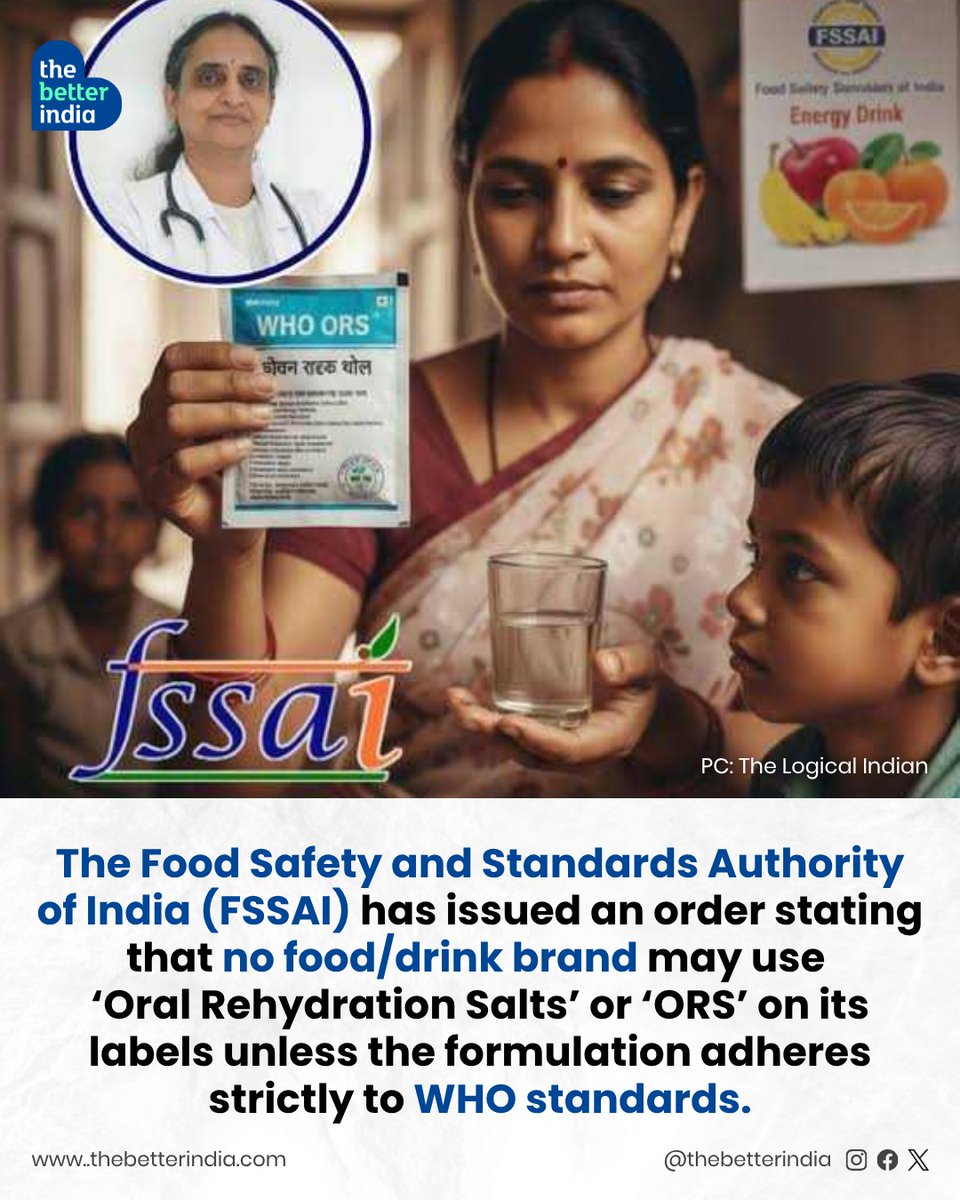
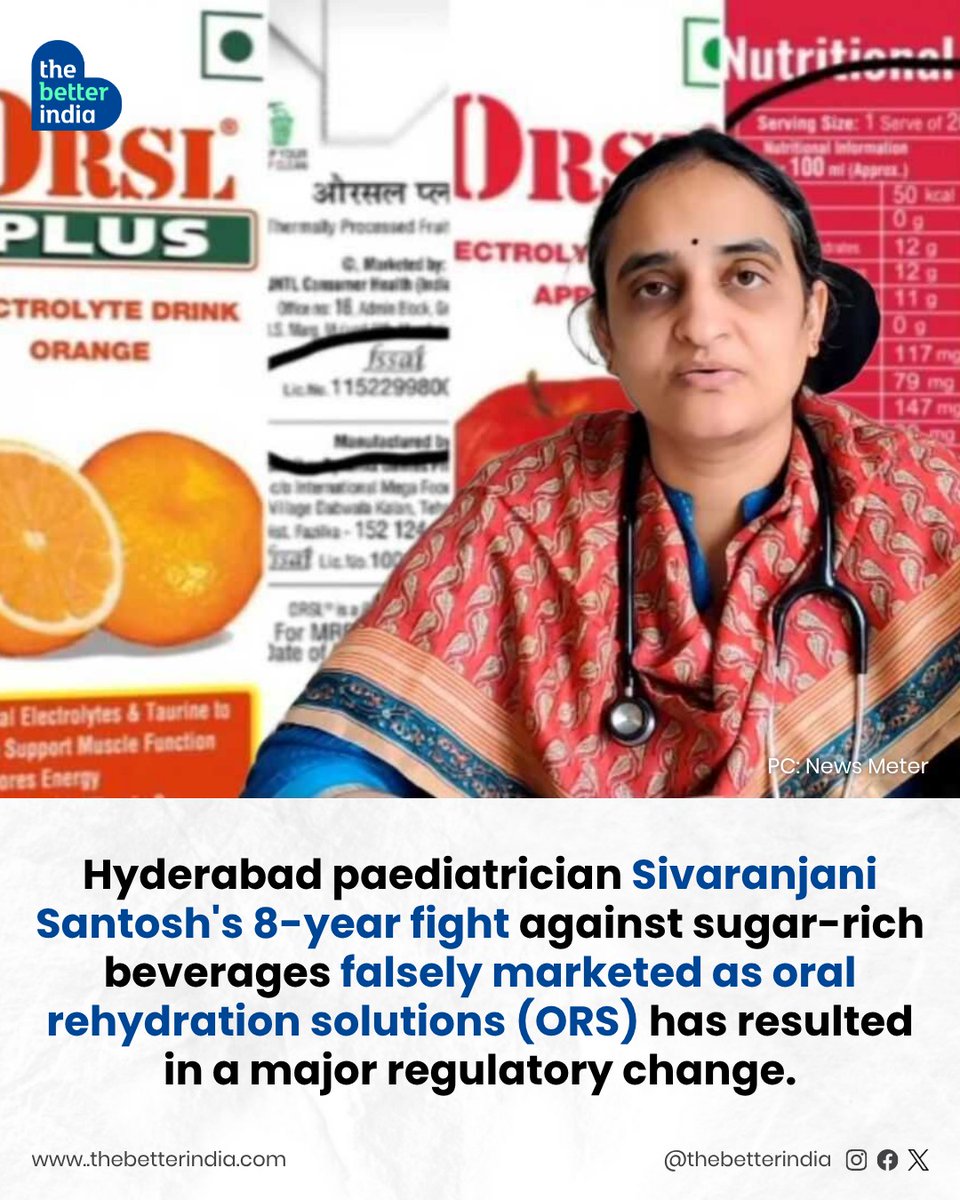
This is the story of Dr. Sivaranjani Santosh, a paediatrician from Hyderabad, who fought for 8 years against sugar-rich drinks falsely marketed as ORS.
Her persistence led to FSSAI’s landmark order, protecting children and patients from misleading claims.
“These drinks had 10x the sugar WHO recommends, worsening diarrhoea and complications in millions of kids,” she explains.
Her 8-year battle changed the game for public health and children across India.
What is sad is that it took 8 years for the government and regulator to understand that these so-called ORS drinks were harmful to children. We need to have quicker public health reforms.
H/O: Self-fall
One of my patients went to a local hospital after a simple fall, just a scalp swelling, nothing major. She wasn’t on any medicines, completely fine otherwise. And she has already received TT three times in the last two years.
I mean, why TT again?
Why an injection painkiller for a minor fall?
Why an antibiotic when there’s no wound?
Why a PPI? Why a CT scan?
And why in the world, a B-complex?
Still this was the prescription. Not even one in the prescription is justified, given the presentation. And atrocious - that it was written that the ‘patient is not willing for further investigations’. Seriously?
This is the kind of thing that makes you shake your head.
I see this almost every single day - and it’s frustrating.
Whenever you talk about this, there are usually two responses from my colleagues:
1.“Patients demand it.”
Many say, “They won’t go unless we give something.”
I don’t agree. What they really need is someone to explain, to reassure. That’s part of treatment too.
2.“Don’t post such things.”
I’ve spoken about this so many times - about the overuse of medicines and tests, but it feels like nobody wants to talk about it seriously.
We have to admit - these kinds of prescriptions hurt everyone.
Patients lose faith. And the image of our whole profession takes a hit.
Sometimes, doing less is actually the best form of care.
Nope. It was for a UTI. They have injection ceftriaxone that was given in the ER. The law suit was why an injection? As per the documents patient did not have any urgent indication for an IV. So the court declared it’s unnecessary and got the compensation. I don’t think anyone even gets the essence of the post that overdoing can lead to issues as well. A well aware patient might easily bring a doctor down with such a prescription.