What an honor to receive the 2024 @BrighamWomens DOM Research Excellence Award! It’s a reflection of the hard work and dedication of the entire lab. Thank you to all of our @bwh_id@mgh_id colleagues and collaborators worldwide!
@firefoxx66@Dr_MChoudhary Absolutely! @Dr_MChoudhary created it. FYI the HIV env sequences from the single pt represents the entire proviral diversity that we sequenced in our lab. Feel free to use it wherever you want! Here’s more details about Manish for crediting purposes: https://t.co/87DNY4YCpp
There's been a lot of chatter about the B.1.1.7 strain now spreading through the UK. It has 17 mutations and 3 deletions. What makes this so unusual, where could it have come from and how might we prevent these types of evolutionary jumps? 1/n
@LizHighleyman@ScienceTM We did have a couple of participants with either HIV or organ transplant but very limited numbers. We’re working to expand the cohort further
Have you been perplexed about why some immunocompromised (IC) patients recover from COVID-19 quickly while others can be infected for months? We uncovered some clues in a paper just published in @ScienceTM. Read on to see what we found: 1/ https://t.co/il7GWOo8s6
So, what accounts for differences in viral clearance rates between IC groups? Mike Seaman and
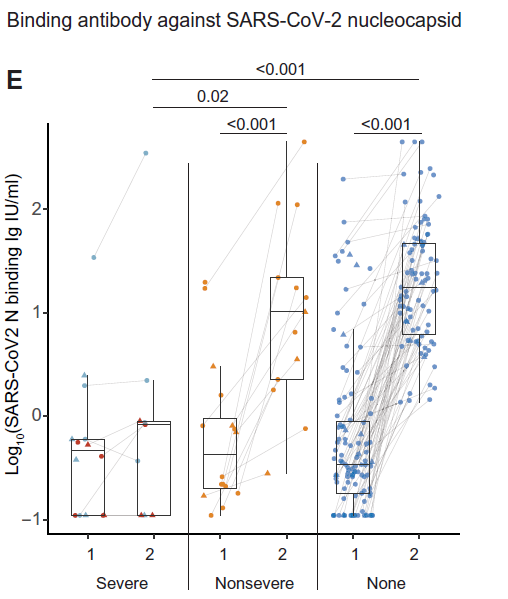
@GaihaGaurav led the immunology studies. Mike found that both the S-HT and S-A groups had poor SARS-CoV-2 host antibody responses even after several weeks of infection (tp 2 below) 6/
This is a true team effort and would not be possible without our participants, the POSITIVES study team
@bwh_id@mgh_id, our collaborators including
@GaihaGaurav@jeffsparks@zach_wallace_md Mike Seaman, & our funders @MassCPR @NIAIDNews
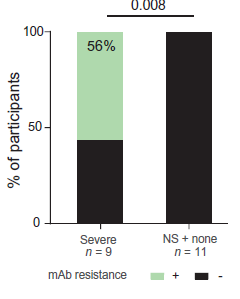
Emerging Spike mutations were more common in the severely IC participants, including resistance mutations in those treated with monoclonal antibodies 5/
Through our POSITIVES study with co-PIs Mark Siedner, Amy Barczak, Jake Lemieux, we enrolled 56 IC pts and 184 non-IC pts with intensive longitudinal sampling. IC pts were categorized into severe heme onc/transplant (S-HT), severe autoimmune (S-A), and non-severe (NS) groups 2/
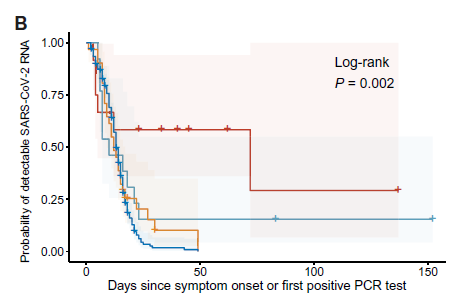
The severe heme onc/transplant (S-HT) group demonstrated the slowest clearance of both viral RNA (median 72 days) and culturable virus (median 40d). The NS and non-IC groups had similar viral kinetics while the severe autoimmune (S-A) group demonstrated an intermediate risk 4/
The IC pts were older and received more antiviral treatment. Both IC and non-IC participants enrolled with a similar duration of symptoms, received a median of 3 vaccinations and were largely infected with the Omicron variant 3/