Chief Market Strategist @WellingtonAltus. PhD Econ. Astute, observations and conclusions. Personal views. Not investment advice. Please do your own research.
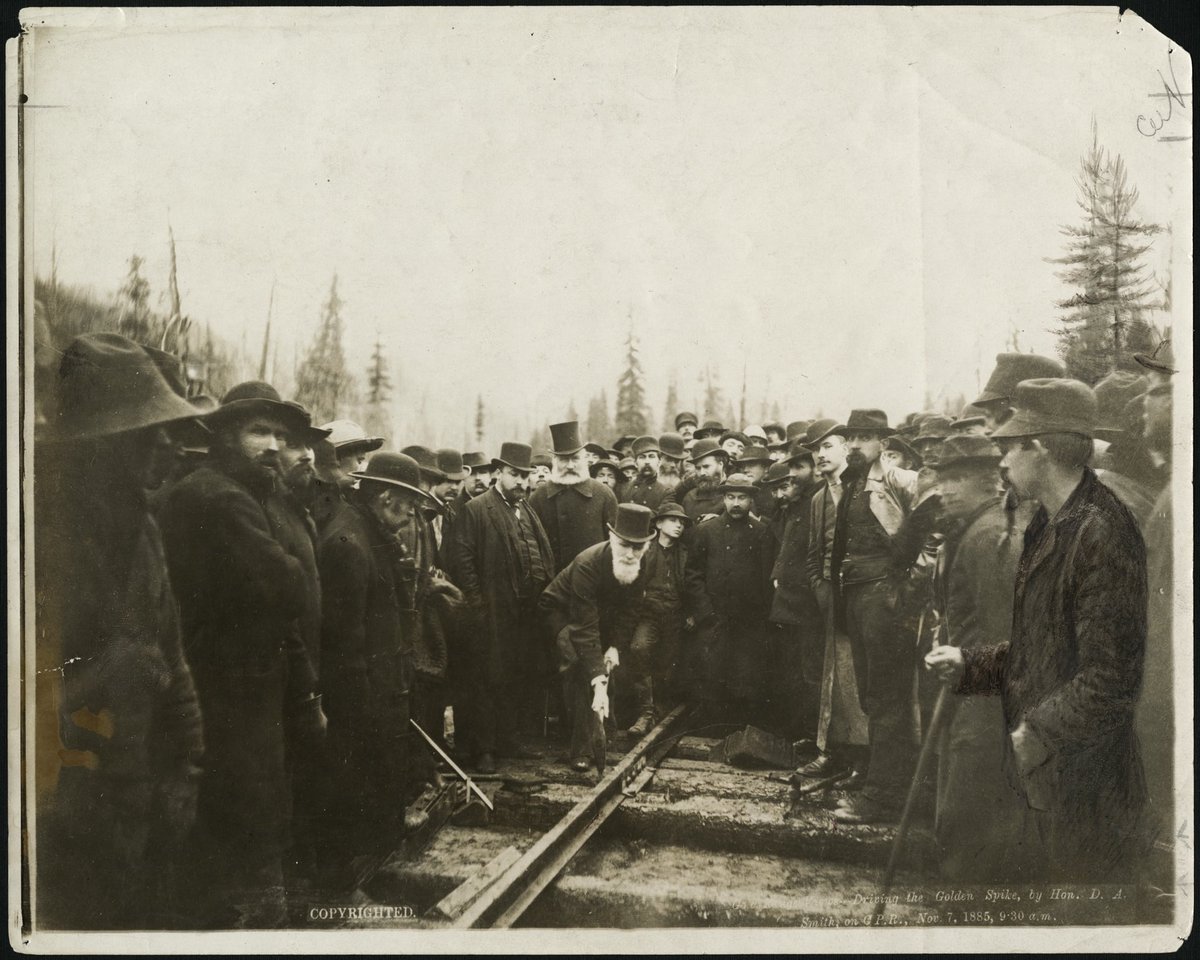
AI Is a Railroad, Not a Telecom Bust
Wall Street is nervous. It treats AI as a typical cycle, not secular growth, and uses the 1990s telecom bust as its guide instead of the railroads.
Wrong history. The railroads ran for 60 years because the build matched the traffic. The only question is whether demand for compute, memory and power is real, and whether it has peaked. It is real, and it hasn’t peaked.
Nvidia beat on every line. Revenue hit $ 115.8 billion, up 103%. It raised its fiscal 2028 growth target to 75%. Demand still exceeds supply. On one major platform, token volume is up 25 times since January while prices fell as much as 70%.
Even the forecasts the bears cite show AI chip spending rising from $ 392 billion this year to $ 758 billion in 2028. Memory stays tight. Power is short. That’s a funding problem, not a demand problem. Capital discipline shortens the line. It doesn’t empty the restaurant.
Supply is disciplined too. TSMC is adding about 20% at its leading nodes. There is no flood of capacity. Productivity grew 3.6% last quarter, refuting bears who say AI will never deliver.
Data centres are now political. Democrats swept the midterms, and Gina Hinojosa won Texas. Her pause on new permits isn’t a ban, and approved projects will get built. If Texas slows the queue, Alabama or Florida will take the overflow.
The risk is Democrats returning to the extreme progressive playbook they ran on climate change, sacrificing jobs and tax revenue to virtue signalling. Republicans lost because America First wasn’t front and centre and Iran was framed as an affordability crisis, not because voters turned on growth.
This is national security. AI is the new arms race, and compute is its ammunition. Every data centre blocked in America is capacity handed to Beijing.
Then there’s the Fed, Mission Creep. Its talking heads weighed in on AI, just as they did on climate change and crypto before abandoning both. A Fed that can’t put theory into practice or read the data objectively has no business ruling on AI. A rogue Fed about to make a generational policy mistake needs structural change and needs to stay in its lane.
The cycle isn’t over. It’s slower, smoother and longer.
Buy when there is blood in the streets!
Extreme fear is setting up the next leg higher
The S&P 500 has fallen 11.6% from its October high in seven straight sessions. Friday’s close sat 4.1 standard deviations below the 50-day average, the most oversold reading since August 2015. The Arms Index posted back-to-back capitulation readings. This is what extreme fear looks like, and extreme fear has historically marked buying opportunities, not the start of bear markets.
The market closed the week at 6,910, right on 6,900, the key Fibonacci support level of this year’s rally. Fast V-shaped recoveries form within days of capitulation, and corrections that hold support don’t become bear markets. From 6,900, the strongest past fast-V recoveries delivered 12-month gains of up to 38%, which puts 9,500 within reach. The timing adds to the case.
The market is entering the sweet spot of the four-year presidential cycle, and the S&P has been higher a year after every midterm election since 1950.
Add a Fed pivot, and 10,000 is still in play. S&P 500 earnings will reach $450 in 2027, so the only argument is over the multiple. With the energy crisis passing, the 10-year Treasury yield will head to 4%, and the Greenspan Fed model then implies a multiple of 25.
Even 22 times earnings gets the index to 10,000. Nothing has changed except the level of fear. There is no recession and no financial crisis, and investors will come to see AI not as a three-year buildout but as something like the railroads.
Fear flips to greed, as it did in 1998. After the Asian currency crisis and the Russia and LTCM shock, the S&P 500 fell 19% from its July peak. The Fed cut three times, the index regained its high by late November, and a year after the October low it was up 39%. When the Fed has eased after a no-recession sell-off, as in 1998, 2019 and 2025, the median 12-month gain has been 33.7%.
Many cite the 1990s to argue that the supply of AI capacity is outstripping demand. That’s wrong. The real lesson of the 1990s is the one Alan Greenspan drew: productivity gains let an economy run hot without stoking inflation. In 1995, after the Fed pivoted from hiking to easing with no recession, the S&P 500 gained 34.1%, the best pre-election year since 1950.
Leveraged products now amplify every swing between fear and greed, and this week’s selling was fear at full volume. The old saying is to buy when there is blood in the streets. Today there is no recession and no financial crisis, the energy shock is ending, and productivity and earnings are growing strongly. A Fed pivot is coming, and the market is cheap.
That’s the time to buy.
The Rogue Fed’s War on Trump
Dallas Fed trimmed-mean PCE is 2.3%. Services inflation is 3.2%, below its six-decade average of 4.7%. Energy is fading. Supercore is below its long-run average. Bernanke, Gertler and Watson showed in 1997 that tightening into an oil shock does the real damage. Blinder warned the same in the 1970s.
The Fed ignores all of it. Waller wants 50bp. St. Louis’s Musalem wants 100bp more by spring. New York’s Williams has pivoted to blaming AI. It is anecdote, not analysis, with the goalposts moved at every meeting.
This is not monetary policy. It is politics. Chairman Warsh came to shrink the Fed’s footprint, end forward guidance and restore discipline. The institution is fighting back, hiking against the evidence to defend its turf and undercut the President who appointed him.
Who gets hurt? America. Workers who lose jobs, families locked out of homes, small businesses squeezed by credit costs. History will not be kind to this Fed. Andrew Jackson took on an unaccountable central bank and won. Where is he when we need him?
Productivity, Not Rate Hikes, Tames Supercore!
Supercore inflation is no mystery, and it’s not a story about the federal funds rate. It is unit labor costs: pay minus productivity.
PCE supercore and nonfarm unit labor costs have a correlation of 0.82 since 1960, and 0.91 on two-year averages. In 2022, productivity fell 1.5%, unit labour costs rose 5.3%, and supercore peaked at 5.3% in October. In 2024, productivity rose 3.1% and unit labor costs slowed to 2.0%, even as pay grew 5.1%.
Supercore came down. The 1996 to 2004 boom worked the same way: productivity 3.1%, pay 4.4%, unit labor costs 1.3%, supercore 2.6%.
The only extended stretch when supercore held near 2% was post-GFC secular stagnation, from mid-2009 to early 2020. It averaged 2.1% and stayed in a 1.5% to 2.5% band in 82% of months, against 15% otherwise. It got there through weak pay of 2.5%, not a productivity boom.
Supercore has been above 2% in 88% of months since 1960, with a long-run average of 4.05%. It was 3.6% in September 2026. In the third quarter, unit labour costs were 2.4%, productivity 2.1% and pay 4.5%. Rate hikes do not create productivity. They cut the investment, including AI capex, that does.
A Fed that hikes into a productivity boom to chase a 2% supercore it has seen only in secular stagnation is not following the data. It is going rogue. The Fed should protect the productivity cycle, not choke it.
The Fed Goes Rogue
There has been more Fedspeak in the past two weeks than in any other two-week stretch this year. Warsh appears to have a rebellion on his hands. So much for no forward guidance.
The Fed’s Keynesians are willing to risk everything, brushing aside data and theory. Headline inflation is an oil shock, not a demand boom: 3.7% against 2.6% core, with Dallas Fed trimmed-mean PCE at 2.3%.
October’s monthly CPI slowed from 0.6% to 0.4%. Shelter, a third of the rise, is partly the Fed’s own making. Core goods rose just 0.2%, and used cars fell 1.2%. There is no evidence of second- or third-round effects.
Services excluding energy cooled to 0.3%. Services inflation of 3.2% sits below its six-decade average of 4.7%. History is clear that rate hikes don’t fix services. After the Fed began hiking in March 2022, services inflation climbed from 5.1% to 7.6% over ten months. Under Volcker, it peaked at 18.1% eight months after the October 1979 shock. Services follow wages, rents and productivity, not the last rate move.
Meanwhile, base effects are doing the tightening for them. The real policy rate, proxied by the 2-year, is 1.93%. As the energy spike drops out, it rises to as much as 3.9% by December 2027, the tightest since 1990.
Their acolytes on Wall Street amplify the noise. This is not a disciplined policy debate. It is a political institution at war with itself.
Enough monetary policy by anecdote. Show us the data. Defend the theory. Explain the policy.
Remember how this crew acted when Biden and Yellen were in charge. They embraced MMT!
For a case study in the damage an unelected institution can do when it goes rogue, watch today’s Federal Reserve.
A Generational Mistake in the Making
The Fed is preparing to make a historic, generational mistake.
The real policy rate is already 1.93%, well into restrictive territory. Now the base effects are about to tighten it further, with no help from the Fed. Next spring, the war’s energy spike drops out of the inflation numbers.
Leave policy where it is and the real rate climbs to 2.21% by the end of 2027 even if energy prices only hold flat. If energy returns to its pre-war level, it reaches 3.29%, the highest since 2000. If the energy glut pushes prices 10% below pre-war, inflation falls under 1% and the real rate hits 3.88%, the highest since 1990.
That’s the tightening coming from doing nothing. The Fed wants to hike on top of it.
Core goods inflation is 0.7%. Input prices in the New York Fed’s own survey have plunged. Oil and diesel are falling. Yet the case for hiking rests on anecdotes about AI and a fear of growth, with no evidence offered.
Arthur Burns let inflation run in the 1970s. This Fed is making the opposite mistake: hiking into falling inflation and sending real rates to levels not seen in a generation. History will not be kind.