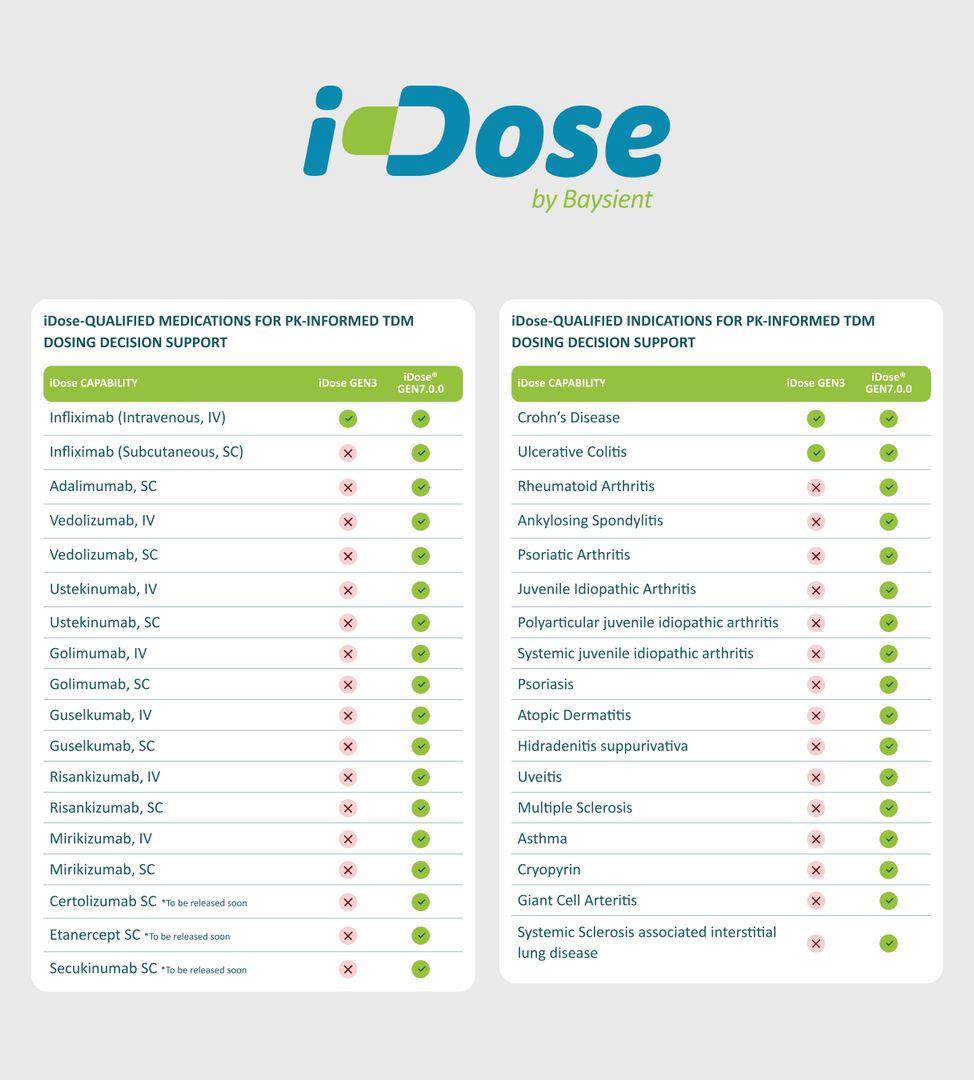
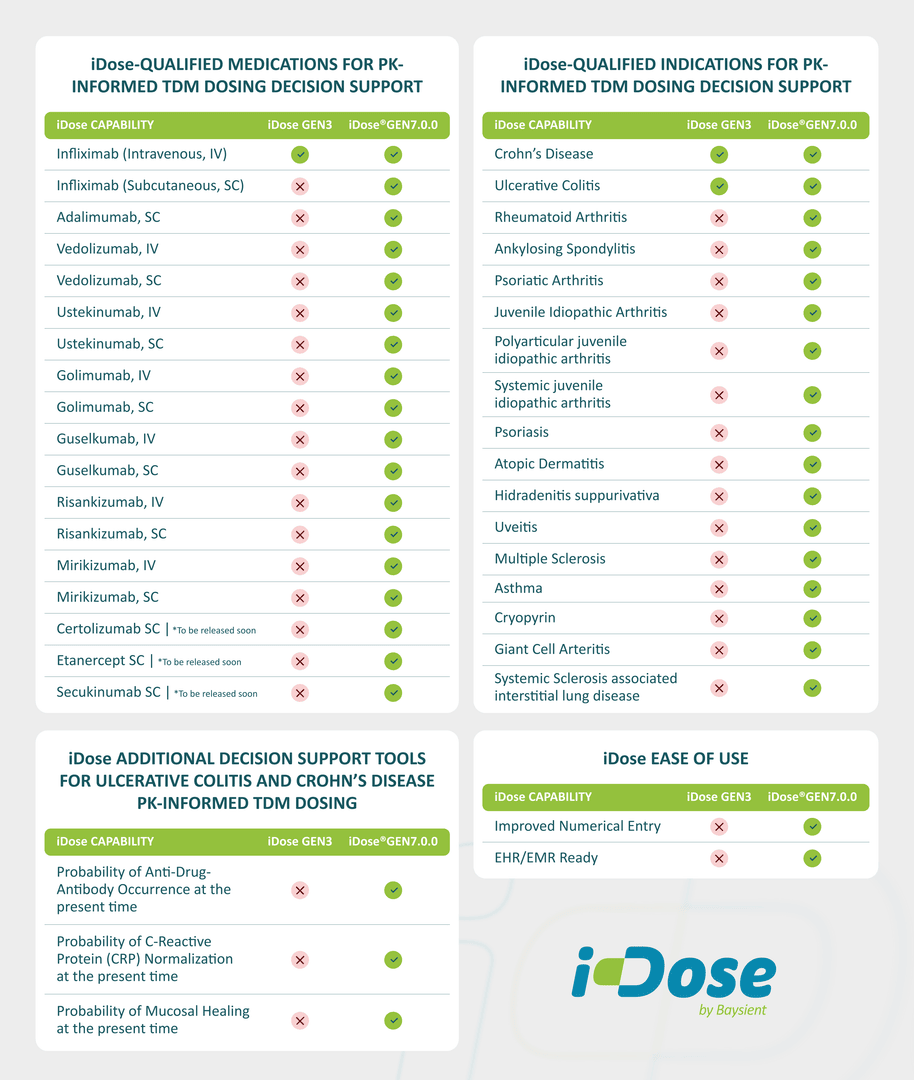
Adalimumab loss of response keeps clinicians up at night. Often, it's a clearance problem with a PK solution.
Read about it here: https://t.co/rirdqoTcnW
Up to 50% of adalimumab patients experience secondary loss of response. For many, it's pharmacokinetic: drug clearance varies, exposure drops, antibodies form.
iDose estimates individual clearance and personalizes dosing to reduce treatment failure.
https://t.co/zinm26oZM3
iDose = decision support software for rheumatologists.
It calculates personalized biologic doses for RA patients based on their individual drug clearance, so doctors can optimize treatment instead of using standard dosing for everyone.
https://t.co/DwgCzcBJyb
If you're managing biologics for any of these conditions and want to see what precision dosing actually looks like in practice, schedule a demo with me to see how iDose works: https://t.co/JXSodMqG7I
May is #NationalNursesMonth
To the nurses managing infusions, coordinating care, catching complications, and advocating for patients:
Your clinical expertise and dedication make healthcare work.
Thank you.
Grateful to work alongside physicians who embrace data-driven approaches and prioritize individual patient needs over one-size-fits-all protocols. Your openness to precision medicine is changing outcomes.
Happy Doctors' Day!
After decades in PK modeling, this study reinforced something critical: we can predict treatment failure from the first dose, AND we can change those predictions with timely intervention. That's the power of precision medicine in practice.
The best treatments in the world only work when skilled nurses are there to implement them and advocate for patients. Thank you for being the backbone of GI care.
Celebrating GI Nurses & Associates Week! To all the GI nurses and associates managing infusions, monitoring treatments, and supporting patients: thank you. #GINursesWeek
Therapeutic drug monitoring isn't just for inflammatory diseases. Cancer patients receiving mAbs also face clearance variability and deserve the same personalized approach to optimize outcomes.
March is Colorectal Cancer Awareness Month. Therapeutic drug monitoring of monoclonal antibodies with TuMinimize helps oncology providers optimize treatment for each patient's individual characteristics. https://t.co/gOtT1G3ka6
Children with IBD deserve better than "try and see if it works." Pharmacokinetic monitoring gives us tools to optimize treatment from day one. Proud to share this research with the NICHD community.
How can individual PK monitoring help us track and slow disease progression in pediatric IBD? Baysient's @DRMOULD explores this in her NICHD Pediatric Clinical Pharmacology lecture. Now available to watch: https://t.co/zP9tu6wYnX
My lecture for the NICHD's Pediatric Clinical Pharmacology Series is now available. I cover disease activity vs. progression, biologic PK in pediatric patients, and how Bayesian adaptive dosing can inform more individualized treatment decisions in IBD.
https://t.co/tVyx1cobqX
Join me for the NICHD Pediatric Clinical Pharmacology Lecture Series - weekly sessions covering clinical pharmacology principles in pediatric populations.
Register now: https://t.co/i4bO1WwDMC
When policy aligns with science, patients win. This decision protects access to the tools we need for smarter, more personalized dosing in IBD and beyond.
A federal court has ruled: TDM is governed by CLIA, not FDA. This keeps precision dosing tools like iDose available to providers without added regulatory hurdles.
https://t.co/79HRlK7wJj
Kids aren’t just small adults. In pediatric IBD, faster clearance & subtherapeutic exposure demand precision, not scaled-down adult doses. iDose helps providers get ahead of treatment failure.
https://t.co/CHGaOpeyRi
Pediatric IBD makes up 25% of new cases, yet most biologics aren’t approved for kids. With a 7+ year delay in approvals, kids rely on off-label use. We need smarter trials & tools like iDose to close the gap.
https://t.co/CHGaOpeyRi
Pediatric IBD ≠ adult IBD in smaller bodies. Kids clear drugs faster & respond differently.
It’s time to move from standard protocols to precision dosing with tools like iDose.
Let’s rethink pediatric IBD care.
📖 https://t.co/gZcLZw5ShG
This is exactly why we built iDose. Waiting for failure isn't good enough, especially in kids. We can model smarter, act earlier, and keep therapies working longer.
Reactive dosing often comes after response is lost. What if we could act sooner?
With iDose, pediatric GI docs can make preemptive, personalized adjustments, reducing antibody risk & treatment failure.
Smarter tools. Better timing.
https://t.co/gZcLZw5ShG
This gap has real consequences. We see the impact every day. Precision care shouldn't be age-dependent. We need to prioritize smarter pediatric trials now.
The avg delay between adult & pediatric approval for IBD biologics is 7+ years. In that time, kids are left waiting, failing therapies, & battling insurance.
We need smarter trials, better tools, & more flexibility. Kids can’t afford to wait.
The U.S. still treats IBD patients with a one-size-fits-all approach, especially with biologics. A new study in Chile is using @Baysient software to investigate how individualized dosing may improve outcomes. It's time we catch up.
📖 Study: https://t.co/DJnawpBXmS
@al_in_sweden Hi Alan
Drug clearance is PK its not PD. and as you would expect, patients whose clearance is fast, they tend to not respond well and fail earlier because their drug exposure (troughs) are low.
A new study highlights baseline clearance variability as a key factor in pediatric IBD treatment success. Therapeutic Drug Monitoring (TDM) can optimize Vedolizumab dosing to improve remission rates & reduce treatment failure.
Read more: https://t.co/z3UaFov61R.