World Diabetes Day
November 14th, 2026
The world marks World Diabetes Day this year under the theme "Early Action on Diabetes." For Pakistan, early is already late.
Our country now has the highest rate of diabetes in the world. Nearly one in three Pakistani adults lives with it, about 34.5 million people.
The numbers are grossly lower than what truly exists because of lack of process driven data collection significantly in the rural areas
Every year around 230,000 Pakistanis die of its complications.
One in five babies is born to a mother with gestational diabetes, so the disease is already reaching the next generation before birth. Yes it is.
Diabetes’ pathophysiology from the lack of insulin secretion has grown to one hovering around severe Insulin Resistance.
Thus we must realise out of the 257 million people in Pakistan 46% adults & 45% adolescents/ children suffer from metabolic disease meaning 117 million out of the 257 million are metabolically sick.
Metabolic disease cascade includes Type 2 Diabetes, Fatty Liver (MASH), Obesity, Hypertension, Insulin Resistance, High Cholesterol (Dyslipidemia), Renal & Cardiovascular Disease, & PMOS.
Worst Pakistan is globally number 1 on prevalence of T2 Diabetes 31.4% & number 1 in the world with highest cardiovascular disease risk in Adolescents
Majority suffer fatty liver & fibrosis. Pakistan remains number 10 in obesity in the world.
These numbers describe our own homes.
It grows in the third cup of sweet chai, the white flour, the fizzy drink at every meal, the evening walk we skipped, and above all in the test we never had.
It needs a conscientious introspection. You have to decide which way to go.
Last but not the least avoid poly saturated fats & believe sugars/sweets are the same as synthetic hardcore drugs such as cocaine, marijuana or alcohol.
Sweets trigger reward system (mesolimbic system) in the brain.
Refined sugars are human killers.
November 14th
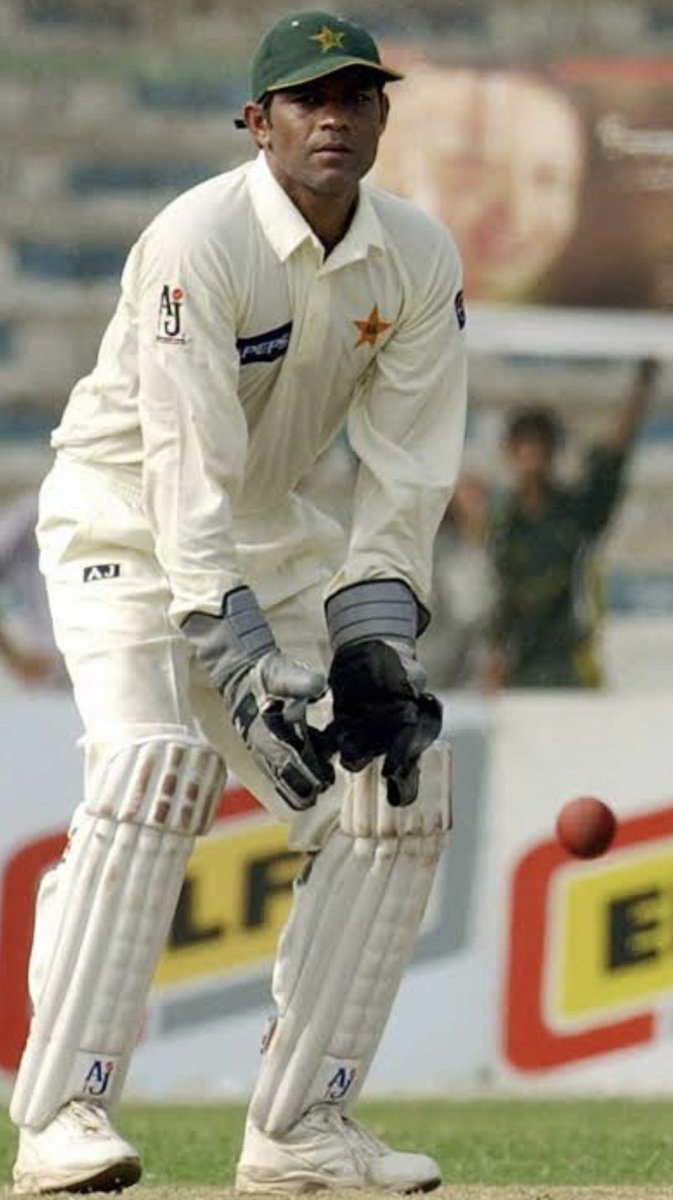
Happy Birthday Rashid
Many joyous returns
Come, come, whoever you are, come to the feast tonight.
The reed has learned your name, and sings it in the moonlight.
Another year has turned, like a dervish in white,
spinning toward the Friend, hands open, heart alight.
O keeper behind the stumps, crouched like a man at prayer,
you caught the falling moon before it touched the ground, and held it tight.
They say the gloves are leather. I say they are two cupped palms
that taught the restless ball how to come home at night.
You led a nation's eleven as a shepherd leads his flock,
not with a whip of thunder but with a lamp of quiet light.
When the crooked coin was offered in the marketplace of shadows,
you turned your face away. The Beloved saw. The ledger came out right.
Integrity is a lonely cup, the tavern-keeper told me.
"Drink it anyway," you said, "its bitterness is light."
Many have shaken your hand; few have touched your heart.
I am one of the few. Let me boast of it tonight.
Pour the wine of years, cupbearer, and pour it generously:
for every summer lived, may God grant many more, as bright.
The wound is where the light comes in.
Rashid, your wounds became windows. Happy birthday, my friend. Live long, live bright 💕🙏 @iRashidLatif68
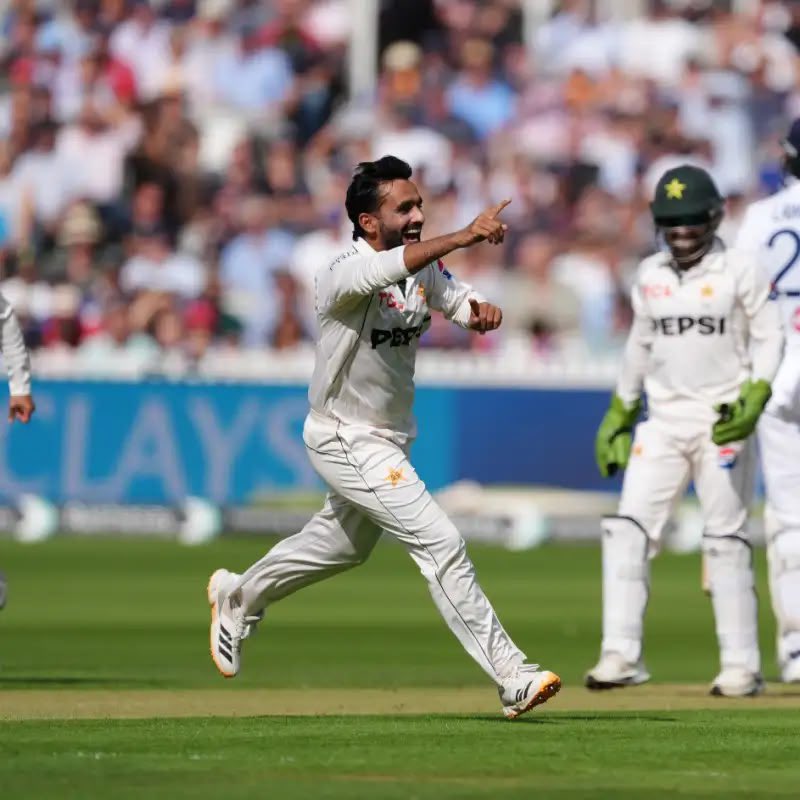
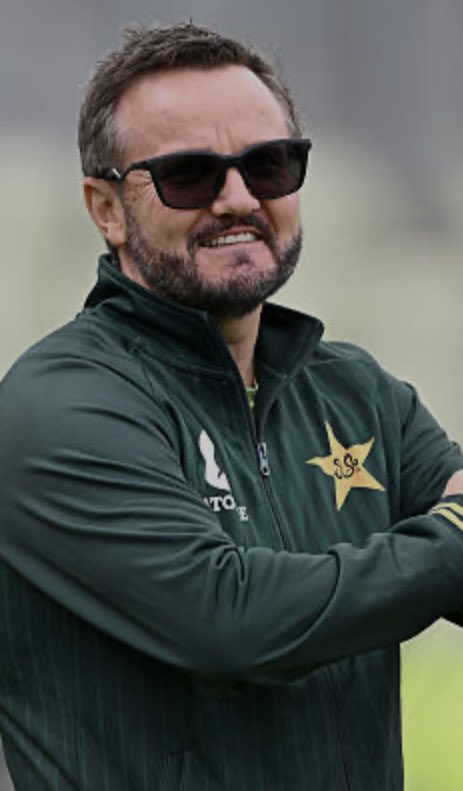
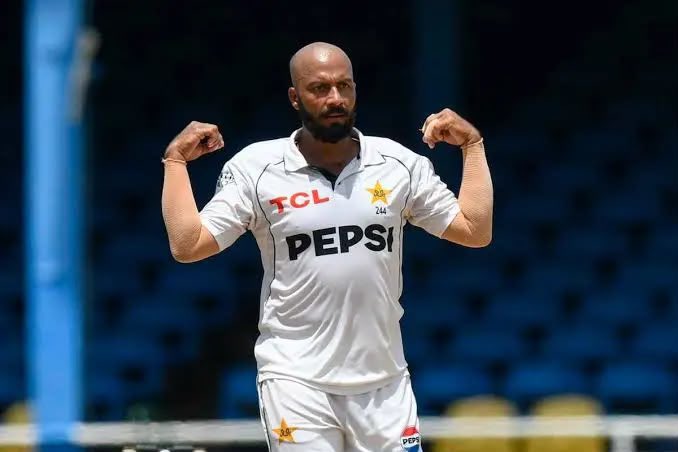
Saqib Khan was nothing short of magnificent. I say this as one who has never been accused of excessive indulgence towards Mike Hesson; indeed,
It is difficult to imagine any home-grown coach, steeped as he would be in the parochial orthodoxies of our cricketing establishment, possessing the imagination, or indeed the temerity, to hand this man a Test cap.
One suspects, moreover, that his modest but serviceable ability to hit a few with the bat lent him a decisive edge over rival claimants.
Saqib is no tearaway. He is that most unfashionable, and most underrated, of creatures: the military-medium seamer. His craft rests not on the brute numbers of the speed gun, but on the quieter virtues of accuracy, a probing angle into the batsman, and a stubborn insistence on pitching the ball up.
These are precisely the attributes that the red-ball game rewards and that the white-ball era has taught us to undervalue.
They are the stuff of attrition and of patience; of the slow strangulation that wins Test matches.
With this performance, Saqib has become only the sixteenth Pakistani to pick a five-wicket haul on Test debut, thereby entering an exclusive list.
And what a performance it was. On the fourth morning at Rawalpindi, he returned with 7-130 from 34 overs against Sri Lanka, and did so in the most emphatic manner imaginable, dismissing both overnight centurions: Dhananjaya de Silva, who had amassed a formidable 167, and the captain, Kusal Mendis, on 119.
To remove one well-set centurion is an achievement; to dispatch both, on debut and in a single morning's work, is the stuff of which reputations, and perhaps careers, are made.
The full list:
1Arif Butt, 6-89 v Australia, 1964
2Mohammad Nazir, 7-99 v New Zealand, Karachi, 1969
3Shahid Nazir, 5-53 v Zimbabwe, Sheikhupura, 1996
4Mohammad Zahid, 7-66 v New Zealand, Rawalpindi, 1996
5Shahid Afridi, 5-52 v Australia, Karachi, 1998
6Mohammad Sami, 5-36 v New Zealand, Auckland, 2001
7Shabbir Ahmed, 5-48 v Bangladesh, Karachi, 2003
8Yasir Arafat, 5-161 v India, Bengaluru, 2007
9Wahab Riaz, 5-63 v England, The Oval, 2010
10Tanvir Ahmed, 6-120 v South Africa, 2010
11Bilal Asif, 6-36 v Australia, Dubai, 2018
12Nauman Ali, 5-35 v South Africa, Karachi, 2021
13Abrar Ahmed, 7-114 v England, Multan, 2022
14Aamer Jamal, 6-111 v Australia, Perth, 2023
15Asif Afridi, 5-61 v South Africa, Rawalpindi, 2025
16Saqib Khan, 7-130 v Sri Lanka, Rawalpindi, 2026
Mike Hesson's Selection Farrago
All youngsters on debut - brilliant. Well done. Tayyab, Taha, Arafat & Saqib you stepped up. 👍
Put the question of Mike Hesson's selection philosophy to any true connoisseur of cricket, anyone who has spent a lifetime reading the subtle dynamics & essence of a five-day contest, and the verdict would be swift and unsparing.
The induction of bits-and-pieces cricketers, of half-baked talents still awaiting their apprenticeship, of personal favourites whose claims rest more on the coach's affections than on the scorebook's testimony, is a practice no serious student of the game could countenance.
Win or lose, this was no way to walk into a home Test. The result, whatever it turns out to be, cannot retrospectively sanctify the method.
Pose the same question in the gilded corridors of the PCB, however, and one suspects Hesson would answer with the practised ease of a man who has learnt that statistics are the most obliging of witnesses.
He would invoke, with something of a flourish, Tayyab Arif's 57, Mohammad Taha's 51, Arafat Minhas's 52 and Saqib's five-wicket haul on debut.
The hierarchy, ever susceptible to the seductions of the box score, would doubtless affirmation in grateful assent.
A job well done, then: bonuses, promotions, and a further accretion of power to a man already rather accustomed to wielding it.
What no one is likely to ask, for the question is inconvenient and inconvenience is anathema to our administrative mandarins, is what precisely he has made of the red-ball side.
Where are the men who toiled through the domestic season and earned their places the old-fashioned way, with runs and wickets?
Why have seasoned players such as Abdullah Shafiq and Sajid Khan, and perhaps even Nauman Ali, been eased aside on the threadbare pretext of "young legs" and youthful vigour, as though Test cricket were a sprint and not a marathon of the mind?
And what explanation might he offer for the neglect of Abdullah Fazal and Ali Usman, or for his curious preference for part-timers over specialists, a choice that inverts the very logic of the longest format?
Strip away the debut fifties and the self-congratulatory press releases, and what remains is not a strategy but a sham: obfuscation masquerading as vision, a triumph of optics over substance that will be found out the moment the opposition ceases to be obliging.
@iRashidLatif68@ShahzadIqbalGEO@KamranMuzaffer
Hand signed original 1948 Australia Invincible bat with other paraphernalia including an autograph sheet, followed by 1934 originally signed bat from The Ashes.
And since you seem determined to stoke the flames, permit me to add a little kindling: I am also a product of University of Oxford.
I make no apology for the pride I take in Aitchison College, nor for the privilege of calling myself an Aitchisonian.
That pride is institutional belonging, a loyalty to the place that formed me. It is not, as you so hastily presume, a badge of privilege.
What you have offered instead is a rather laboured anatomy of entitlement. It is delivered with a judgmental zeal that reveals far more about your own frailties, insecurities and antiquated obsession with social hierarchy than it could ever reveal about mine.
Tolerance, my friend, remains among the most underrated of virtues. Each of us is born with some measure of grace and poise. I would gently commend you to discover yours, and to enjoy it.
Another Aitchisonian Takes Guard on the World Stage
Well done indeed. Another son of Aitchison College has crossed the threshold into international cricket, and it falls to us, his fellow Aitchisonians, to offer our warmest congratulations to
Muhammad Tayyab Arif
Go well, young man.
Make your mark, and never stray from the path of disciplined excellence that brought you here.
We Aitchisonians are immensely proud of you. You now carry a legacy older than the nation whose cap you wear; carry it with poise.
He joins a lineage as distinguished as any school in the subcontinent can claim.
India, before Partition
Iftikhar Ali Khan Pataudi, Nawab of Pataudi, schooled at Chiefs' College, as Aitchison was then known. He played Test cricket for England between 1932 and 1934, then led India in 1946.
He remains the only man to have represented both England and India.
Yadavindra Singh, Maharaja of Patiala, whose solitary Test, against England in 1934, yielded a graceful 24 and 60.
Pakistan
Majid Khan: 63 Tests (1964–83), captain
Imran Khan: 88 Tests (1971–92), captain, and architect of the 1992 World Cup triumph
Aamer Hameed: 2 ODIs (1977–78)
Ramiz Raja: 57 Tests and 198 ODIs (1984–97), captain
Bazid Khan: 1 Test (2005)
Wahab Riaz: 27 Tests (2010–18)
Muhammad Tayyab Arif: Test debut, Rawalpindi, 2026
Footnotes to a Proud History
Three of these Pakistanis rose to lead their country: Majid, Imran and Ramiz.
Majid and Imran were cousins, scions of the Burki–Niazi clan whose cricket was nurtured on the lawns of Zaman Park.
Bhupinder Singh, Maharaja of Patiala and himself an Aitchisonian, was appointed to captain India on her maiden Test tour of England in 1932. He withdrew before it began and never played a Test.
Yadavindra Singh and Bazid Khan share a poignant distinction: each played a single Test, the former for India, the latter for Pakistan.
May young Tayyab's story run far longer.
@iRashidLatif68@MuhammadWasim77@ansukhera
A player with 800+ runs at number 3 is sent to number 7, and players with no centuries are pushed up—no infrastructure can save a system like this! 🏏💥
In this unfiltered clip from FACE OFF, the panel breaks down ridiculous batting order shuffles, the dropping of Abdullah Fazal and Ali Usman, and panic selections based on grass pitches.
📺 Watch FACE OFF Live every Friday at 9:00 PM right here on Smash IT!
How can domestic cricket produce quality players with such flawed selection logic? Drop your thoughts in the comments below! 👇
#TayyabArif #AbdullahFazal #AliUsman #AamerJamal #DrNaumanNiaz #WaheedKhan #FACEOFF #SmashIT #PakistanCricket #PCB #CricketDebate #FACEOFFLive
Beyond the forty-five who played a single Test, a further forty-two Pakistani cricketers saw their careers close somewhere between a second and a fourth appearance.
Two more, still active, are presently stranded on two.
Two Tests (19)
Khalid Wazir (1954), Mohammed Ghazali (1954), Miran Bakhsh (1955), Afaq Hussain (1961–64), Niaz Ahmed (1967–69), Aftab Baloch (1969–75), Zakir Khan (1986–89), Naved Anjum (1989–90), Nadeem Khan (1993–99), Ijaz Ahmed Jr (1995), Mohammad Hussain (1996–98), Zahoor Elahi (1996), Naved Ashraf (1998–2000), Mohammad Khalil (2004–05), Sohail Tanvir (2007), Mohammad Salman (2011), Nasir Jamshed (2013), Bilawal Bhatti (2013–14), Mohammad Wasim Jr (2022)
Three Tests (10) Duncan Sharpe (1959), Munir Malik (1959–62), Arif Butt (1964–65), Zulqarnain (1986), Nadeem Abbasi (1989), Shakeel Ahmed Jr (1993–95), Yasir Arafat (2007–09), Abdur Rauf (2009), Ehsan Adil (2013–15), Fakhar Zaman (2017–18)
Four Tests (13) Anwar Hussain (1952), Israr Ali (1952–59), Mohammad Munaf (1959–62), Abdul Kadir (1964–65), Khalid Ibadulla (1964–67), Younis Ahmed (1969–87), Rashid Khan (1982–85), Kabir Khan (1994–95), Mohammad Talha (2009–14), Umar Amin (2010), Mohammad Irfan (2013), Iftikhar Ahmed (2016–22), Zahid Mahmood (2022–24)
Two careers remain open on two Tests apiece: Mohammad Huraira, first capped in 2024, and Abdullah Fazal, capped in 2026.
Three cases stand apart.
Younis Ahmed played his four Tests across eighteen years, from 1969 to 1987. The interval between his appearances ranks among the longest in the history of the game.
Khalid Ibadulla made 166 on debut against Australia in 1964, yet was granted only three further Tests.
Duncan Sharpe, an Anglo-Pakistani, scored 134 runs in his three Tests before emigrating to Australia.
Taken together with the forty-five one-Test cricketers, the reckoning is stark. Eighty-seven of Pakistan's 272 Test players, very nearly a third, never reached a fifth Test.
Few statistics capture so plainly the restlessness that has governed Pakistan's selection since 1952.
Of the cricketers chosen to represent Pakistan since October 1952, forty-five did not survive beyond a single Test.
Such a figure points to a want of continuity that has troubled Pakistan's selection from the very beginning.
Those whose Test careers began and ended in a single match are as follows:
The 1950s: Khalid Hasan (1954), Aslam Khokhar (1954), Agha Saadat Ali (1955), Gul Mohammad (1956), Fazal-ur-Rehman (1958)
The 1960s: Javed Akhtar (1962), Shahid Mahmood (1962), Farooq Hamid (1964), Mufasir-ul-Haq (1965), Ghulam Abbas (1967)
The 1970s: Agha Zahid (1975), Farrukh Zaman (1976), Shahid Israr (1976), Anwar Khan (1979)
The 1980s: Azhar Khan (1980), Azmat Rana (1980), Shahid Saeed (1989), Shahid Mahboob (1989)
The 1990s: Nadeem Ghauri (1990), Masood Anwar (1990), Ashfaq Ahmed (1993), Atif Rauf (1994), Azam Khan (1996), Mohammad Ramzan (1997), Ali Hussain Rizvi (1997), Shakeel Ahmed Sr (1998)
The 2000s: Atiq-uz-Zaman (2000), Irfan Fazil (2000), Qaiser Abbas (2000), Humayun Farhat (2001), Naved Latif (2002), Farhan Adil (2003), Yasir Ali (2003), Riaz Afridi (2004), Bazid Khan (2005), Iftikhar Anjum (2006)
The 2010s: Zulqarnain Haider (2010), Mohammad Ayub (2012), Sharjeel Khan (2017), Usman Salahuddin (2018), Muhammad Musa (2019), Usman Shinwari (2019)
The 2020s: Zafar Gohar (2021), Tabish Khan (2021), Haris Rauf (2022)
Several others remain on a solitary Test, though their careers are not yet closed: Kashif Ali and Asif Afridi, both capped in 2025, and Mohammad Imran Randhawa.
Asif Afridi's six wickets at 15.66 is the most distinguished return among them.
Within this company lie some genuine curiosities.
Khalid Hasan played his only Test aged sixteen years and 352 days. He remains the youngest one-Test cricketer in history, and his international career was over before his seventeenth birthday.
Zulqarnain Haider fell first ball in the first innings at Edgbaston in 2010, then returned to make a defiant 88 in the second. It is arguably the finest single-Test performance by any Pakistani.
Bazid Khan is a third-generation Test cricketer, following his father, Majid Khan, and his grandfather, Jahangir Khan. His solitary appearance came in a heavy defeat at Bridgetown in 2005.
Humayun Farhat remains the only wicketkeeper in Test history never to have effected a dismissal.
Javed Akhtar played a single Test and later stood as an umpire in eighteen.
The inference is unavoidable. Either these men were never good enough to represent their country, or they were treated with considerable injustice.
A single Test can scarcely vindicate a selection, and it is equally poor grounds on which to condemn one.
Pakistan have handed Test caps to four more debutants, a largely unwarranted decision that seems to flow from Mike Hesson's impulsive and frankly inexplicable selection philosophy.
Pakistan's roll of Test cricketers now stands at 272.
Today's four debutants take the tally to 31 new caps in Pakistan's last 40 Tests, from cap 242 to cap 272, or a fresh face roughly every 1.3 matches.
The number is simple. Razaullah, capped at Edgbaston in 2026, was the 268th, so today's quartet in Rawalpindi are numbers 269 to 272.
Counting back 40 Tests leads to Karachi in January 2021, when Pakistan capped Nauman Ali and Imran Butt against South Africa, Butt being the 242nd.
The new caps are:
269Tayyab Arif
270Mohammad Taha
271Arafat Minhas
272Saqib Khan
Of the four, only Taha's inclusion is easy to justify. One might, at a stretch, defend preferring Arafat Minhas to Ali Usman, the frontline left-arm spinner who was unceremoniously left out of the original fourteen.
On a green surface, picking Arafat is really about lengthening the batting. The irony, however, is hard to miss. And how on earth Abdullah Fazal was dropped defies explanation.
Behind the stumps, Saad Baig is the better choice. Giving Ghazi Ghori another chance would at least suggest continuity, but continuity is an oxymoron in a regime defined by Hesson's impulsive, almost whimsical instincts.
31 debutants in 40 Tests reflect unstable coaches in a chaotic system running in circles. Sad.
Let’s end wishing the best to the new entrants & surprisingly they begin pressured not because of replacing old stars but jumping over a handful of youngsters may be better performers & high on talent than them. There is no process driven selection, no respect to player pathway and first class cricket.
@iRashidLatif68@ShahzadIqbalGEO@KamranMuzaffer
Major squad update: Abdullah Fazal is dropped as Aamer Jamal returns to the setup.
Catch all the details and unfiltered reactions on FACE OFF!
🔴 Reminder: FACE OFF goes live every Friday at 9:00 PM! Make sure to tune in.
Share your perspective in the comments! 👇
#SmashIT #DrNaumanNiaz #WaheedKhan #FACEOFF #PakistanCricket #CricketAnalysis #PCB #TestTeam
Heart rendering news of tragic passing away of Rabiya Ahsan, a colleague who was most cricket savvy & had a real passion for the game. With @AmirMateen2 I appeared countlessly on her shows. Most respectful, committed, decent & someone with a drive to excel. My last appearance was on her YouTube channel. Inna lillahi wa inna ilayhi raji'un
Tragic!!!
Bless you always. I dint mind body shaming because from six packs to steroid belly, I couldn’t do much about iatrogenic obesity having survived fourteen major surgeries, a bone marrow transplant, an autogenic stem cell transplant & a genetically engineered stem cell transplant & a continuous immunotherapy & steroids. May Allah always give you absolute help.
Mike Hesson appears set upon the ruin of Pakistan's red-ball cricket.
How, one must ask, could anyone in good conscience omit Abdullah Fazal, the finest young batter in the country? Had he been injured, a brief statement to that effect would have sufficed.
None was forthcoming. Equally baffling is the exclusion of Aamer Jamal, a capable specialist all-rounder who ought never to have been dropped. Why included now, and why tamper with the original fourteen at all? Though Aamer’s inclusion is welcomed.
The omission of Ali Usman may perhaps be defended should the pitch favour the seamers. Arafat Minhas, though not yet established in the longer format, might likewise be justified on the grounds that he lends depth to the batting.
The other choices are harder to excuse. Sameer Minhas is prodigiously talented, yet he has played only seven first-class matches and has still to score a first-class hundred.
Tayyab Arif is a gifted batsman, but far too raw for Test cricket at this stage. Meanwhile, Saad Ali, Awais Zafar, even Mohammad Suleman, together with a number of fast bowlers who have performed season after season, have been passed over entirely. It is a sorry state of affairs.
Consider, by contrast, Mohammad Taha. He is a seasoned campaigner, with 29 first-class matches, six hundreds and five half-centuries to his name, and he bowls usefully besides. This season alone he has amassed 775 runs in eight matches, including a double hundred and two further centuries.
Tayyab's figures this season are better still: 727 runs in seven matches at an average of 66.00 in his debut campaign, with three hundreds and a 98 that fell just short of a fourth. Yet a record of such promise, however impressive, is no reason to throw a young player in at the deep end.
Hesson has to realize you can’t win Tests with bits & pieces, half baked back ups. You need specialists to share the burden. After losing 18 or 19 Tests, the two players who won you the Test in the West Indies, Abdullah Shafiq & Sajid Khan, both have been dumped. Sad, sadder still. Someone from high up in the PCB needs to ask Hesson a few questions. He announced the previous squad himself so how could he whimsically treat players with contempt? If there are reasons such a fitness or any other must be shared publicly.
@iRashidLatif68@ShahzadIqbalGEO@KamranMuzaffer@AJavedOfficial
It defies all reason. Were I to select a squad having weighed every name and assessed every player's craft, on what possible grounds would I then unpick it at a moment's caprice?
Such wavering could only signify a want of resolve, or perhaps some deeper psychological impediment, a mind quite at odds with its own judgement.
Mike Hesson, regrettably, continues to give us cause to believe that his grounding in the game is slender, and that his practical experience lacks the weight of the more accomplished coaches at work elsewhere in international cricket.
His mental reservations, aggravated by a troubling impetuosity, are doing more than undermining the pathways so carefully constructed for young talent.
They are doing real harm to gifted cricketers, placing hindrances in the very path along which their careers ought to advance.
@iRashidLatif68@ShahzadIqbalGEO@KamranMuzaffer@AJavedOfficial
It is a sorry truth, but a truth all the same.